



Predicting match outcomes, enhancing training, and developing strategies: Artificial intelligence is set to comprehensively transform tennis.


Recently, I came across an article online titled "Why 2025 Will Be the Year of AI in Tennis?" The author discusses how artificial intelligence will bring revolutionary changes to tennis players’ training, matches, and fans’ viewing experiences from various perspectives.
This article, after translation, is about 2600 words and requires approximately 9 minutes to read. Here is a 200-word summary of its key content.

1. The year 2025 marks a pivotal turning point for AI integration in tennis, as the sport’s repetitive and precise nature aligns perfectly with data, laying a solid foundation for AI applications.
2. AI breakthroughs have achieved over 80% accuracy in match predictions and can analyze players’ techniques and fatigue levels, supplementing human insights.
3. Empowering player training through video analysis and wearable device data helps coaches target improvements and prevent injuries.
4. Enhancing the viewing experience by providing real-time predictions and detailed data allows fans to become active analysts rather than passive spectators.
5. The widespread adoption of AI in 2025 is driven by improved data quality, increased computing power, and greater public acceptance.
6. AI also impacts event management and will continue to transform tennis by blending technology with tradition.

Below is the main content of this article.
At the intersection of technology and sports, few revolutions have been as sudden and profound as the rise of artificial intelligence. What once seemed like science fiction has become a decisive force shaping how athletes train, how fans engage, and even how outcomes are predicted.
By 2025, this transformation is most evident in tennis—a sport long defined by precision, data, and human psychology.
Over the past year, AI has evolved from an abstract concept to a tangible part of the tennis world. From match predictions to player analysis, AI has begun to influence every aspect of the game. One breakthrough has drawn global attention—the emergence of AI-driven tennis prediction platforms that use advanced algorithms to analyze and forecast matches daily.
It is no exaggeration to say that 2025 has become a turning point for intelligent tennis. Here’s why.
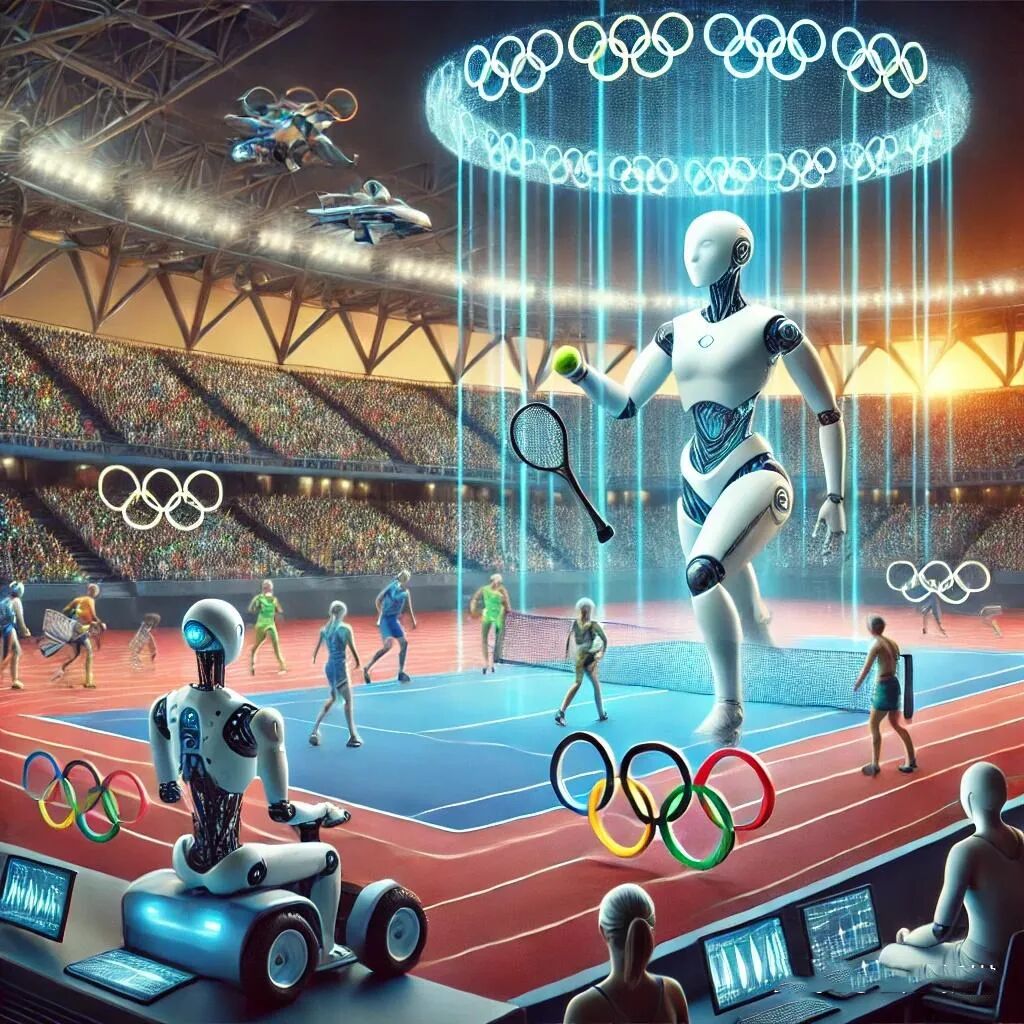
The perfect match between tennis and data
Tennis is a sport built on repetition, precision, and measurable variables. Every serve, rally, and winning point generates data. Modern tournaments record thousands of such details per match—serve speed, rally length, shot placement, return success rate, and more.
For years, this data was mainly used for statistics and commentary. Analysts cited numbers, coaches reviewed footage, and fans debated performance metrics. Now, AI has changed this application paradigm.
By feeding these massive datasets into learning systems, AI can identify correlations even the most experienced coaches or analysts might miss. It can uncover trends—such as how a player’s first serve percentage drops under pressure, or why a certain return style is more effective on clay than grass.
Tennis is inherently rhythmic and patterned. These characteristics make it highly suitable for analysis through modeling.
From guesswork to algorithmic accuracy
One of the most fascinating breakthroughs of this new era is AI’s ability to predict match outcomes with remarkable accuracy. Traditional predictions often relied on intuition or limited statistics. Now, some platforms using machine learning models process thousands of historical matches and calculate win probabilities in real time.
These algorithms analyze not only possible results but also how players perform—factoring in fatigue, head-to-head records, surface preferences, and even match pressure. The result is a finely tuned prediction system that surpasses human estimations.
According to independent reports, AI-driven tennis models can achieve over 80% accuracy in selected matches, a figure that would have seemed impossible just a few years ago.
This does not mean AI replaces human insight but rather complements it. When AI and human intuition combine, our understanding of matches becomes more comprehensive and profound.

How AI empowers players
AI is not just about predicting matches; it also helps players improve.
Coaches now use AI-based video analysis to study opponents, breaking down shot tendencies, court positioning, and scoring patterns. Some systems can identify inefficiencies in player techniques within seconds, saving hours of manual review.
For example, AI models might flag a player’s backhand performance dropping by 15% after the sixth shot in a rally or a significant decrease in serve speed after long rallies. Such insights enable training sessions to focus on very specific weaknesses with measurable performance gains.
Even wearable devices have become smarter. Sensors integrated into rackets and apparel collect players’ biometric data, helping AI programs manage workload, prevent injuries, and optimize recovery.
In short, AI not only predicts outcomes but also helps players play better tennis.

How AI enhances the fan experience
It’s not just athletes benefiting from precise analysis; fans are experiencing tennis in unprecedented ways.
AI-powered match predictions, real-time win probability charts, and detailed performance breakdowns turn watching matches into an interactive experience. Spectators can see the likelihood of a player holding serve, what adjustments increase performance, or how momentum shifts between competitors.
Some AI-driven websites go further, offering daily global coverage—from ATP and WTA tournaments to lower-level ITF events. Every match becomes a story told through data that fans can follow live.
This shift creates a more transparent, interactive tennis community, turning passive observers into active analysts.

The turning point of AI in sports
The transformation in tennis reflects a broader trend across sports. Soccer clubs use AI to evaluate tactics, Formula 1 teams rely on predictive modeling for pit strategies, and basketball teams apply machine learning to prevent injuries.
But tennis stands out because it combines one-on-one competition with rich structured data—ideal conditions for algorithmic interpretation.
Unlike team sports where coordination and randomness play larger roles, tennis outcomes largely depend on measurable performance patterns. This makes tennis a model sport for AI analysis—a place where human intuition and computational intelligence fully merge.

Transparency and credibility
With technological advances come questions of trust. Are AI predictions truly accurate? Are their models transparent?
Leading developers in the field address these concerns by publishing performance data and continuously improving their systems. Some even share accuracy charts publicly, allowing users to see how results evolve over time.
This commitment to accountability helps AI tools earn credibility among fans and analysts. It’s no longer about “trusting the machine” but about verifying its logic through real data.

Why is 2025 a breakthrough year?
So why now? Why 2025 and not five years ago?
The answer lies in the perfect alignment of three decisive factors influencing AI, all converging in 2025.
First, data availability: every professional tennis match now generates comprehensive, high-quality statistics in real time.
Second, computing power: cloud-based AI platforms can process millions of records within seconds.
Third, public acceptance: fans, players, and coaches have grown accustomed to using AI tools daily—from streaming recommendations to sports analytics.
These three factors together have driven the widespread adoption of AI in tennis. AI’s role in tennis is no longer confined to labs but has entered the public arena.

Broader impacts
Beyond prediction and analysis, AI is gradually changing how tennis is managed and experienced. Event organizers use algorithms to optimize schedules, reducing player fatigue, while media companies employ AI to generate automatic highlight reels and commentary summaries.
In time, we might even see AI-integrated coaches providing real-time feedback during matches or tactical advice after each point.
Tomorrow’s tennis will be a fusion of art and algorithms, intuition and information.

Looking ahead
Over the next decade, AI will profoundly reshape tennis. Yet one thing remains constant—tennis is always evolving. Years from now, we will realize AI has not replaced the sport’s soul but enhanced it.
From predicting outcomes to helping players improve, from enriching fan experiences to making data more accessible than ever, AI is transforming every facet of tennis. The AI tennis prediction and analysis platforms already emerging prove that technology and tradition can coexist perfectly.
For a sport built on precision, adaptability, and intelligence, AI brings not just a revolution but a natural evolution to tennis.(Source: Tennis Home, translated by Yun Juan Yun Shu)

 Links
Links
 Contact
Address:UNIT 1804 SOUTH BANK TOWER, 55 UPPER GROUND,LONDON ENGLAND SE1 9E
Number:+85259695367
E-mali:[email protected]
 App
App


