



Novak Djokovic wins the inaugural Global Sports Award, presented by Cristiano Ronaldo



Under the dazzling lights of the stage, a conversation beyond sports disciplines is unfolding. Football legend Cristiano Ronaldo hands the first Global Sports Award trophy to Novak Djokovic. In that moment, the boundaries of competitive sports quietly fade away, leaving a silent resonance between two GOATs from their respective fields about the essence of excellence. Ronaldo’s tribute was as precise as a scalpel: “An athlete who, through relentless effort, has conquered time and become a role model for past, present, and future generations.” This was not only praise for Djokovic but also a mirror reflecting the presenter’s own challenging and glorious journey to the top.
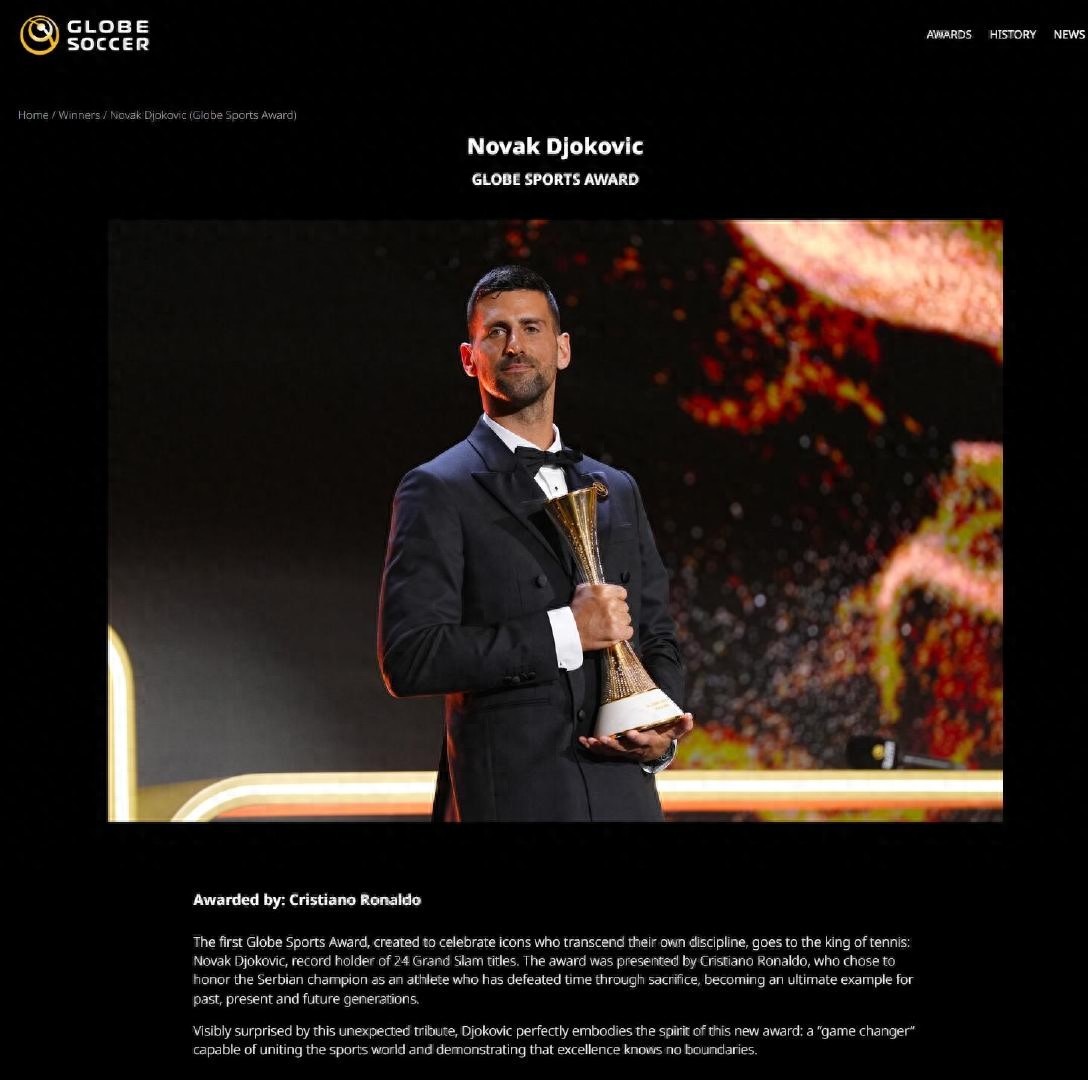
What Djokovic holds is far more than another Grand Slam trophy engraved with his name. Since its inception, the Global Sports Award has aimed high: to honor icons who transcend their own sports, seeking changemakers who unite the sports world and reshape its landscape. In an era where sports are increasingly specialized and segmented, this award strives to reweave the common bond that connects diverse sports and people: the relentless human pursuit of pushing limits and the pure quest for excellence without end.
Djokovic is undoubtedly one of the most perfect embodiments of this era’s spirit.
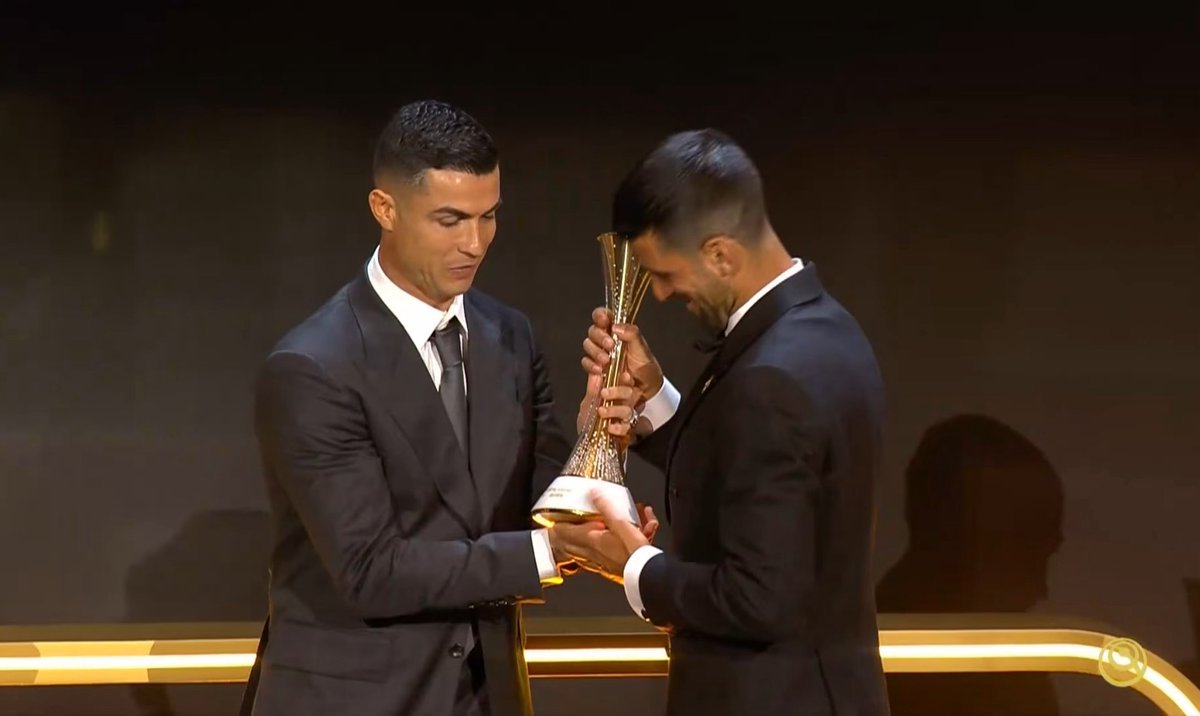
His story has long surpassed the scope of a tennis biography. A Serbian boy emerging from war, he carved out a third path in a tennis world dominated by the Federer-Nadal “duopoly” through incredible willpower and revolutionary techniques. His 24 Grand Slam titles and record for the longest duration at number one are his most prominent honors. But the numbers tell only part of the story; his true transformative power lies in the philosophy his existence represents: the peak of excellence is not just raw talent but the ultimate product of science, mindset, and near-obsessive self-management. Through precise physical conditioning and mental refinement, he has redefined a professional athlete’s “longevity” and “peak performance.”
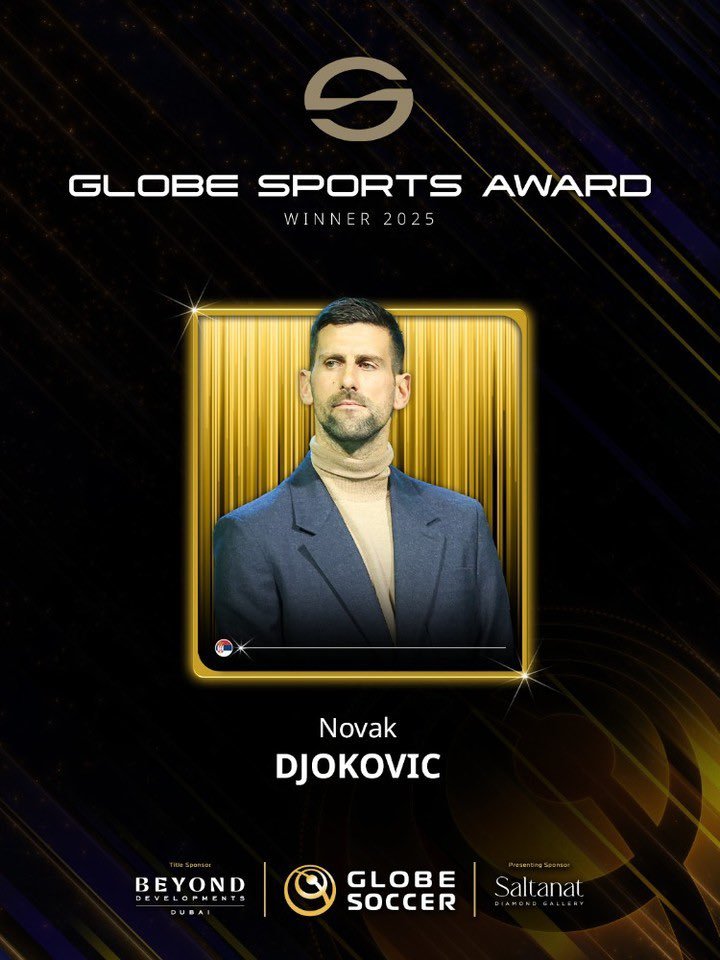
When he continues to dominate the court at the ages of 34 and 35, repeatedly making Father Time retreat with a sigh, his inspiration extends far beyond tennis fans. Countless people striving in various fields draw from his spirit of age-defying growth and continuous evolution. He proves that boundaries—whether of age, background, or playing style—are waiting to be broken by determination and wisdom.
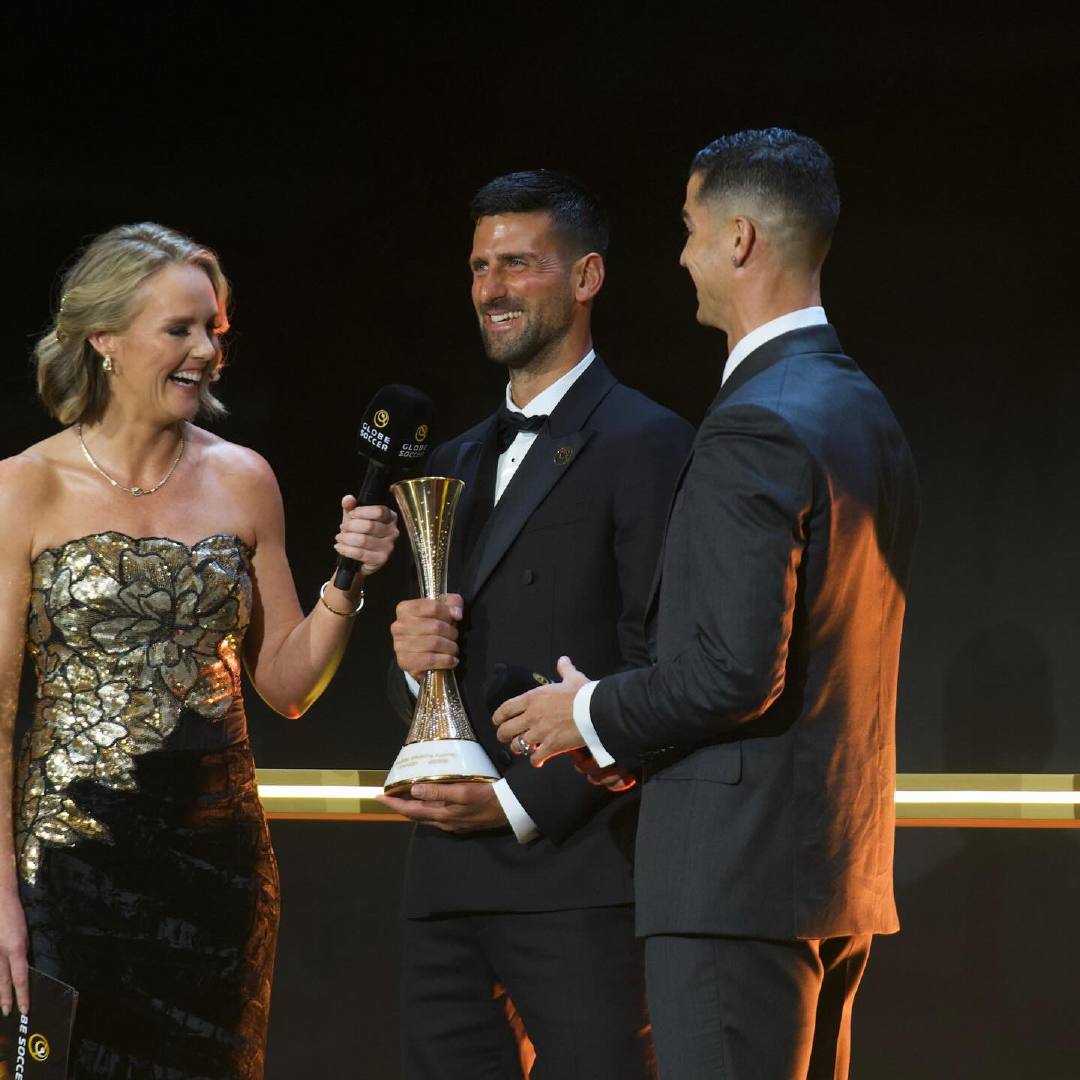
Thus, Ronaldo presenting the award carries symbolic meaning beyond the ceremony itself. It feels like a tribute from one form of excellence to another. One embodies supreme physical talent, killer instinct, and a commercial empire; the other exemplifies technical revolution, mental resilience, and holistic life management. Their paths differ greatly, yet both have reached the immortal shore. Their shared presence vividly advertises the spirit of the Global Sports Award: excellence takes many diverse and splendid forms, but at its core, the unquenchable fire is universally connected.
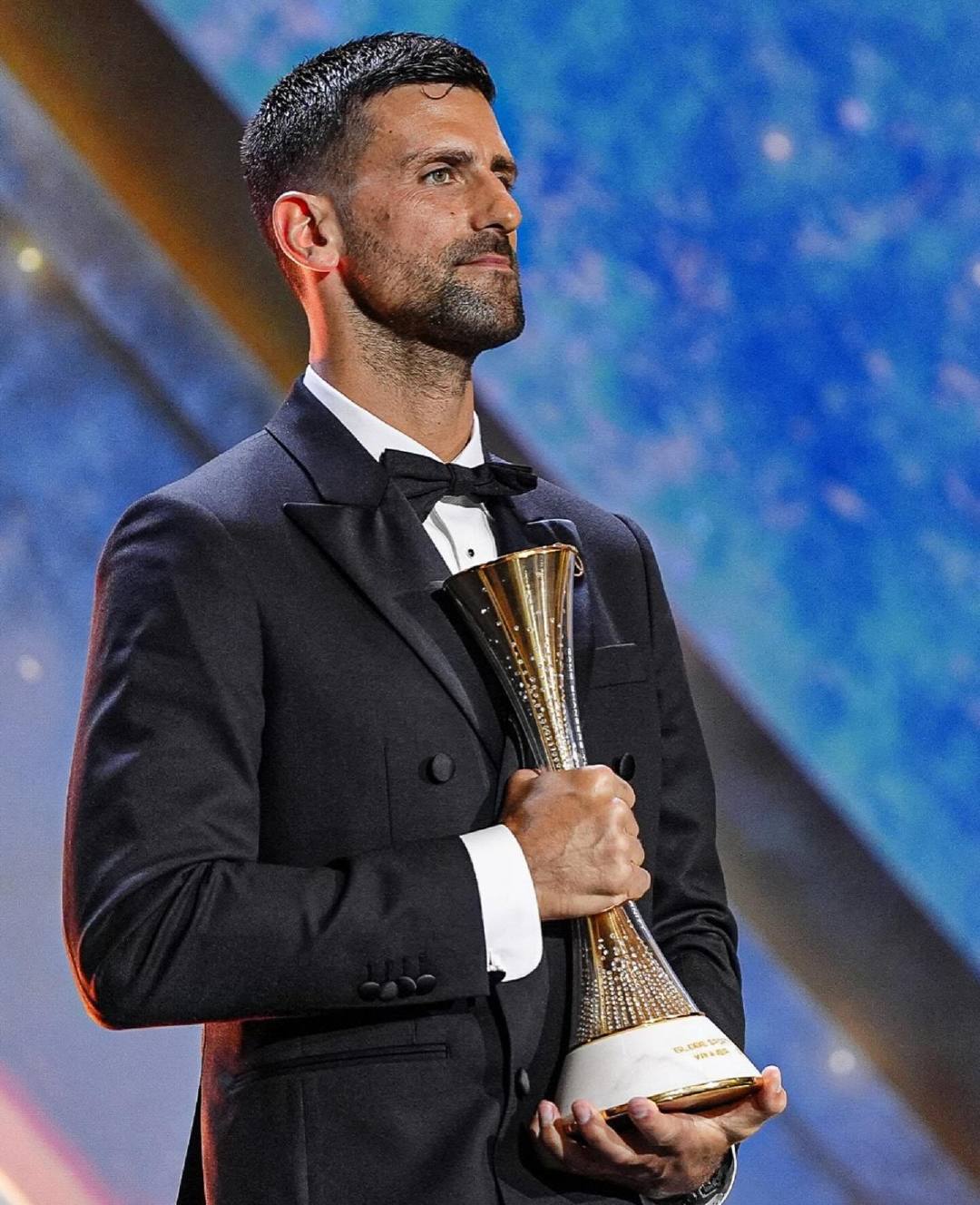
In Djokovic’s acceptance speech, he might mention gratitude, team, and legacy. But the true resonance of this award lies in the questions and insights it poses to the world: In an age rife with division and short-sightedness, can sports once again serve as a mirror that unites humanity’s shared ideals and passions? Can an athlete’s greatness transcend the sidelines to become a broader spiritual beacon?
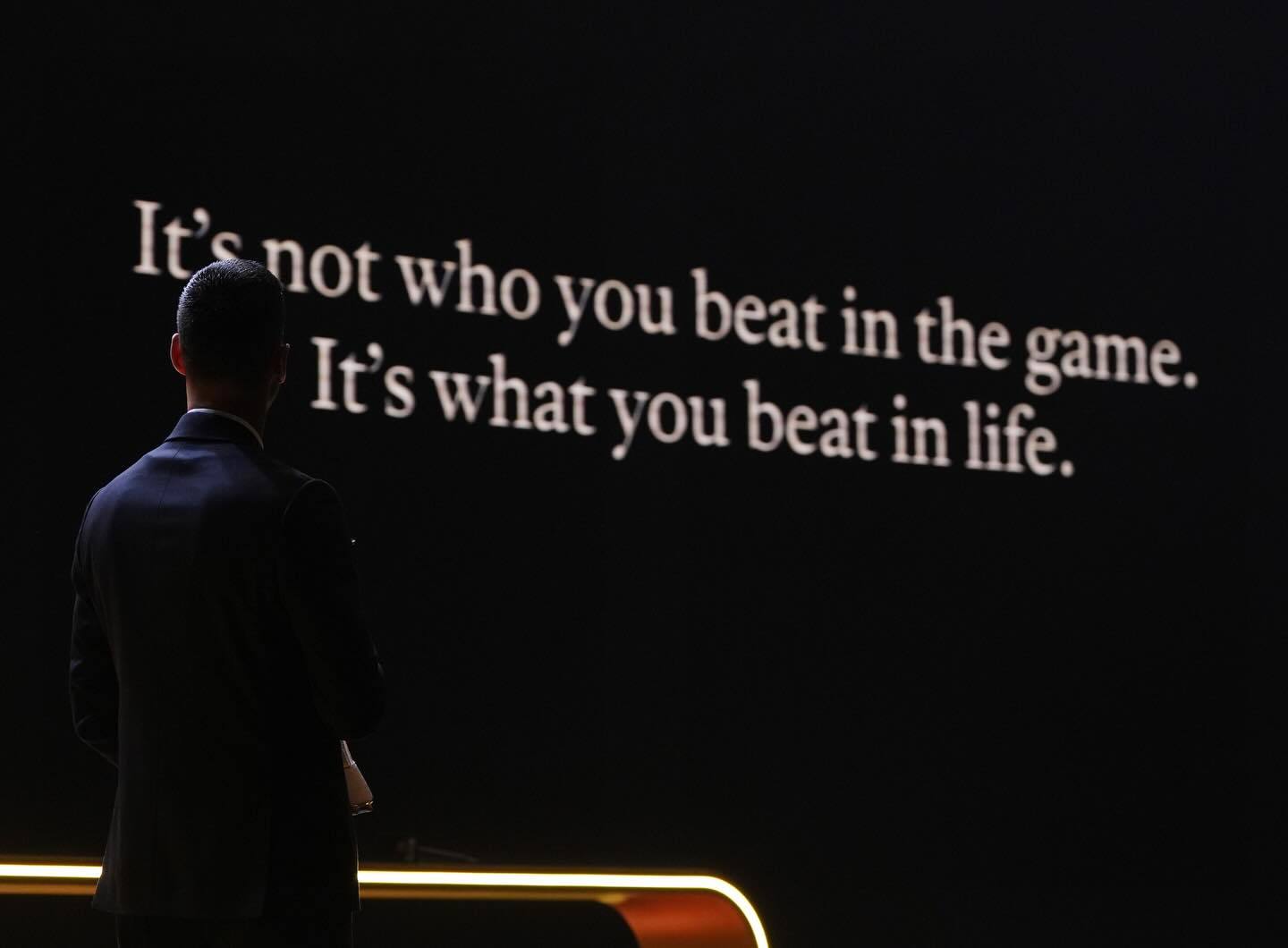
Djokovic’s entire career provides an affirmative answer. The trophy awarded by another legend not only crowns his status as tennis royalty but also confirms his higher identity as an explorer of human potential. It reminds us that the most thrilling contests are not just the exchanges on the court, but how individuals, with extraordinary perseverance, continuously expand the boundaries of possibility and illuminate the paths of others along the way.
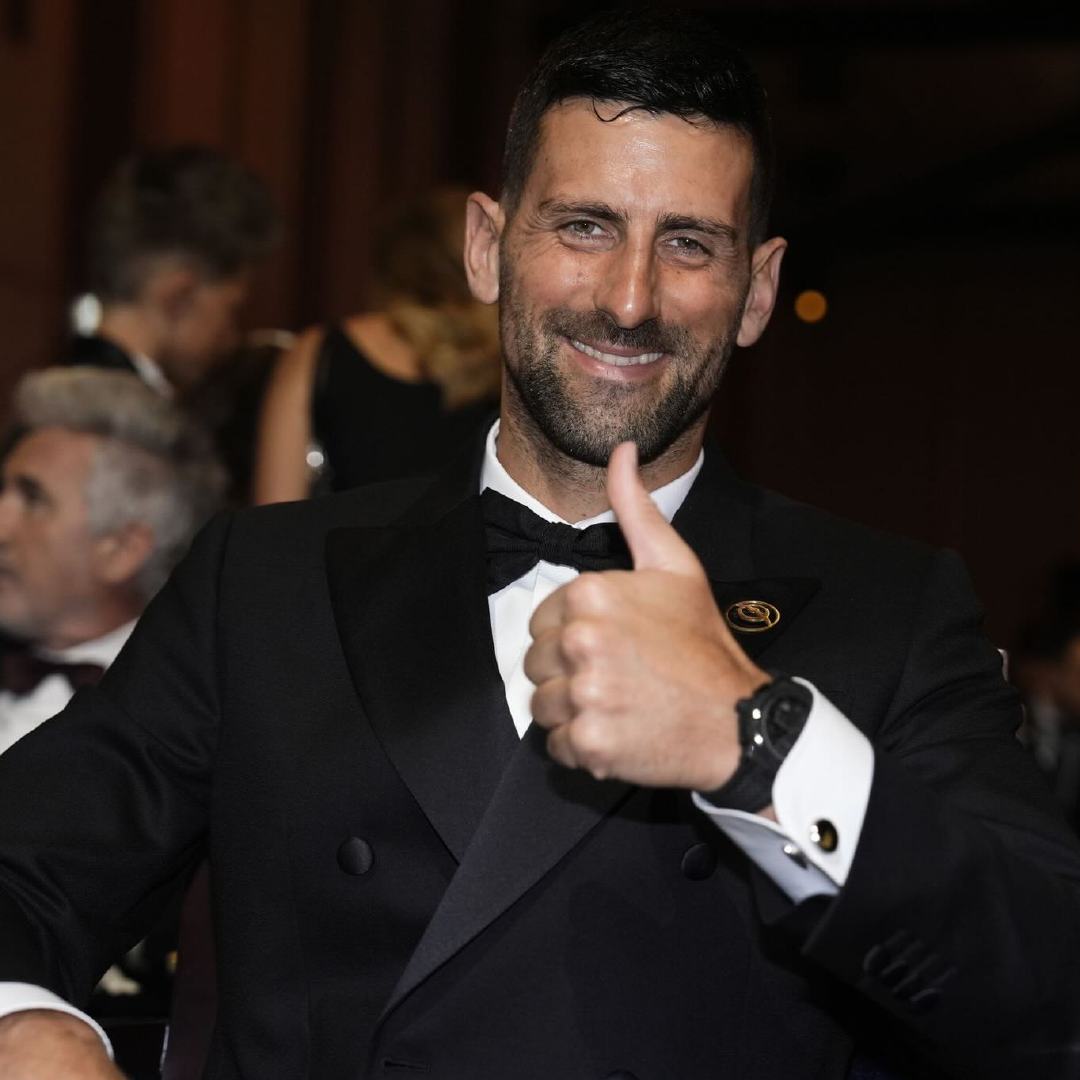
This is the true global significance and the most precious gift sports can offer beyond winning and losing: an eternal story of transcendence and a conviction—that excellence knows no boundaries, regardless of the field.(Source: Tennis Home Author: Mei)

 Links
Links
 Contact
Address:UNIT 1804 SOUTH BANK TOWER, 55 UPPER GROUND,LONDON ENGLAND SE1 9E
Number:+85259695367
E-mali:[email protected]
 App
App


