



ATP’s financial struggles revealed: Player earnings suffer a shocking decline in 2025



Despite the impact of the COVID-19 pandemic in 2020, ATP prize money had been steadily increasing since 2019. However, beneath the surface, the trend is shifting. The antitrust lawsuit filed by the PTPA aims to reshape how players are compensated and how earnings are distributed, reflecting growing concerns that recent prize money increases no longer carry the same weight, making current growth less significant than before.
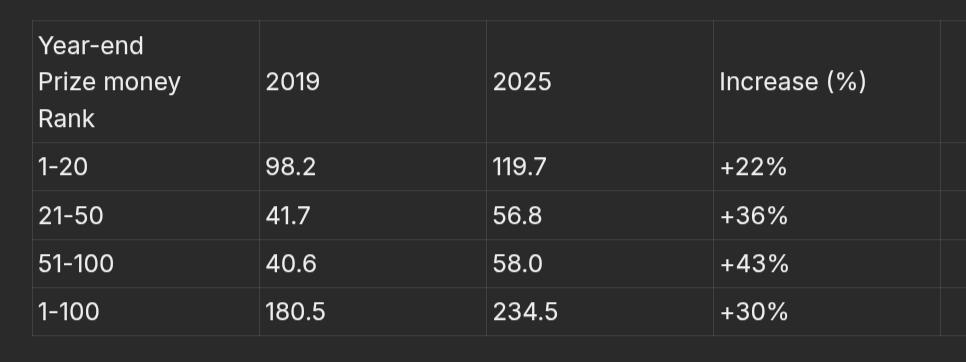
Over the past six years, prize money for the top 20 ATP players has only risen by 22%. Yet, from November 2019 to November 2025, the US inflation rate reached 26%. This means the actual income of the world’s top players has effectively decreased compared to 2019.
The situation is different for lower-ranked players. Those ranked 21 to 50 saw their earnings increase by 36%, while players ranked 51 to 100 experienced a 43% rise. These groups have outpaced inflation, earning more in 2025 than they did six years ago.

Concerns about this imbalance have existed for years and peaked with the PTPA’s antitrust lawsuit. The PTPA argues that the current system unfairly restricts how and how much players can earn.
In the lawsuit, the PTPA highlights that major tours and Grand Slam events limit other tournaments from increasing prize money. It also emphasizes that compared to other top sports, tennis players receive a significantly smaller share of revenue.
In sports like golf, the NBA, and the NFL, athletes can earn up to 50% of total revenue. In contrast, tennis players typically receive only about 15% from Grand Slam events, a discrepancy at the heart of the debate.
Tournament organizers respond that they adjust prize money annually according to inflation. The US Open is often cited as an example, offering a record $90 million in total prize money this year, a 20% increase from 2024. “If the tour can raise by 22%, why can’t the Grand Slams?” asked US Open women’s doubles champion Dabrowski.
However, despite the prize money increases, top players still struggle to reach previous earning levels. Even Alcaraz has not matched the peak prize money top players achieved in 2015.
Prize money has become a major topic this year. The top 20 men’s and women’s players jointly signed an open letter demanding higher revenue shares from the Australian Open, French Open, Wimbledon, and US Open. With the US Open raising prize money this season, the issue has gained renewed momentum. Djokovic also commented on the prize increases, calling it “a step in the right direction.” He welcomes the Grand Slams’ willingness to raise overall player earnings but clearly states it still falls short of players’ expectations.
“It’s obviously positive to see the Grand Slams willing to increase player prize money overall,” Djokovic said. “But is this the ideal situation? I don’t think so, there’s still a lot of room for improvement.”
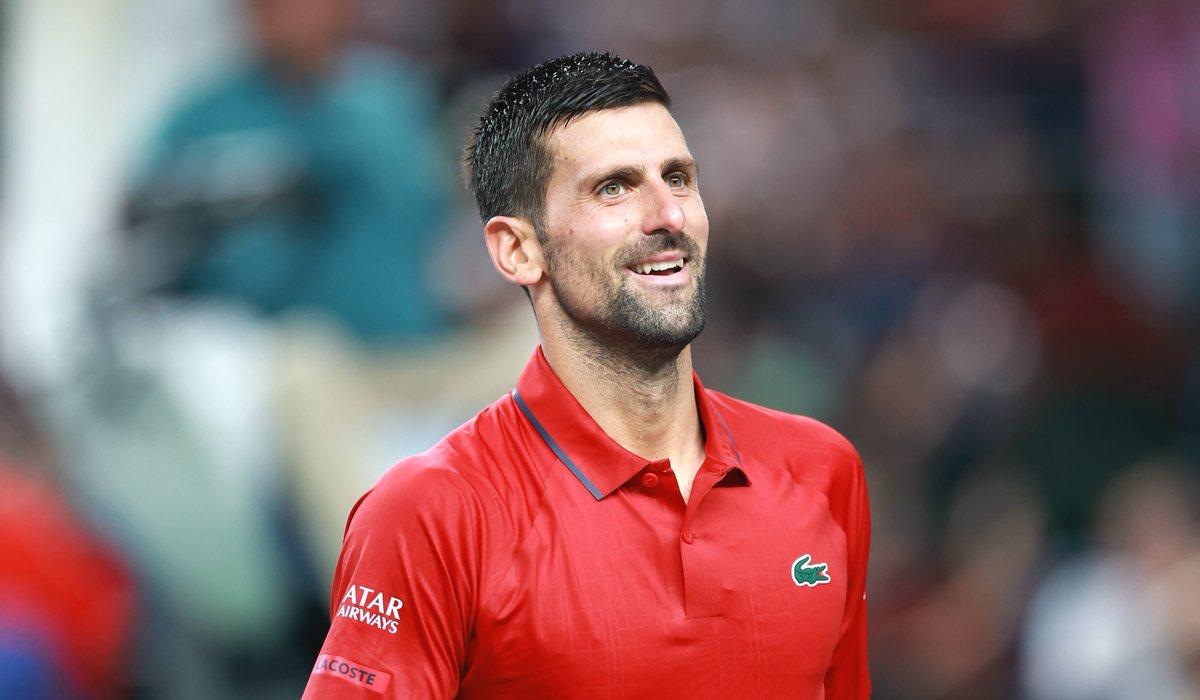
Djokovic clarified that this is not about personal gain, noting many lower-ranked players heavily depend on Grand Slam prize money to survive. “When I’ve spoken about this before, people often say, ‘Look, he just wants more money for himself.’ That’s not the case.”
“I’m talking about the bigger picture. Globally, not many tennis players can make a living from the sport, and this issue is not discussed nearly enough,” Djokovic stated.
As the prize money debate heats up again, the focus turns to the future: will tennis governing bodies further increase tournament prize money next year to keep pace with inflation?(Source: Tennis Home, Author: Spark)

 Links
Links
 Contact
Address:UNIT 1804 SOUTH BANK TOWER, 55 UPPER GROUND,LONDON ENGLAND SE1 9E
Number:+85259695367
E-mali:[email protected]
 App
App


