



The reason behind the split between Alcaraz and Ferrero, the coach who first guided him


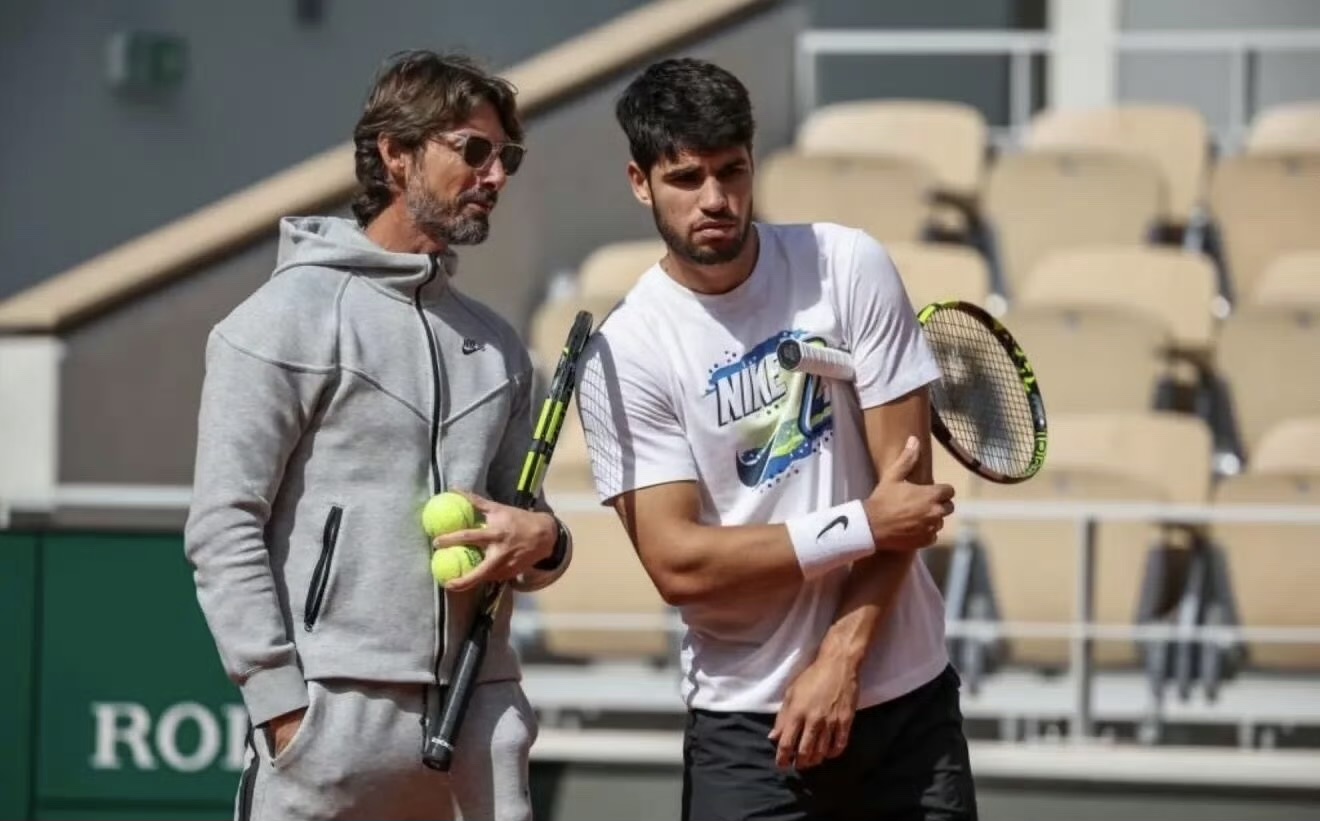
Recently, tennis superstar Alcaraz announced the end of his seven-year partnership with his veteran coach Ferrero, sending shockwaves through the tennis world. Fans and observers have been speculating about the reasons behind their separation. The public focus quickly shifted from a simple coach-player split to a more complex behind-the-scenes narrative. According to Spain’s Marca, Alcaraz’s first coach, now a commentator at Eurosport, Santos, sharply pointed out the likely core conflict: “Ferrero and I faced the same situation, which involved Alcaraz’s father.”
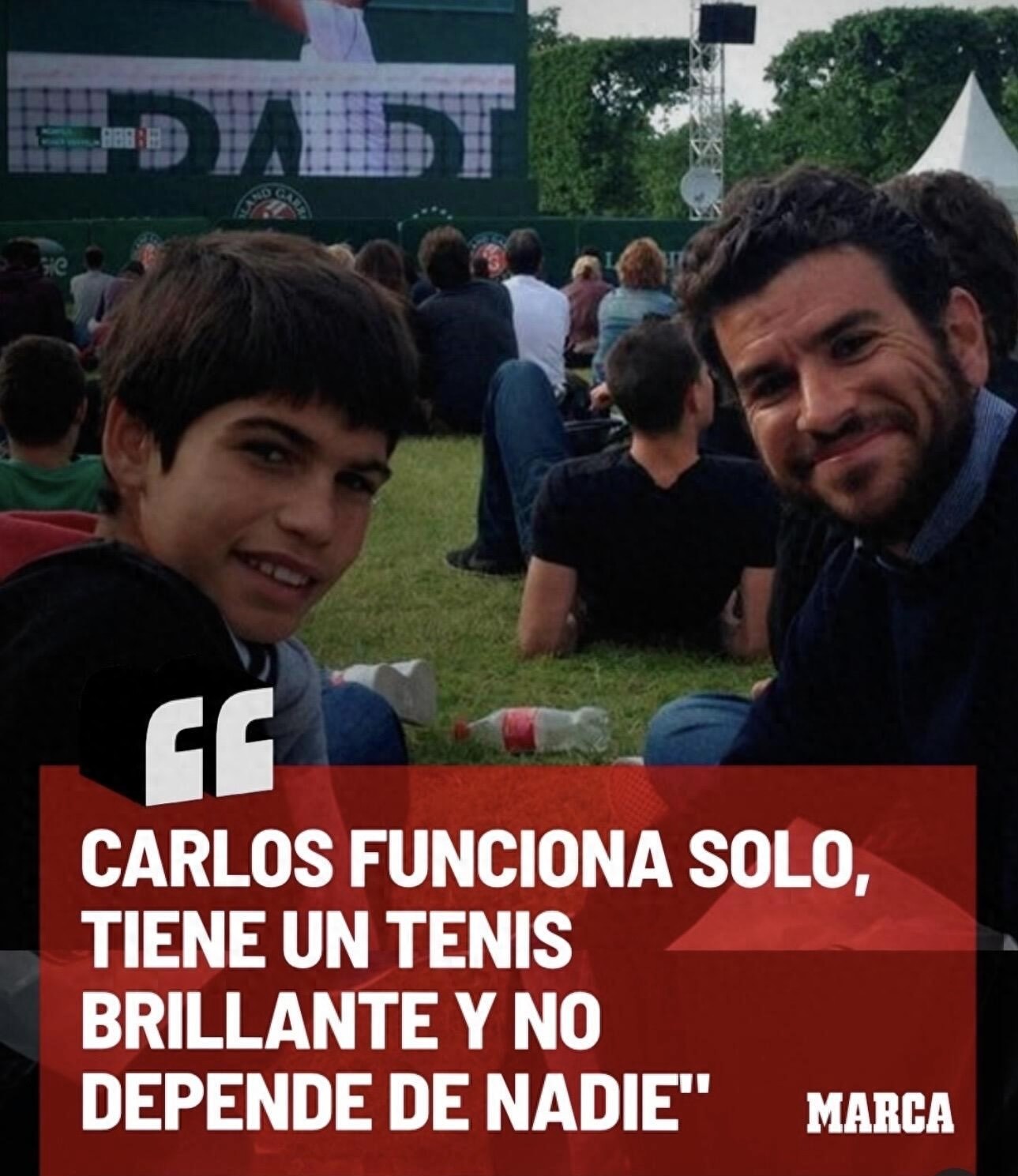
This understated remark lifted a corner of the glamorous veil covering professional tennis: the journey of a prodigious young talent is not only about skill and hard work but also intertwined with family support, control, and the inevitable frictions arising during professionalization.
Santos’s frankness sketches a figure ever-present in Alcaraz’s career—his father. “Juan Carlos (Ferrero) may have made some demands, but the father was unwilling to accept or compromise, just as he did with me,” he emphasized. “The one controlling everything is the father; Alcaraz himself is not involved.”
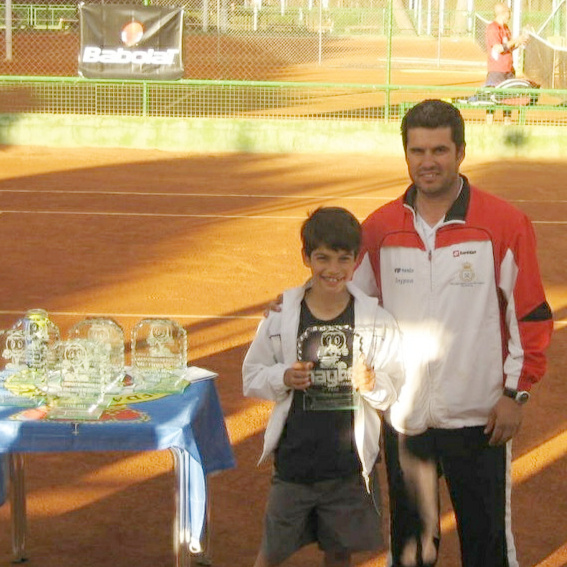
This description places Alcaraz within a typical, yet particularly prominent, family power structure seen in elite sports. From the moment Alcaraz began playing tennis as a child, his father was deeply involved, fully supporting his son’s tennis dreams. This close, all-out family backing was the foundation that allowed Alcaraz to rise to the top of the world despite not having unlimited resources. His father’s protection, decision-making, and resource coordination shielded young Alcaraz from external distractions, enabling him to focus on the court.

However, when protection gradually turns into control, and the demands of professionalism clash with family operation styles, conflicts quietly emerge. The detail Santos revealed—“The next coach must be someone willing to live in Murcia and create every convenience for him”—acts like a key, exposing an underlying entry rule: new team members might first need to integrate into and comply with this family-centered, father-led system rather than being chosen purely on professional grounds.

For a distinguished coach like Ferrero, this undoubtedly could become a constraint. He has his own professional philosophy, training methods, and team requirements. When professional authority meets the family’s final decision-making power and the two cannot reconcile, parting ways becomes the most likely outcome. This is not a simple matter of right or wrong but a classic dilemma in professional sports about how to define boundaries between personal career and family influence.
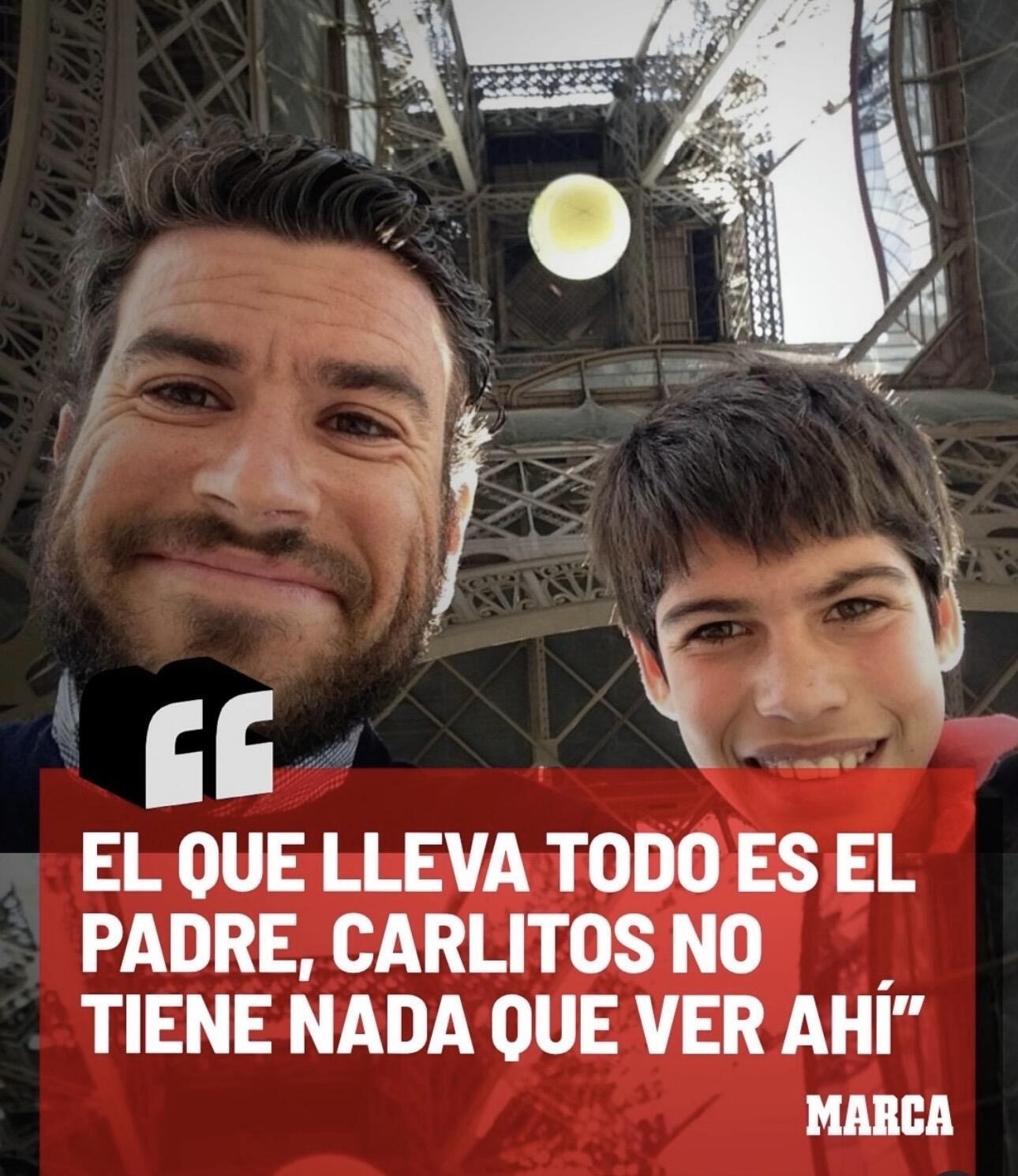
Santos shifted his tone and left a meaningful closing remark: “Carlos can manage on his own; he has outstanding tennis talent and doesn’t rely on anyone!” This confident statement highlights the delicate crossroads Alcaraz currently faces.
On one hand, Alcaraz has indeed proven himself as a once-in-a-century talent through his achievements. His passionate, all-around playing style, clutch mentality in critical moments, and a series of remarkable accomplishments by age 22 all demonstrate his extraordinary ability as an independent competitor. He is no longer the boy who needs full protection but a champion with his own ideas, ready to be tested and grow in a broader arena.
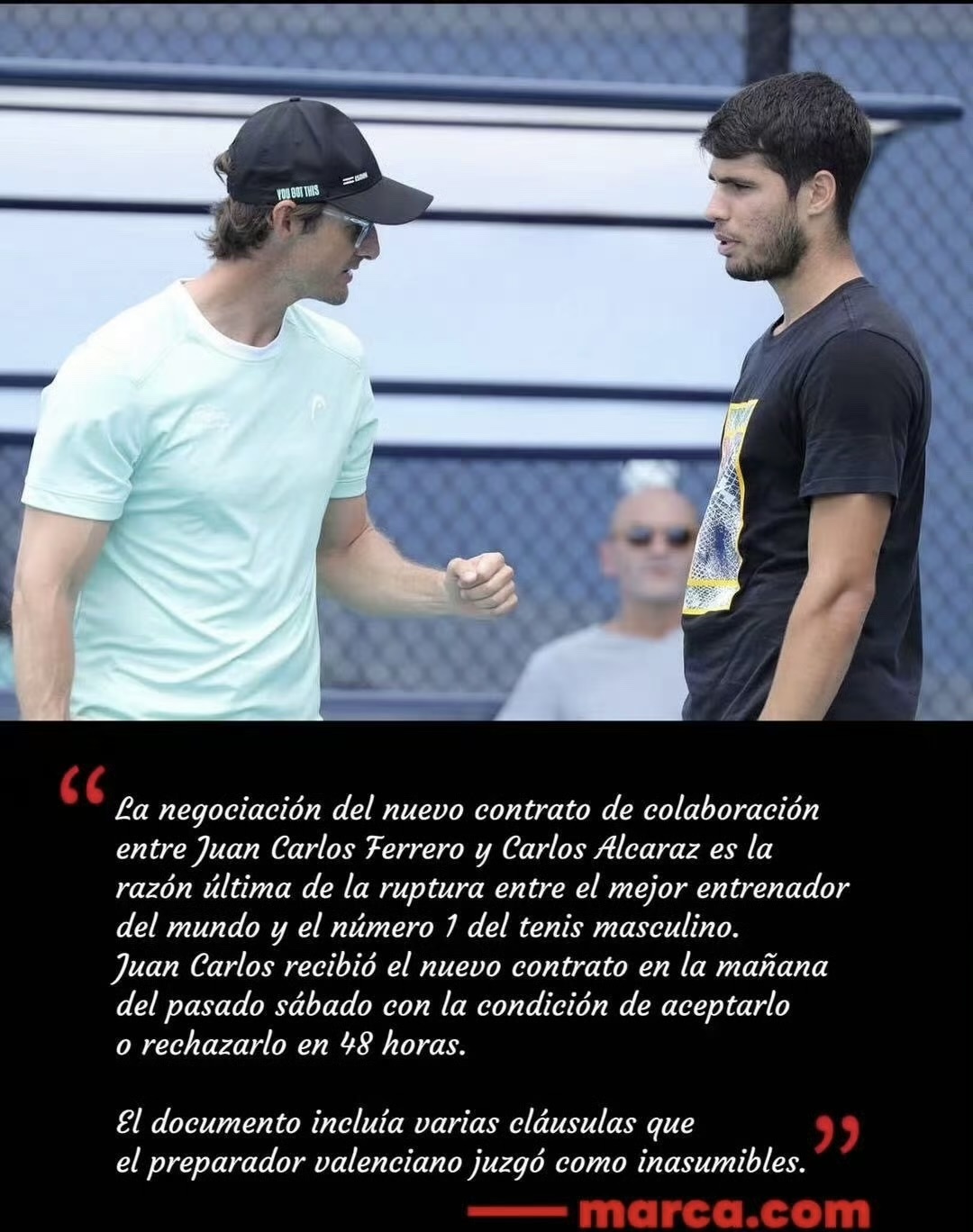
On the other hand, having long been embedded in a close family support system, achieving true independence in mindset and decision-making is perhaps a more complex challenge than winning a Grand Slam. He must learn how to collaborate with professionals from diverse backgrounds and philosophies, actively participate in major career decisions, and find a new balance between family care and professional autonomy. The split with Ferrero may well be an external sign of this growing pain.
The separation between Alcaraz and Ferrero is far from an ordinary coaching change. It acts like a mirror reflecting the deep challenges faced by contemporary top athletes, especially young prodigies, in managing their careers:
1. Transition of power structures: How can the athlete’s core team smoothly shift from being entirely family-centered to a more professional, specialized setup with clear divisions of authority and decision-making?
2. Rebuilding trust: How to establish trust with external top professionals based purely on business competence without negating the family’s significant contributions?
3. Realigning goals: When athletes enter new development phases (such as consolidating status, extending peak performance, or dealing with injuries), how can family objectives and professional team goals effectively coordinate?

For Alcaraz, the process of finding his next coach will not only address gaps in his tennis skills but also represent a crucial definition of his future team management model. Will the new cooperation fully comply with the existing family framework or create a more open, inclusive new structure?
Santos’s phrase “Carlos can manage on his own” is both a high praise of Alcaraz’s talent and resilience and a gentle reminder: it is time for him to take more control as the main subject, steering the ship that was once fully helmed by family but now sails into deep, challenging waters.

Alcaraz’s tennis talent is undeniable, and his ability to conquer the court has already been witnessed worldwide. Now, this off-court contest about growth, independence, and team building may equally define the height and breadth of his future. The fatherly support lifted him halfway up the mountain, but the final stretch to legendary status requires him to measure the path with his own steps and dance gracefully with the wider world.(Source: Tennis Home, Author: Mei)

 Links
Links
 Contact
Address:UNIT 1804 SOUTH BANK TOWER, 55 UPPER GROUND,LONDON ENGLAND SE1 9E
Number:+85259695367
E-mali:[email protected]
 App
App


