



Potapova becomes Austria's top female player after nationality switch; why are so many Russian stars leaving?



With the 2026 season on the horizon, yet another player born in Russia has opted to switch nationalities. Potapova, ranked 51st worldwide, declared this week that after her citizenship was recently granted, she will represent Austria in competition.
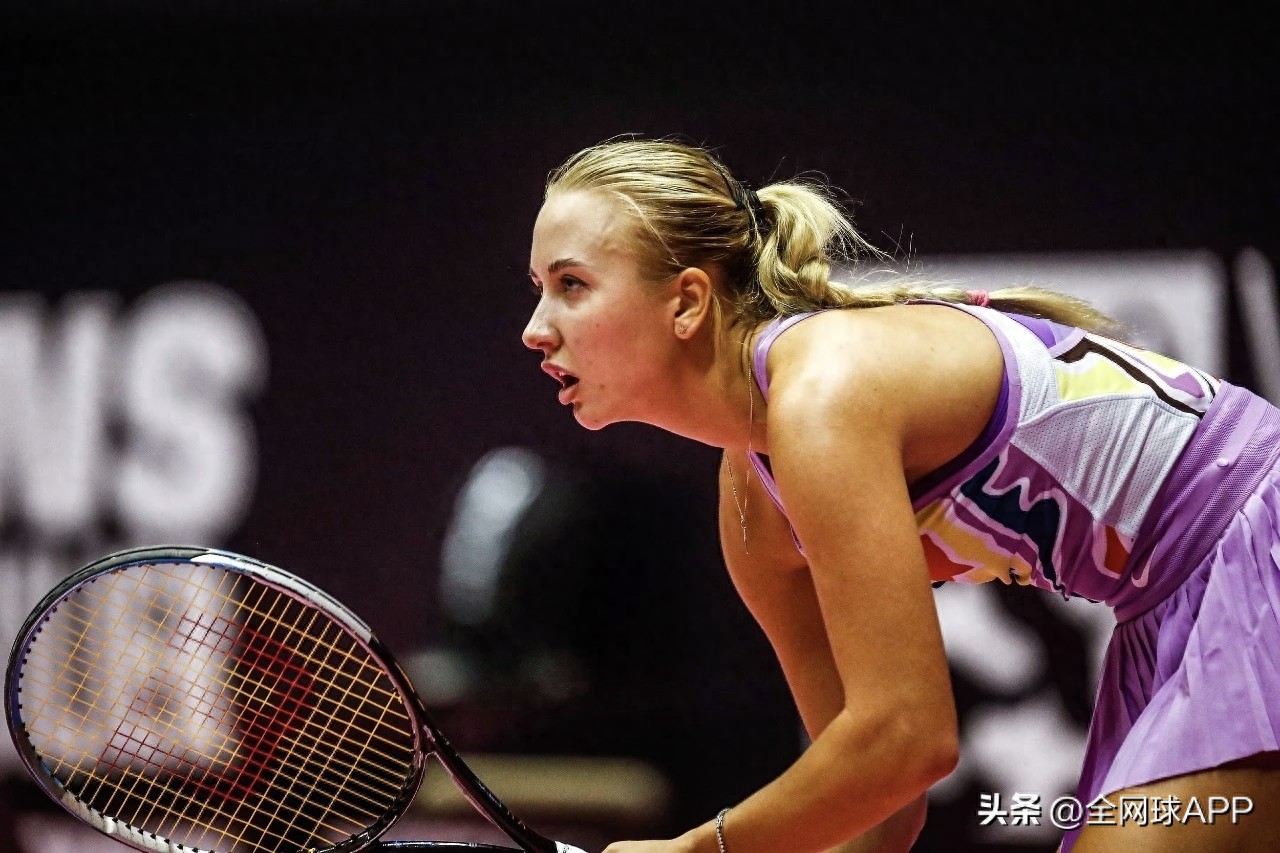
Potapova
Photo: Visual China
"I am very happy to share this news with you all. My permanent residency application has been approved by the Austrian government. Austria is a country I love deeply; the people here are incredibly warm and welcoming, making me feel right at home. I really enjoy Vienna and look forward to it becoming my second home. I proudly announce that starting in 2026, I will begin my professional tennis career representing my new homeland, Austria," Potapova stated on her personal social media.
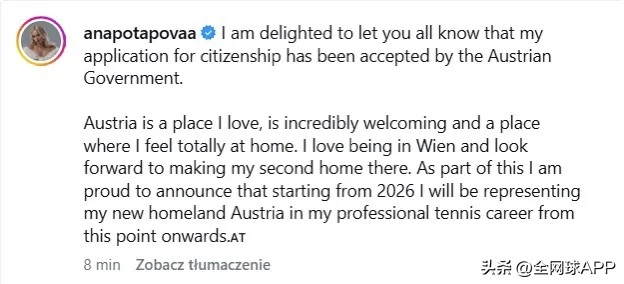
Potapova issues statement on nationality change
Once the nationality change officially takes effect, she will become the highest-ranked female tennis player representing Austria. Currently, the second highest-ranked Austrian player is Grabher, who stands at 94th. Austria holds fond memories in Potapova’s career—two years ago, she won her second WTA singles title in Linz on Austrian soil.
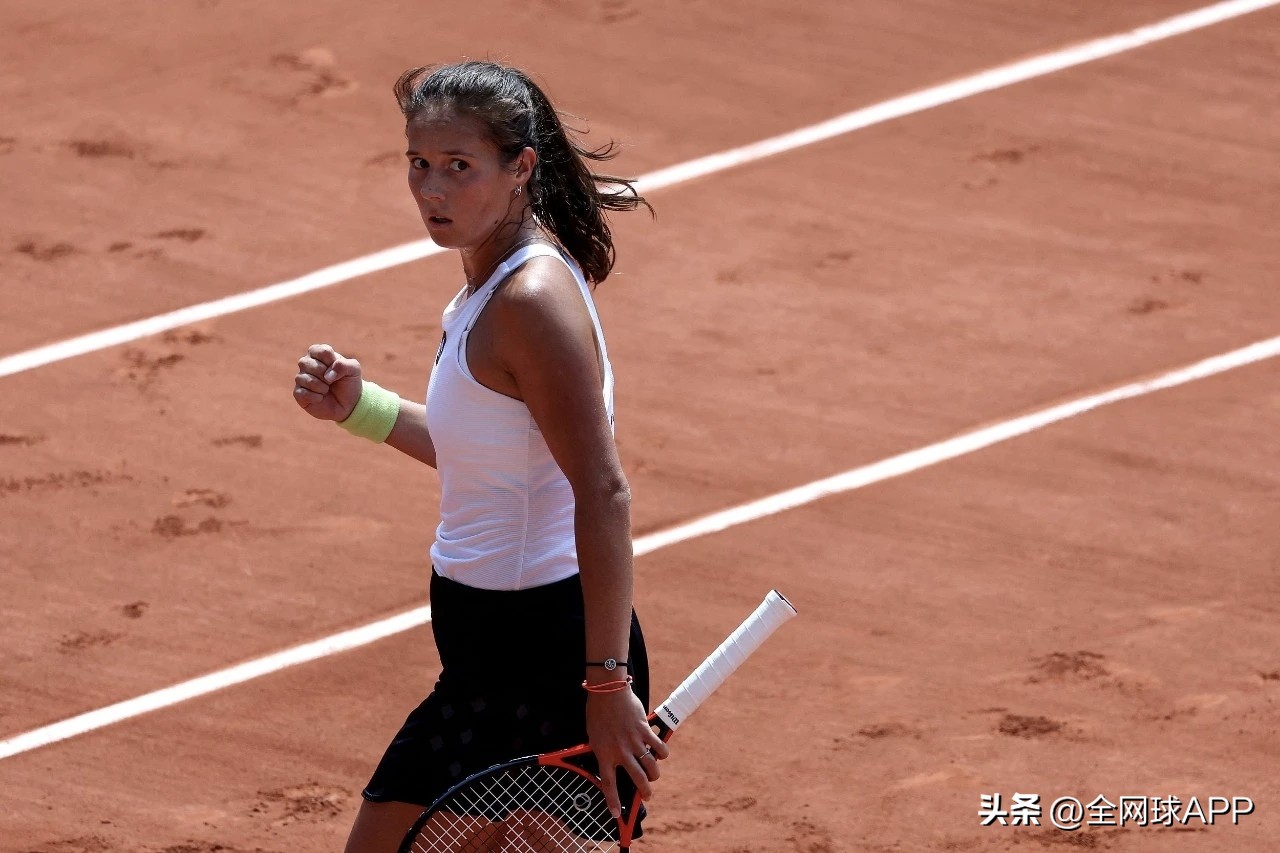
Kasatkina
Photo: Visual China
Over the past three years, Russian and Belarusian tennis players have competed under a neutral flag, with no national emblem displayed next to their names. Potapova is not the only Russian player to change nationality; the most notable case before was Kasatkina, who announced in March this year that she had obtained permanent residency in Australia. Additionally, Avanesyan, who upset Zheng Qinwen in the third round of last year’s French Open, switched to represent Armenia last year; Grachova has represented France since 2023; in November this year, 22-year-old rising star Timofeeva, who reached the Australian Open round of 16, declared she would play for Uzbekistan; and Rashimova, ranked 112th globally, also announced this month she will represent Uzbekistan.
Shamil Tarpishchev, chairman of the Russian Tennis Federation (RTF), commented: “Regarding Potapova, this was not entirely unexpected for us, but still somewhat surprising. She has lived in Austria for two years, and I can only guess she made this decision hoping to participate in the Olympics. Based on rankings, she does not qualify for our national team. She has been complaining about visa issues, which disrupted her rhythm—it was really just everyday matters.”
The RTF vice chairman and former world number one, Fernikov, expressed even stronger dissatisfaction, saying: “Should I cry? Is she a great athlete? Has she ever made any significant contributions to Russia throughout her life? You can’t convince me, and I can’t convince myself, so maybe it’s for the best that she left.”
Furthermore, Tarpishchev pointed out the underlying reasons behind players switching nationalities: “Athletes cannot change their homeland; they only change the country they represent because everyone wants to keep competing. Why are these nationality changes happening at this particular time? It’s because countries are assembling their Olympic teams, often recruiting players from our talent pool and paying large sums for them. Meanwhile, players consider how to improve their performance and achieve better results. These combined factors drive athletes to change nationalities, but they cannot alter their true homeland.”

 Links
Links
 Contact
Address:UNIT 1804 SOUTH BANK TOWER, 55 UPPER GROUND,LONDON ENGLAND SE1 9E
Number:+85259695367
E-mali:[email protected]
 App
App


