



An Analysis of Federer’s Technical System from Kyrgios’s Perspective



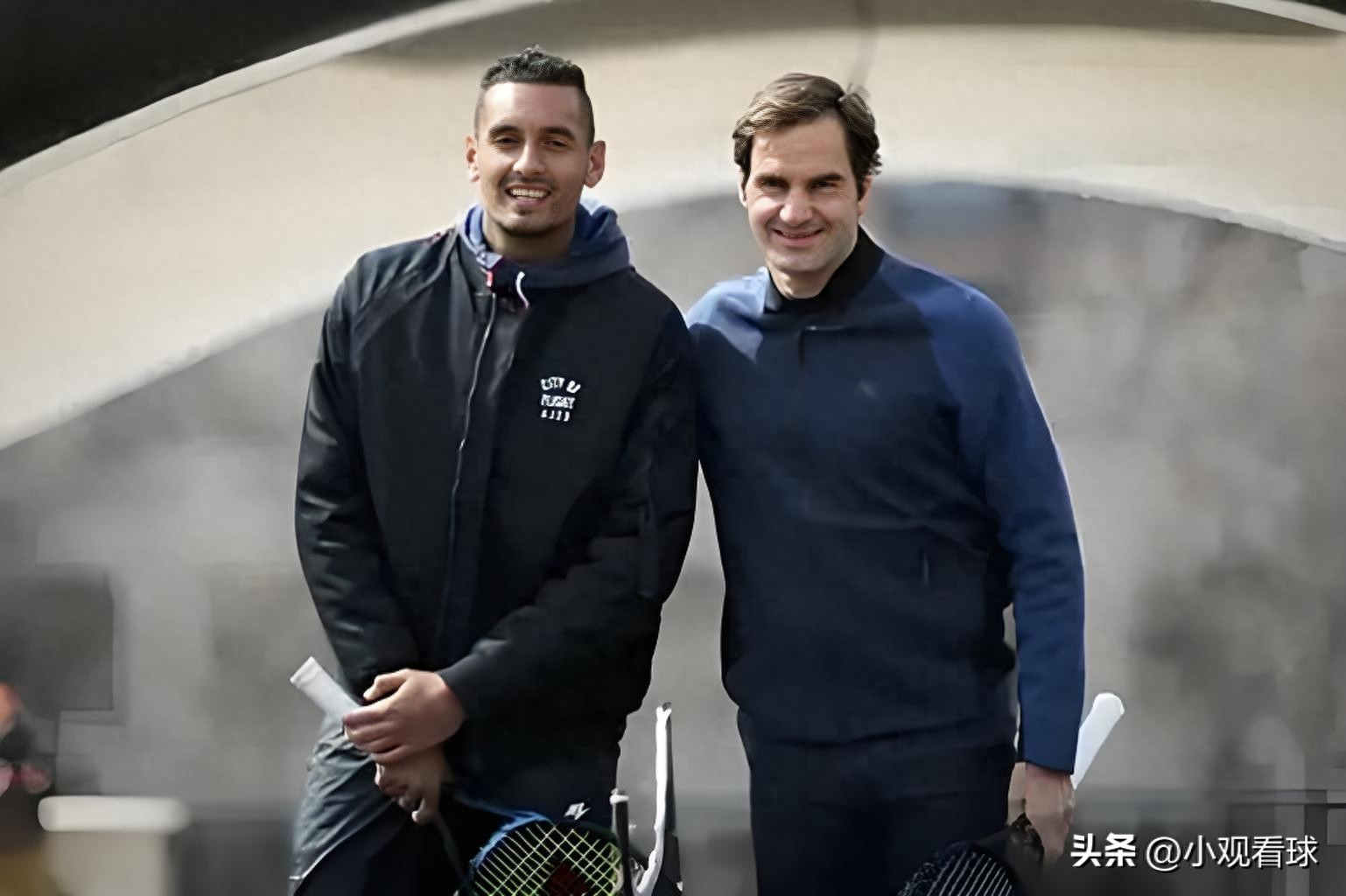
Throughout tennis history, Roger Federer is among the most impactful and entertaining players, with a style that shaped an era and became a model for those who followed. Nick Kyrgios, representing the younger generation, provided an insightful breakdown of Federer’s technical features from an insider’s viewpoint, focusing on timing, spatial compression, net aggression, creativity, and psychological composure. This article systematically reviews Kyrgios’s observations with detailed technical data and expert opinions to deeply explore the uniqueness and excellence of Federer’s technical system.
Kyrgios’s Overall Assessment of Federer’s Technical Traits
1. Kyrgios’s Perspective of Reverence
Kyrgios holds Federer in high esteem, admitting on Australia’s Channel Nine commentary: "It’s so frustrating. He instantly sends the pressure back to you, making the court feel like it shrinks, leaving you unable to perform normally." He noted that Federer "never panics, even when double-faulting, remaining calm," and this mental steadiness imposes immense invisible pressure on opponents.
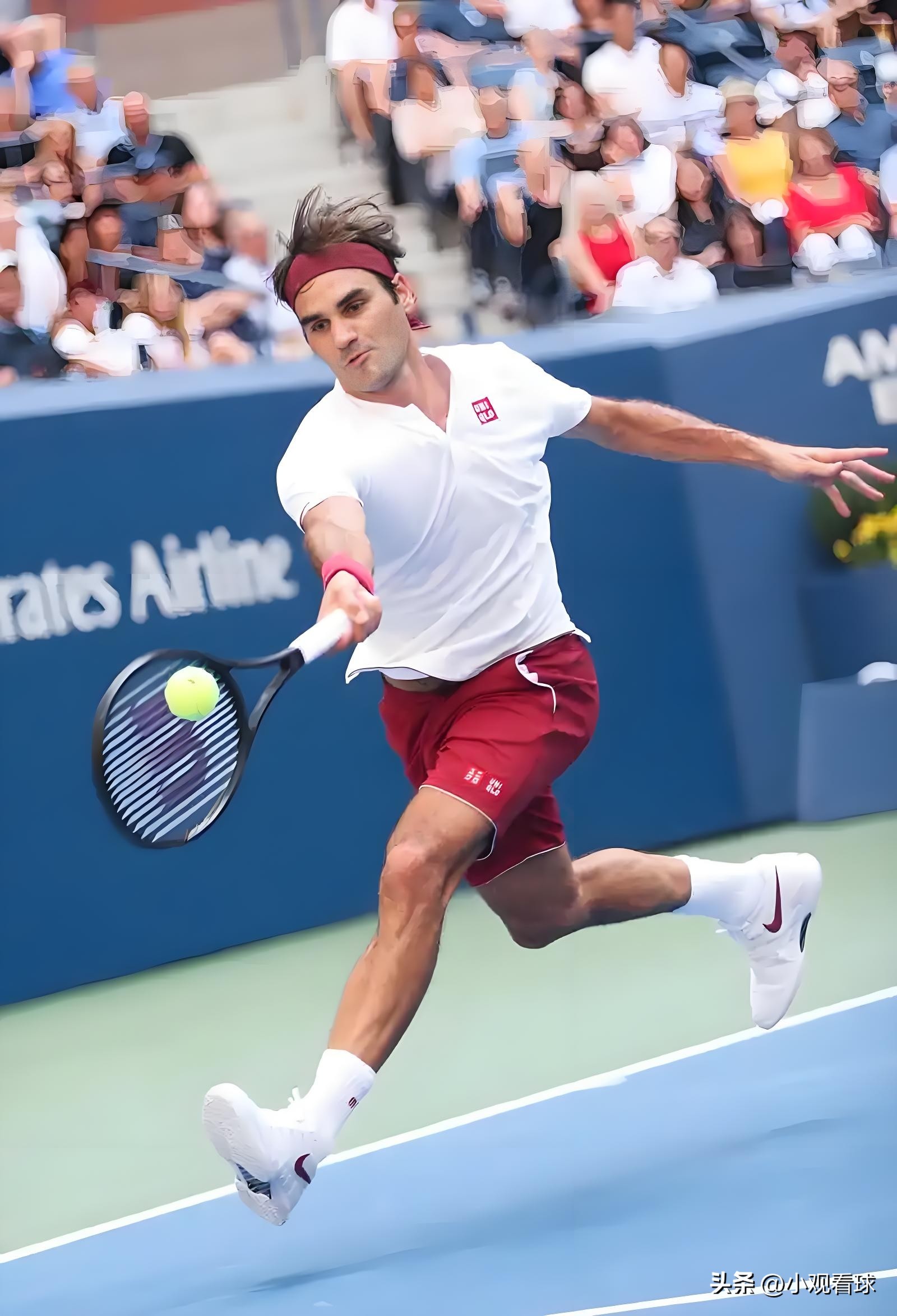
Kyrgios praised Federer’s technical creativity: "He is incredibly inventive, doesn’t need to rely on conventional volleys, and can execute swinging volleys — truly gifted." He also emphasized Federer’s "fearsome timing," stating "he can handle almost every shot with a half-volley." Having trained with Federer for a week, Kyrgios revealed that Federer personally designed drills to refine slice shots and other skills, showing that the legend is not only naturally talented but also extremely hardworking: "I thought he had nothing left to improve, yet he keeps advancing."
2. The Status of Federer’s Technique
In Kyrgios’s eyes, Federer is "the greatest player of all time," and "when facing him, you get very few chances, and once you have one, you must seize it firmly." He particularly lauded Federer’s net play: "He always positions himself inside the baseline ready to press forward, as precise as a surgeon. The scary part is the unpredictability — you think you’ve read the shot, but it turns out completely different." This uncertainty is the core charm of Federer’s technique.
Kyrgios’s Analysis of Five Core Technical Dimensions
1. Timing: Terrifyingly Precise
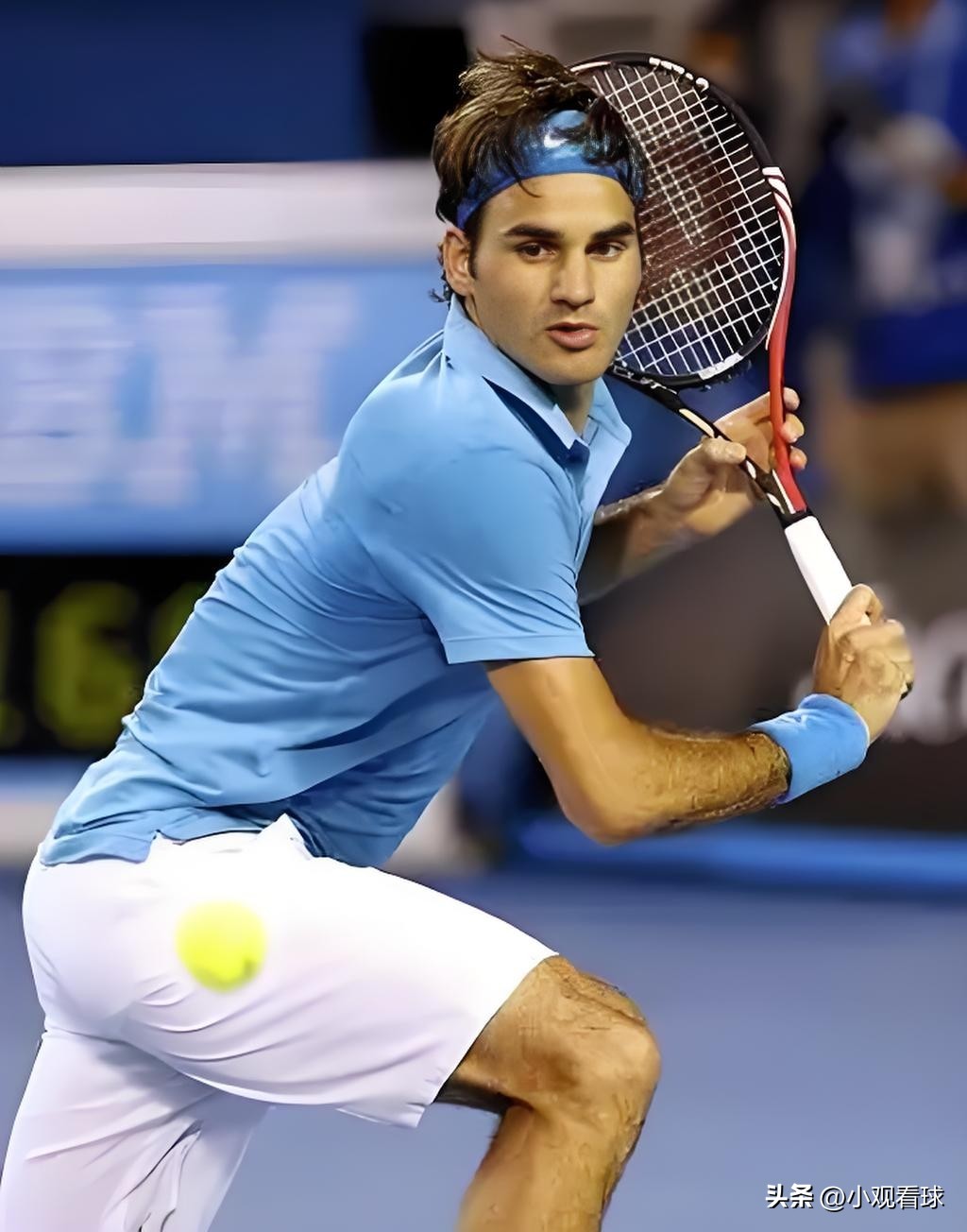
Kyrgios described Federer’s timing as "frighteningly excellent," first demonstrated by his use of half-volleys — hitting the ball just after it bounces, leaving opponents no time to react, requiring superb anticipation and quick reflexes. Additionally, Federer accurately judges the optimal hitting moment based on ball speed, spin, and placement, making his shot patterns unpredictable. On returns, he positions himself forward "always ready to press," contacting the ball earlier and maintaining agile footwork, further increasing pressure on opponents.

2. Court Compression: The Magic of Making the Court “Smaller”
Federer achieves the effect of "shrinking the court" through three key abilities: first, standing inside the baseline early to hit quickly and reduce opponents’ reaction time; second, moving with footwork like "a motor," swiftly reaching ideal hitting spots while staying balanced; third, using diverse shot trajectories — including conventional straight, cross-court, and unconventional angles — to comprehensively limit opponents’ movement, compressing both technical space and applying psychological pressure.
3. Net Pressure: Surgical Precision at the Forecourt
Kyrgios likens Federer’s net skills to "surgery," centered on an aggressive forward approach — after baseline shots, he actively moves in to finish points with volleys; his volleying is creative, skillfully using swinging volleys and other unconventional techniques that keep opponents guessing. His serve strongly supports this net strategy with precise placement and varied rhythm, effectively setting up the "serve plus one" net approach to form a complete pressure system.
4. Creativity: Fully Unleashed Technical Imagination
Creativity is a hallmark of Federer’s game, capable of shots like between-the-legs hits and ultra-low passing shots around the net post, showing great technical diversity: "He can produce backhand slices, backhand topspins, and forehands that are either traditional topspin or lightning-fast flat drives." This creativity extends beyond technique into tactical thinking, allowing flexible adjustments according to match situations and opponents’ traits, with exceptional intelligence in transitions between offense and defense.
5. Mental Stability: Unshaken in the Face of Pressure
Federer’s mental composure is viewed by Kyrgios as a key weapon — "remaining calm even after mistakes" helps induce doubt in opponents. Although Kyrgios mentioned Federer "gets tired under intense pressure," his performance at critical moments remains steady, and his on-court grace forms a unique psychological tactic that continuously burdens opponents with pressure, leading to their errors.
Technical Data Confirming Kyrgios’s Observations
1. Career Technical Statistics
According to ATP official data, Federer’s career record stands at 1251 wins and 275 losses (82.0% win rate), with Grand Slam results of 369 wins and 60 losses (86.0% win rate). His serving stats are outstanding: first serve success rate at 62%, first serve points won 77%, second serve points won 57%, service games won 89%, overall service points won 70%, and a total of 11,478 aces. His return game is also strong, with 32% points won on opponents’ first serves, 51% on second serves, and a break point conversion rate of 41%, demonstrating his all-around technical prowess.
2. Head-to-Head Records and Key Match Data
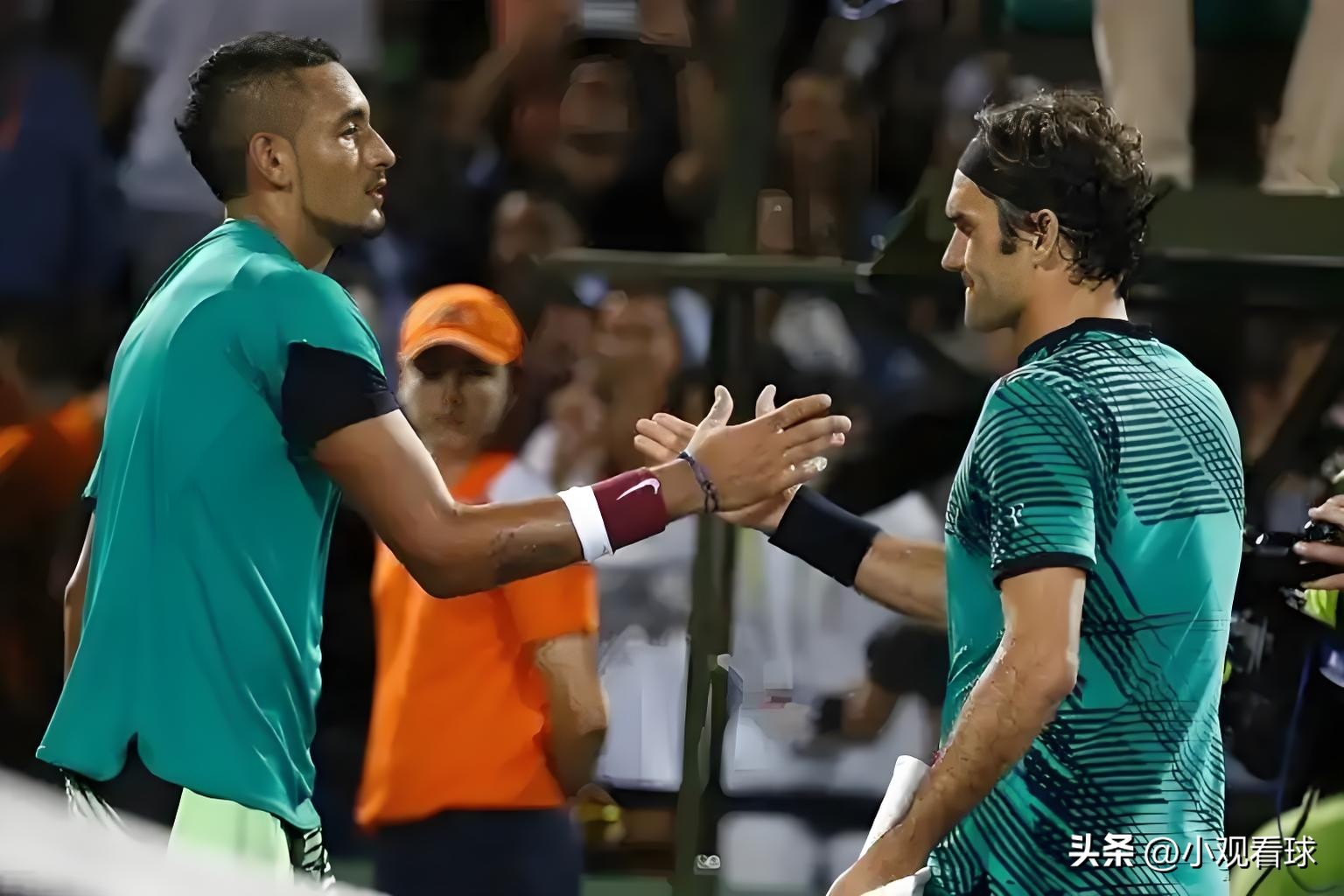
Federer holds a 6-1 match record against Kyrgios, winning 14 sets and 134 games compared to Kyrgios’s 6 sets and 109 games. Technical stats reveal that although Kyrgios slightly leads in aces (86 to 63) and first serve success rate (64% to 62%), Federer significantly outperforms in first serve points won (83% to 75%), highlighting the importance of his serve in supporting subsequent tactics.
2017 Miami Masters SemifinalFederer narrowly defeated Kyrgios 7-6(9), 6-7(9), 7-6(5), with an 85% first serve points won rate being key to victory and 52 winners showcasing his comprehensive skills. In the 2018 Wimbledon match against Raonic, Federer had a 70% first serve success rate and 93% points won on first serve, winning 35 consecutive service points and hitting 16 aces, confirming his net pressure. 2018 Australian Open data shows over 70% of Federer’s shots were completed within 0-4 strokes, validating the efficiency of his half-volley technique.
Cross-Verification from Expert Perspectives
1. Coaches and Players’ Evaluations
Patrick Mouratoglou, Serena Williams’s coach, stated: "Federer’s tennis is flawless and unmatched; behind his seemingly effortless style lies extreme hard work," aligning with Kyrgios’s observations on training attitude. Former Serbian player Janko Tipsarevic noted Federer has "the most tactical variations and clearest awareness," while current world No.1 Iga Swiatek admires his "fluidity" in technique, all echoing Kyrgios’s analysis.
2. Technical Analysts’ Opinions
Analysts highlight Federer’s forehand "God’s hand" with racket head speed reaching 130 km/h, ball speed up to 180 km/h, and topspin rotation around 4500 RPM, with spin variety that challenges opponents. His net volleys rely on "exceptional hand-eye coordination and anticipatory skills," enabling "complete control at will," confirming Kyrgios’s "surgeon" metaphor.
Historical Positioning and Impact of Federer’s Technical System
1. Technical Innovation and Evolution
Federer’s "SABR" (Sneak Attack By Roger) tactic revolutionized traditional return patterns, turning defense into offense. His forehand combines speed, spin, and placement, with one in six forehands resulting in a direct point. His service game wins 88.81% of service games, second only to three big-serving players. After a knee injury in 2016, he introduced a "2.0 version" of his technical system, optimizing backhand, serve, and return, simplifying tactics and adjusting mindset from "chasing titles" to "enjoying matches," maintaining peak competitive form.
2. Profound Influence and Lessons
Federer’s techniques are widely emulated, with the SABR tactic becoming an essential part of modern tennis. His elegant style enhances the sport’s appeal and commercial value. His success delivers three key lessons: technical innovation is the core competitive edge, adaptability is crucial to overcoming barriers, and mental stability combined with continuous improvement sustains long-term peak performance.
Impact on Contemporary Players:
Technical Emulation: Many young players study Federer’s strokes, especially his forehand and net volley techniques.
Tactical Adoption: Federer’s SABR tactic is increasingly used, becoming a vital part of modern tennis.
Mental Influence: Federer’s grace and composure on court inspire many players to emulate his demeanor.
[Summary]
Kyrgios’s observations accurately capture the essence of Federer’s technique, with the five core dimensions aligning perfectly with technical data and expert opinions. Federer’s technical system combines revolutionary innovation with artistry; innovations like the SABR tactic and half-volley technique have redefined modern tennis standards. The perfect blend of mental and technical skills forms a unique competitive style. As Mouratoglou said: "No one has ever played like Federer, and no one will in the future." Federer’s place in tennis history is unique and irreplaceable.
[Look at me][Look at me][Look at me][Laugh][Laugh][Laugh]
#Is Federer the Greatest in Tennis?##Why Is Federer’s Playing Style So Elegant?##Federer’s Retirement#

 Links
Links
 Contact
Address:UNIT 1804 SOUTH BANK TOWER, 55 UPPER GROUND,LONDON ENGLAND SE1 9E
Number:+85259695367
E-mali:[email protected]
 App
App


