



Doping testers waiting in a player's living room for urine samples: Where is the boundary of athletes' privacy rights?


“A doping tester came to my house at 8:15 PM, stating that the declared time was not valid and that I must be tested right away.” The tennis star Vondrousova’s recent social media post highlighted the friction between professional athletes and anti-doping bodies. She recounted an uncomfortable situation: “Is it usual for anti-doping officials to wait in our living room at night for us to provide a urine sample?”
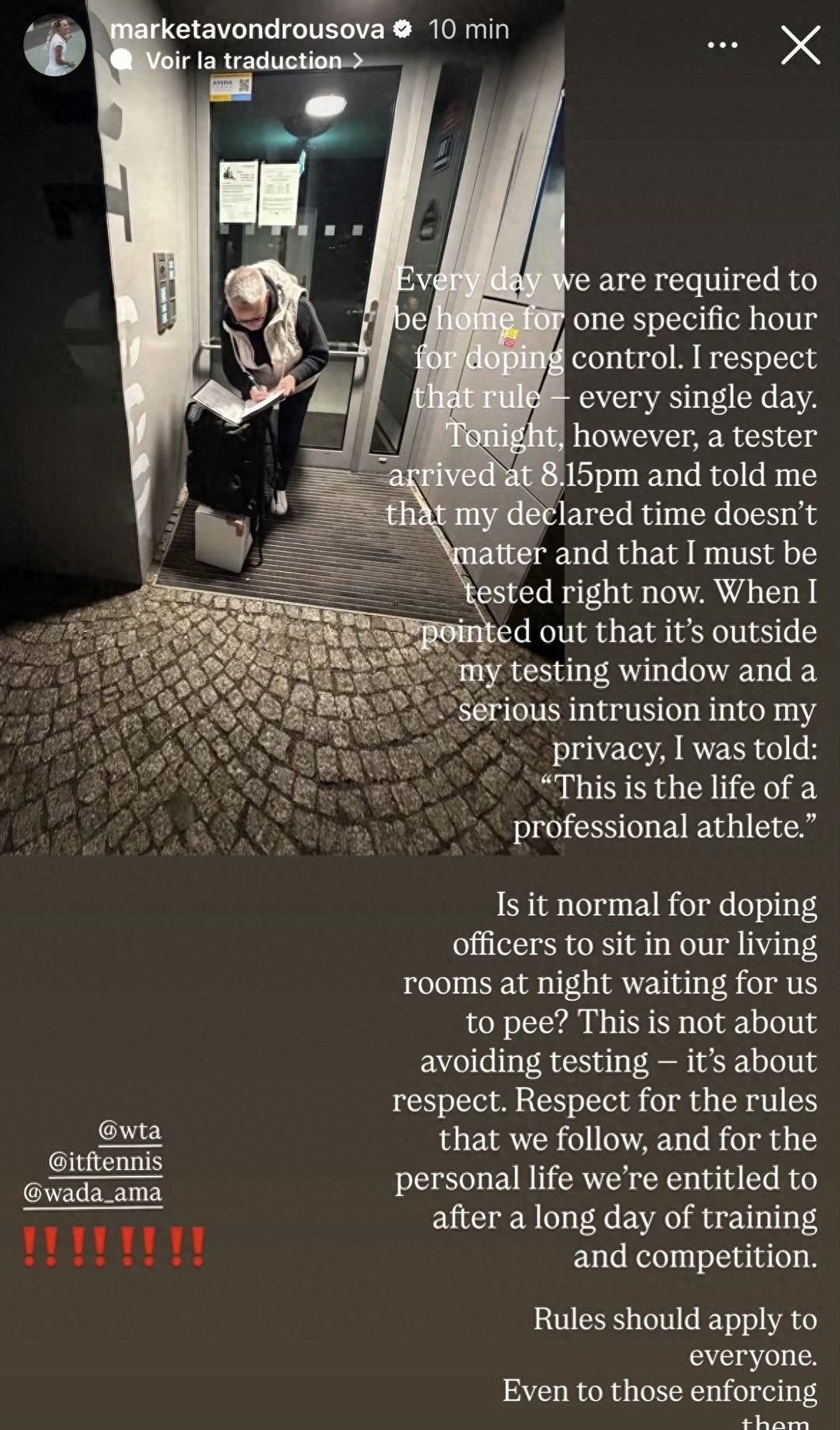
This incident touches on a long-standing dilemma in sports: In the pursuit of “clean sports,” where should the line be drawn regarding athletes' privacy and fundamental dignity?
The rationale for anti-doping testing is obvious. Numerous scandals in sports history—from the Tour de France to the Russian systematic doping case—demonstrate the necessity of strict oversight. The World Anti-Doping Agency (WADA) established the “whereabouts” system requiring athletes to declare a fixed location for one hour each day three months in advance so testers can conduct unannounced checks.

The logic behind this system is that if athletes know when they will be tested, they might avoid using banned substances during those times. Surprise testing fills this regulatory gap, ensuring athletes remain “clean” at all times.

However, the Vondrousova case highlights potential problems in implementing the system. She emphasized that she respected and adhered to the one-hour daily testing window, yet the testers showed up outside that time and demanded immediate testing. This unexpected situation disrupted the athlete’s personal schedule, especially at night after a full day of training and competition, making it feel intrusive.
“This is not about evading tests, but about respect.” Vondrousova’s words echo the feelings of many athletes. Respect must be mutual: athletes respect the rules, and those enforcing them should also respect athletes’ basic rights and dignity.

The privacy rights of professional athletes have always been in a special state. For the sake of fairness in sports, they must undergo more physical checks and location monitoring than ordinary people. But is there a limit to these concessions?
Psychologists point out that being under constant surveillance can negatively affect athletes’ mental health. Home is the last sanctuary of personal privacy, and when testers “sit in the living room waiting for urine,” such invasive scenarios may increase athletes’ anxiety and stress, while mental health is also a crucial part of athletic performance.

Vondrousova’s statement that “rules must apply to everyone, including those who enforce them” is thought-provoking. This is not just about testing times but also concerns the humanity and professionalism in the enforcement process.

Possible improvements include:
1. Clearer enforcement standards: establish more precise testing time rules and procedures for exceptions
2. Enhanced training for testers: ensure personnel maintain professionalism and respect while performing duties
3. Feedback mechanisms: provide athletes with formal channels to report improper testing behavior
4. Technological solutions: explore non-invasive testing methods to reduce awkward situations

Sports are not only about results and records but also about humanistic spirit and moral values. The fight against doping must continue, but the methods of this fight should also align with the respect and fairness that sports advocate.

Vondrousova’s voice may become a catalyst for change. While ensuring the purity of sports, how to protect athletes’ basic dignity and privacy will be a crucial challenge for sports governing bodies. After all, true sportsmanship includes both fair competition and respect for every participant's fundamental rights.(Source: Tennis Home Author: Mei)

 Links
Links
 Contact
Address:UNIT 1804 SOUTH BANK TOWER, 55 UPPER GROUND,LONDON ENGLAND SE1 9E
Number:+85259695367
E-mali:[email protected]
 App
App


