



Watch the most expensive ball, drive the fastest car, and witness the truest World Cup.


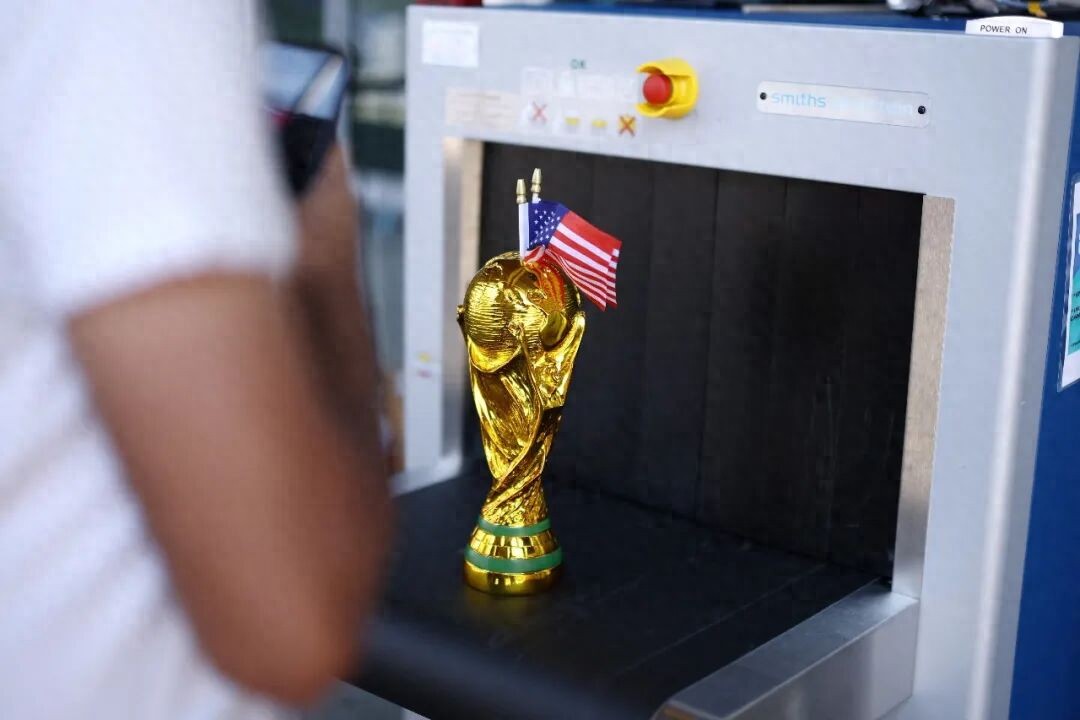
By Rong Zhihui 67,000 spectators sang "Take Me Home, Country Roads" in unison, so loudly that even the "Pacific Northwest Seismic Network" detected the "big commotion" at Seattle's stadium. This was about the U.S. beating Australia 2-0 on June 19.
A few days later, I also arrived on the U.S. West Coast, intending to experience firsthand the Americans' earth-shaking World Cup enthusiasm.
From a Chinese perspective, singing "Take Me Home" during a major tournament seems unlucky—it implies an early exit and heading back home. But then I thought, this is America's home turf; they're already playing at home. Besides, only tourists from afar might care about "good luck," since many places in the U.S. are nerve-wracking and require some fortune.
With a "fortune cookie" from Panda Express that had Chinese characters, I ventured into California—overcast in the morning, sunny in the afternoon. The U.S.-Mexico-Canada World Cup, along with several other sports events, unfolded along Highway 1, accompanied by the chilly Pacific breeze.

Anyone setting foot in California will admire NVIDIA CEO Jensen Huang's dress sense: a T-shirt and leather jacket, perfectly solving San Francisco's tricky weather.
Actually, NVIDIA is based in Santa Clara, which is farther from the sea than San Francisco and relatively less cold, so Jensen only needs two layers. To walk decently in San Francisco, you'd need at least an extra fleece. No wonder "Mark Twain" said, "The coldest winter I ever spent was a summer in San Francisco," but Mark Twain never actually said that—showing that famous satirists, East or West, often get words attributed to them.
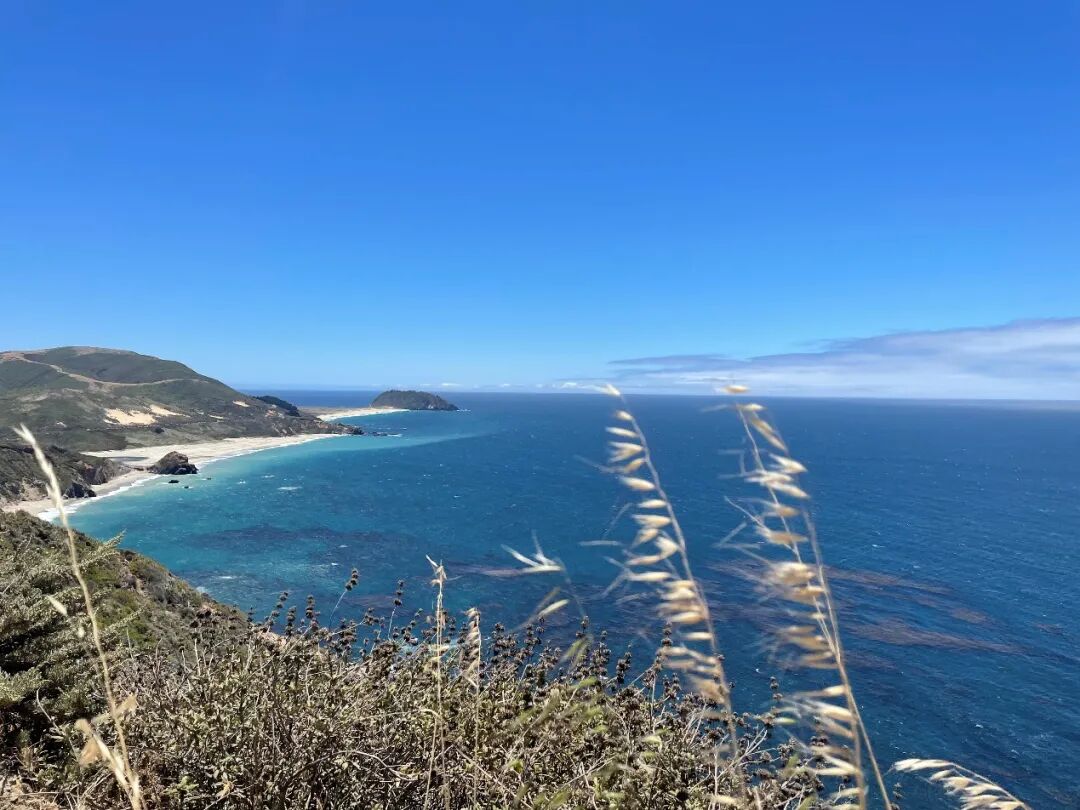
Along Highway 1, you can see the coastal mountains and the Pacific Ocean at a glance.
Thanks to the California Current and the morning fog that arrives daily, I never saw the Golden Gate Bridge. Well, not entirely—I saw two bridge piers, which meant all the knowledge I'd learned from a Hong Kong-Zhuhai-Macao Bridge engineer about classifying bridges was useless on the spot.
Since Americans aren't that into soccer, I first watched a baseball game with high "national appeal" to warm up. Oracle Park faces east, and from the stands looking from home plate to right field, you face the blue McCovey Cove and the sea breeze. Some clever people kayak in the water, waiting to catch balls that land in the bay after a "splash hit."
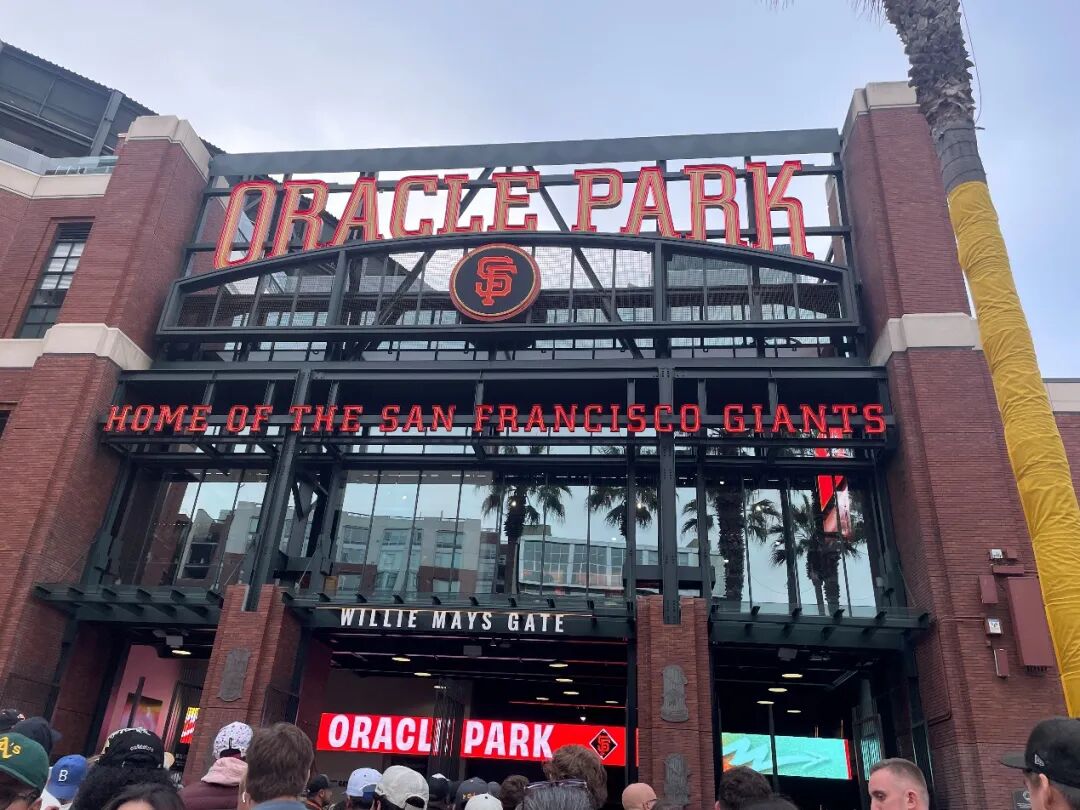
Oracle Park, home of the San Francisco Giants
Those waiting in the water that day were probably disappointed. The San Francisco Giants faced the Oakland Athletics, and until I left, there wasn't a single splash hit—and likely none after I left either. It wasn't that I had to leave early; first, I couldn't really understand the game, and second, I was still jet-lagged and had fallen asleep several times in the stands.
What woke me up a few times were the strange shouts from Korean fans nearby. The Giants' key outfielder is Korean Lee Jung-hoo, and even I could tell he's talented. Born into a baseball family, his father is known as the "Son of the Wind," and he's called the "Grandson of the Wind." After hitting a base hit, he made a "Daehanminguk" celebration gesture on the big screen, supporting the Korean national soccer team.
Anyone who watched the 2002 Korea-Japan World Cup probably doesn't like the Korean soccer team—I certainly don't. Oracle Park, being globally minded, even during a baseball game, showed the scores of concurrent World Cup matches on the big screen, probably reminding Lee Jung-hoo to show his patriotism.
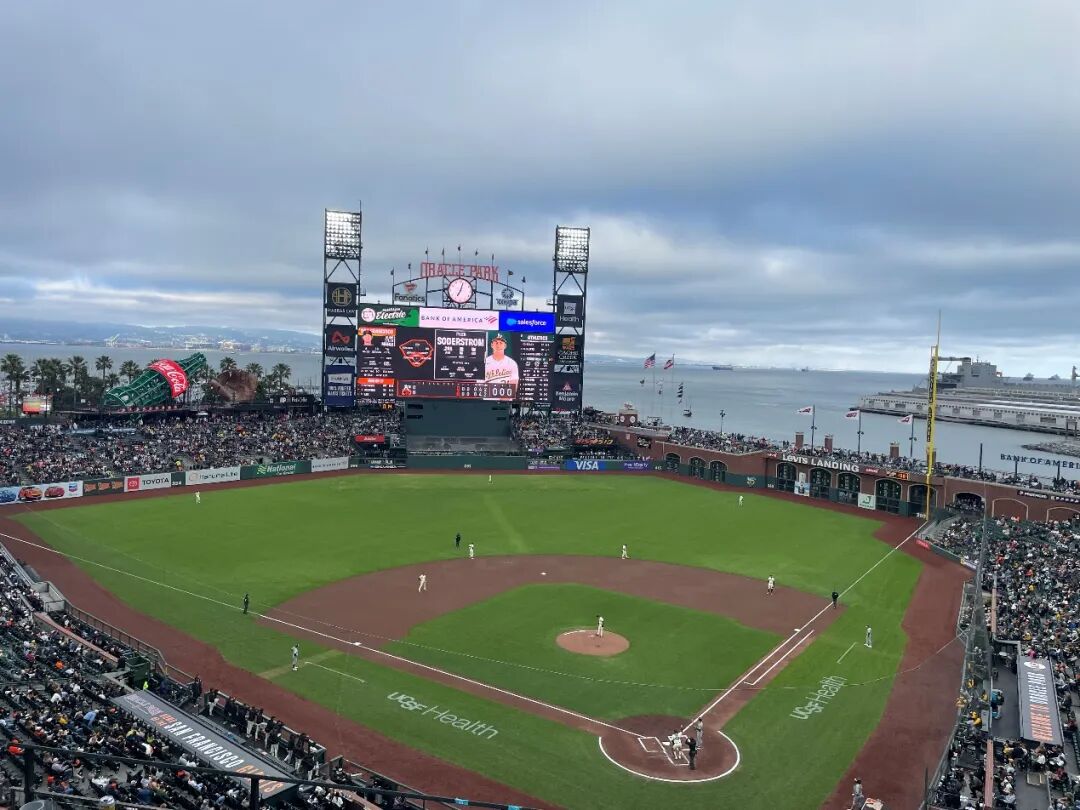
The Giants versus the Athletics, with a clear view of the bay
In recent years, Japanese and Korean players have been filling the U.S. baseball scene. Shohei Ohtani of the Los Angeles Dodgers is almost a "global GOAT," though highly controversial. Baseball is popular mainly in a few countries, with Major League Baseball (MLB) having the highest competitive level and commercial value. Japan's Hanshin Tigers have sent top pitchers like Kei Yabu, Kei Igawa, and Shintaro Fujinami to MLB. Last year, for the Hanshin Tigers' 90th anniversary, I bought a "passion" folder at the Koshien Stadium souvenir shop, and even accidentally watched a "community play."
Generally, if a sport is a "national pastime," its competitive level is usually high. Driving south along Highway 1 into Big Sur State Park, I saw three generations of a family playing baseball on a dusty field, with four patient dogs lying around. The youngest girl, too weak to hit the ball, kept laughing—a classic "American portrait."
In my family, three generations never played any sport together. Our most common group activity is "making dumplings," which fits the stereotype foreigners have of Chinese people. But there have been "competitions" between every two generations. When I was six, I raced 50 meters with my 59-year-old grandmother and lost; I also played table tennis with my dad and never won. The shadow of losing at the "national sport" even followed me to Chinatown.
Chinatown was unremarkable, with poor hygiene. On one wall was a mural of Wong Kim Ark, born in Chinatown in 1873 to Guangdong immigrants. After being denied re-entry following a trip abroad, he sued the U.S. government. In 1898, Wong won, establishing "birthright citizenship" in the U.S. Just as I saw that mural, the U.S. Supreme Court rejected President Trump's attempt to abolish birthright citizenship, likely bringing relief to many in Chinatown.
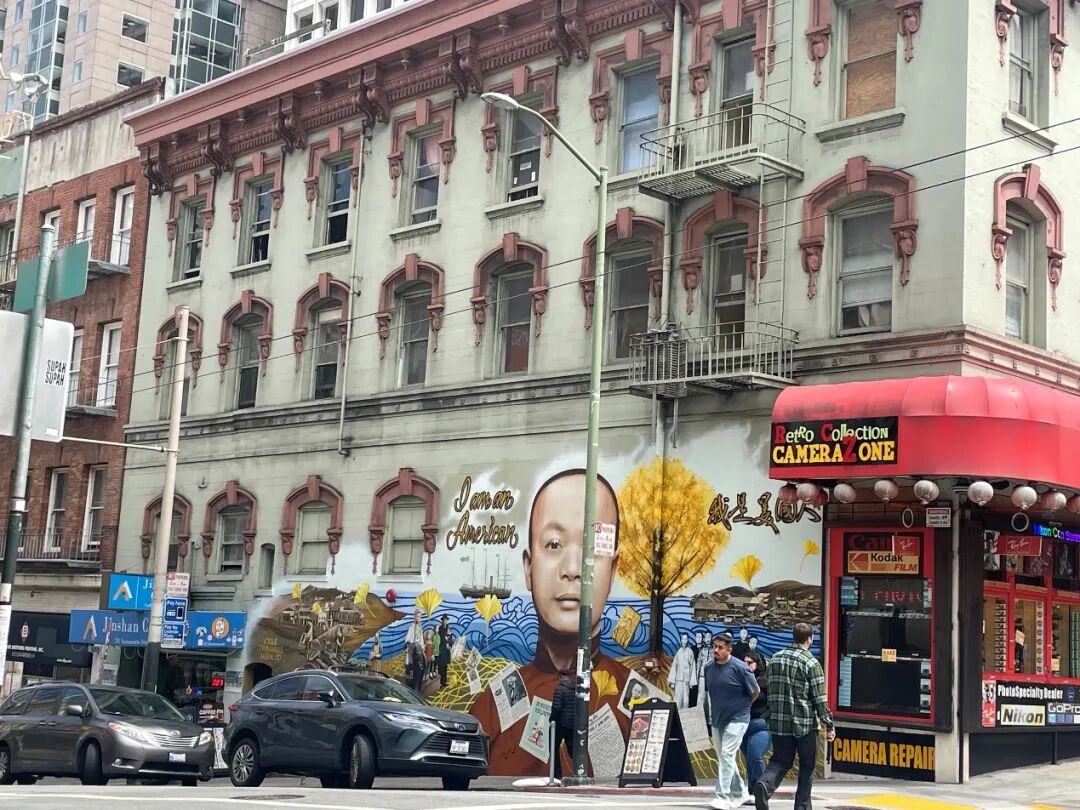
The mural of Wong Kim Ark in Chinatown, a pioneer in the birthright citizenship lawsuit.
From a small room came the sound of table tennis. I followed it and found an American adult and child playing. An American spectator, seeing me, invited me to play a few rounds. I repeatedly declined. He asked if I lived nearby; I said I was a tourist. A hint of regret crossed his face, then disappeared as he welcomed me to come again. This young "Elder Li" spoke fluent Chinese, using table tennis to evangelize—clearly skilled at "reading the room" with Chinese people. At that moment, I regretted not practicing the national sport more, so I couldn't show off in San Francisco's Chinatown.
Not far from Chinatown is City Lights Books, the headquarters of the Beat Generation in the 1950s and a modern avant-garde cultural "holy site." Its name comes from Charlie Chaplin's classic film *City Lights*, symbolizing how literature can illuminate society during the repressive era of the Cold War and McCarthyism.
In 1956, City Lights owner Lawrence Ferlinghetti published Allen Ginsberg's poetry collection *Howl and Other Poems*. Because the book contained content about homosexuality, drugs, and criticism of American society, San Francisco police arrested Ferlinghetti and closed the bookstore. Another landmark lawsuit changed history: Ferlinghetti was acquitted, freedom of speech and press became widely recognized, and City Lights gained fame.
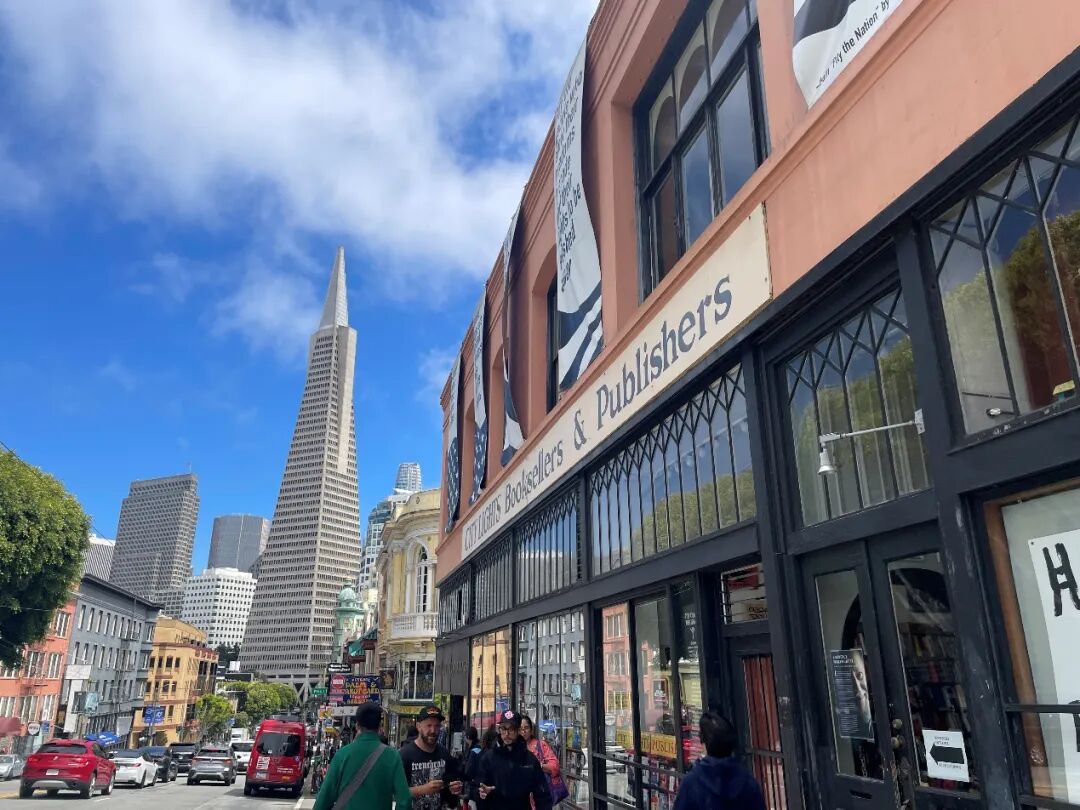
At the entrance of City Lights Books, looking down Jack Kerouac Alley, you see the recently renovated Transamerica Pyramid.
Back then, it only sold cheap paperbacks so that working-class people and students could afford books. Today, the bookstore's air is a bit stale, with many students around. Standing in front of a whole wall of Marxist works, historical photos, protest posters, and literary manuscripts, I suddenly felt that this place wasn't far from home, and also felt a touch of the joy of being "on the road."

California's weather, aside from the morning fog, is much like my hometown in Northeast China: cold and windy in the shade, hot and sunny in the sun, with huge temperature differences between day and night. But for some reason, California strawberries aren't sweet. I thought fruits in areas with big temperature differences would be sweet, but maybe these strawberries aren't from California.
In Sonoma, north of San Francisco, strong winds and dust instantly transported me back home. So that's what "Take Me Home, Country Roads" really means. Sonoma hosted a General Tire 150 race, which is part of the ARCA Menards Series, an official feeder series to NASCAR.
Simply put, young American drivers aiming for the top NASCAR Cup Series must first compete in the ARCA Series, which includes the General Tire 150 race I watched. The Sonoma track is a complex road course. "150" means the race covers 150 miles (about 241 km) at high speed, featuring classic American racing collisions, close shaves, and corner overtakes.
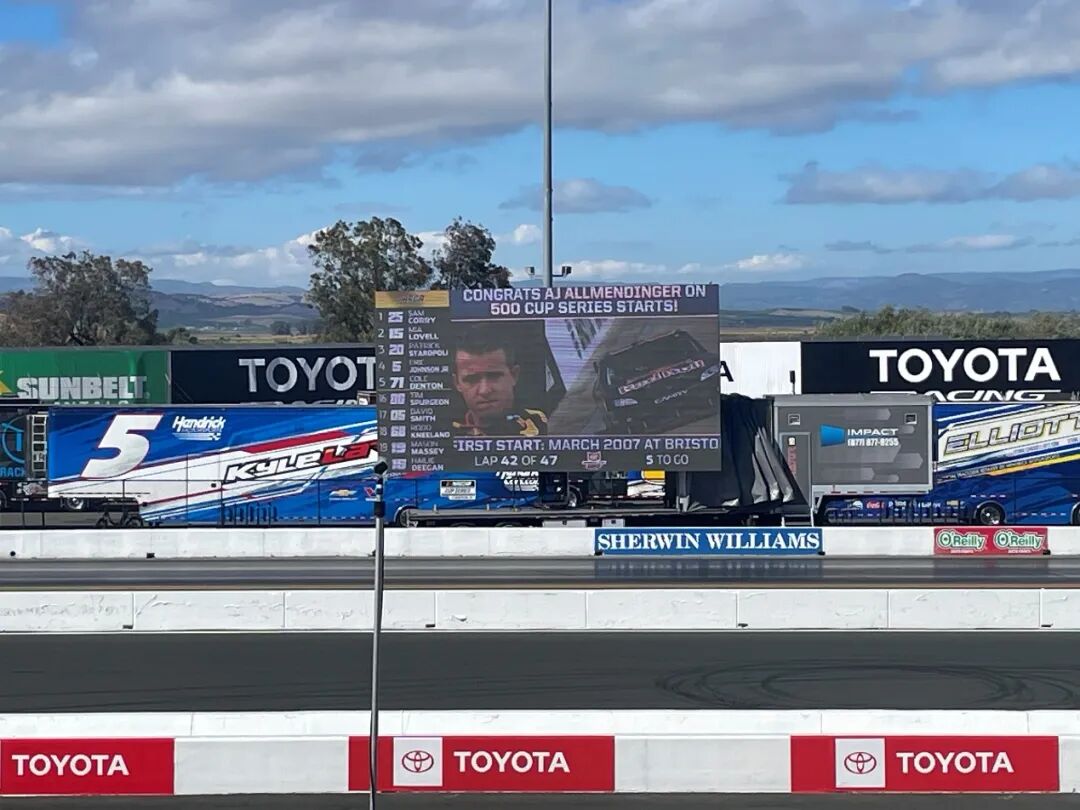
At the Sonoma race, it was hard to capture a speeding car on camera.
But I didn't see any of those signature moves. Underestimating the traffic, I arrived late, and after just two laps, the race ended. The winning No. 25 Toyota performed a celebratory drift after crossing the finish line. Driver Sam Cote, only 18 years old, led all 47 laps and won his first career ARCA West Series championship. Since he led all 47 laps and I watched 2, that's basically like watching the whole thing, right?
I casually bought a red T-shirt with NASCAR lettering. This $60 shirt, after being washed overseas, didn't fade but shed red threads all over and shrank a bit. I can safely say it's not made in China—Chinese manufacturing is much better quality.
World Cup merchandise, on the other hand, is mostly made in China with excellent quality. Shopping for souvenirs at the World Cup store is an art: pick items that are made in China but not sold in China, otherwise you could buy them at home and save money. Timing is also key—go shopping during the end of the first half when the match is boring and unlikely to have goals, to avoid long lines and missing the game.
The free bracelet was the hottest "freebie" of this World Cup—no reason not to grab one. Sponsored by Bank of America, the bracelet has five or six metal charms, each with unique symbols like the American bald eagle, Canadian moose, Mexican jaguar, the World Cup trophy, the U.S. flag, etc., and you can combine them yourself.
In short, this bracelet was the hardest to get. I walked into a Bank of America and shamelessly asked if they had any, only to be turned away. After a match at Levi's Stadium, they handed them out, but I waited in line for an hour to get one—no choice on the design, just maybe a national team option. At SoFi Stadium, they didn't give them out after the match because they'd run out before the game, so I wasted a trip. On Chinese second-hand platforms, the bracelets sell for 300 to 500 RMB depending on the "configuration."
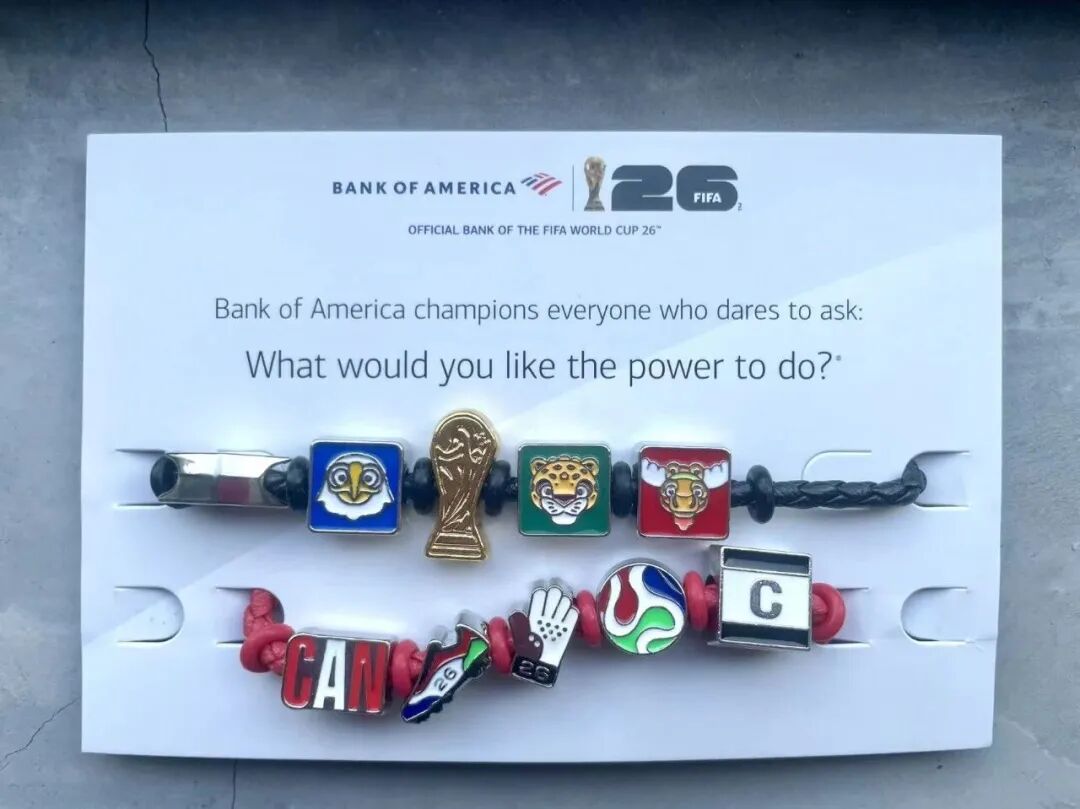
The "trophy" I got after an hour in line—can only look at, can't wear because it fades.
Two World Cup matches, totaling over 180 minutes, and I saw only one goal: Paraguay vs. Australia at Levi's Stadium ended 0-0, and Canada vs. South Africa at SoFi Stadium ended 1-0. The games were boring and didn't justify the ticket price.
I had to console myself that the Paris Saint-Germain vs. Tottenham match I watched at Parc des Princes in Paris was totally worth it—5-3, eight goals, 34 shots, and Vitinha's hat trick—I used up all my soccer-watching luck for two years.
Although these two World Cup matches were unremarkable, there were plenty of highlights outside the games.
The World Cup stadiums were beautiful and provided a great viewing experience. The U.S. has 11 World Cup venues, all converted from football stadiums at huge cost, with artificial turf replaced by real grass. SoFi Stadium in Los Angeles is a world-class venue, built at a cost of $5.5 billion, with 70,000 permanent seats, a hanging double-sided ring screen, and a semi-transparent ETFE plastic roof. Since it's too close to LAX, the stadium was dug 30 meters below ground. Entering from the main gate, you're at the top of the stands looking down—a truly stunning view.
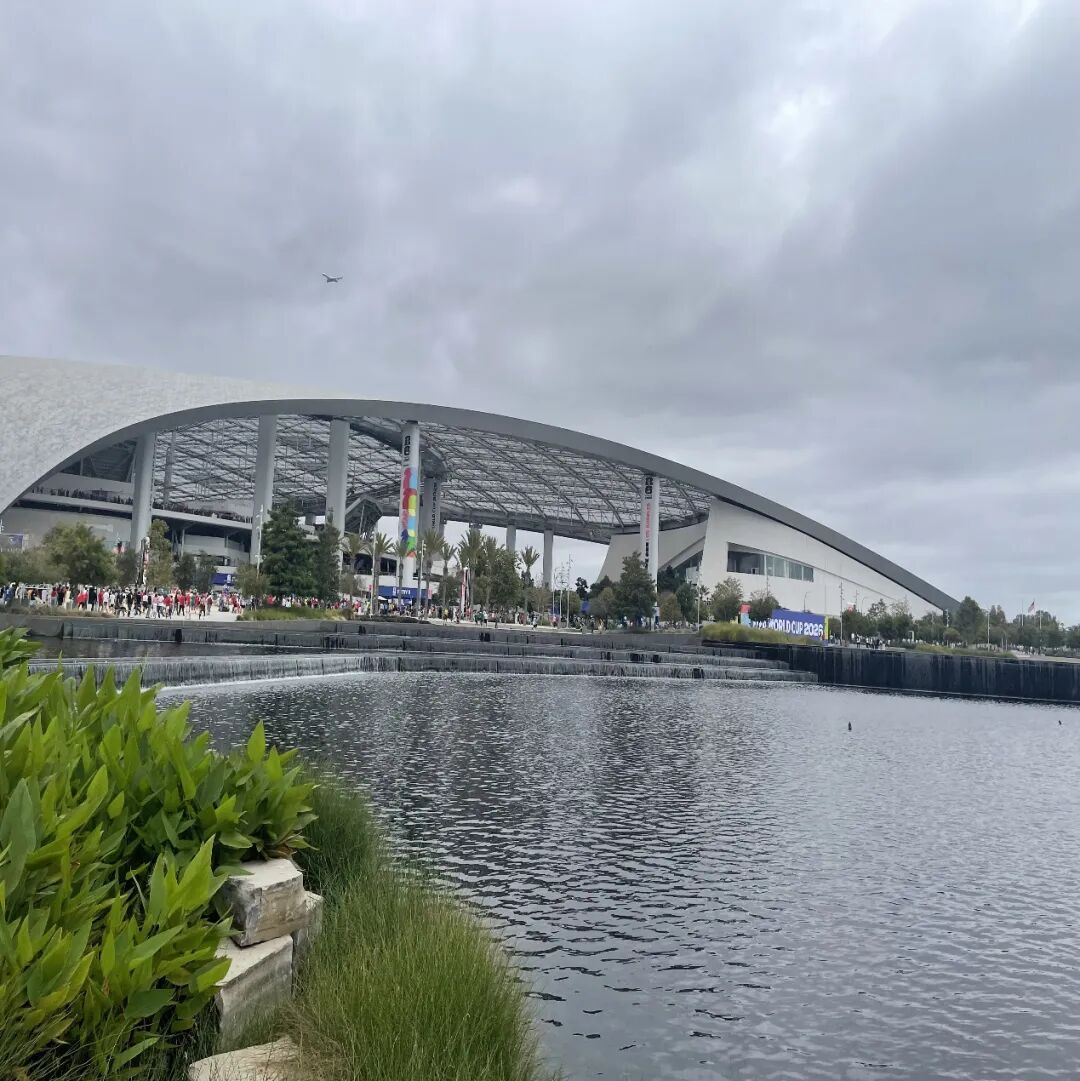
Exterior of SoFi Stadium, though the weather was a bit gloomy.
SoFi Stadium will host the 2028 Olympics opening and closing ceremonies, as well as swimming and other core events. It will also feature the "technical miracle" of building a pool inside a football stadium. To fulfill an "Olympic dream," I made a special trip to the Los Angeles Memorial Coliseum, the 1984 Olympics venue, which was also the main stadium for the 1932 Games. Soon, Los Angeles will become the only non-capital city to host the Olympics three times.
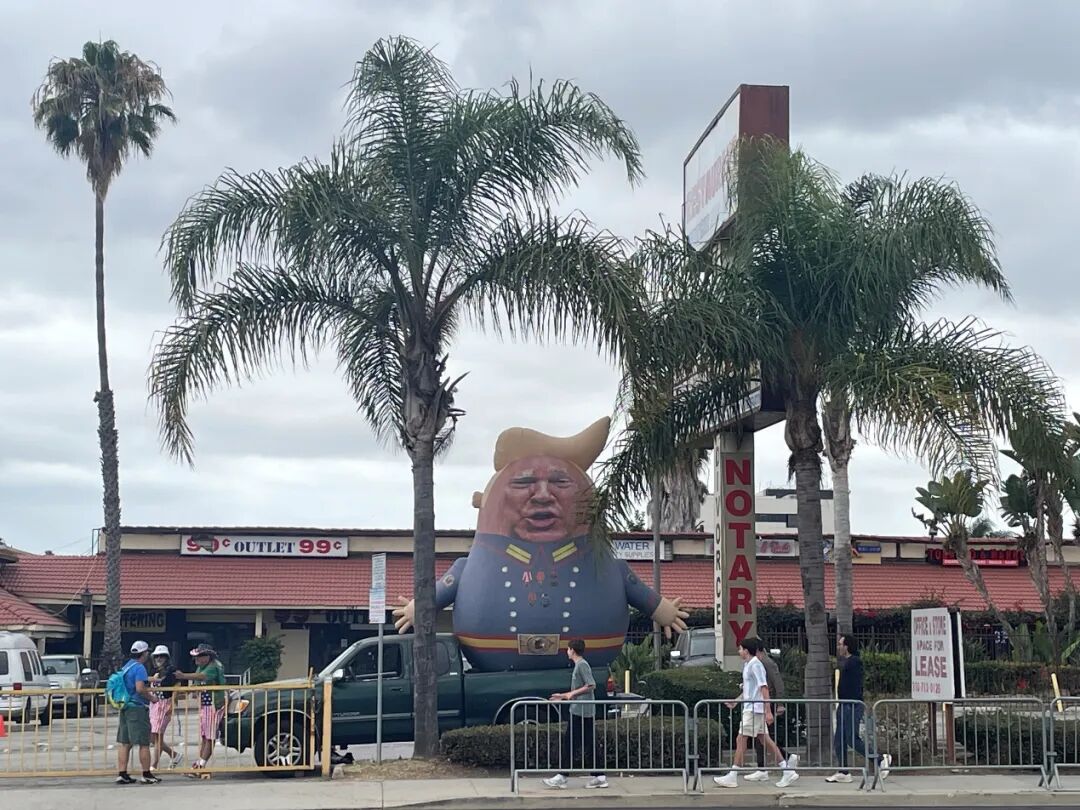
Outside SoFi Stadium, an inflatable Trump stood prominently.
The World Cup transportation connections were surprisingly convenient. As everyone knows, U.S. World Cup stadium parking fees are exorbitant (parking in general is expensive). SoFi's parking is $250 to $300, and Levi's is $175. To save money and avoid traffic, I parked outside the stadium and took public transport.
Levi's Stadium is in San Jose. I parked at a tech startup campus about five kilometers away, and unexpectedly saw FIFA partner Lenovo there. Including theft protection, I paid $17, but then found out parking was free. Then I took the VTA light rail directly to the "Great America" station, right next to the stadium.
Across from that campus is the famous PayPal Park, said to be full of homeless people. I didn't see a single one. Considering that Kansas City spent over $20 million on a "World Cup temporary prison" for security, it seems San Jose's government also made arrangements.
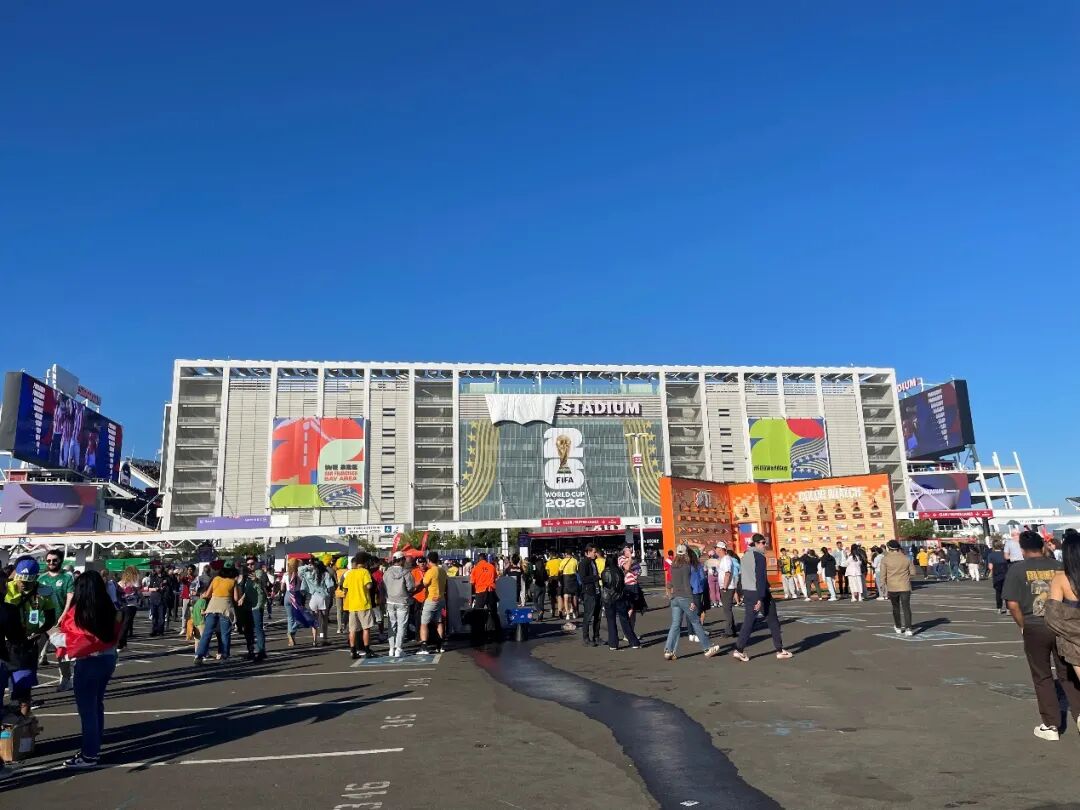
Levi's logo was covered because it's not a World Cup sponsor.
In Los Angeles, it was even easier. The LA Metro, as a regional support partner for the World Cup in Los Angeles, set up 15 shuttle transfer points from metro stations. I walked to the metro, and staff and volunteers in themed outfits guided me to the shuttle stop. There were fans and canopies along the way, and I boarded the shuttle without queuing, arriving at the stadium in 15 minutes.
In the U.S., shuttles for spectators have a feature: they don't wait until the bus is packed like sardines. Basically, when about 80% of seats are filled, the bus departs, balancing comfort and efficiency. The same was true for the Sonoma race. The trip to SoFi Stadium cost me $1.75—the metro fare—and the shuttle was free. On the return, dozens of shuttles were organized by area, with different bus models and paint schemes, making it easy to get correct directions if you took the wrong one.
Many "smart" people suggest on social media that Chinese tourists park at big-box stores like Sam's Club or Costco to save money. Don't listen. In the U.S., most parking is paid, and trying to park for free in a paid lot will likely get your car towed, costing you $400 to retrieve it. If it's a rental, it's even worse. A recent dispute in Changsha about a woman occupying someone else's parking spot remained unresolved, causing a stir. Americans would be baffled—clear property rights, just tow the car away, why go to court?
America is truly a "nation on wheels." Almost all infrastructure is designed for "four wheels." I walked 15 minutes from my hotel to the LA metro station, and halfway the sidewalk disappeared, forcing me onto the grass. The blocks are huge; a 500-meter street might have only one two- or three-story building. As for convenience stores or bubble tea shops, none exist even if you walk until your throat dries up.
Actually, it's still like Northeast China: vast, sparsely populated, sunny, with oversized vegetables and fruits, and plenty of big trucks. Highways connect cities and towns in all directions, with many lanes, but driving isn't easy. Because Americans drive too fast.
On my first day, I stayed in a hotel next to a highway. Standing at the window, cars zoomed past as if about to take off. When I got on the highway, I realized that 150 mph on the fast lane isn't a joke—but I couldn't keep up at 150 mph for long. Even on the right lanes, 130-140 mph was common and hard to follow. If you can't keep up with the car ahead, you'll get caught for speeding. Plus, U.S. traffic police don't use cameras; they appear out of nowhere behind you, so you have to constantly watch for police lights—a lot of mental pressure.
On one short stretch, a police car actually followed me. My GPS was confused, and I drove sweating into a farmland area, somehow "losing" the police car!
The stretch of Highway 1 from Monterey to Oxnard, about 438 km, I spent mostly driving, except for breaks at Big Sur, the Henry Miller Library, and Ragged Point. Driving for long, I needed some fun. A black car of the same model sped by, changing lanes smoothly, so I followed it, and before I knew it, I was also doing 150 mph.
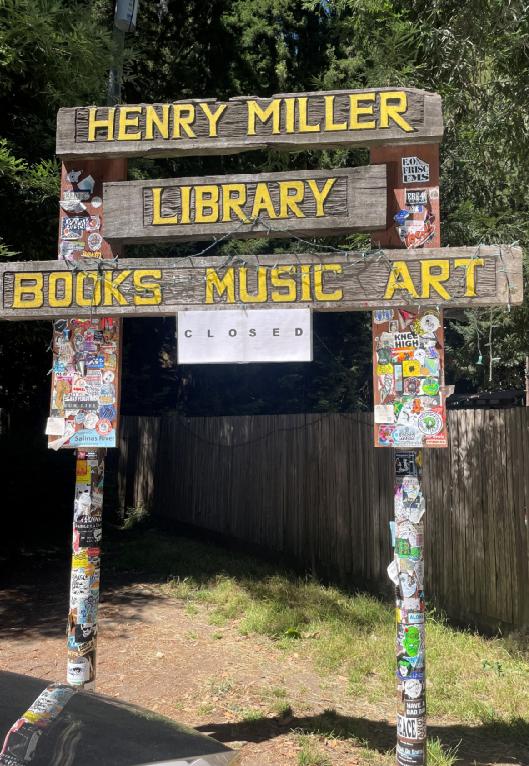
The Henry Miller Library was closed for a wedding, and the groom said he wasn't a Henry Miller fan.
Another fun thing was listening to "mood" music. 95.6 FM probably couldn't afford the rights; they played a Taylor Swift song three times in one afternoon. Switching to a "California playlist" on streaming was better, and "Take Me Home, Country Roads" played again, even though John Denver's song is about West Virginia.
Looking at the vast brown hills and wild meadows outside the car window, I thought American Westerns could be considered Chinese Northeastern films.

I started watching the World Cup in 1998. Living on a high floor with a wide view, surrounded by posters of Ronaldo, Owen, and Batistuta, I often gazed out the window, imagining the fierce matches taking place in France beyond the horizon.
Ronaldo's mysterious "sleepwalk" in the final, Zidane's two headers sealing the victory; Blanc's "frog jump" kiss on Barthez's bald head as a ritual; Bergkamp's "first touch miracle"; Owen's solo run; Croatia's first World Cup yielding golden boot winner Suker; Beckham's hair messed by Simeone, his slight retaliation leading to a red card and England's loss to archrival Argentina; goalkeeper Chilavert's free-kick goal setting a historic record...
Little Tiger instant noodles timely released "player cards" in common, silver, and gold versions. I collected over a hundred and arranged them into a "108 heroes" ranking based on my own ability ratings, which took a lot of brainpower—they even included Romário, who didn't play in that World Cup.
The World Cup was during summer vacation, and it's the only summer vacation I remember with particularly many rainy days. At the 1999 Spring Festival Gala, Zhao Benshan summed up the year succinctly: "1998, 1998, what a year! Big grain harvest, floods driven away... The world was chaotic, full of scheming... Looking at global affairs, the scenery here is uniquely good."
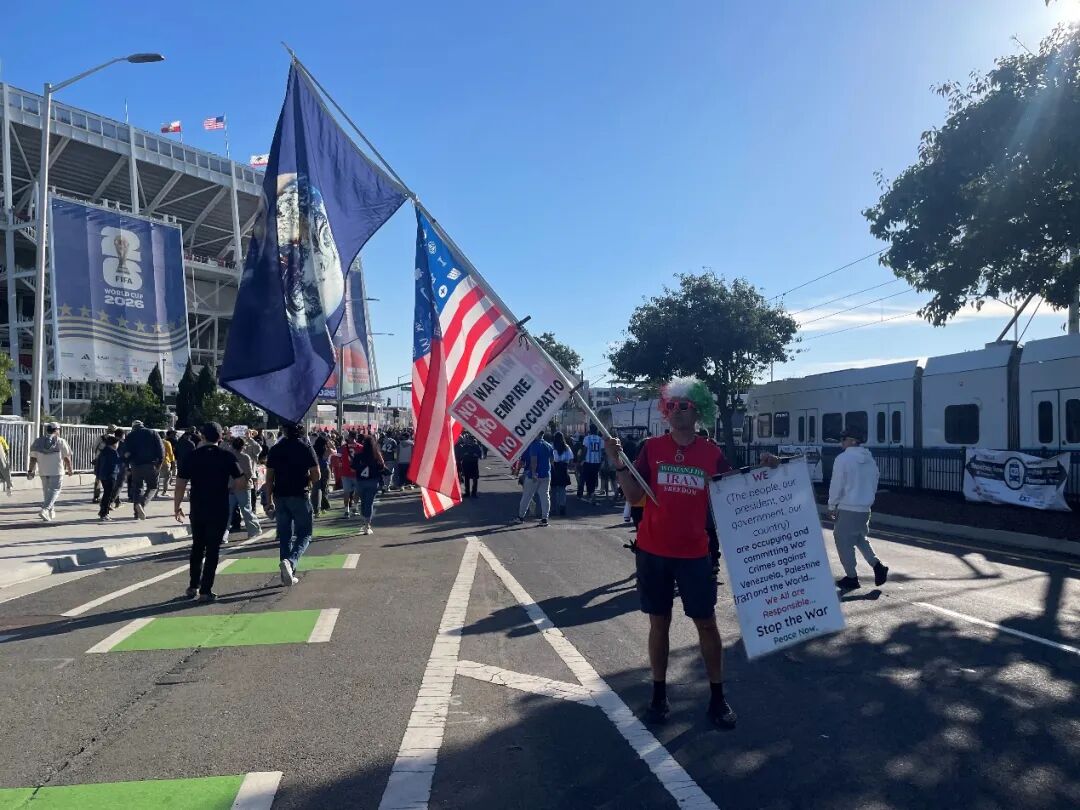
Outside Levi's Stadium, fans supporting Venezuela, Iran, and Palestine called for world peace.
The 1994 U.S. World Cup felt more like "prehistory." 1998 soccer magazines still recalled Roberto Baggio's missed penalty at the Rose Bowl; Bebeto's "cradle dance" after scoring; Maradona's final brilliant goal against Greece; and Escobar's murder after scoring an own goal.
Actually, that year, the live police chase in Los Angeles overshadowed almost all sports events. The chase was of football star O.J. Simpson, as thrilling as the first Hollywood blockbuster brought to China, *The Fugitive*.
The U.S. loves bidding for the World Cup. In Americans' eyes, only the U.S. can bring radiant glory, ultimate charm, and passionate atmosphere to the World Cup.
The 1994 draw ceremony was held in Las Vegas, with Bill Clinton, Faye Dunaway, Jeff Bridges, Jessica Lange, and other celebrities in attendance. The opening ceremony featured Diana Ross, Daryl Hall, and the B-52s. This year's U.S.-Mexico-Canada World Cup final will have President Trump, Madonna, Justin Bieber, Robin Williams, Tom Cruise, and BTS—a "historical tradition" continued.
Interestingly, U.S. World Cup bids always involve the Secretary of State. For the 1986, 1994, and 2026 World Cups, former Secretary of State Henry Kissinger mediated. The 1986 bid failed when FIFA President João Havelange secretly backed Mexico, angering Kissinger, who remarked, "The complexity and cruelty of football politics make me even miss Middle Eastern politics."
Kissinger personally intervened in 1975 to bring Brazilian legend Pelé to the New York Cosmos in the U.S., a textbook example of Cold War-era "football diplomacy." If not for that, Pelé would likely have gone to Juventus or Real Madrid. Pelé didn't waste Kissinger's efforts; during his years in the U.S., he got Americans to love soccer. The only thing that made him uneasy was the dyed artificial turf—Pelé once thought he'd caught some strange North American fungus.
Current Secretary of State Marco Rubio has inherited Kissinger's mantle.
As a Cuban-American descendant from Florida, a state that "doesn't raise idle people," Rubio deeply tied football diplomacy to U.S. national interests: ensuring his hometown Miami became a core host city, securing high-value knockout matches including the third-place game, and making Miami the "first gateway" connecting Central and South America for this World Cup—Messi plays in Miami, so naturally his national team Argentina gets special treatment.
Rubio's stance on immigration did a 180-degree turn. Initially, he didn't agree with Trump's border wall policy, but after 2019, he pledged loyalty to Trump and began strongly defending the wall's legitimacy. On July 17, he issued extremely strict visa restrictions; recently, he suspended visas for thousands of Mexican cross-border truck drivers, shaking the U.S.-Mexico trade chain.
It's ironic. In 1994, when the U.S. first hosted the World Cup, NAFTA had just taken effect, with the U.S., Canada, and Mexico aiming to phase out tariffs and relax investment restrictions for free flow of goods and capital. This year's U.S.-Mexico-Canada World Cup, supposedly co-hosted, finds the three countries already estranged in spirit and appearance, with NAFTA struggling to even extend smoothly, now on a "year-by-year review."
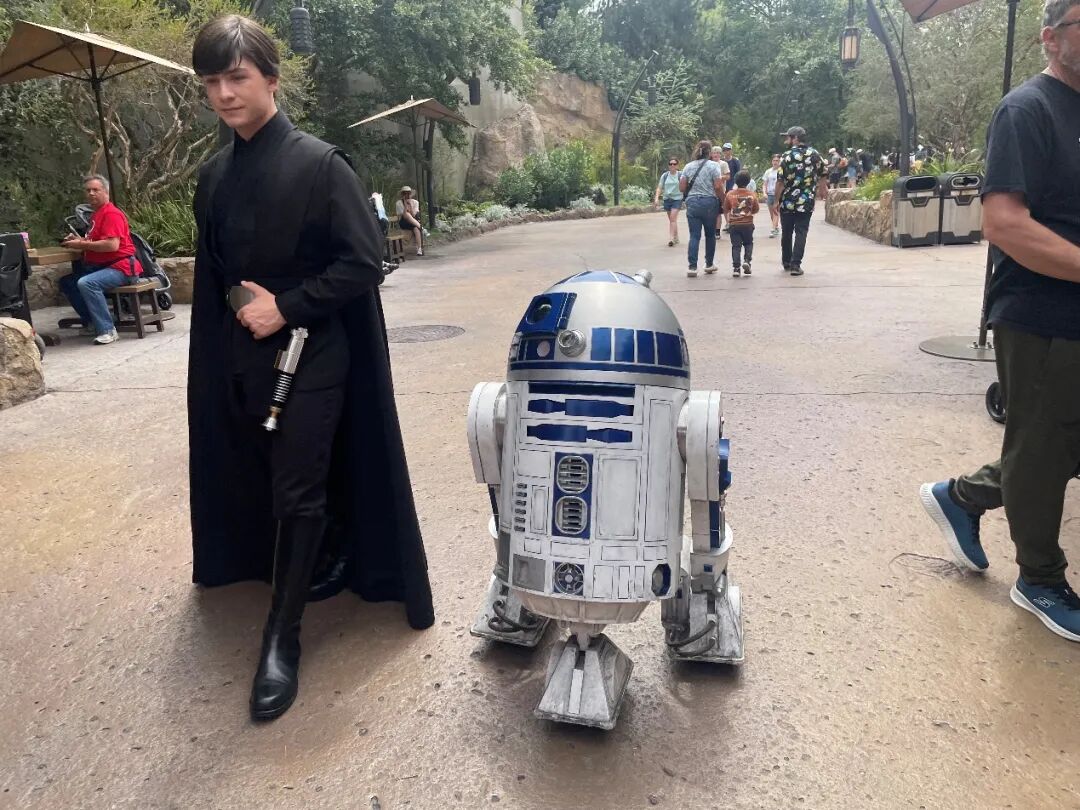
In Disney's "Star Wars" area, Luke Skywalker and R2D2 were preparing to go to Dagobah to find Yoda.
At the end of my trip, I went from Disney's "Galaxy's Edge" in Anaheim to the Mexican border city of Tijuana. Tijuana also feels like the "edge of the galaxy." The border wall stretches from the mountains into the sea, and border patrol vehicles drive past constantly. Standing on a high point, you can clearly see the U.S. flag waving on the other side, but on this side, houses are low and shabby, vividly illustrating the huge gap between developed and third-world countries, between capitalist centers and peripheries.
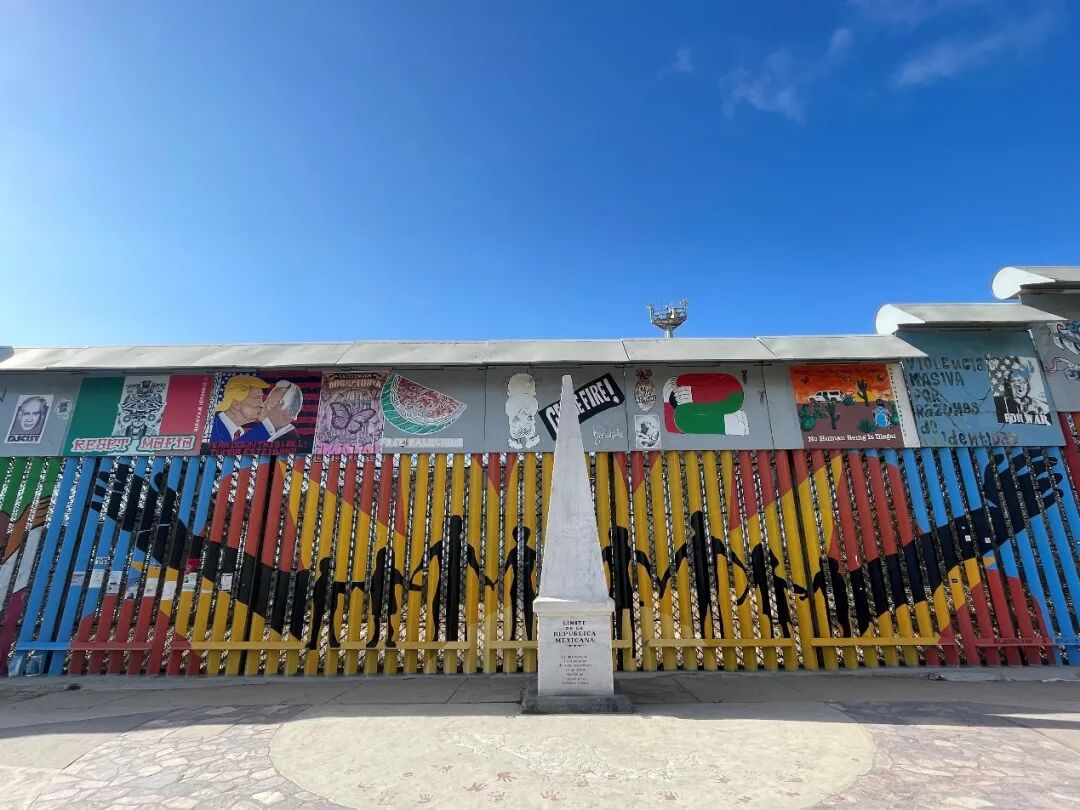
The U.S.-Mexico border wall is covered in graffiti.
Mexicans' passion for soccer is much higher than Americans'. That day at 6 p.m., Mexico was playing Ecuador at the Azteca Stadium in the capital, and Mexico City got a full day off. At 4 p.m., bars in Tijuana had long lines; people in Mexican jerseys were singing and dancing, ready to drink and watch the game, as lively as Chinese New Year.
Walking through Tijuana's streets, I understood why Mexico's "specialty" is the big sombrero: without it, life would be unbearable.
At the Tijuana Cultural Center, I quickly left my "masterpiece." Actually, I saw others drawing and felt tempted, but I didn't know any famous Mexican cultural symbols offhand, so I opened my phone, found the game *Guacamelee!*, picked the simplest little thing, drew it, and proudly hung it on the wall.
From what I observed, the drawings on the wall were clearly "masterpieces" carefully selected by staff. The bottom row, including mine, were the newest. That means when the staff selects again, my "masterpiece" will definitely be taken down. Friends planning to visit the Tijuana Cultural Center soon, hurry up to see it—after that, my drawing will be gone. Don't say I didn't warn you.
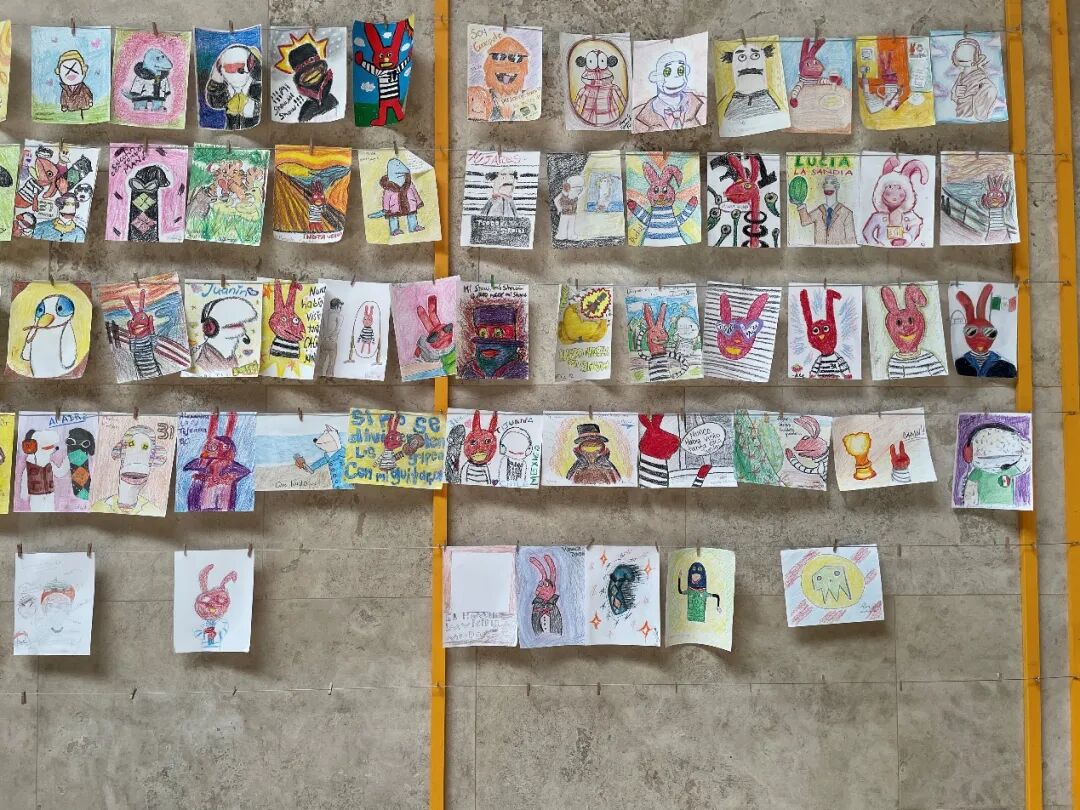
At the Tijuana Cultural Center, the drawing in the bottom right corner is mine.
From San Diego back to Los Angeles, it was already dark. "Take Me Home, Country Roads" played intermittently, and the surroundings blurred. This California highway seemed to stretch into my childhood.
In truth, foreign lands and home are not that far apart. Over decades of travel, the World Cup is like the most prominent "road sign," pointing to the weight of life's departure and arrival, farewell and reunion, illusion and reality.
Kerouac's novel *On the Road* has this line: "When the dawn breaks, the world lights up again, and I seemed to see my original self."


Wonderfulshortvideo
User ceshi has posted a video.


User soccer has posted a video.
real madrid news today barcelona news today la liga news today lamine yamal goal today lamine yamal assist
WHAT A WEEKEND for Godolphin
It’s like watching the Mona Lisa being painted 🤯
Valid crash out‼️
haaland goal today haaland edit haaland injury news haaland vs ipswich man city 3-2 ipswich town
 Links
Links
 Contact
 App
App