



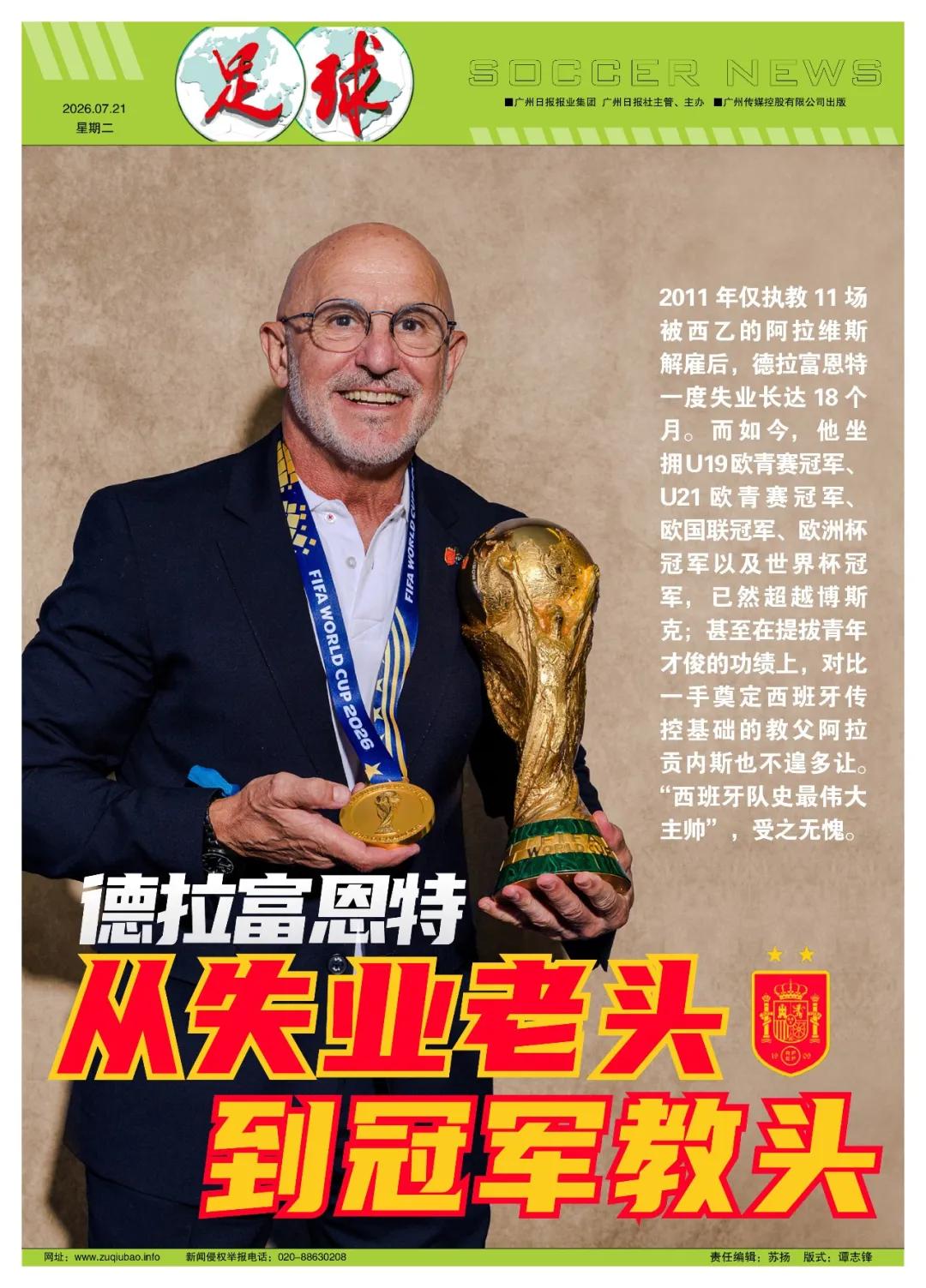
At 50, you call him a "laid-off old man"; at 65, you respectfully address him as a "World Cup champion coach".



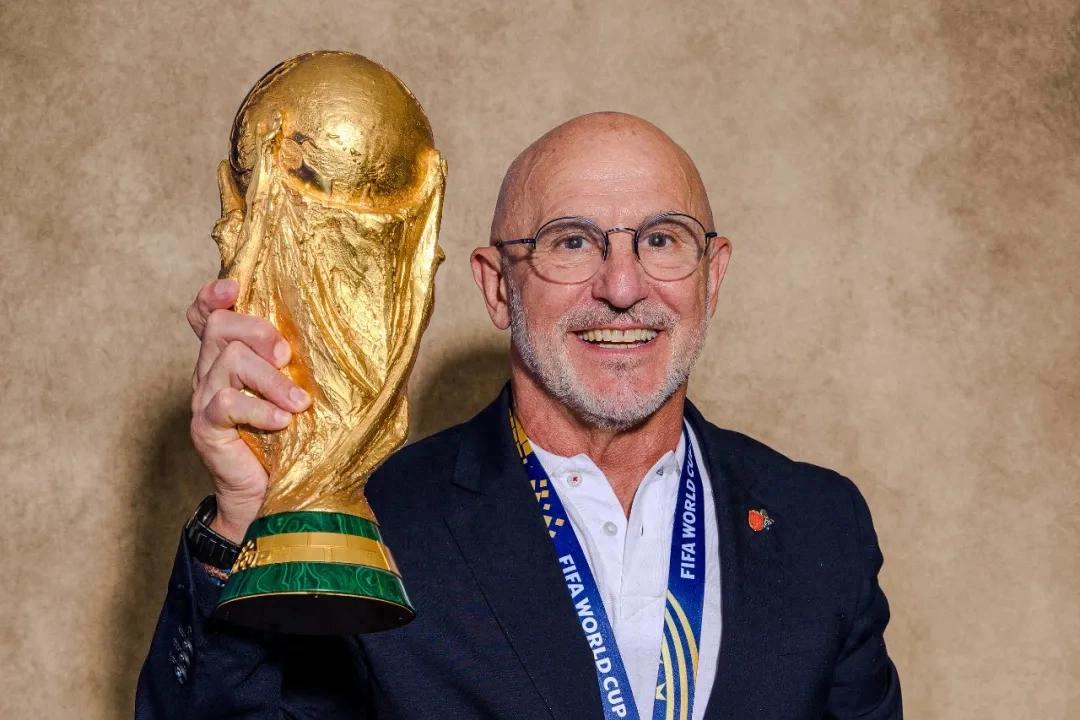
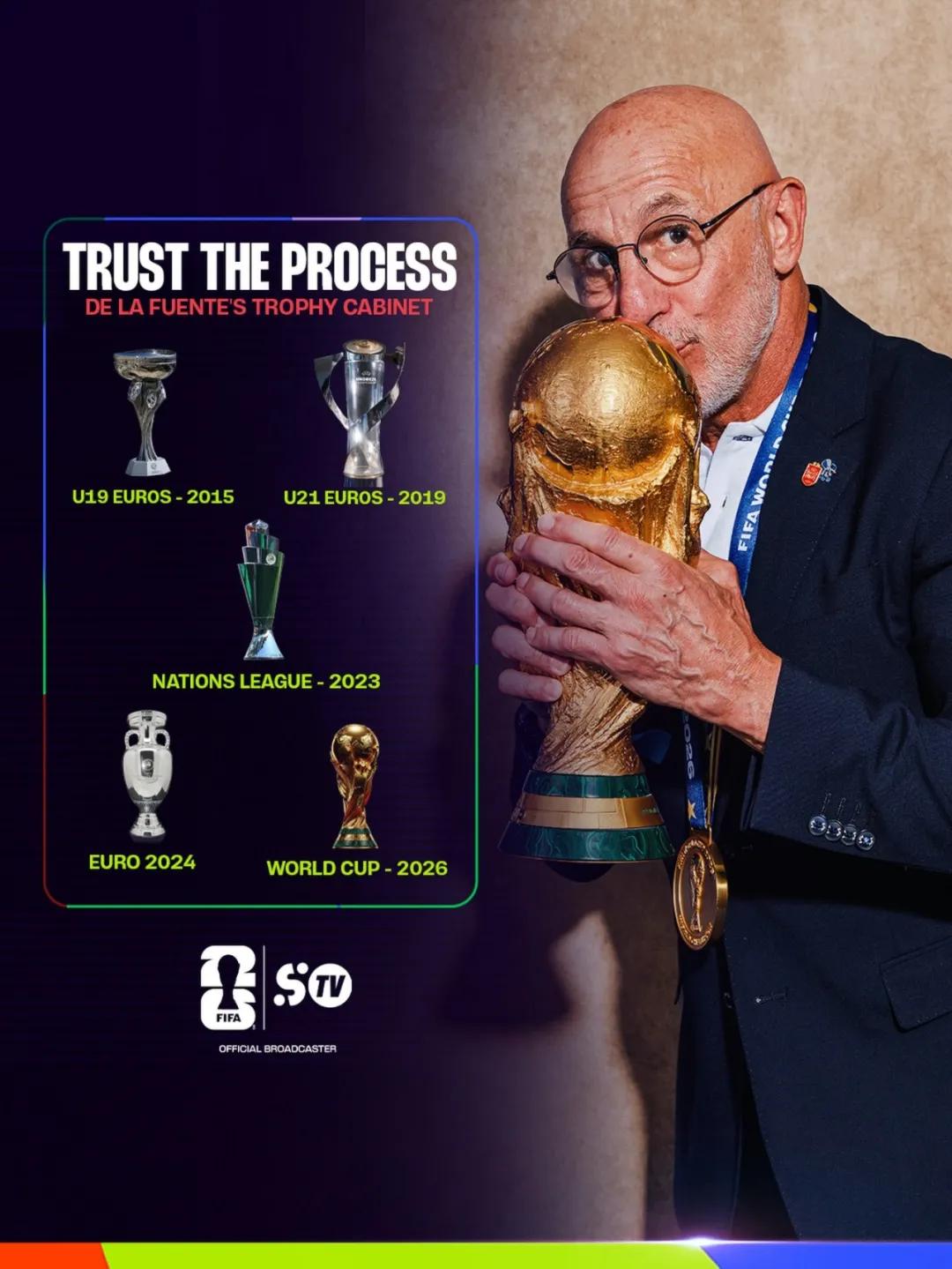
Written by Han Bing "Coach, what haven't we won yet?" For a manager who has just reached the milestone of 50 matches in charge of the national team, this question might seem a bit arrogant. Yet for Luis de la Fuente, the head coach of Spain—champions of the 2023 UEFA Nations League, the 2024 European Championship, and the 2026 World Cup—it is truly a "good question" to reflect on. Especially since the questioners include those who have followed him for over a decade, winners of the 2015 U19 European Championship or the 2019 U21 European Championship.
With a well-defined, muscular physique, it's hard to imagine that de la Fuente just celebrated his 65th birthday during the World Cup. With five championship trophies from coaching various national youth teams, this oldest World Cup-winning manager in history has already surpassed Vicente del Bosque, who also helped Spain rise from European kings to global dominators. Even in terms of promoting young talent, he rivals the godfather of Spanish football, Luis Aragonés, who laid the foundation for tiki-taka. "The greatest coach in Spanish football history"—well-deserved.
The silver medal at the 2021 Tokyo Olympics might be one of the few regrets that are hard to make up for. But now, de la Fuente and "his children" answer with "the next match in September"—"tireless," "one game at a time"—the Bullfighting dynasty 2.0 has only just begun.
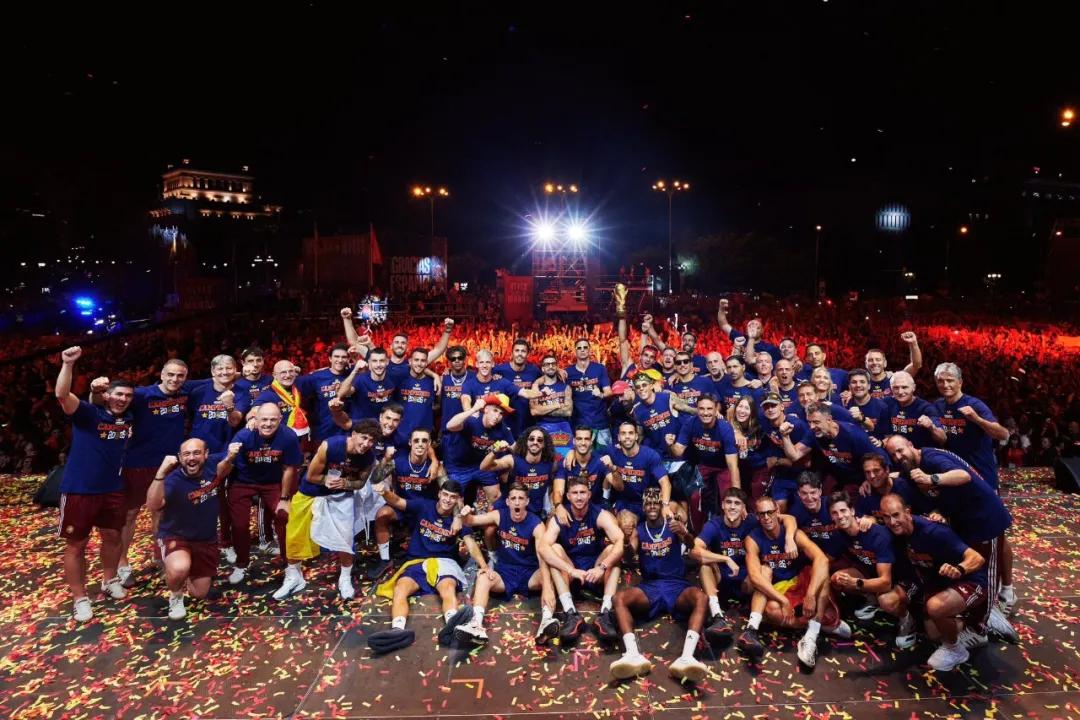

Beyond lifting the World Cup trophy again, another surprising "glorious revival" for Spain in this World Cup was their best defensive performance in history, conceding only one goal in eight matches. Before this, the record was held by France (1998) and Italy (2006), both conceding two goals in seven matches, as well as the Bullfighting dynasty 1.0 from 16 years ago.
When talking about this Spanish world champion team, de la Fuente has repeatedly emphasized the "2010 spirit"—efficiency based on possession play. However, just as tiki-taka experienced ups and downs over 16 years, Spain's renewed success is not merely a wholesale inheritance of past experience. German football legend Philipp Lahm wrote in a column in The Guardian: "De la Fuente's success is the result of the continuous evolution of Spanish coaching culture within the Cruyff system." Like Pep Guardiola, Unai Emery, and Luis Enrique, de la Fuente has adapted Cruyff's possession football to his own personality. Unlike the possession football of 2010, de la Fuente's tactics emphasize high pressing, especially the speed of winning back the ball, which directly determines attacking efficiency and provides more reliable and effective control of the game.
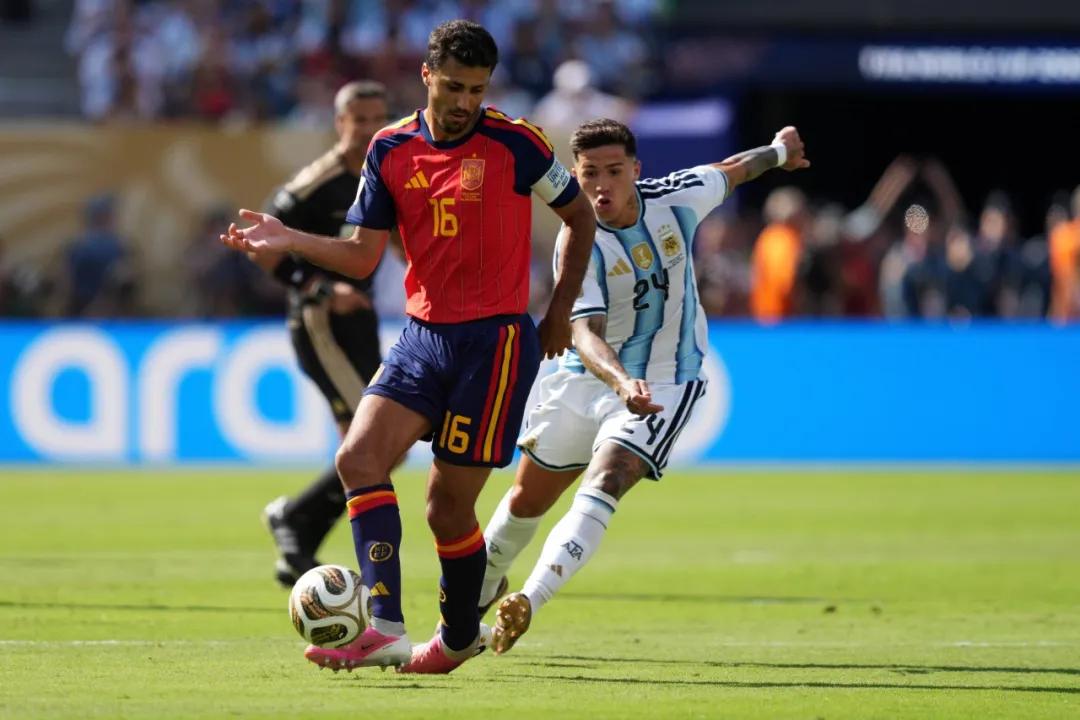
During this World Cup, Spain averaged 62.7% possession, 792 passes per game (89.7% success rate), and in the final, 858 passes with 774 successful—both tournament highs. They averaged 212 passes in the attacking third, 3.5 times more than their opponents. In terms of high pressing, opponents faced pressure every 7-8 passes on average (PPDA value of 7.2-8.4), a frequency that was far ahead of other teams. In the final, the high pressing ratio was 14%, compared to Argentina's 4.3%, and the average defensive line was 46 meters from their own goal, the farthest of any team in the tournament. The high pressing success rate was 38%, and five goals came from high pressing turnovers—both also tournament bests.
Spain regained possession in the attacking third 14.3 times per game, also a tournament high. Each recovery took only 10-11 seconds, faster than France's 14 seconds and Argentina's 13 seconds—again a World Cup best. In contrast, during the 2010 World Cup, Spain took an average of 19 seconds to regain possession, illustrating the rapid evolution of football.
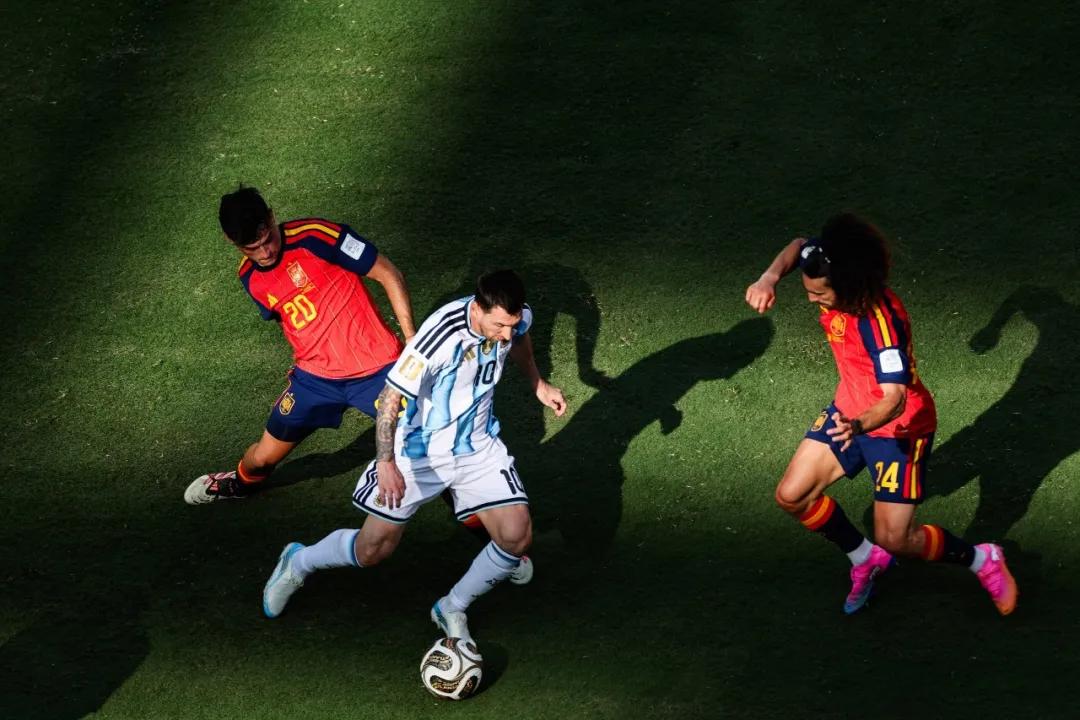
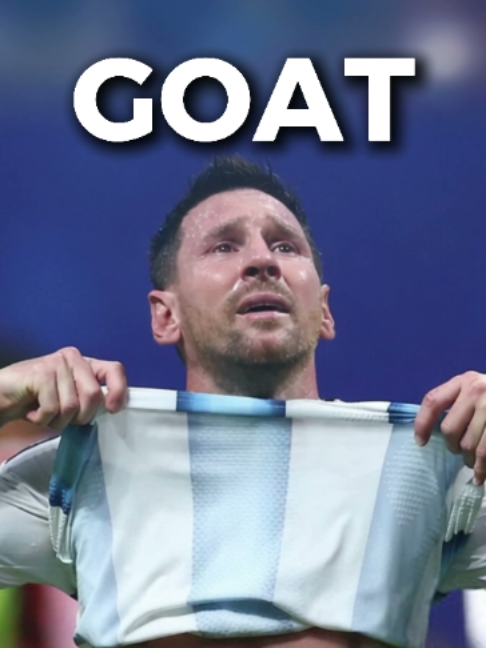
In this World Cup, 12.2% of Spain's time without the ball was spent in high pressing. In the semifinal against France, possession peaked at 68%, and Rodri's pass success rate was 92%, effectively cutting off France's passing lanes and neutralizing the activity of their front three. Full-backs and midfielders coordinated to press forward, intercepting the ball when opponents tried to play out from the back. In the final, Argentina's goalkeeper and defenders were continuously surrounded and pressed by Yamal and Ferran Torres, resulting in a pass success rate of less than 60% from the back, forcing them to clear the ball and lose possession. Messi was frequently double-teamed and dispossessed as soon as he received the ball, making it nearly impossible to organize attacks.
As La Gazzetta dello Sport emphasized: De la Fuente's possession football incorporates more high pressing, enhancing the efficiency of ball recovery. This allows the team to easily exploit opponents' mistakes and regain possession, thereby maintaining proactive control. It is this combination of sustained possession and efficient ball recovery that keeps Spain unbeatable.
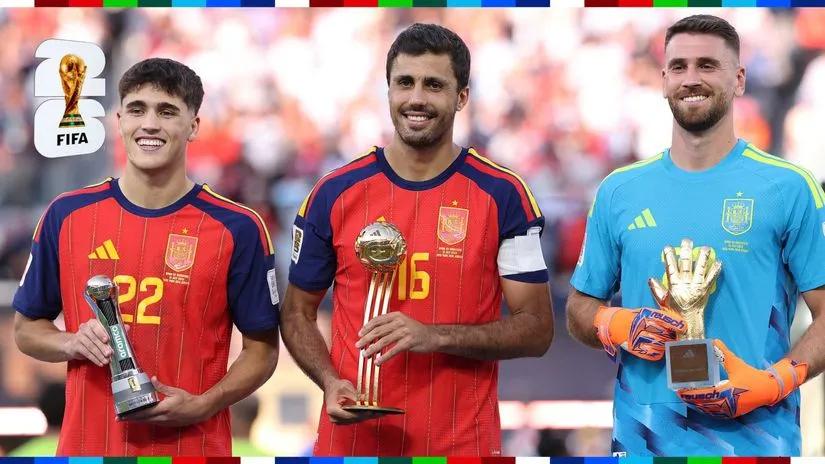

Despite entering the tournament as the top favorite, Spain drew their first group match against the little-known Cape Verde, coupled with midfield core Rodri's poor form at club level last season and injuries to European Championship-winning wingers Nico Williams and Lamine Yamal. Their championship support rate declined throughout the group stage. But in the end, it turned out that Cape Verde, as the biggest dark horse, earned the title of "honorary third place" by holding both the champion and runner-up to draws in regular time, and de la Fuente's philosophy of "taking it one game at a time" prevailed. "Continuous growth, constant refinement of skills, and giving everything in every match" has been de la Fuente's ongoing demand from his players for over a decade.
After being sacked by Alavés in the Spanish second division in 2011 after just 11 matches in charge, de la Fuente was unemployed for 18 months. Upon seeing a newspaper advertisement for a national youth team coach position posted by the Spanish Football Federation, he contacted former Spain coach José Antonio Sáez, who recommended him to the federation. Initially, de la Fuente was given only a three-month short-term contract, tasked with leading the team in the 2013 U19 European Championship. Although they lost to France in the semifinals, his performance earned him a long-term contract. Thus began the story of "de la Fuente's children."
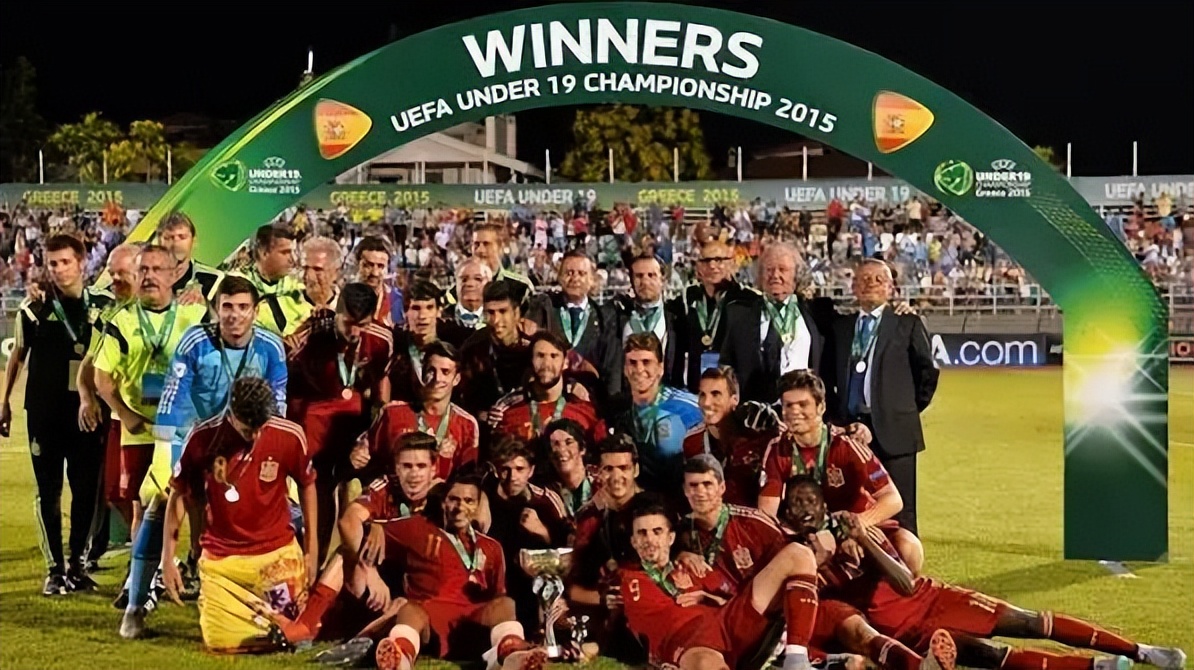
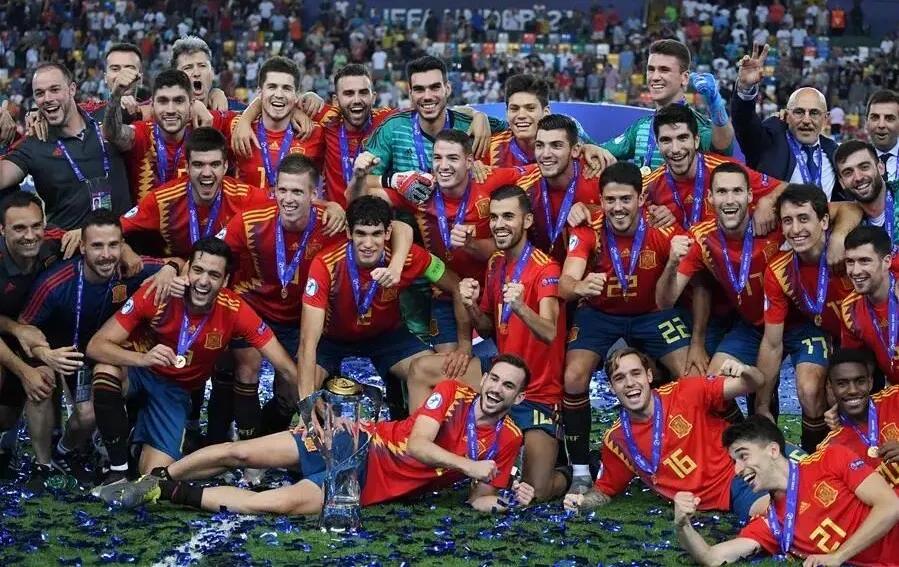
Starting with Spain's victory at the 2015 U19 European Championship, "de la Fuente's children" gradually took shape. Through six U19 and U21 European Championships and the 2021 Tokyo Olympics, players like Unai Simón, Mikel Merino, Rodri, Marc Cucurella, Ferran Torres, Fabián Ruiz, Dani Olmo, Mikel Oyarzabal, Martín Zubimendi, Yeremy Pino, Eric García, Pedri, Álex Baena, and Nico Williams were gradually integrated.
At least 16 of the 26 players in Spain's World Cup squad were "de la Fuente's children." In the final, seven started, six came off the bench, and at one point, eight were on the field. The Spanish world champion team was built around "de la Fuente's children," supplemented by other mainstays he promoted over the past five years with the senior national team, such as Lamine Yamal, Pau Cubarsí, Aymeric Laporte, and Pedro Porro. De la Fuente has even known the families of players like Olmo, Zubimendi, Pedri, Oyarzabal, and Cucurella for a decade.
De la Fuente always says "please" and "thank you" to his players, believing this "concerns education, values, and principles." He fosters a culture of patience and calm within the team, emphasizing sacrifice, humility, and collective responsibility. He repeatedly stresses the importance of family, creating a family atmosphere within the national team while encouraging players to communicate more with their families for emotional support and inner peace. Half an hour before the 2024 European Championship final, de la Fuente's first action was to call his family to check if everyone had arrived. During this World Cup, when he learned that a familiar photographer's mother had passed away, he even led the entire team to embrace the photographer in a show of emotion.
In such a team, a warm, trusting, and lively family atmosphere is everywhere. De la Fuente did not blindly favor Raya or Joan García, who performed better at top clubs, but instead chose to trust Unai Simón. The Athletic Bilbao goalkeeper repaid his mentor with a Golden Glove performance, keeping seven clean sheets. Mikel Merino, who was on crutches for two months due to injury, was also backed by de la Fuente to make the trip to the Americas, and his consecutive match-winning goals were the best gift to Spain and his coach. Before the final, Cucurella and Baena both said they would tattoo the coach's face on their bodies if they won; after the final, Yeremy Pino made the same promise. When asked about this in the post-match press conference, the veteran coach joked: "I'm not so ugly that they need to tattoo 'my face' somewhere no one can see."

Of course, this "caring father" is also a "strict father." His strictness begins with self-discipline. The 65-year-old de la Fuente often sleeps only four to five hours a day, and his perfect muscle definition comes from a habit of exercising twice a day, which he resumed during the 18 months of unemployment 15 years ago.
While bonding with players, he also established a strict management system: players are prohibited from using phones in public spaces, must arrive five minutes early for group activities, have a unified schedule, and are strictly forbidden from going out without permission or contacting the media. Violators face fines, loss of starting status, or even removal from the match squad. Training and matches are purely based on form; poor performance or lack of effort in pressing results in being benched. These rules are jokingly referred to by players as the "Spartan Code," likening them to the militarized management of ancient Sparta.
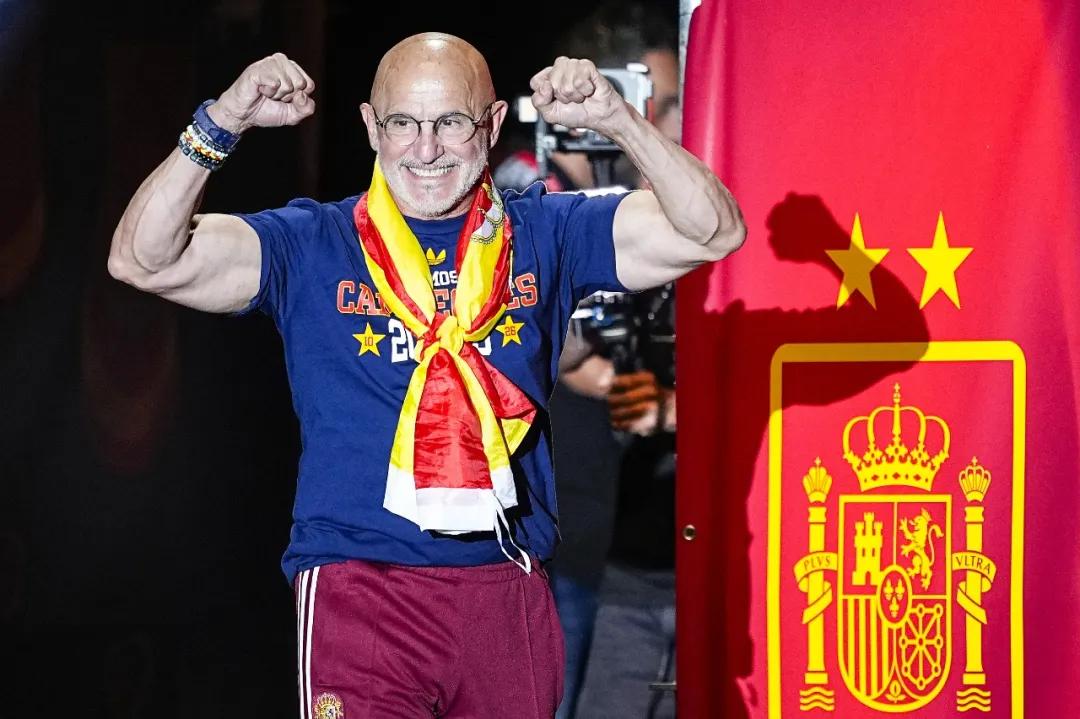
De la Fuente's parents valued family warmth, which shaped the coach's philosophy of creating a big-family atmosphere, starting from the youth national team. De la Fuente hails from the La Rioja region, broadly considered part of the Basque Country. His birthplace, Haro, is famous for its annual wine festival, where people wear white clothes and drench each other with red wine for fun. His father was a merchant sailor, and his mother, Berta, ran a small grocery store while managing household affairs. He is the youngest of four children. His playing career was mainly at Athletic Bilbao, where he won two La Liga titles and participated in the 1988 Seoul Olympics.
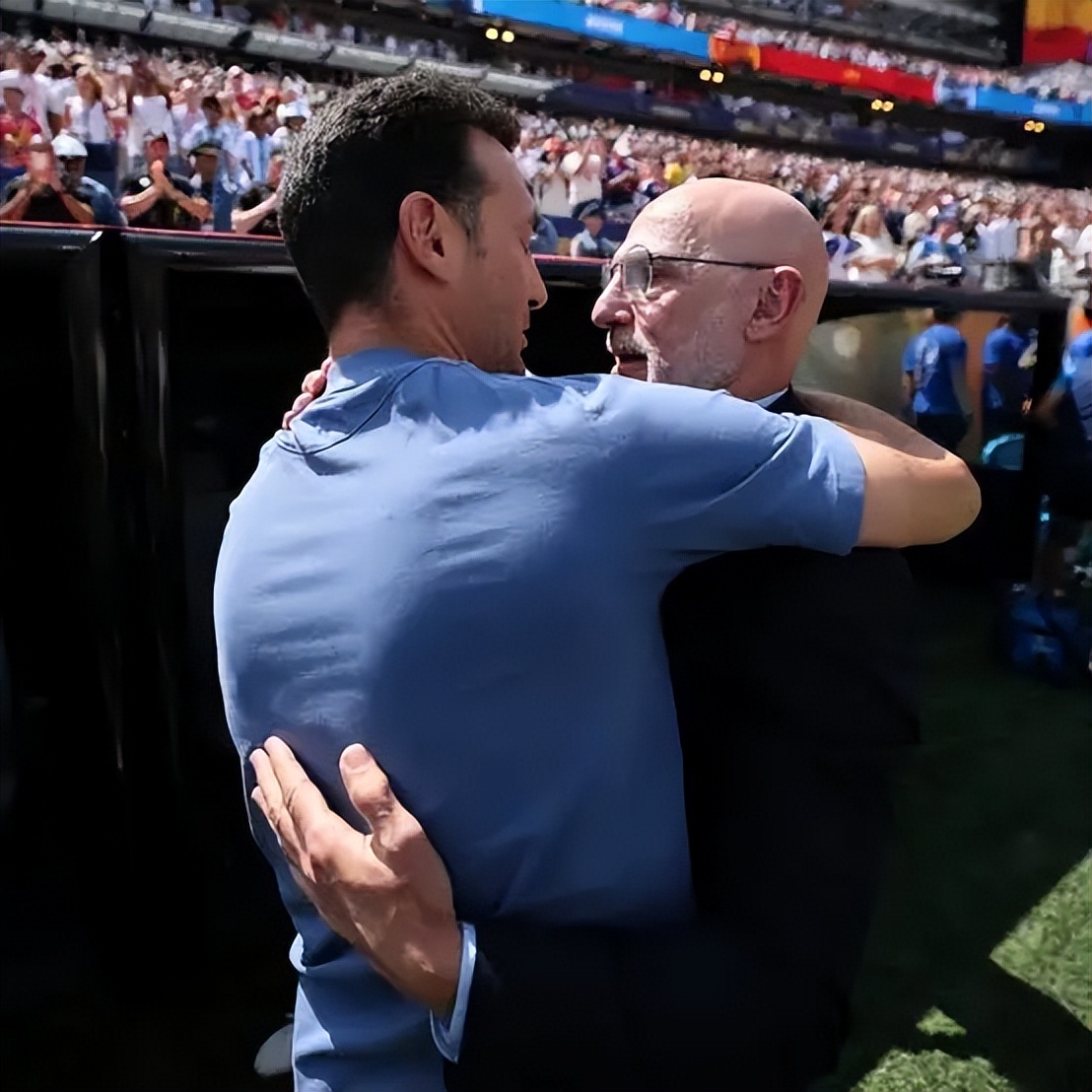
From 2017, he served as a lecturer in UEFA's professional coaching courses, teaching two subjects: football evolution and team building. Argentina's coach Lionel Scaloni, as well as Andoni Iraola, Xabi Alonso, and Joan Capdevila, were all his former students. After the final, his warm embrace with former student Scaloni and his comforting words afterward showed respect for the opponent and a tender side toward his pupil.
Furthermore, after the team's triumph, Spanish media repeatedly highlighted the uniqueness of this new champion team. Unlike the usual regional and cultural divisions, there was a stronger sense of national pride in playing for Spain. El País noted that national pride was the spiritual foundation of success: "The players come from more diverse backgrounds, including not only various regions but also naturalized players, and they possess a rare sense of national values." El Mundo argued that the World Cup gave Spain a unique "collective experience": "Thanks to de la Fuente's children, Spain has seen an exciting and confident national value system for the future."
Ferran Torres said after the match: "The victory belongs to 47 million Spaniards, not just me and my teammates." De la Fuente also emphasized: "We are a team that embraces diversity; we fight for Spain." The Guardian opined: "The Spanish team has made football a force that bridges regional divisions in Spain. Unlike before, after winning, Spanish players pose for photos more often wearing national team jerseys, rather than displaying flags from their respective regions to emphasize 'differences.'"
After the victory, fans celebrating in the streets of Spain, regardless of their origins, chanted "Vamos España" more loudly, demonstrating the enormous power of football to unite different groups of people. A Spanish team with a stronger sense of national pride can achieve greater success, and in the process, unify the entire country from a football perspective.


Wonderfulshortvideo
messi goal today messi assist today messi highlights vs egypt enzo fernandez goal today romero goal today argentina goals today argentina 3-2 egypt


“Wonderful player, fantastic player, could not run” 😅
Neville, Keane and Wright DO NOT agree on the future of Argentina in the World Cup 👀
“It gave you everything” 👀
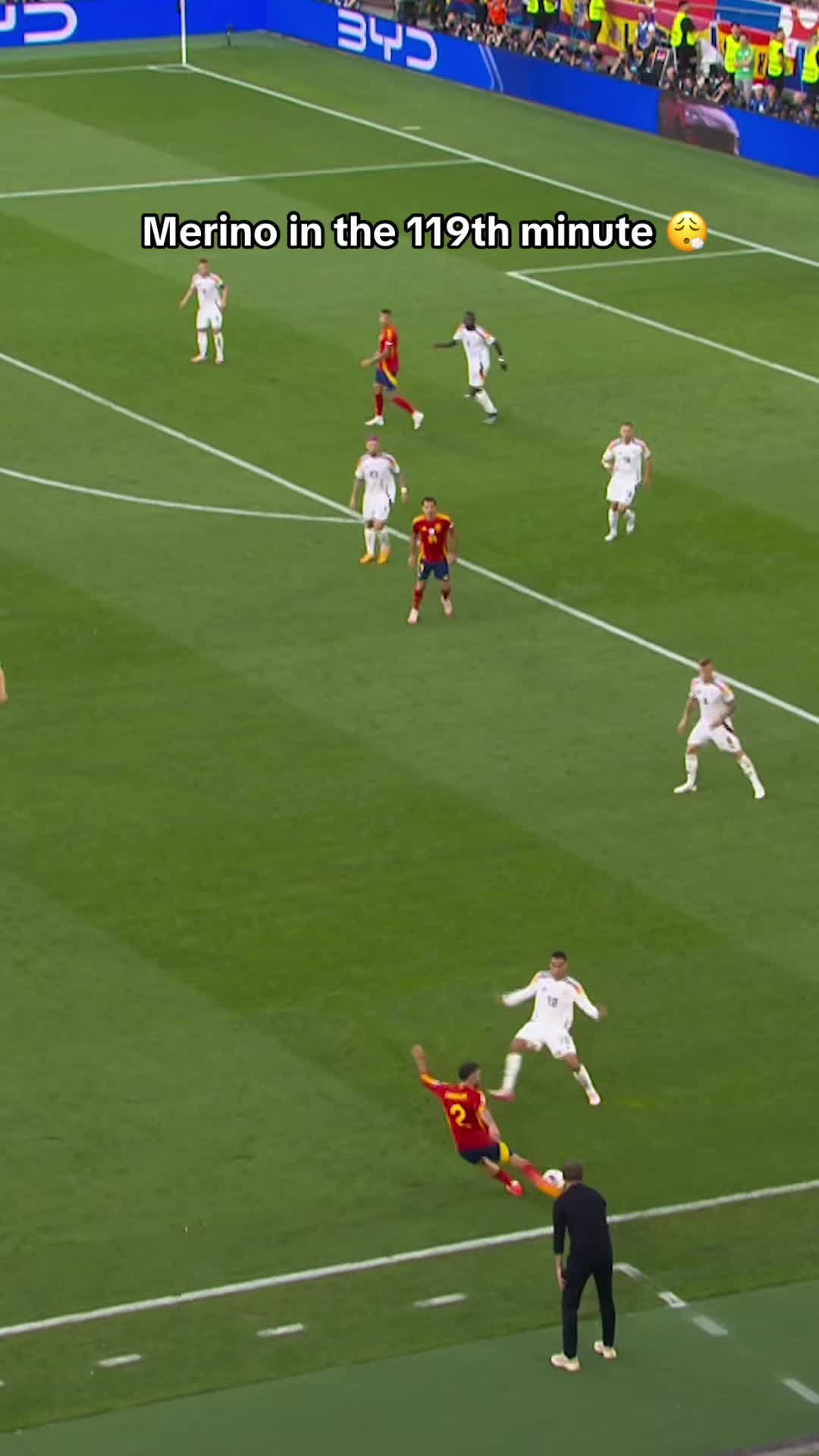
Clutch Merino 😮💨
merino goal today portugal 0-1 spain ronaldo interview today ronaldo retirement retiring
kane goal today kane highlights today england 2-1 congo
 Links
Links
 Contact
 App
App


