



From Germany's prolonged decline: A lesson with no exceptions



Boston, round of 32. Germany held 75% possession throughout 90 minutes and two extra periods against Paraguay, a team 31 spots lower in the FIFA rankings. They scored no goals. Subsequently, they fell on penalties. That is the third occasion in eight years Germany has been knocked out of the World Cup at a phase where they were meant to proceed. At Russia 2018 and Qatar 2022: group stage. And now, Boston 2026, they still failed to make the round of 16. Footy Times stated: "Three World Cups. One country. A pattern so uniform that it can no longer be called misfortune."
From world champions in 2014 to a struggling image over three consecutive World Cups, German football has not abandoned its traditions nor its training system once regarded as a global benchmark. What it has lost is the capacity to create generations strong enough to follow their predecessors. In modern football, power is not preserved by history but is renewed every year, each season, through fresh individuals.
The greatest irony in German football today: the youth academies, the NLZ system implemented since 2002 after the Euro 2000 disaster, continue to operate as designed. However, former international Thomas Hitzlsperger remarks that Germans have "forgotten how to fight" without the ball, lacking the intensity and desire that once defined them: "Competitive aggression. Fear in the opponent's eyes. The killer instinct required to finish off a match."
German press goes deeper: emerging German talents get insufficient playing time in the Bundesliga due to pressure from foreign players. They mature in an atmosphere of excessive care—boots polished, clothes laundered—to the point of losing the necessary hunger of a true professional. The development system excels at creating technically skilled players but deficient in fighting spirit. This is a paradox that no academy blueprint anticipated.
And this is not exclusively Germany's issue. The Netherlands were also eliminated by Morocco. Italy, four-time world champions, have missed three consecutive World Cups. This downturn does not signal a complete shift in global football's power balance. Germany remains among the world's elite footballing nations, with the Bundesliga as a top domestic league, a state-of-the-art training system, and resources few countries can match. It is premature to speak of the end of an empire.
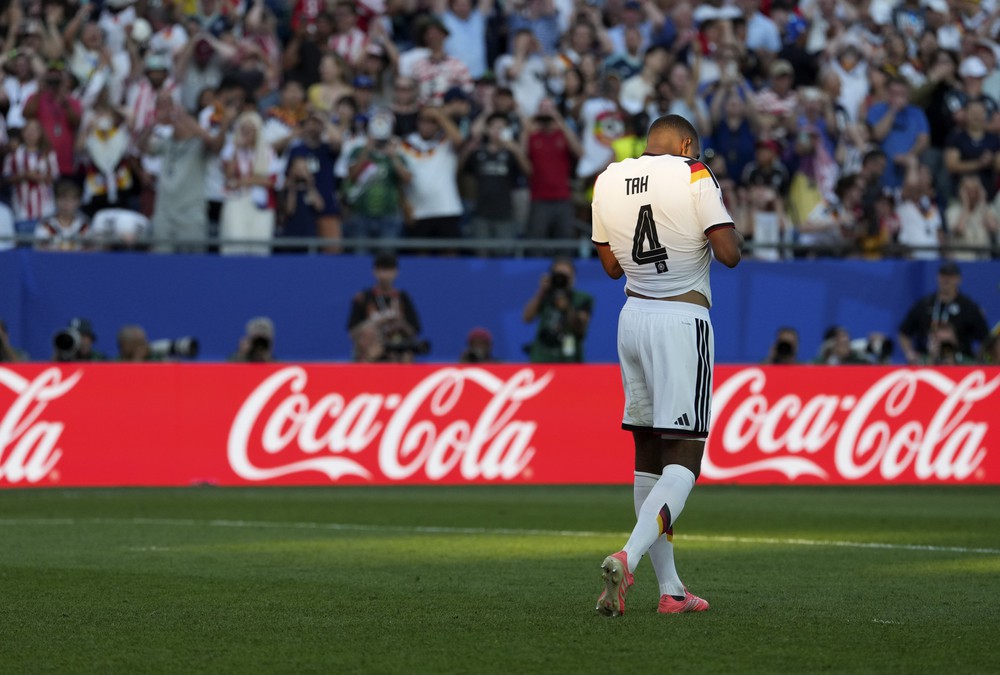
Center-back Jonathan Tah looked crestfallen after his missed penalty sent the German team out of the 2026 World Cup. Photo: Xinhua/TTXVN
Nevertheless, it is clear that the gap between Germany and the rest has narrowed significantly. In the story of German football's decline, one detail stands out when viewed conversely: Japan defeated Germany twice in under a year. The first time at the 2022 World Cup. The second in a friendly. While Germany faced an ignominious early exit, Japan, even after a stoppage-time loss to Brazil, earned respect. ESPN called it "one of the most impressive performances by Asian football at the World Cup."
Examining the stories of Germany and Japan side by side reveals a principle football has no exceptions for: resources and systems are merely necessary conditions. The sufficient condition is people—the quality of each player, constantly tested in a truly competitive environment, honed not to meet standards but to exceed them.
This is a reality every footballing nation must face, regardless of how rich its tradition may be.
For developing football nations like Vietnam, that lesson holds even greater value. Not every football country enjoys the advantage of a large pool of naturalized players or a vast diaspora. When external resources are limited, strength can only be built from within. To maintain competitiveness, a football system must continuously produce new talent, foster ongoing competition for positions, and consistently embrace the discarding of old values, even those that were once symbols.
Perhaps that is the greatest takeaway from Germany's long slide. It is not a tale of a power ending, but a reminder to the world that in modern football, class is not an inherited legacy. Only football nations that ceaselessly generate new individuals can remain at the summit. And those who linger too long, no matter how great they once were, will have to yield to those tirelessly climbing up.


Wonderfulshortvideo
messi goal today messi assist today messi highlights vs egypt enzo fernandez goal today romero goal today argentina goals today argentina 3-2 egypt



“Wonderful player, fantastic player, could not run” 😅

Neville, Keane and Wright DO NOT agree on the future of Argentina in the World Cup 👀
“It gave you everything” 👀
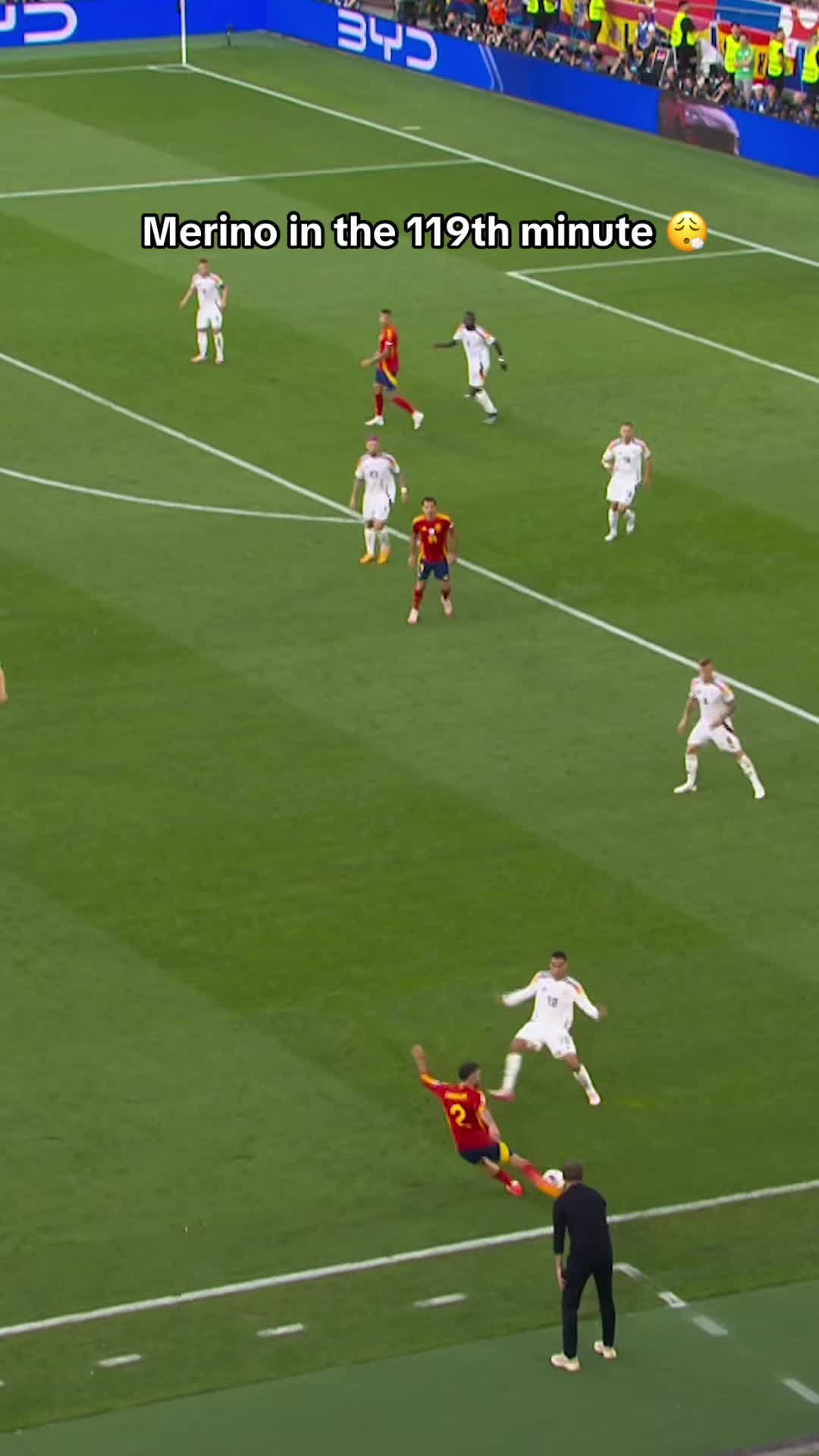
Clutch Merino 😮💨
merino goal today portugal 0-1 spain ronaldo interview today ronaldo retirement retiring
kane goal today kane highlights today england 2-1 congo
 Links
Links
 Contact
 App
App


