



64,508 attendees per match and the 10% puzzle for Vietnamese football



FIFA made public the official statistics concluding the 2026 World Cup group phase: 4,644,549 visits to the stands, 99.7% seat occupancy, with a mean of 64,508 per match. Another 5.5 million individuals poured into FIFA Fan Festivals throughout 3 host nations.
These figures appear under far from ideal conditions: ticket prices have been criticized as the steepest in World Cup history, several countries faced US visa rejections preventing thousands of fans from coming. Summer heat in Dallas or Miami is hardly the best time to squeeze into stadiums. Moreover, social media delivers every angle and each moment in real time, for free, on mobile phones, from the couch.
Nevertheless, audiences still showed up. Nearly every venue was packed. The thought-provoking question is not why they came, but why that number matters so much to FIFA—and what lessons it holds for Vietnamese football.
FIFA designed the 2026 World Cup around a core idea: live spectators are an irreplaceable asset that no technology can substitute. When 64,508 people occupy a stadium, they produce an atmosphere impossible to replicate on a screen. That sound, that energy, the feeling of being at the planet's biggest event. This (perhaps) is what FIFA truly sells—not football. The match is merely the pretext. The community experience is the actual product.
Beyond that, spectators are a commercial asset in concrete terms. Every attendee brings spending: tickets, food, merchandise, accommodation, transportation... During just the group stage, fans at Fan Festivals consumed nearly 2 million non-alcoholic drinks, over 2 million alcoholic drinks, and 300,000 hot dogs—funny numbers but representing tens of millions of dollars of direct revenue for local economies. Furthermore, spectators generate photos, videos posted online, and stories shared—the most effective free marketing content FIFA could wish for.
Social media does not steal fans from World Cup stadiums. Instead, it creates more fans eager to attend: driven by FOMO, wanting to live the scene rather than just watch it on a screen. The more content circulates on TikTok and Instagram, the more people desire a firsthand experience.
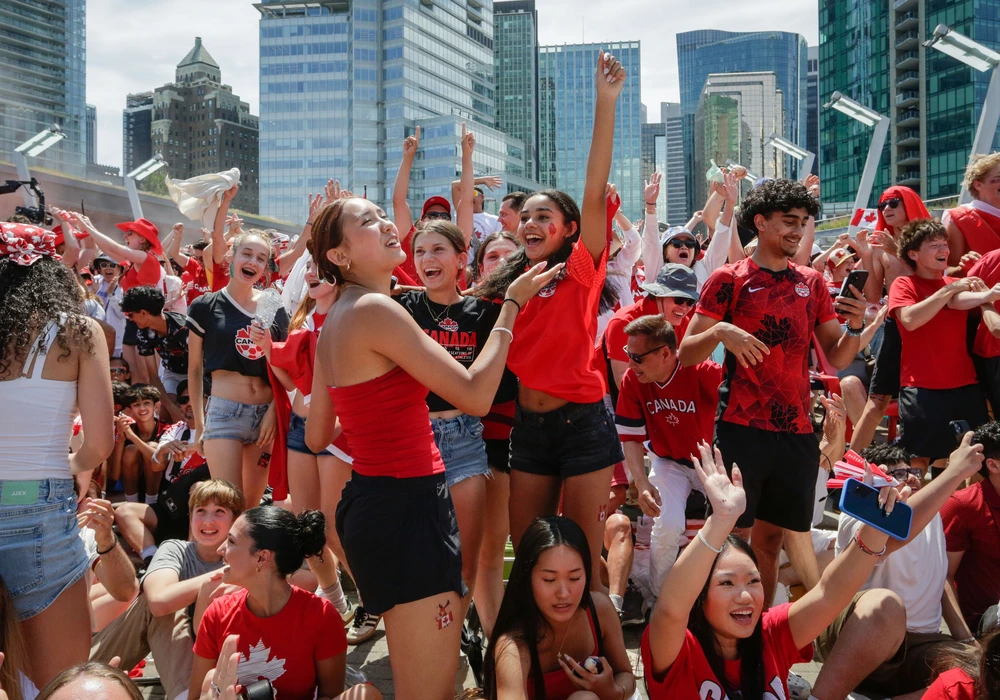
The 2026 World Cup was not only heated in the stands; the outdoor Fan Fest zones also drew massive crowds of supporters. Photo: Xinhua/TTXVN
Now back to Vietnamese football and a very different figure: an average of 5,000–7,000 spectators per V-League match. A modest 10% compared to a World Cup game. Some matchdays, certain stadiums even fall below 1,000 people. And this number has persisted over the last five seasons.
Of course, it's unfair to compare with an event like the World Cup, but observing the stability (though lack of growth) in V-League attendance each season is indeed concerning. It reveals that 5,000–7,000 loyal fans turning up per round form a community with local identity, emotional bonds, and word-of-mouth potential. This is something that doesn't even require a marketing campaign to exist.
The problem is that this figure is treated as a "default," not invested in for expansion, and easily eroded if the live experience isn't improved while the home viewing experience via smartphones keeps getting better. The issue is that V-League clubs have never systematically worked on retaining and growing audiences. Match days are still mostly "just show up for the game." Pre- and post-match activities remain old-school promotional tactics lacking viral moments.
But that's alright. On the positive side, this is fertile ground for social media and content creators—something clubs previously found difficult or couldn't afford. Today, social media opens doors for clubs to develop their "asset." However, to achieve that, they need a mindset shift.
Young fans, who grew up with smartphones, don't come just to watch football. They come for an experience, to check in, to create their own memorable moments. If clubs don't offer that environment, no matter how thrilling the on-field action, the stadiums will gradually empty out.
The V-League and its clubs cannot match FIFA's scale. But the principle remains the same: spectators don't appear out of nowhere, they don't stay without reason, and they don't grow naturally. That is the challenge for VPF. It is the challenge for every club. And it is a challenge for the entire football culture—because when the stands are empty, not only does revenue disappear. The football culture fades away along with it.


Wonderfulshortvideo
messi goal today messi assist today messi highlights vs egypt enzo fernandez goal today romero goal today argentina goals today argentina 3-2 egypt



“Wonderful player, fantastic player, could not run” 😅

Neville, Keane and Wright DO NOT agree on the future of Argentina in the World Cup 👀
“It gave you everything” 👀
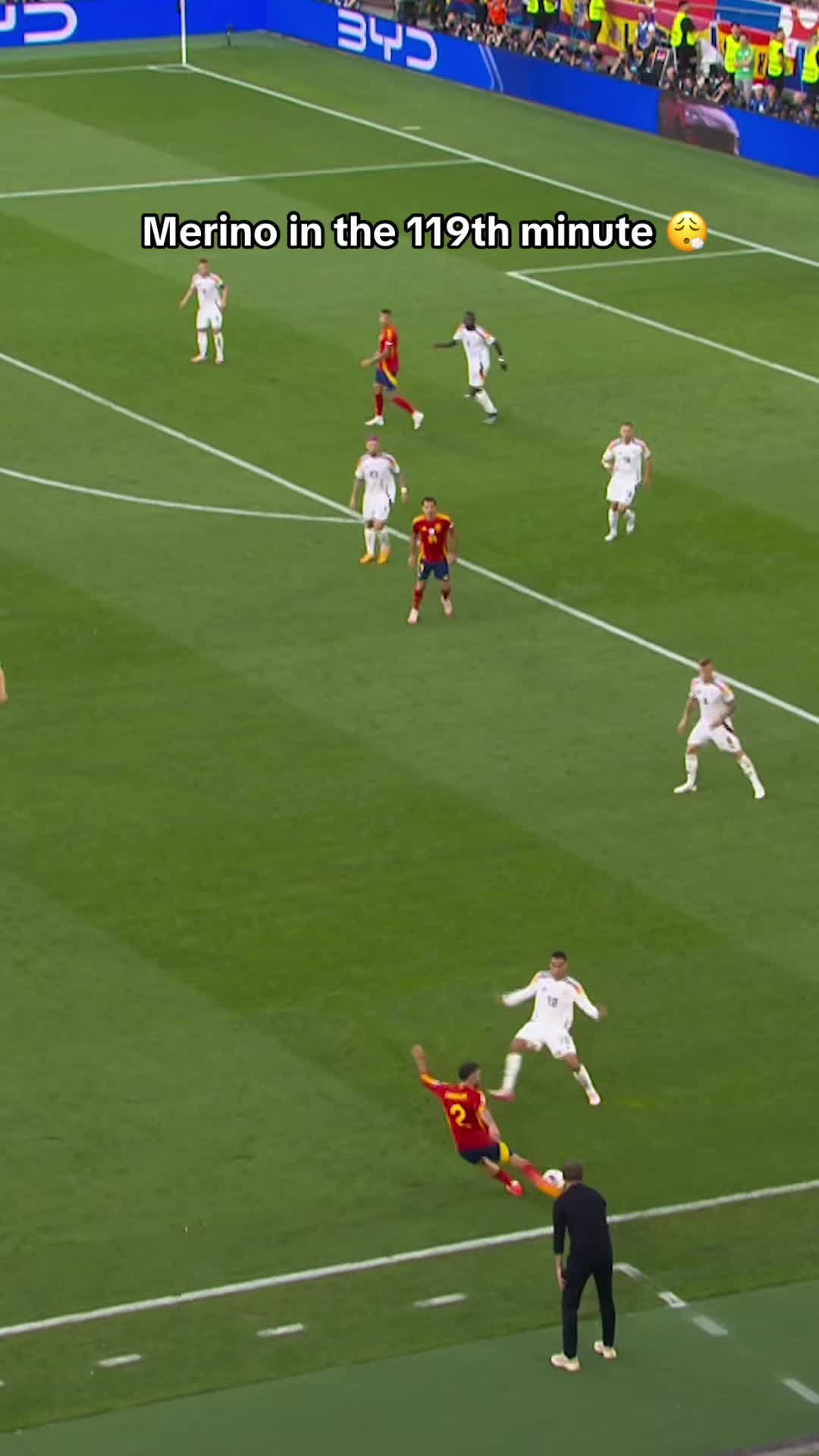
Clutch Merino 😮💨
merino goal today portugal 0-1 spain ronaldo interview today ronaldo retirement retiring

kane goal today kane highlights today england 2-1 congo
 Links
Links
 Contact
 App
App


