



CSL Coexists with World Cup: Stable Popularity, Need for Higher Tempo and Intensity



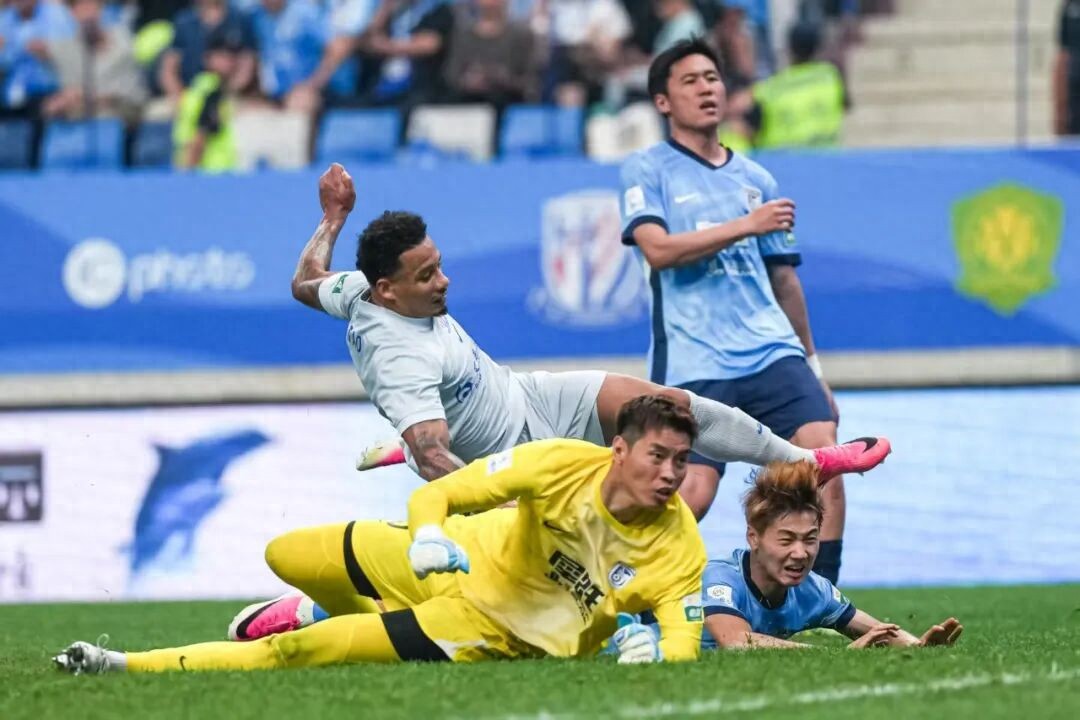
Reporter Chen Yong reports As the World Cup group stage reaches the third round, with teams battling or calculating for a place in the last 32, the Chinese Super League has reignited. Walking alongside the World Cup is unquestionably a test, spanning aspects such as technical-tactical observation, fan engagement, and referee judgment scales.
A reassuring point is that in the just-concluded 16th round of the league, although attendance dropped in a few matches, the overall popularity of the CSL remained largely stable. For the CSL, since the cross-year schedule is not yet feasible, it must coexist with the World Cup or the European Championship. During this coexistence, how to better benchmark, learn, and absorb—especially in terms of intensity and pace—is clearly a crucial topic. Looking ahead, the cross-year schedule still needs to be actively promoted.

Over the past three days, two voices have lingered. The first says: "After watching the World Cup, the technical and tactical level of the CSL is simply unwatchable." The second says: "I only glanced at the World Cup, but I watched the CSL with great engagement because it's our own league."
On the first matchday, June 26, Qingdao Hainiu hosted Yunnan Yukun. In the first half, both sides essentially abandoned defense, combining for six goals, with Qingdao Hainiu leading 4-2. The second half saw no further goals, and Qingdao Hainiu ultimately won the match.
On the second matchday, the 27th, Liaoning Tieren, playing at home, did not adopt a conservative approach. As a result, Shandong Taishan scored five goals through excellent counterattacks, winning 5-1. During the match, Shandong also missed one one-on-one chance and two open goals, while hitting the post three times. The subsequent games were more competitive: Shenzhen Peng City trailed 0-2 but pulled two goals back, with Zhou Dingyang equalizing in the 89th minute; Chengdu Rongcheng then secured a last-gasp winner through Wei Shihao in the 8th minute of stoppage time. In that game, Shenzhen Peng City were not inferior to Chengdu Rongcheng in terms of performance. Henan Club Caifangfang hosted Shanghai Port, taking the lead before being overturned. They scored a goal near stoppage time, but it was ruled offside due to Gustavo's toe being offside. Henan actually had a better overall performance than Shanghai Port. Beijing Guoan hosted relegation-threatened Wuhan Three Towns, winning 1-0 in a narrow contest, with Wuhan showing strong survival desire. In the final match of the second matchday, Chongqing Tonglianglong edged Tianjin Jinmen Tiger 1-0; the former had six shots while the latter fired 13 but failed to equalize. Tianjin had a goal disallowed for offside interference in stoppage time.
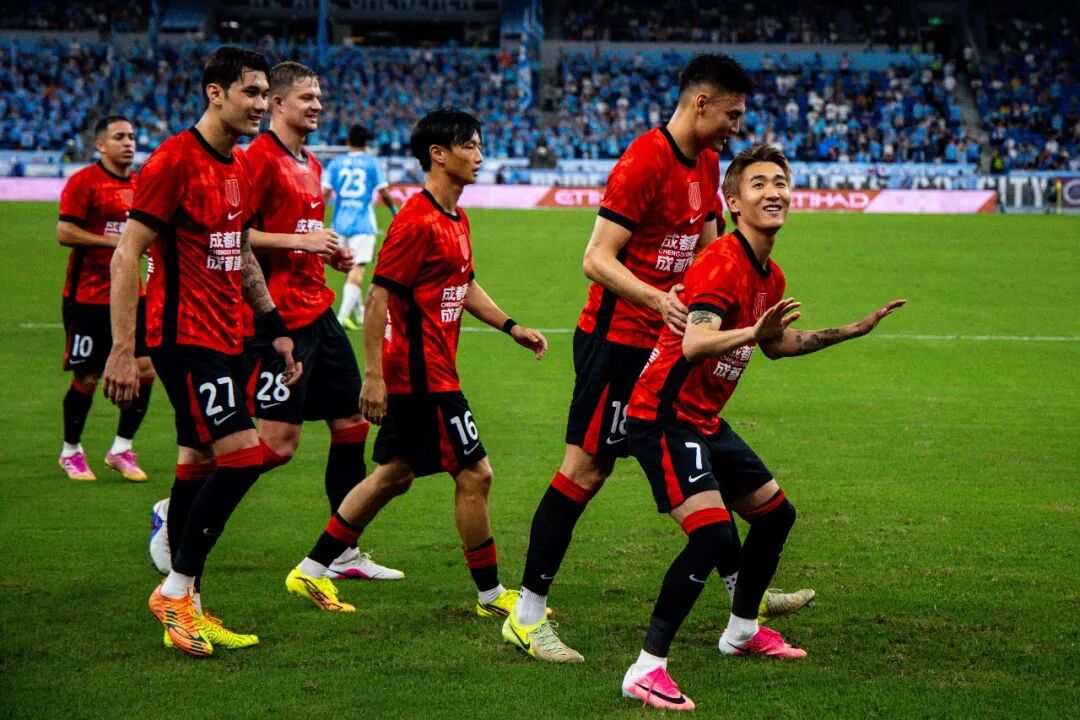
On the last matchday, the 28th, Qingdao West Coast faced Zhejiang Greentown. The first half ended 1-1, but Qingdao stepped up in the second half to win 3-1. Dalian Yingbo Haifa hosted Shanghai Shenhua. Stanciu gave Dalian the lead early, but Wu Xi and returning Ashuo scored to turn the game around—Ashuo's goal was a spectacular solo run. Later, Latang scored twice, giving Shenhua a 4-1 victory.
Given that the CSL's intensity and pace currently cannot match world-class standards, enhancing league suspense is paramount. The resilient performances of Henan Caifangfang and Shenzhen Peng City, as well as the survival instincts of Tianjin Jinmen Tiger and Wuhan Three Towns, sparked considerable discussion this round. Stopping strong teams remains a theme of the new CSL season. After 16 rounds, Chengdu Rongcheng has 13 wins (81.25% win rate), which is commendable. Other top teams: Shandong Taishan has 8 wins (50%), Shanghai Shenhua 7 wins (43.25%), Beijing Guoan and Zhejiang Greentown only 6 wins (37.5%), and Shanghai Port just 5 wins (31.25%).

The current top five golden ticket markets in the CSL—Dalian Yingbo, Beijing Guoan, Chengdu Rongcheng, Chongqing Tonglianglong (Longxing Stadium), and Shanghai Shenhua—only had two playing at home this round: Dalian Yingbo and Beijing Guoan. Chongqing's match was not at Longxing Stadium but at Tonglianglong Stadium, so overall attendance figures for this round were unlikely to break records.
Data shows that, except for a few matches, attendance in this round did not differ significantly from previous rounds. We compared with recent matches or those against similar opponents (thanks to Asaikana for the data):
Qingdao Hainiu vs Yunnan Yukun: 21,036 attendance, notably lower than the team's previous figures. Liaoning Tieren vs Shandong Taishan: 28,619, roughly comparable to Round 15 (weekend) Liaoning vs Shanghai Port (31,759). Henan Caifangfang vs Shanghai Port: 19,041, similar to Round 15 Henan vs Zhejiang Greentown (19,371). Shenzhen Peng City vs Chengdu Rongcheng: 25,119, higher than the previous round Shenzhen vs Qingdao Hainiu and also higher than Round 11 (weekend) Shenzhen vs Shandong Taishan (23,751). Chongqing Tonglianglong vs Tianjin Jinmen Tiger: 16,856, slightly lower than Round 5 (weekend) Chongqing vs Shenzhen Peng City (18,033 at Tonglianglong Stadium). On the final matchday, Qingdao West Coast vs Zhejiang Greentown: 14,332, significantly lower than previous matches.
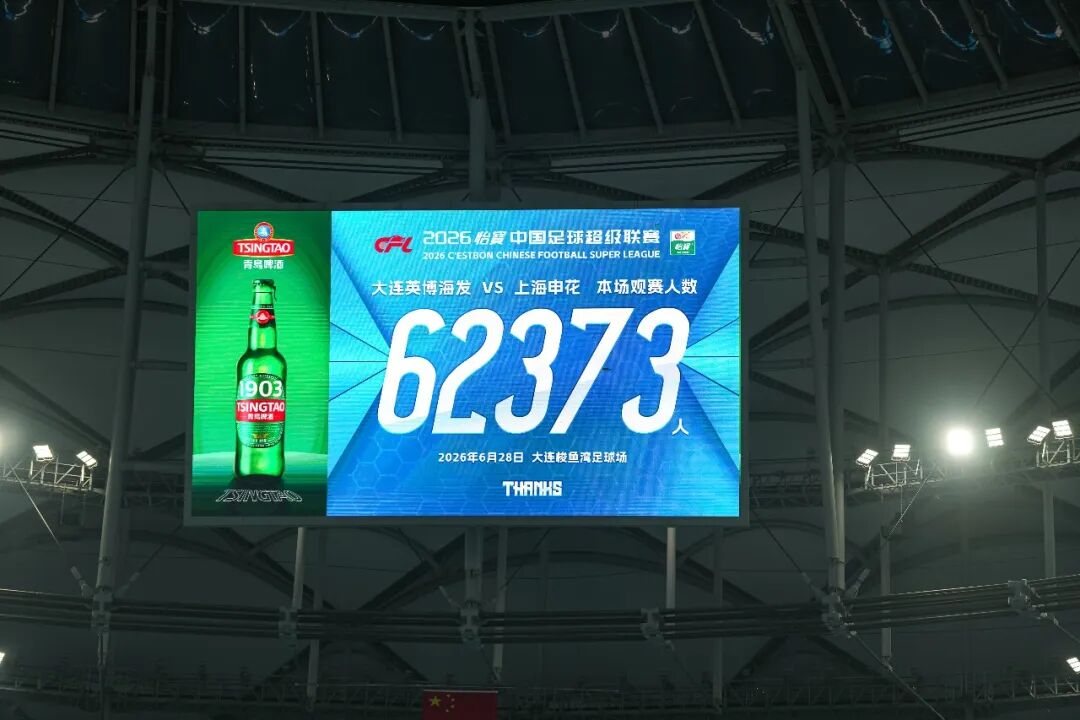
Among the two golden ticket markets, Beijing Guoan vs Wuhan Three Towns drew 40,146, roughly matching Round 12 (weekend) Beijing vs Qingdao Hainiu (41,886). The top gold ticket market, Dalian Yingbo Haifa vs Shanghai Shenhua, saw an attendance of 62,373, setting a new home attendance record for Dalian Yingbo and continuing to break the third-highest attendance record in Chinese top-flight history.
The overall stability of the fan market can be attributed to several factors: First, the CSL fan base has seen explosive growth, with a 32.54% increase in 2025 compared to 2024, and a further 24.3% year-on-year increase in the first half of 2026. Second, the CSL has built a stable fan community that does not abandon matches for other events. Third, the World Cup, due to its expansion, has featured many mediocre matches, including suspected calculated draws, which have dampened fan enthusiasm. The slight decline in attention for some CSL matches this round is partly due to the World Cup and partly due to team form—for example, Qingdao Hainiu's four consecutive losses had undermined fan confidence.

Aligning with mainstream world leagues is the aspiration of Chinese football stakeholders. The 2026 CSL season has shown some positive signs, but overall, the journey toward alignment remains long and arduous.
On the technical and tactical front, a major highlight of the 2026 CSL season is that teams are no longer conservative in their systems. Notable examples include Henan Caifangfang and Qingdao Hainiu. In the past, Henan relied on counterattacks, causing trouble for many strong teams, but this season they play a more balanced style, averaging over 51% possession per game, ranking 7th in the CSL. Qingdao Hainiu, previously known for counterattacks, has also shifted to a more balanced approach this season, averaging 44.9% possession, ranking 12th.
A more balanced style means more transitions, which require players to think and make more decisions—crucial for raising the league's and players' levels. However, the current transition pace still lags far behind world mainstream leagues. In terms of match intensity, the CSL's overall level is decent.
Regarding intensity and pace, refereeing standards are also a key factor. In this World Cup, referees have been very lenient, leading to intense physical contests. Back in the CSL, we see some referees trying to encourage physical play, such as not blowing the whistle for close marking, but compared to the World Cup, CSL referees are still overly cautious and strict, which to some extent undermines the intensity and disrupts the rhythm.
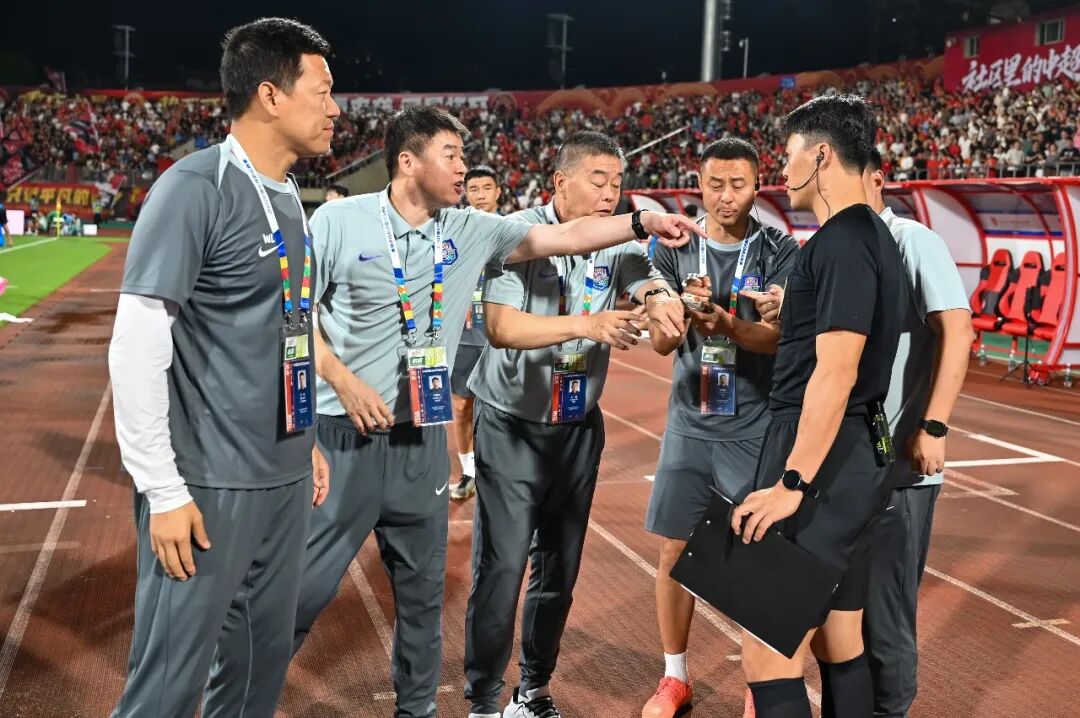
Another issue with CSL referees is the lengthy VAR process after intervention. Viewing replays and making decisions is often drawn out, with many referees appearing indecisive in front of the screen, undermining their authority. In the match between Chongqing Tonglianglong and Tianjin Jinmen Tiger, Tianjin scored at 89:16, VAR intervened at 89:40, the referee decided to review the footage at 90:33, stepped away then returned to review again, finally making a decision at 92:52. The entire process lasted 3 minutes and 12 seconds, which set the stage for post-match protests by Tianjin, who argued that stoppage time was insufficient: VAR alone consumed 3 minutes in stoppage time, but only 2 minutes were added.
For the CSL, improving intensity and pace can be achieved through changes in coaches' strategies and refereeing standards, but genuine progress will inevitably be a long-term process: only when the overall level of local players sees a significant uplift can the entire CSL truly rise, and intensity and pace achieve a qualitative leap.
Another aspect to consider is the schedule and format: although this season's CSL does not have an interval during the hot July-August period, it did arrange a longer break in June, allowing teams ample rest and adjustment, and giving the national team and U23 squad time to train together.
In the long run, coexisting with the World Cup is clearly detrimental to the CSL's appeal. More importantly, FIFA and AFC's competition systems—including national team tournaments and the AFC Champions League Elite—are based on a cross-year schedule, usually starting in September. For CSL clubs and Chinese national team players, this period is often when they are most fatigued.
Therefore, discussing a cross-year schedule remains a key issue for Chinese professional leagues. The CFA and the Chinese Football League have been monitoring this topic, but due to multiple factors—especially China's vast geographical span and the difficulty of playing winter matches in the northeast—the cross-year format cannot yet be implemented. In the future, if more professional indoor football stadiums are built in the northeast, it could lay a solid foundation for a cross-year schedule.


Wonderfulshortvideo
messi goal today messi assist today messi highlights vs egypt enzo fernandez goal today romero goal today argentina goals today argentina 3-2 egypt



“Wonderful player, fantastic player, could not run” 😅

Neville, Keane and Wright DO NOT agree on the future of Argentina in the World Cup 👀
“It gave you everything” 👀
Clutch Merino 😮💨
merino goal today portugal 0-1 spain ronaldo interview today ronaldo retirement retiring

kane goal today kane highlights today england 2-1 congo
 Links
Links
 Contact
 App
App


