



Expanded, but not fully strengthened for the strong: World Cup's flow feast and elite game



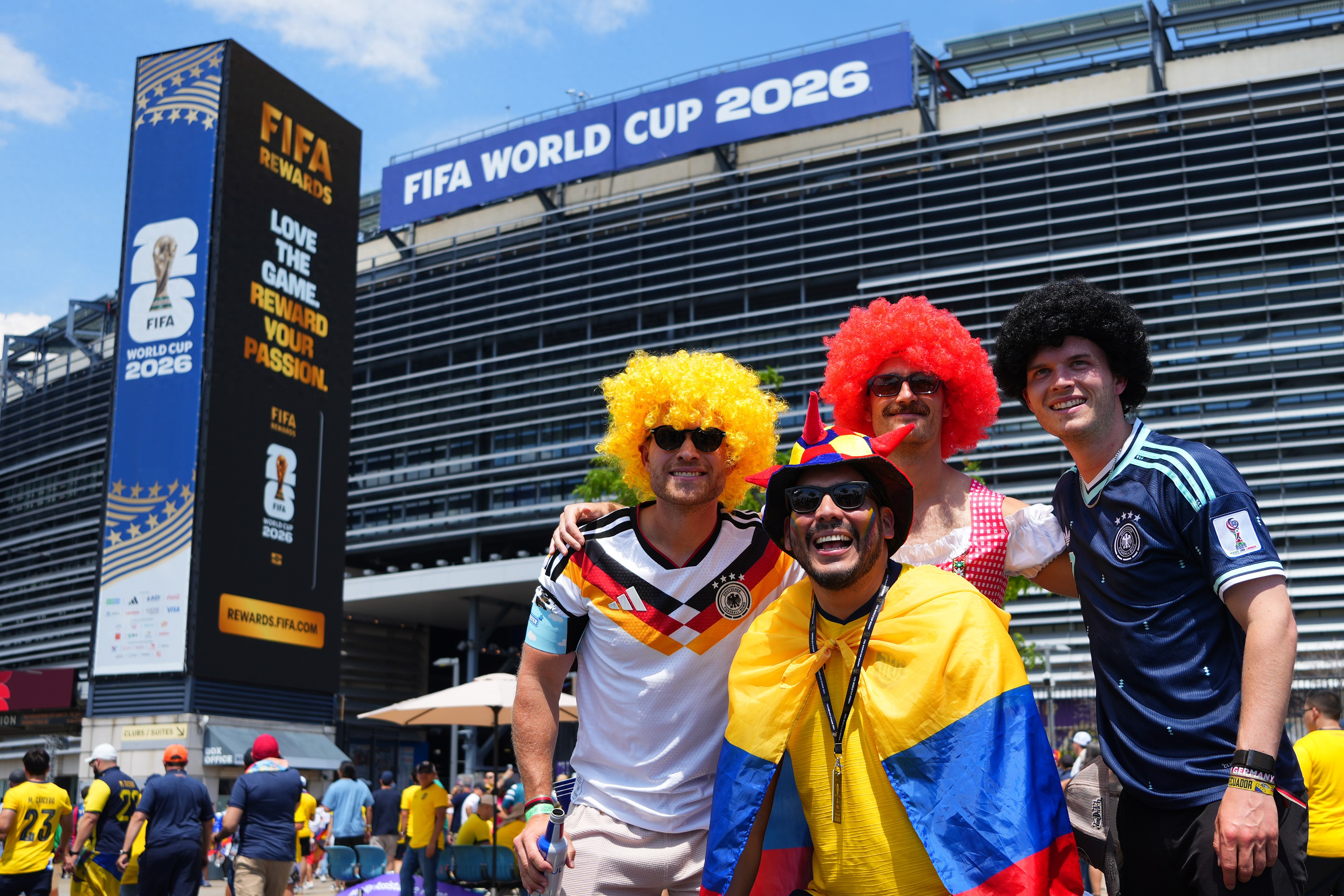
Written by Han Bing The group stage of the USA-Mexico-Canada World Cup has ended. The 72 group matches attracted more than 4.6 million spectators, nearly twice the 2.428 million of the 1994 World Cup, and even shattered the 32-year-old record for total attendance at a single World Cup. Of course, this spectacular and lively scene results from the greatly expanded number of games. Infantino only highlighted the total attendance and ticket revenue records, but deliberately overlooked another figure: the number of group stage matches this year is twice that of 32 years ago, yet the average attendance (64,000) is lower than the 67,500 of 1994.
From a certain perspective, this "although... but" dynamic constitutes the internal logic of this World Cup's expansion.
As most media predicted before the tournament, the competitiveness of group stage matches has declined after the expansion. With a 67% probability of advancing, the third round of group matches—which were once decisive for qualification—now features more meaningless games and suspected collusive matches. High-quality clashes between strong teams in the group stage were also rare this time. However, this was never the primary goal of expansion. The strategic significance of expansion—enhancing the World Cup's global coverage and influence—has been fully achieved, and the carnival-like or "entertainment" aspect of the group stage is simply an inevitable byproduct. Moreover, with the format change, the doubled knockout rounds will be the ultimate showcase of football's competitiveness. Are 32 top-tier encounters enough?

The expansion has brought more lower-ranked teams to the World Cup. At the 2022 World Cup, there were 25 teams ranked in the top 32, 7 teams ranked outside the top 32, and only 3 teams ranked outside the top 48, accounting for 9.4% of all participants, with the lowest ranking being 61st (Ghana). In this edition, teams ranked in the top 32 increased by only 3 (to 28), a growth rate (12%) far below the increase in total teams (50%). There are 12 teams ranked outside the top 48, making up 25% of all participants, with the lowest ranking being 85th (New Zealand). The expansion is more about "downward compatibility" rather than reducing the absence rate of higher-ranked strong teams.
Among the 16 teams eliminated in the group stage, most are beneficiaries of the expansion, primarily from traditionally weaker regions like Asia, North/Central America, and Oceania. Of the four World Cup debutants, three (Curaçao, Jordan, Uzbekistan) were eliminated, except Cape Verde. Among the 16 lowest-ranked teams in the tournament, 10 were eliminated. The bottom three in rankings—New Zealand (85th), Haiti (83rd), and Curaçao (82nd)—all failed to advance. Meanwhile, lower-ranked qualifiers like Ghana (73rd), South Africa (60th), and DR Congo (46th) are traditional African powerhouses, so their rankings do not reflect true strength. This shows that the expansion, in competitive terms, still largely maintains the traditional power structure. In short, expansion has increased the spectacle but hasn't upset the "big guns"—a win-win for all.
All three host nations from North/Central America, the region's strongest teams, advanced, while the three teams that qualified through the preliminary rounds were all eliminated. Four years ago, at the 32-team Qatar World Cup, two of four teams from the region reached the round of 16. Among the nine Asian participants, only Japan and Australia advanced, resulting in a 77.8% elimination rate. At the 32-team Qatar World Cup four years ago, six Asian teams participated, and three (Japan, South Korea, Australia) still made the round of 16. The expansion has not brought more advancing teams from weaker continents. The high elimination rates for teams from North/Central America and Asia demonstrate that the gap between first-tier and second-tier teams in these two continents remains unchanged by expansion.
For most teams that have benefited from the expansion, the three group matches and participation bonuses represent the tangible dividends of the World Cup. Just being part of the global football celebration is itself the greatest value. Expecting them to go further is statistically unreasonable and also "morally" unjustifiable.

The expansion has broadened the World Cup's global coverage. Using a 12-year absence from the tournament as a benchmark, this edition added as many as 18 "new face" teams, of which nine were eliminated in the group stage—a probability that aligns with both reason and the cyclical nature of football's generational strength. The only undeniable fact is that, compared to the 32-team era, there are fewer high-quality group-stage clashes and more lopsided scorelines. Traditional strong teams are more likely to secure early qualification with a round to spare, making more final-round matches low-intensity affairs with squad rotations.
Four years ago, all 13 European participants were ranked in the top 32, with the lowest being 26th. In this edition, 12 of the 16 European teams are ranked in the top 32, while four are outside, the lowest being 64th. Still, 13 of the 16 European teams advanced to the round of 32, a qualification rate of 81.2%. Of the six South American participants, five advanced, a rate of 83.3%. The only elimination, Uruguay, came due to a rare fluke where the goalkeeper made three errors leading to goals in three matches. The low elimination rates for European and South American teams indicate that expansion has eased the path for strong teams from these continents.
The dilution of group-stage quality is directly reflected in the reduced difficulty for top-tier teams to advance. Four years ago, among the seven traditional powerhouse seeded teams and the unseeded Netherlands (in Group A), only France, Brazil, and Portugal won their first two matches, and seeded Belgium was eliminated in the group stage. Four years later, at the USA-Mexico-Canada World Cup, as many as seven teams started with consecutive wins and secured early advancement. Additionally, because the eight best third-placed teams also qualify, teams that had four points after two rounds—such as Canada, Switzerland, Brazil, Morocco, Netherlands, Japan, Egypt, Spain, Austria, Portugal, England, and Ghana—were effectively already through. Such a large number of advancing teams turned many third-round group matches into low-stakes affairs with little competitive drive.
With top teams spread across different groups, high-level group clashes have noticeably decreased. In this World Cup's group stage, matches between teams ranked in the top 20 accounted for less than 10% of all games. Among them, only one match involved two former world champions, and there was no meeting between the eight traditional title contenders.
The dilution of group-stage quality is also evident in the significant increase in one-sided blowouts. In the 72 group-stage matches of the USA-Mexico-Canada World Cup, there were 15 matches where one team scored four or more goals, accounting for 20.8% of all games. Four years ago, across 48 group matches, only five games featured such scorelines, meaning this number has tripled.
However, this data-driven and spectacle-filled "carnival" will come to an abrupt halt after the group stage. The newly added round of 32 brings 16 extra knockout matches—intense, do-or-die battles that represent the core competitive zone of the expanded format. With 32 more matches ahead, all elimination games, this is double the life-or-death encounters compared to the 32-team era. Are you ready?

Africa, whose allocation of spots doubled, had 10 participants, and only Tunisia was eliminated due to a lack of strength and internal discord; the other nine all advanced to the round of 32, a qualification rate of 90%. Among these nine, only South Africa and Egypt rely on a relatively small number of overseas-based and naturalized players, while the other seven—including the biggest surprise, Cape Verde—are largely supported by naturalized players and those playing in top European leagues. This pattern also applies to Curaçao and Haiti in North/Central America, Iraq, Qatar, and Australia in Asia, and New Zealand in Oceania—all benefitting from European-based naturalized and expatriate talent to enjoy the World Cup dividend.
In this World Cup, 853 players are based in Europe, accounting for 68.5% of all participants. Although this share is lower than the 72.6% at the 2022 World Cup, the absolute number has increased by 250 players—83 more than the net increase from all other continental leagues combined. Among the 32 teams that advanced, besides the 13 European teams, the remaining 19 non-European squads boast a total of 299 European-based players, representing 35% of all World Cup players from European leagues. Notable examples include Côte d'Ivoire (25 players), DR Congo and Ghana (24 each), Japan/Senegal/Cape Verde (23 each), Argentina (19), Algeria (19), and Australia (16)—all with more than half of their squads playing in Europe. Teams reaching the knockout stage for the first time in their history, such as Côte d'Ivoire, DR Congo, and Cape Verde, have all benefited from the "surplus capacity" of European league players.
With the success of most emerging teams dominated by European-based players in this World Cup, the future trends of naturalization and European migration—especially naturalization from European leagues—are sure to intensify. The "surplus capacity" of European football talent will thus be released even further. In this sense, teams from traditionally weaker football continents that fail to keep up with this trend will likely remain at a significant disadvantage in the short term.
FIFA's original intention with expansion was to support youth development and infrastructure improvement in football-weak countries and regions. However, at least in the short term, it has paradoxically made European football the biggest beneficiary. The influence of European leagues on the World Cup is likely to grow even larger as a result. After all, youth development takes time, while mass naturalization of European league players offers a shortcut that can be quickly achieved.


Wonderfulshortvideo
messi goal today messi assist today messi highlights vs egypt enzo fernandez goal today romero goal today argentina goals today argentina 3-2 egypt



“Wonderful player, fantastic player, could not run” 😅
Neville, Keane and Wright DO NOT agree on the future of Argentina in the World Cup 👀

“It gave you everything” 👀
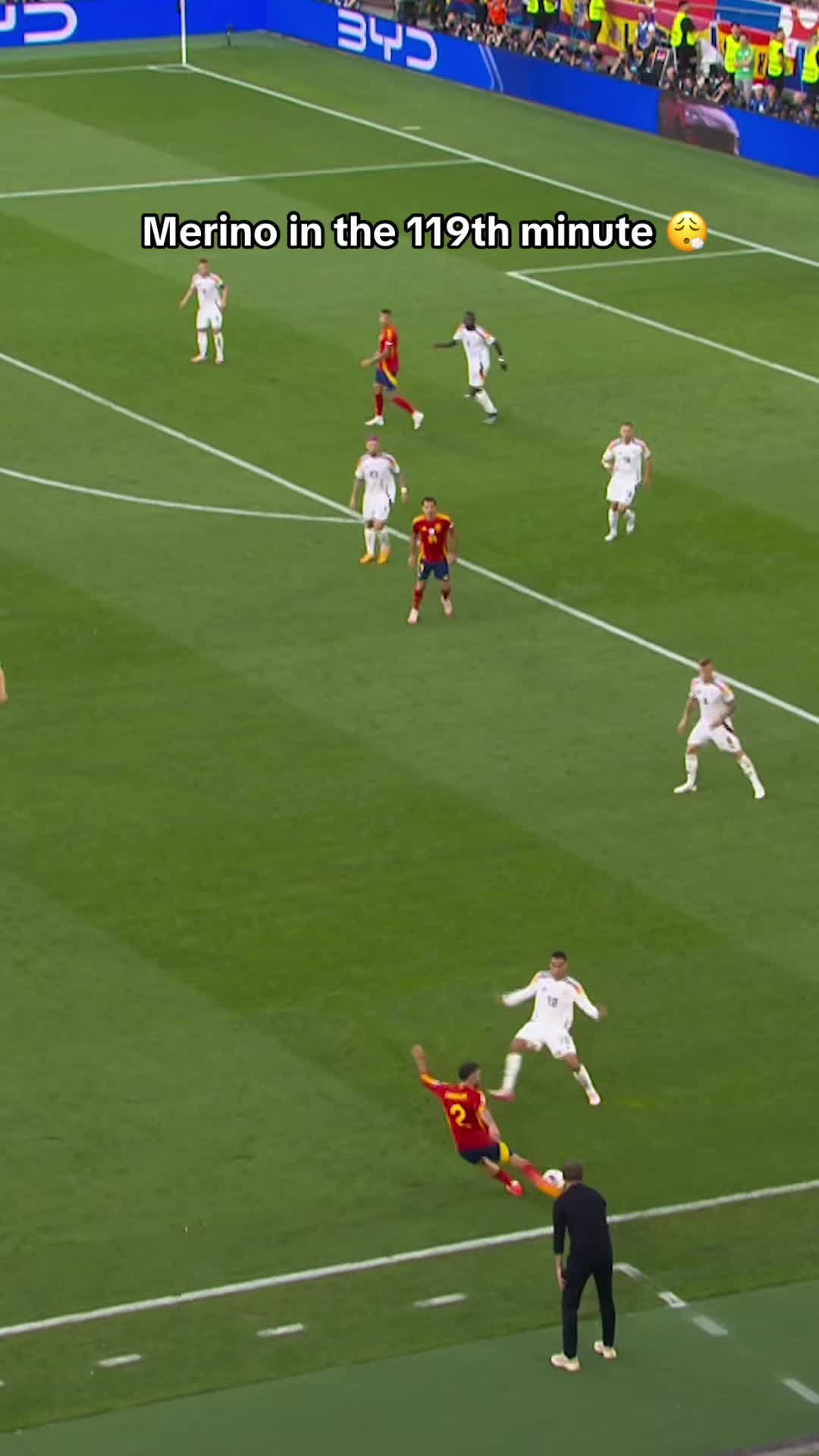
Clutch Merino 😮💨
merino goal today portugal 0-1 spain ronaldo interview today ronaldo retirement retiring
kane goal today kane highlights today england 2-1 congo
 Links
Links
 Contact
 App
App


