



Echoes of the Champions League: PSG's assault on conservative strongholds



When PSG asserts its dominance in the Champions League once more, a segment of Europe is hurt by the financial might of the Paris-based team, which has exceeded old norms.
What dark implications lie behind PSG's imposition in this arena, given that the world saw Real Madrid President Florentino Perez in the stands of the Puskas Arena, seated beside FIFA President Infantino, UEFA President Ceferin, and PSG President Al Khelaifi, who also chairs the European Club Association (ECA)?
What kind of dominance is this?
All the most powerful figures in world football gathered at the biggest club final, not to mention the football legends also present. If this is not seen as a compromise among "entities," then it must be a strong alliance, demonstrating the transparency and openness of football.
There is debate over the money that Arab owners pour into Manchester City or PSG, viewing it as financial injustice, legal loopholes, and suspecting motives of "sports washing," sparking deep controversy for decades. However, the fundamental issue is that the British or French governments welcomed these massive investments, as they generate huge capital flows, boost employment, and enhance bilateral relations between the parties.
Certainly, governments have conducted checks on the legitimacy of these financial flows and implemented strict anti-money laundering measures. The only limitation may be that European governments do not interfere in spending issues or football's balance, as there are other secondary control tools in place.
With a biased, gloomy, and contemplative perspective, sports conservatives express outrage at PSG's success, claiming that the Qatari owners exploit this success to whitewash a system of "slave labor" based on racial discrimination and widespread human rights abuses.
They see this as a severe violation of ethical rules, affecting the traditional values of the Champions League, normal standards of conduct, normalizing arbitrariness, and creating inequality on the pitch.
The financialization of PSG's budget—850 million euros, 34 times that of teams like Angers or Le Havre—is criticized for killing the suspense on the pitch each season, leading to a decline in the French league, reduced broadcaster interest, and lower media rights fees.
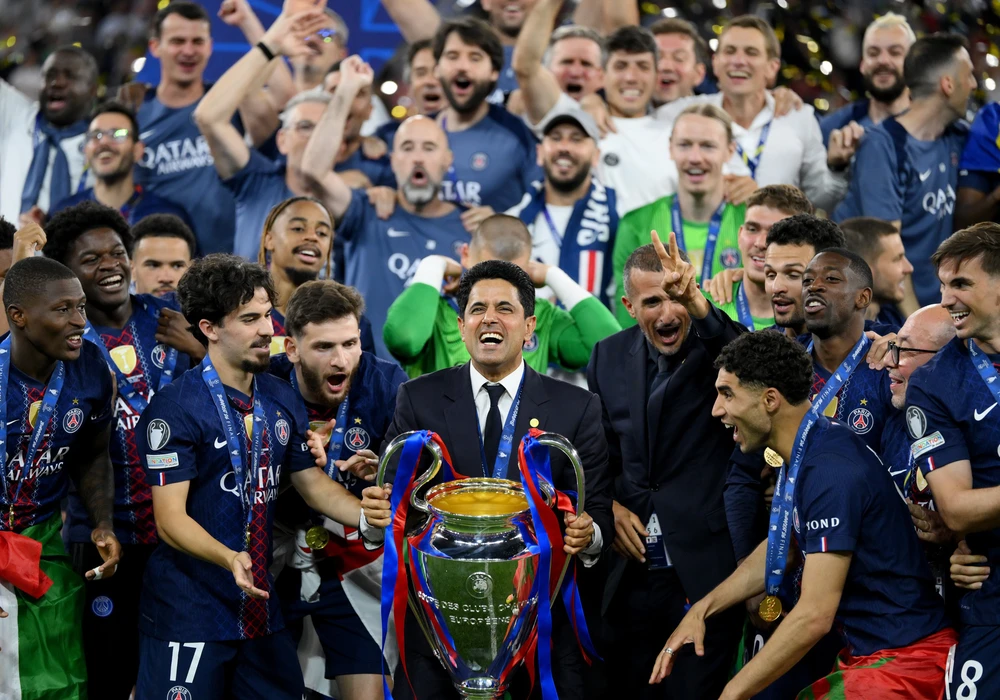
PSG's success is viewed by some elites as a cultural invasion
But what about the fact that Real Madrid's budget reaches 750 million euros, vastly exceeding Villarreal's 181 million euros (a team that just qualified for next season's Champions League), yet the Galactic club is obviously seen as a sustainable model?
Cultural invasion
Before the arrival of Arab owners on the Old Continent, which rapidly shifted power, football had long-standing injustices operating under an old order dominated by the G-14 group. Surely we have forgotten the presence of this club group in Europe.
The monopoly of the old alliance—Real, Barcelona, Juventus, and Manchester United—used historical status to seize the largest TV rights, pushing smaller clubs into poverty.
Victims of the old model appear frequently in every football nation on the Old Continent as they try to compete financially with the giants. Italians saw how Parma and Fiorentina collapsed; the English had Leeds as a victim. Even Borussia Dortmund teetered on the brink of bankruptcy in 2005 due to financial burdens. Europe's elite clubs have always spent money from huge bank loans or from billionaires, and the difference in funding sources—between individuals or companies and state-backed financial funds—does not create inequality.
In reality, European football's greatest fear is not financial, but loss of control. The collapse of the "old ruling class" threatens the wallets and dominant positions of traditional powers. These old-guard clubs have used their influence at UEFA to push the Financial Fair Play (FFP) rules, aiming to lock the door and prevent other teams from transforming their fortunes with more money.
And the Old Continent has a particular sensitivity when its traditional icons are taken over by state investment funds from the Middle East—this may not simply be a story about sports, but also about culture.


Wonderfulshortvideo
messi goal today messi assist today messi highlights vs egypt enzo fernandez goal today romero goal today argentina goals today argentina 3-2 egypt



“Wonderful player, fantastic player, could not run” 😅
Neville, Keane and Wright DO NOT agree on the future of Argentina in the World Cup 👀
“It gave you everything” 👀
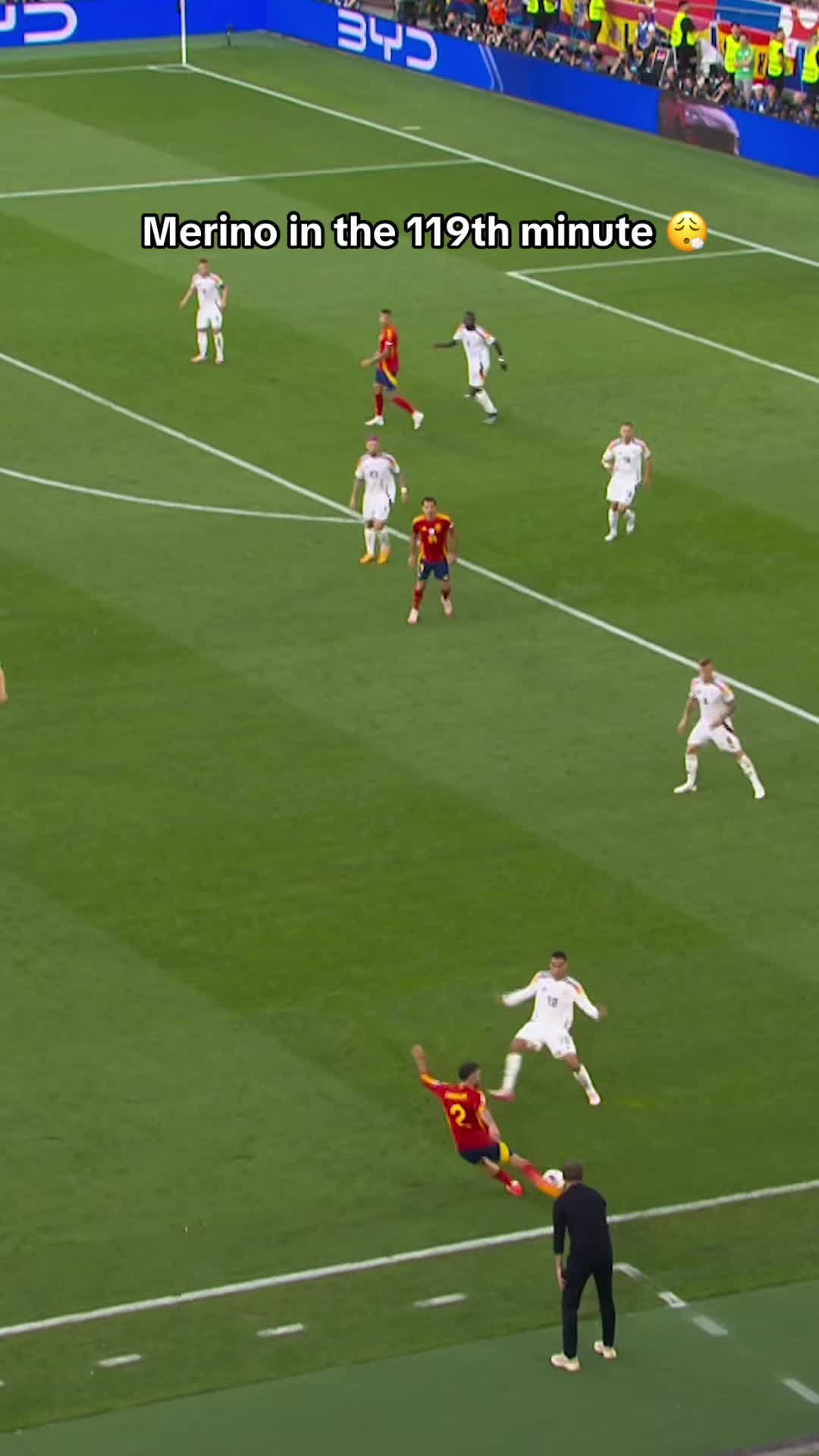
Clutch Merino 😮💨
merino goal today portugal 0-1 spain ronaldo interview today ronaldo retirement retiring
kane goal today kane highlights today england 2-1 congo
 Links
Links
 Contact
 App
App


