



World Cup 2026: A Major Test for North American Transport Infrastructure



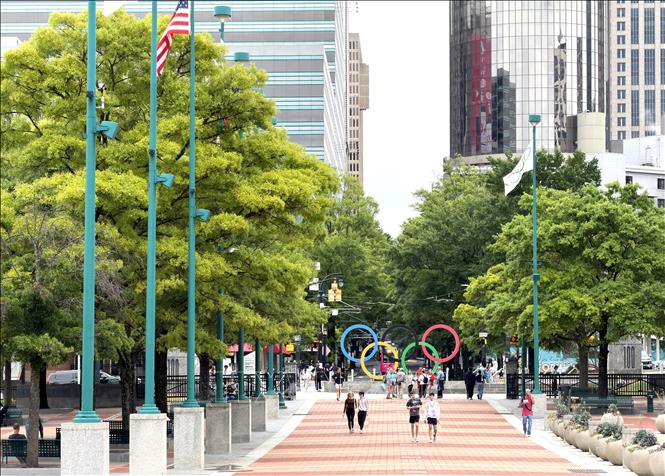
According to Axios on June 3, the tournament will feature 104 matches across 16 cities in the United States, Canada, and Mexico. The U.S. alone will host 78 games, prompting local authorities to race against time to upgrade transport systems, security measures, and infrastructure projects before the opening day.
Many cities have launched large-scale transportation plans to prepare for millions of fans. Kansas City has completed the expansion of its free streetcar line in the downtown area, Houston has opened a new pedestrian walkway on Main Street, while Seattle has decided to keep all lanes open on Interstate 5 during the tournament to reduce the risk of congestion.
In Atlanta, local authorities are finalizing the $5 billion Centennial Yards complex located opposite the stadium, while accelerating road upgrades, bike lanes, and sidewalk improvements ahead of the city's first match.
However, transporting spectators remains one of the biggest challenges. Many stadiums are located in suburban areas far from city centers, forcing local governments to invest more in bus and rail networks to provide connections.
According to Reuters, Arlington, home to the Dallas area's World Cup stadium, lacks a large-scale public transport system. Local officials have had to deploy a network of chartered buses connecting with regional rail lines to serve the expected crowds of tens of thousands per game.
The issue of travel costs is sparking debate in some host cities. In New Jersey, a round-trip train ticket from Manhattan to MetLife Stadium, the venue for the World Cup final, was initially announced at over $150 before being reduced to $98 following strong public backlash.
In Boston, round-trip train fares from downtown to Gillette Stadium on World Cup match days have been raised to $80, significantly higher than the usual $20–30 range.
Meanwhile, some localities are keeping fares unchanged to encourage public transport use. According to Conan Cheung, Chief Operations Officer of LA Metro, Los Angeles will maintain its base fare of $1.75 along with existing discount programs throughout the tournament. Philadelphia is also keeping standard train fares and offering a free return trip sponsorship for fans after matches.
Transport companies also see the World Cup as an opportunity to expand their customer base. Long-distance bus operator FlixBus reports a surge in demand for travel between host cities, with many buses already fully booked before the tournament even begins.
Transport experts believe the 2026 World Cup will be a rare opportunity for North American cities to demonstrate the effectiveness of their public transport systems to millions of international visitors. The success or failure of these transport plans this summer could have long-term effects on the region's urban infrastructure image.
Thus, the 2026 World Cup is not only a competition on the field but also a real-world test of North America's urban management capabilities, transport connectivity, and ability to host global events.


Wonderfulshortvideo

messi goal today messi assist today messi highlights vs egypt enzo fernandez goal today romero goal today argentina goals today argentina 3-2 egypt



“Wonderful player, fantastic player, could not run” 😅

Neville, Keane and Wright DO NOT agree on the future of Argentina in the World Cup 👀

“It gave you everything” 👀

Clutch Merino 😮💨
merino goal today portugal 0-1 spain ronaldo interview today ronaldo retirement retiring

kane goal today kane highlights today england 2-1 congo
 Links
Links
 Contact
 App
App


