



World Cup 2026: A Journey Through the 'Holy Lands' of the US East Coast



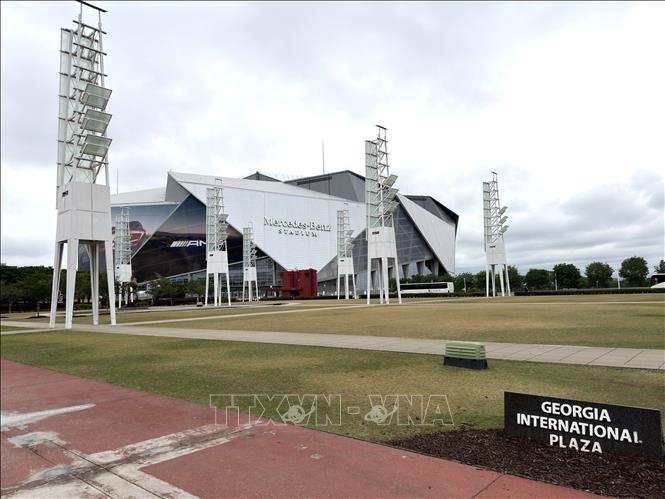
Under FIFA regulations, venues will temporarily use geographic names instead of their familiar commercial names to avoid conflicts with the tournament's global sponsors. Behind these name changes are multi-billion-dollar sports facilities being transformed from American football sanctuaries into stages for the world's most popular sport.
In Atlanta, the Mercedes-Benz Stadium will become one of the most notable venues of the tournament. Opened in 2017, the facility is famous for its retractable roof that opens like a camera lens and a capacity of over 67,000 spectators for soccer matches. To serve the World Cup, the stadium only needs minor adjustments such as replacing artificial turf with natural grass and rearranging seating areas. Outside the stadium, Centennial Olympic Park will host the FIFA FanFest, promising to become a gathering point for tens of thousands of fans.
Matches in the Boston area will be held at Gillette Stadium in Foxborough, about 37 km from downtown. The stadium, operational since 2002, has just completed a $250 million upgrade package featuring modern additions like a new press area, large LED screens, and significantly improved service systems. The city of Boston is also preparing City Hall Plaza as the festival hub for fans throughout the tournament.
As the southernmost host venue in the US, Miami offers a very different atmosphere. The Hard Rock Stadium, with a capacity of over 64,000 seats, has installed natural grass and added a sun-shading system to cope with Florida's harsh summer weather. Meanwhile, Bayfront Park along the coast will become one of the most vibrant soccer festival centers in the region.
In Philadelphia, Lincoln Financial Field will welcome fans with a new look featuring natural grass and FIFA-standard field dimensions. Beyond the matches, the city plans to organize a series of large-scale fan activities at Lemon Hill Park and many other satellite locations across Pennsylvania.
The biggest highlight of the 2026 World Cup in the US is undoubtedly the New York–New Jersey complex, where MetLife Stadium has been chosen to host the final on July 19. With an upgrade investment of over $100 million, MetLife has been equipped with a new media center, high-speed Wi-Fi, multilingual signage, and natural grass as required by FIFA.
This is where billions of people around the world will focus their attention when the prestigious golden trophy finds its new owner. In addition to the matches, the New York area is also preparing a range of fan experience spots, from the Billie Jean King National Tennis Center in Queens to the "FIFA Fan Village" at Rockefeller Center.
The 2026 World Cup is not only a competition among 48 teams but also a showcase of US organizational capabilities. On the East Coast, stadiums once familiar for American football are donning a new look to become the centerpiece of the planet's biggest soccer festival. From Atlanta, Boston, Miami, Philadelphia to New York–New Jersey, each stadium will tell its own story, yet all share a common goal: to deliver the largest, most modern, and most emotional World Cup in tournament history.


Wonderfulshortvideo

messi goal today messi assist today messi highlights vs egypt enzo fernandez goal today romero goal today argentina goals today argentina 3-2 egypt



“Wonderful player, fantastic player, could not run” 😅

Neville, Keane and Wright DO NOT agree on the future of Argentina in the World Cup 👀

“It gave you everything” 👀

Clutch Merino 😮💨

merino goal today portugal 0-1 spain ronaldo interview today ronaldo retirement retiring

kane goal today kane highlights today england 2-1 congo
 Links
Links
 Contact
 App
App


