



It was not Mendes, but Arteta who neutralized Saka.



Soccer superstars are typically evaluated on their capacity to create impact even under a poorly operating system. Saka is among the elite globally, yet he is not the one who determines the outcome of a match.
Little blame falls on the 25-year-old forward for the loss to Paris Saint-Germain, even though he is precisely Arsenal's most decisive attacking player and the club's driving force in big matches.
Vindication for Saka
Let's examine the following facts. Before the final in Budapest, Mikel Arteta's attacking system was largely built around the number 7's ability to create breakthroughs. He had 35 successful dribbles, 20 dangerous penetrations into the opponent's box, and 8 runs into dangerous areas. Additionally, he made 38 key passes, 12 passes into the box, averaged 2.25 shots per 90 minutes, and provided 2 assists in 10 matches. All these numbers are very high and consistent for a forward.
Importantly, these statistics indicate how the Gunners' tactical approach was designed to serve the 25-year-old forward, aiming to pull the opponent's left-back away from Saka's operating space, create gaps in the final third, and put defenders in one-on-one situations against number 7. This leads to the conclusion that he is more a product of the system than someone who transcends the collective framework.
In the final, Arsenal had only 24.7% possession, resulting in Arteta's favorite only touching the ball 26 times in 83 minutes on the pitch. He had 8 passes, 1 shot, 1 tackle, and no successful dribbles. The heat map of number 7's activity also showed his position mostly in his own half.
Dropping too deep to defend and preserve the scoreline led to too few transitions, moving Saka away from areas where he could threaten Paris Saint-Germain. Arsenal also failed to build attacking sequences and counterattacks after taking the lead against PSG, making number 7's ineffectiveness obvious.
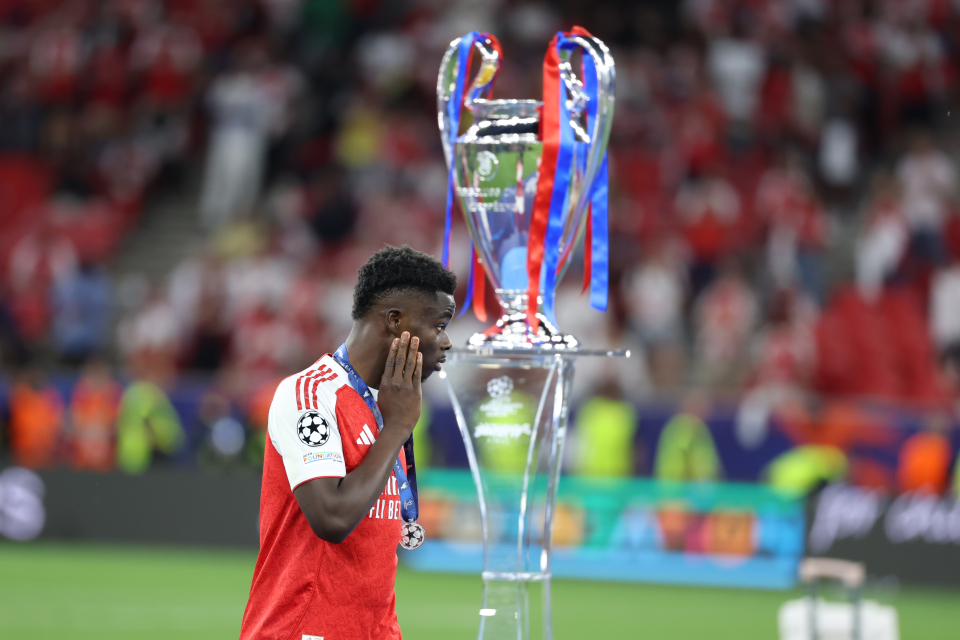
Saka disappointed due to Arteta's tactical choices
Arteta's problem
When a team doesn't keep the ball, their most dangerous player also struggles to have a positive impact. This isn't an isolated case of Arsenal's system underperforming; it has appeared in losses to Man City in the Premier League and the League Cup final. Key elements in the tactical chain such as Declan Rice, Trossard, Saka, and especially Odegaard all disappointed with misplaced passes.
The tactical structure after Kai Havertz's opening goal brought the Gunners into a familiar pattern that Arteta had honed throughout the season: the ability to absorb prolonged pressure and stay calm in tense situations, prioritizing the expenditure of energy and the elimination of opponents' chances even without possession.
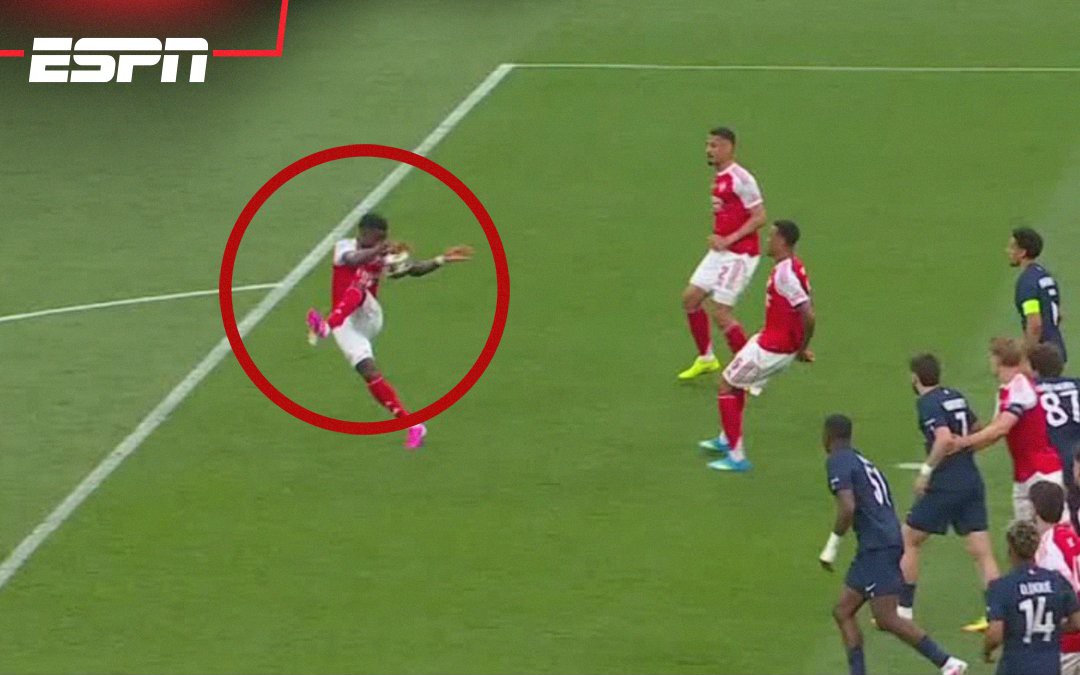
But at the same time, this method also confines players capable of creating breakthroughs into stifling spaces. Saka is the type of player who needs the system to enable his abilities rather than driving the system forward in situations demanding a difference-maker.
The Spanish manager did not put his most dangerous player into situations that could decide the match quicker, because he absolutely trusted controlled defending in big games over risking attacks.
This is a major difference regarding the role of number 7 under Thomas Tuchel for the England national team. Instead of making Saka the endpoint of combinations and also the starting point of attacks as Arteta does, the German strategist prioritizes midfield control, counter-attack prevention, and safe ball circulation with Saka receiving the ball in low areas, acting as a link in building play.
This makes the Three Lions more stable, Saka faces fewer "dead-end" situations, and the system becomes more efficient. And certainly, he will benefit more collectively, albeit with reduced danger and explosiveness compared to at Arsenal.


Wonderfulshortvideo
messi goal today messi assist today messi highlights vs egypt enzo fernandez goal today romero goal today argentina goals today argentina 3-2 egypt



“Wonderful player, fantastic player, could not run” 😅
Neville, Keane and Wright DO NOT agree on the future of Argentina in the World Cup 👀
“It gave you everything” 👀
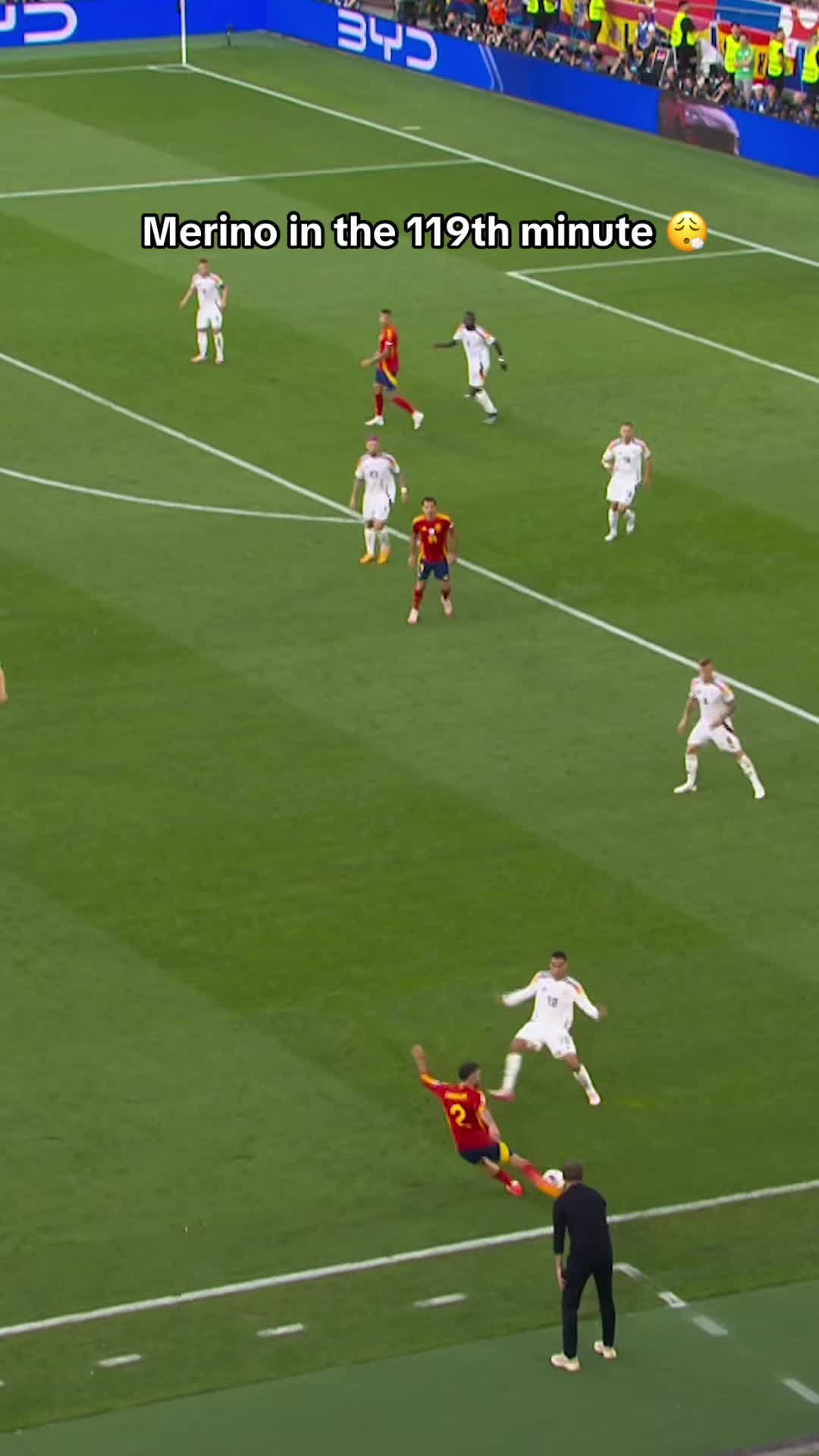
Clutch Merino 😮💨
merino goal today portugal 0-1 spain ronaldo interview today ronaldo retirement retiring
kane goal today kane highlights today england 2-1 congo
 Links
Links
 Contact
 App
App


