



After six months of blocked transfers for the 09 national team players, it is urgent to clarify the qualification system for the National Games.



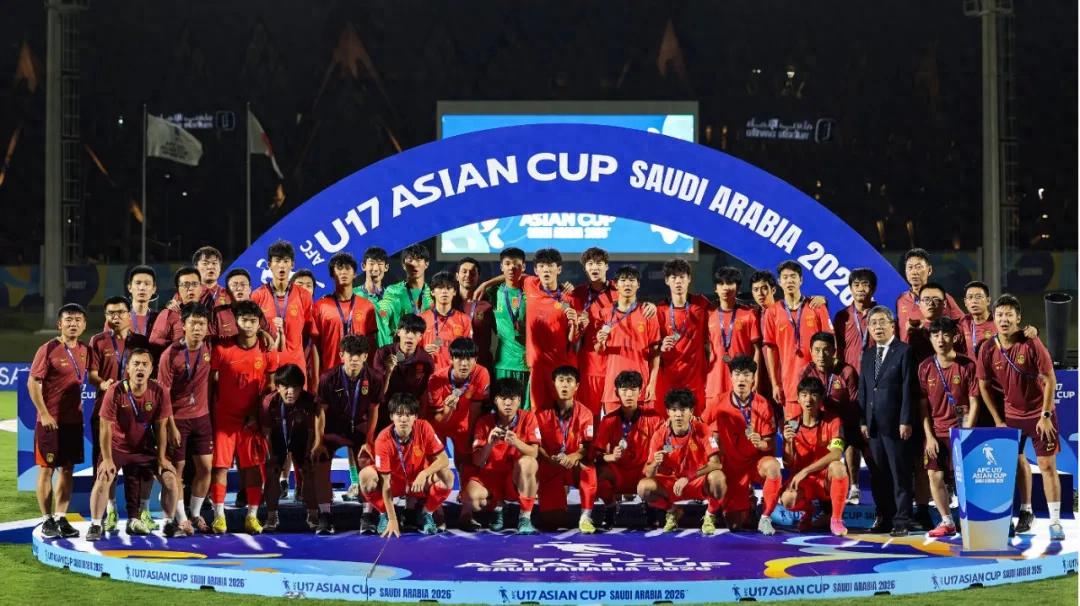
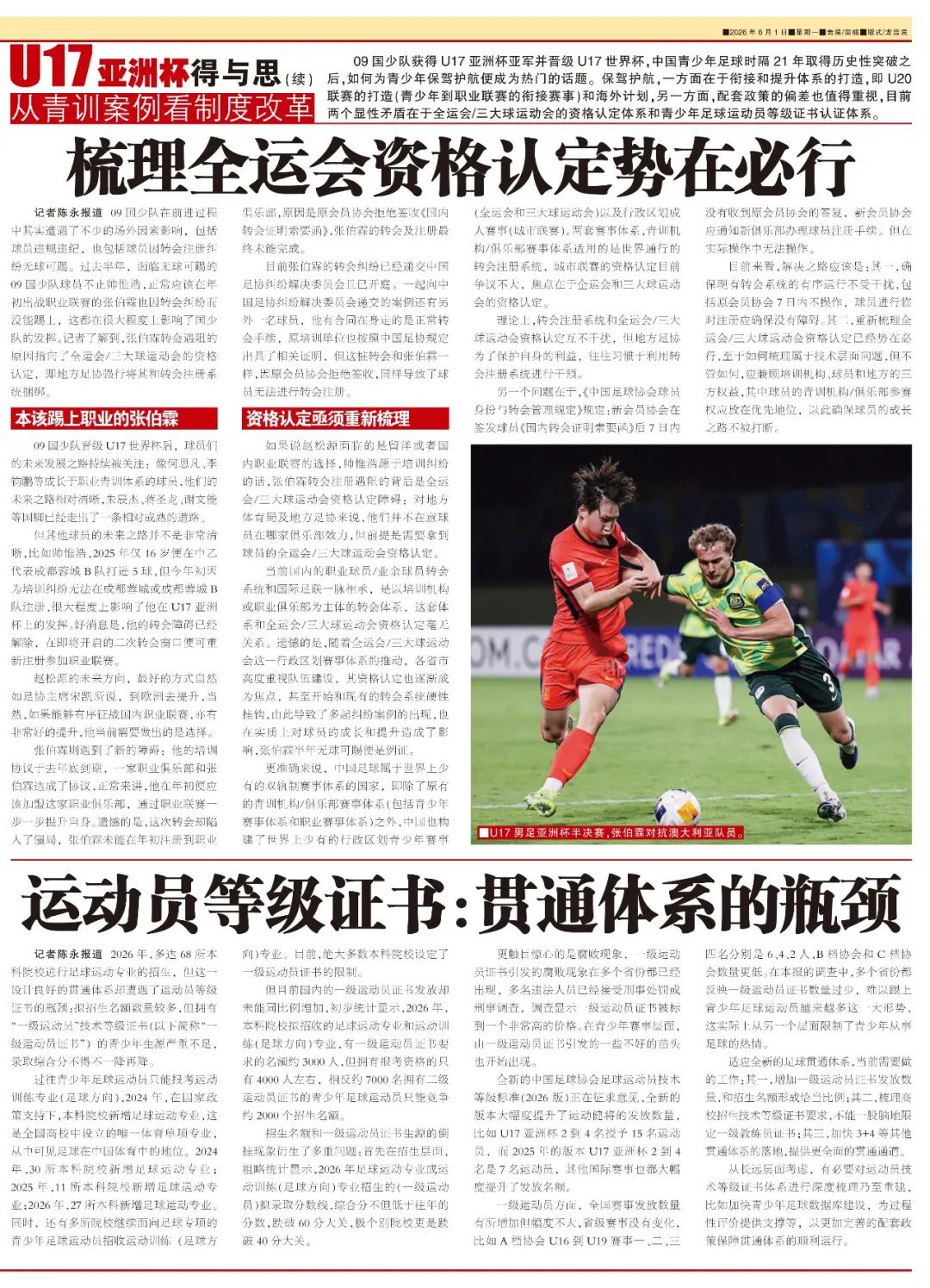
Reporter Chen Yong reports Following the 09 national youth team's runner-up finish in the U17 Asian Cup and qualification for the U17 World Cup—a historic breakthrough for Chinese youth football after 21 years—the focus has shifted to protecting young players. This protection involves two aspects: first, creating a bridging and upgrading system, such as the U20 league (a transitional competition from youth to professional leagues) and overseas plans; second, addressing policy deviations. Two prominent conflicts currently are the qualification system for the National Games/Three Major Sports Games and the certification system for youth football player rankings.
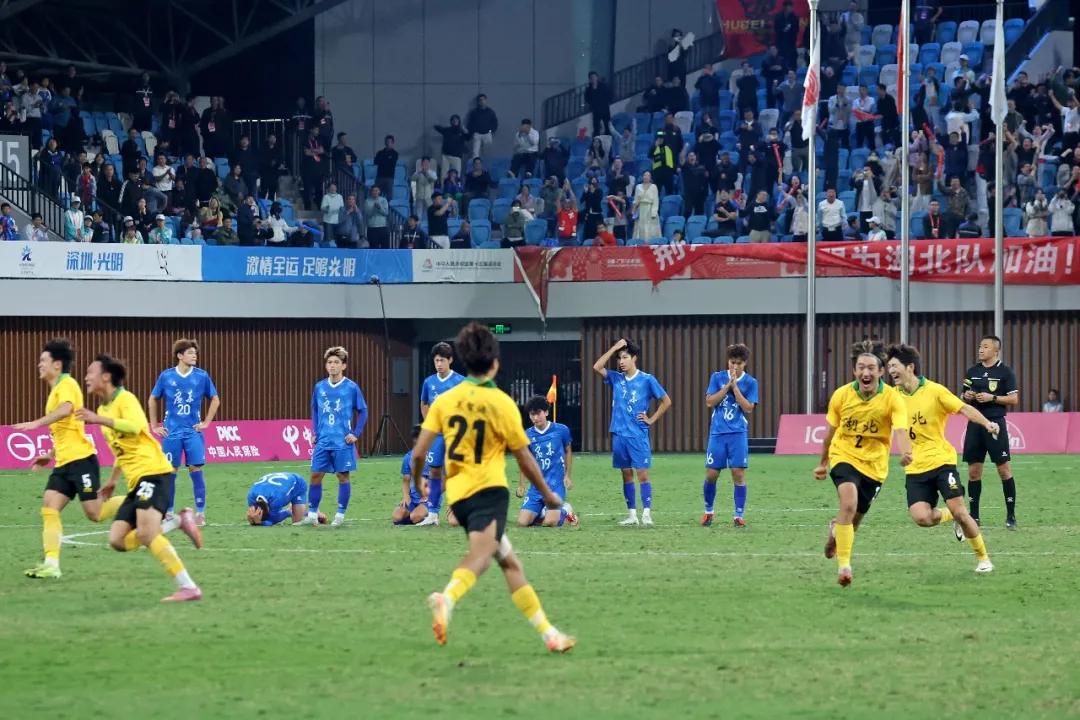
The 09 national youth team faced many off-field issues during its progress, including player disciplinary violations and players being unable to play due to transfer registration disputes. Over the past six months, Shuai Weihao was not the only 09 national youth player left without matches; Zhang Bolin, who was expected to play in the professional league early this year, also missed out due to a transfer dispute. These issues significantly affected the team's performance. According to reports, the reason Zhang Bolin's transfer was blocked points to the qualification system for the National Games/Three Major Sports Games, where local football associations forcibly tied it to the transfer registration system.
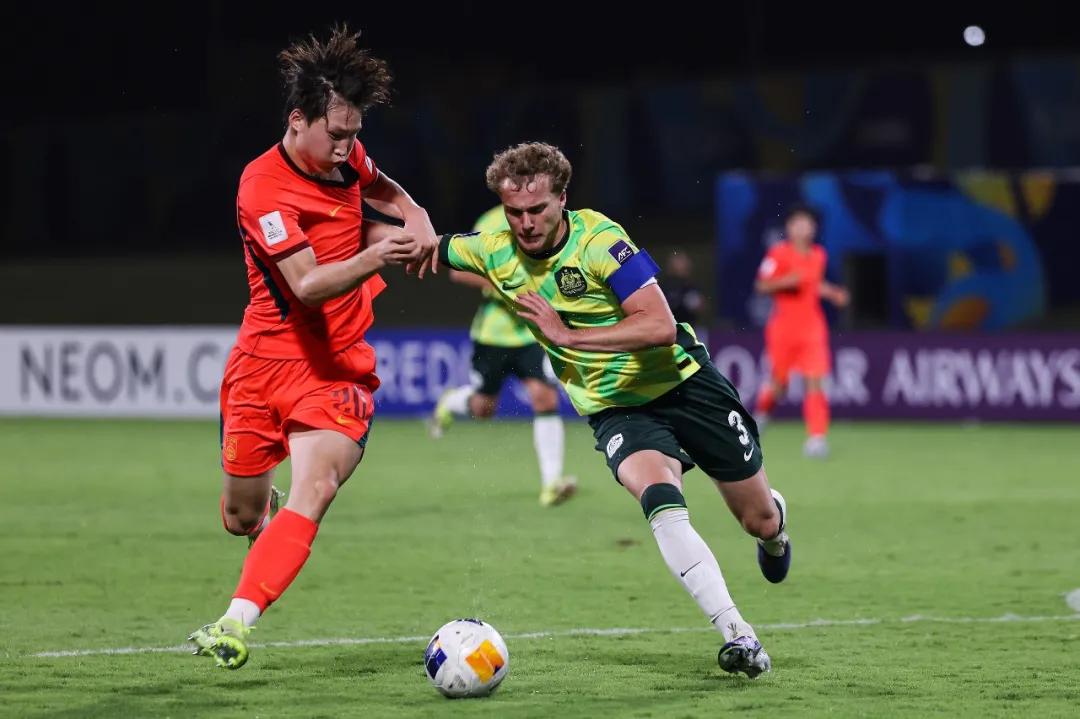

After the 09 national youth team qualified for the U17 World Cup, their future development paths have drawn attention. Players like He Sifan and Li Junpeng, who came from professional youth training systems, have relatively clear futures, following the mature path set by their predecessors such as Zhu Chenjie, Jiang Shenglong, and Xie Wenneng.
However, the future for other players is less clear. For example, Shuai Weihao scored five goals for Chengdu Rongcheng B in the Chinese League Two at just 16 in 2025, but due to training disputes, he was unable to register with Chengdu Rongcheng or its B team early this year, which largely affected his performance in the U17 Asian Cup. The good news is that his transfer obstacle has been resolved, and he can re-register for the professional league when the secondary transfer window opens.
For Zhao Songyuan, the best path forward—as Chinese FA Chairman Song Kai suggested—is to go to Europe to improve. Alternatively, playing regularly in the domestic professional league would also provide excellent development. He now needs to make a choice.
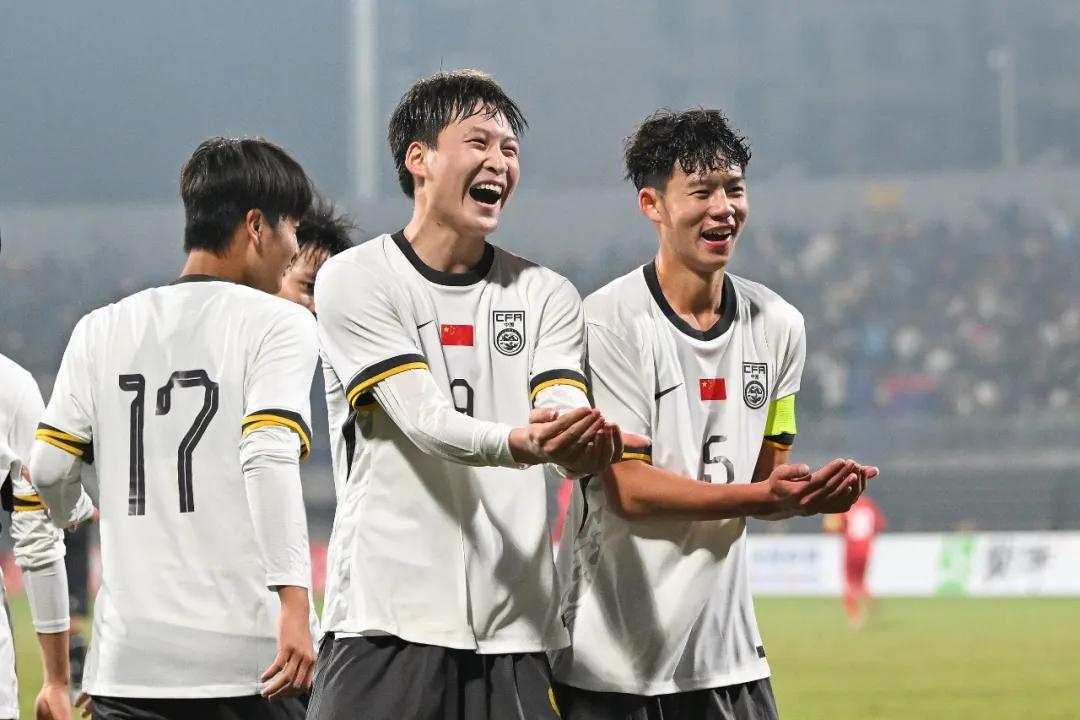
Zhang Bolin faces a new obstacle: his training agreement expired at the end of last year. A professional club reached an agreement with him, and normally he should have joined that club early this year to improve step by step through the professional league. Unfortunately, the transfer stalled because the original member association refused to sign the "Domestic Transfer Request Letter," preventing Zhang Bolin from completing his transfer and registration.
Zhang Bolin's transfer dispute has now been submitted to the Chinese FA's Dispute Resolution Committee and a hearing has been held. Another case submitted to the same committee involves a different player with an existing contract who went through normal transfer procedures, with the original training unit providing the required certificate per CFA regulations. Yet, just like Zhang Bolin, this player also failed to complete the transfer registration because the original member association refused to acknowledge the request.
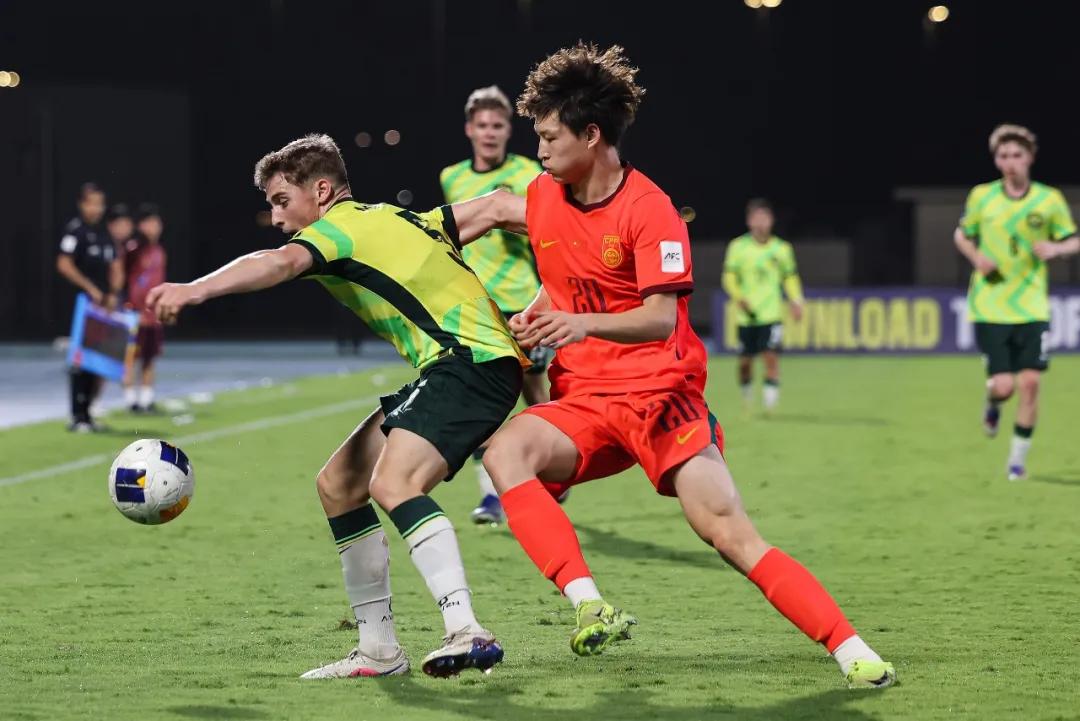

While Zhao Songyuan faces a choice between going abroad or playing domestically, and Shuai Weihao's issue stems from a training dispute, the obstacle to Zhang Bolin's transfer registration lies in the qualification system for the National Games/Three Major Sports Games. For local sports bureaus and football associations, they do not care which club a player joins, but they need to secure the player's qualification for the National Games/Three Major Sports Games.
Currently, China's domestic transfer system for professional/amateur players follows the international FIFA model, centered on training institutions or professional clubs, and has no connection to the qualification system for the National Games/Three Major Sports Games. Unfortunately, with the promotion of these administrative regional events, provinces and cities have placed great importance on team building, making qualification a focal point that is now being forcibly linked to the existing transfer system. This has led to multiple disputes and has negatively impacted player development, as evidenced by Zhang Bolin's six months without playing.
More precisely, China is one of the few countries with a dual-track competition system. In addition to the existing youth training/club competition system (including youth and professional leagues), China has also built a unique administrative regional youth competition system (National Games and Three Major Sports Games) and an adult regional competition system (City Leagues). For the two systems, the youth training/club competition system uses the international transfer registration system, while the City League qualification is not controversial. The contention lies in the qualification for the National Games and Three Major Sports Games.
Theoretically, the transfer registration system and the qualification for the National Games/Three Major Sports Games should not interfere with each other, but local football associations often use the transfer registration system to intervene in order to protect their own interests.
Another issue is that the "Chinese Football Association Player Identity and Transfer Management Regulations" state: if a new member association does not receive a reply from the original member association within seven days after issuing a "Domestic Transfer Request Letter," the new association should notify the new club to complete the player's registration. However, in practice, this procedure cannot be executed.
Currently, the solution should be twofold. First, ensure the orderly operation of the existing transfer system without interference, including the ability for players to obtain temporary registration if the original member association fails to respond within seven days. Second, re-evaluating the qualification system for the National Games/Three Major Sports Games is imperative. How to restructure it is a technical issue, but in any case, it should balance the rights of training institutions, players, and local authorities. The right of players to participate with their youth training clubs/professional clubs should be prioritized to ensure that their development is not interrupted.


Wonderfulshortvideo
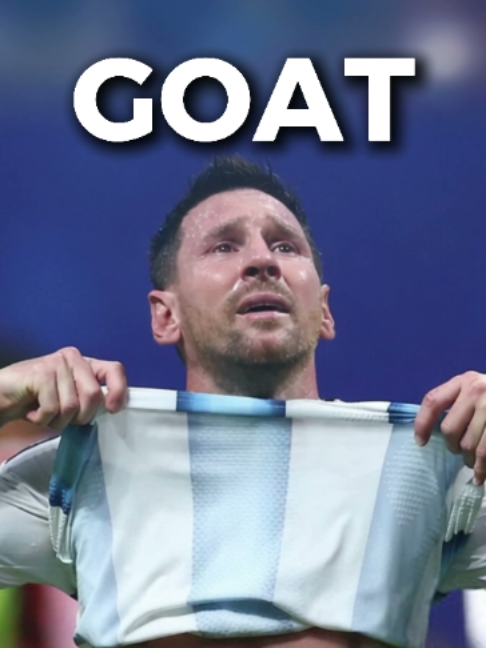
messi goal today messi assist today messi highlights vs egypt enzo fernandez goal today romero goal today argentina goals today argentina 3-2 egypt



“Wonderful player, fantastic player, could not run” 😅

Neville, Keane and Wright DO NOT agree on the future of Argentina in the World Cup 👀

“It gave you everything” 👀
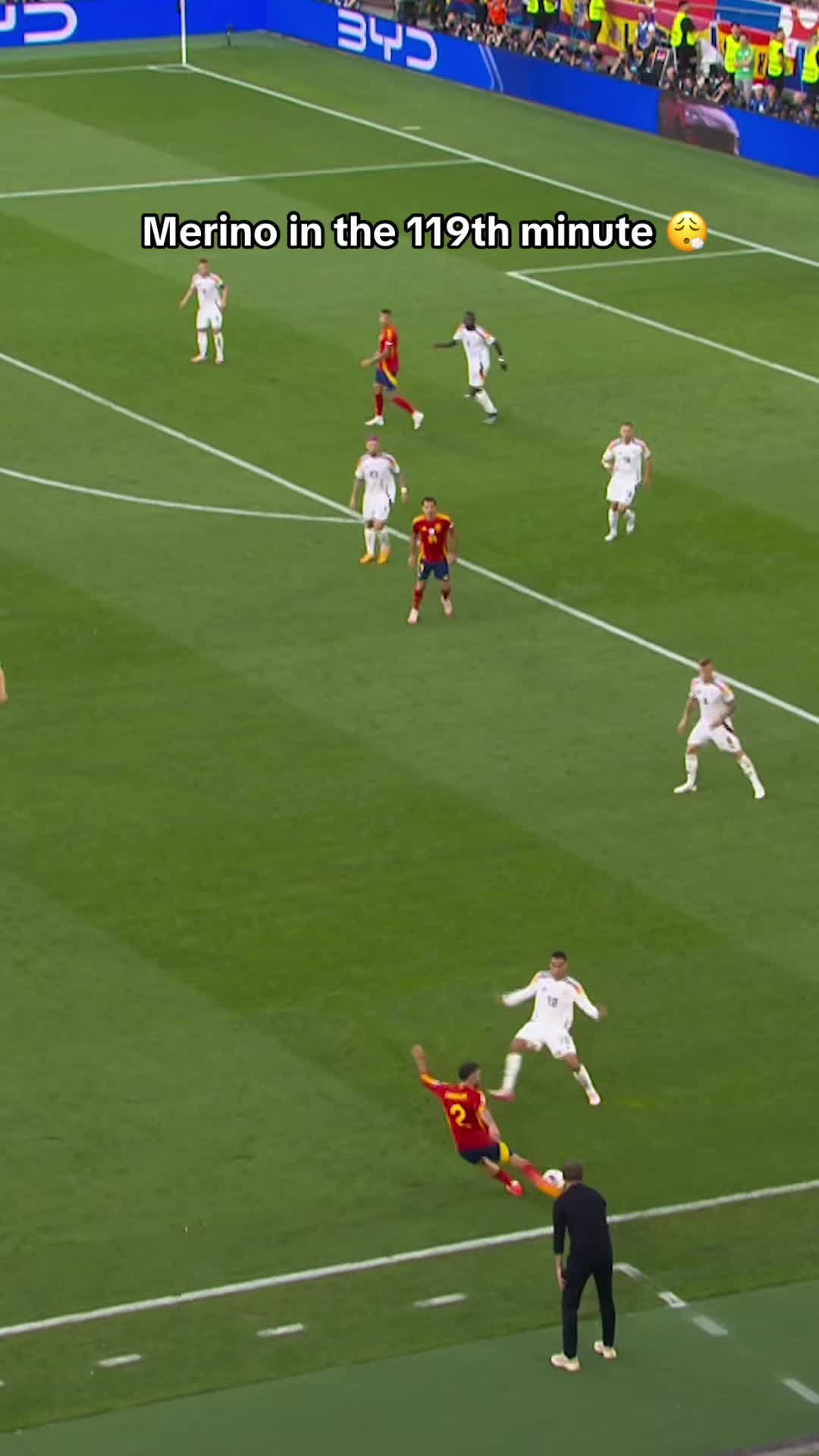
Clutch Merino 😮💨
merino goal today portugal 0-1 spain ronaldo interview today ronaldo retirement retiring
kane goal today kane highlights today england 2-1 congo
 Links
Links
 Contact
 App
App


