



Joining his 11th top-tier league, Keisuke Honda aims for the "journeyman player" record.




Written by Han Bing On April 10, Singapore Premier League club FC Jurong announced the signing of Japanese star Keisuke Honda, who will turn 40 in June. This marks Honda's 11th top-tier league in his career, tying Uruguayan star Sebastián Abreu. In 2024, Honda became the first player to score in 10 different top-tier leagues, with his goal being to become the player who has played and scored in the most top-tier leagues.
In early 2010, Keisuke Honda joined CSKA Moscow, becoming the first Japanese player to play in the Russian Premier League, and his career path began to align with that of a "journeyman player." This football term originally refers to players who have played for many clubs, but Honda's aim is to join more leagues and experience more football cultures.
During his nine seasons in Europe, Honda played in the Dutch Eredivisie, Russian Premier League, and Italian Serie A.

Starting in summer 2017, Honda moved through Mexico, Australia, the Netherlands, and Brazil. On March 15, 2020, he scored his 100th club career goal for Botafogo, becoming the first player to score in top-tier leagues across five continents (Asia, Europe, North America, Oceania, and South America). This "five continents" refers only to geographical meaning, as Australia had already joined the AFC in 2006. Subsequently, Honda played in Azerbaijan and Lithuania, and in 2024 joined the Bhutan Premier League, completing his record of scoring in 10 different top-tier leagues.
In July 2024, Bhutan Premier League club Paro FC signed Honda for a contract to play only one match. On August 13, in the AFC Challenge League playoff, Honda captained the team to a away win against a Nepalese opponent, helping Paro FC qualify for an Asian competition for the first time in its history. Two months later, Paro FC invited him to play the final league match, when the team had already secured the title, with the sole purpose of helping Honda achieve his record of scoring in 10 top-tier leagues. In the 32nd minute of the first half, Paro FC got a penalty, and the whole team let Honda take it, thus accomplishing the feat.
The FC Jurong that Honda has joined this time is a satellite club of J-League's Niigata Albirex in Singapore, naturally aiming to continue刷新ing his record.

There are many "journeyman players" like Keisuke Honda in world football.
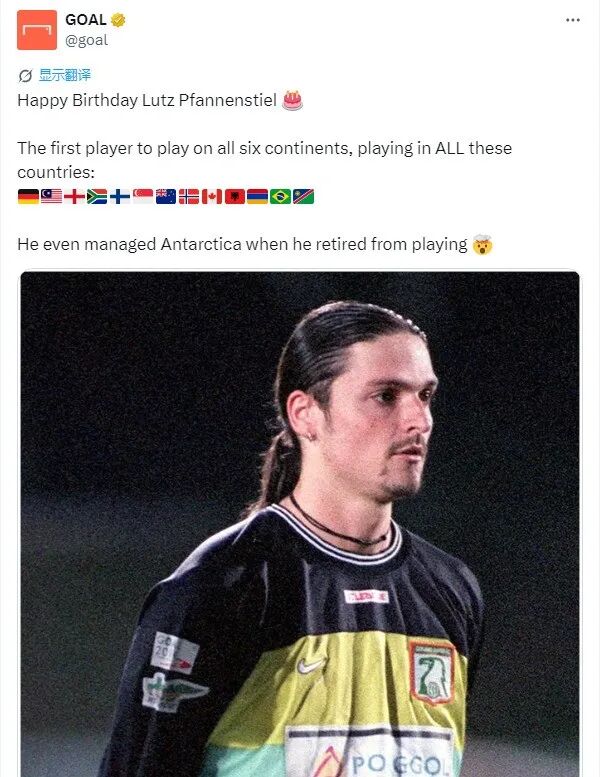
German goalkeeper Lutz Pfannenstiel, who will turn 53 in May, is considered the pinnacle; he is the first player to have played in leagues under all six continental football federations, from Germany in 1991 to Brazil in 2008, completing the feat over 17 years. By his retirement in 2011, he had played in 13 leagues across 25 clubs, but only in six top-tier leagues: England, Malaysia, Singapore, New Zealand, South Africa, and Namibia. The second player to have足迹遍布 all six federations is Dutch goalkeeper Tim Krul, who will turn 38 soon, having played in 10 leagues including Malta, Gibraltar, Tanzania, and Puerto Rico, but this is geographical rather than federation-based across six continents.

The player with the most professional clubs in his career is Argentine forward José Luis Frontini, who played for 37 clubs from 2001 to 2021, but most were in Brazil, with only Poland and Korea besides. Since most were in lower-tier leagues, it was only recognized by world football in 2021, surpassing the more famous Uruguayan striker Sebastián Abreu.

Abreu was the first to be acknowledged by Guinness World Records (2018) as the player with the most clubs. From his debut in Uruguay in 1995 to joining Chilean club Audax Italiano in 2018, over 23 years he played in 11 top-tier leagues: Uruguay, Argentina, Spain, Brazil, Mexico, Israel, Greece, Ecuador, Paraguay, El Salvador, and Chile. The only遗憾 is that he failed to score in Israel and Chile's top leagues, allowing Honda to率先达成 the feat of scoring in 10 top-tier leagues.
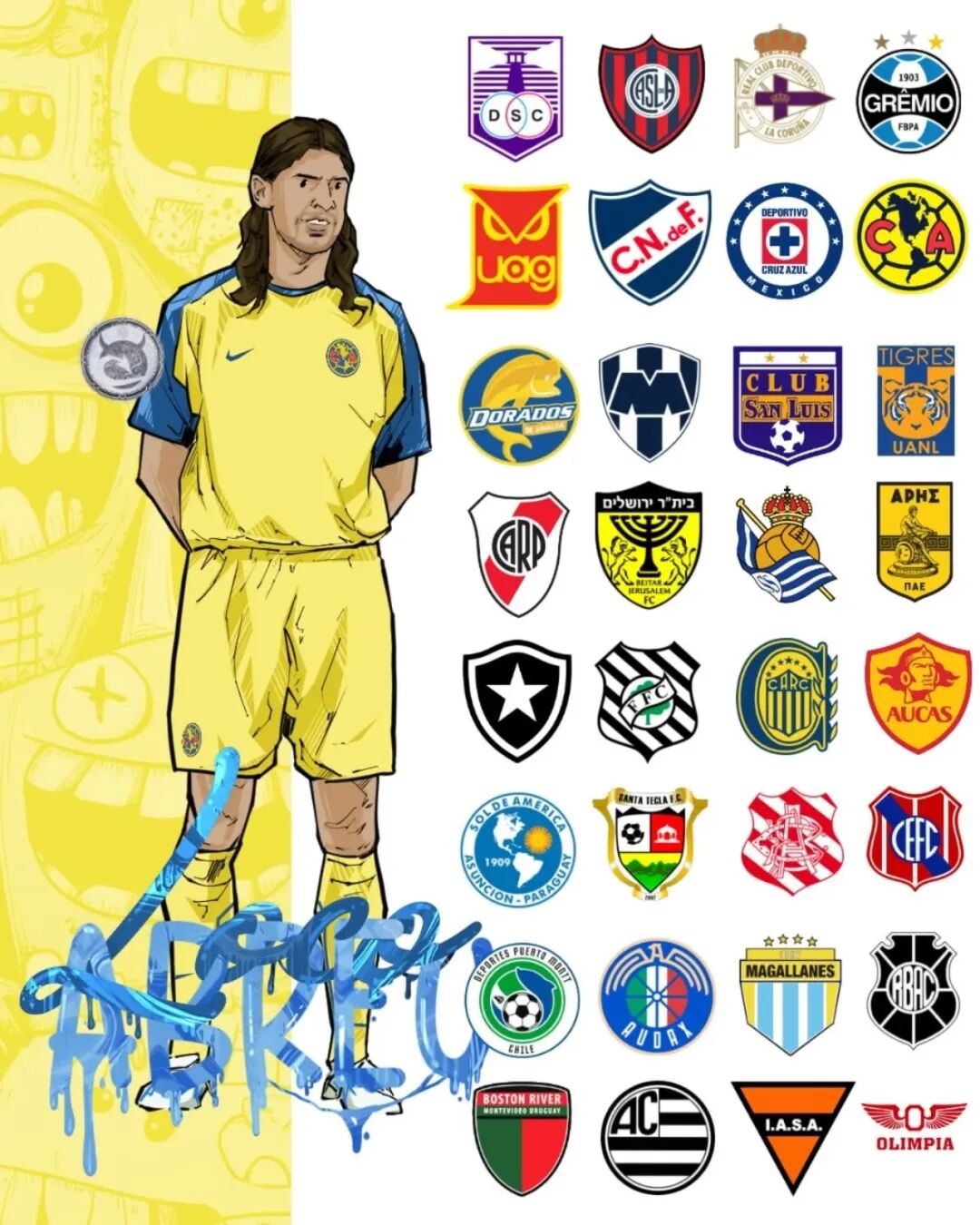
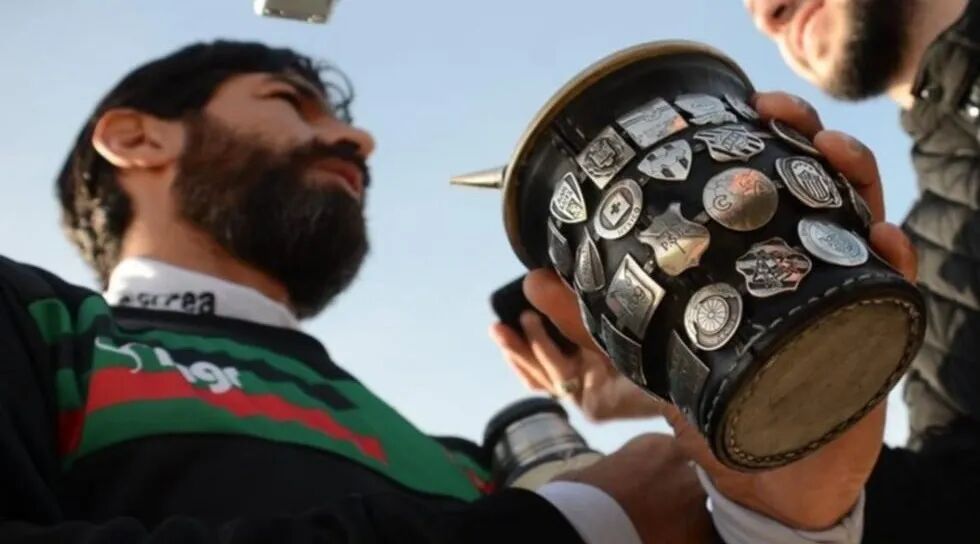
Abreu played almost entirely in higher-level professional leagues in South America and Europe, with a career spanning 32 clubs, including many prestigious ones such as Deportivo La Coruña, Real Sociedad (La Liga), River Plate, San Lorenzo, Rosario Central (Argentina), Grêmio, Botafogo (Brazil), Cruz Azul, América (Mexico), and Nacional (Uruguay). He won eight league titles, four Rio state championships, and the 2011 Copa América, achievements surpassing Honda's. Abreu has a mate gourd adorned with badges of all the clubs he played for, the most representative symbol of his "journeyman player" career.
Besides playing in the most top-tier leagues, Abreu's most commonly used number during his career was 13. However, at four clubs where the number 13 was occupied by other players, he chose to wear 113, a rare sight in the world.



Wonderfulshortvideo
Ganglion cyst removed


Ganglion cyst removed
User SportScoop has posted a video.
User SportScoop has posted a video.
Replying to @Computer says no.
Replying to @Computer says no.
User SportScoop has posted a video.
 Links
Links
 Contact
 App
App


