



Expert Doan Minh Xuong: 'Vietnam Sports Needs a New Momentum'



Expert Doan Minh Xuong acknowledges that in the context of increasingly fierce competition at all levels, from the established strategy, Vietnam Sports (VNS) needs effective solutions and decisive actions to create new momentum, gradually bringing achievements closer to continental and world standards.
* Sports & Culture: Sir, the country has a solid position and foundation to confidently reach out to the world, so VNS is also part of that flow aiming for higher goals?
- Expert Doan Minh Xuong: To evaluate where a sports system stands, look at world-level competitions like the Olympics. If so, VNS is a picture interwoven with many colors on its journey to the "big ocean" after 50 years of integration and development.
Over nearly five decades, VNS has participated in 11 Olympic Games, with 164 athletes competing, achieving only 5 medals, including 1 gold, 3 silver, and 1 bronze. It can be said that these are indicators showing the sports sector needs to "wake up," rethink and find more breakthrough directions for the future path.
It cannot be denied that VNS has made significant progress in the last 20 years, especially after winning its first gold medal at the Rio 2016 Olympics with Hoang Xuan Vinh's outstanding performance in shooting. However, this progress is not uniform and continuous. Looking back at Olympic participation history, VNS has not truly surpassed its limits. To achieve medals at the Olympics, it must face fierce competition from strong opponents worldwide. To achieve higher goals, a long-term development strategy and systematic investment in key sports are needed.
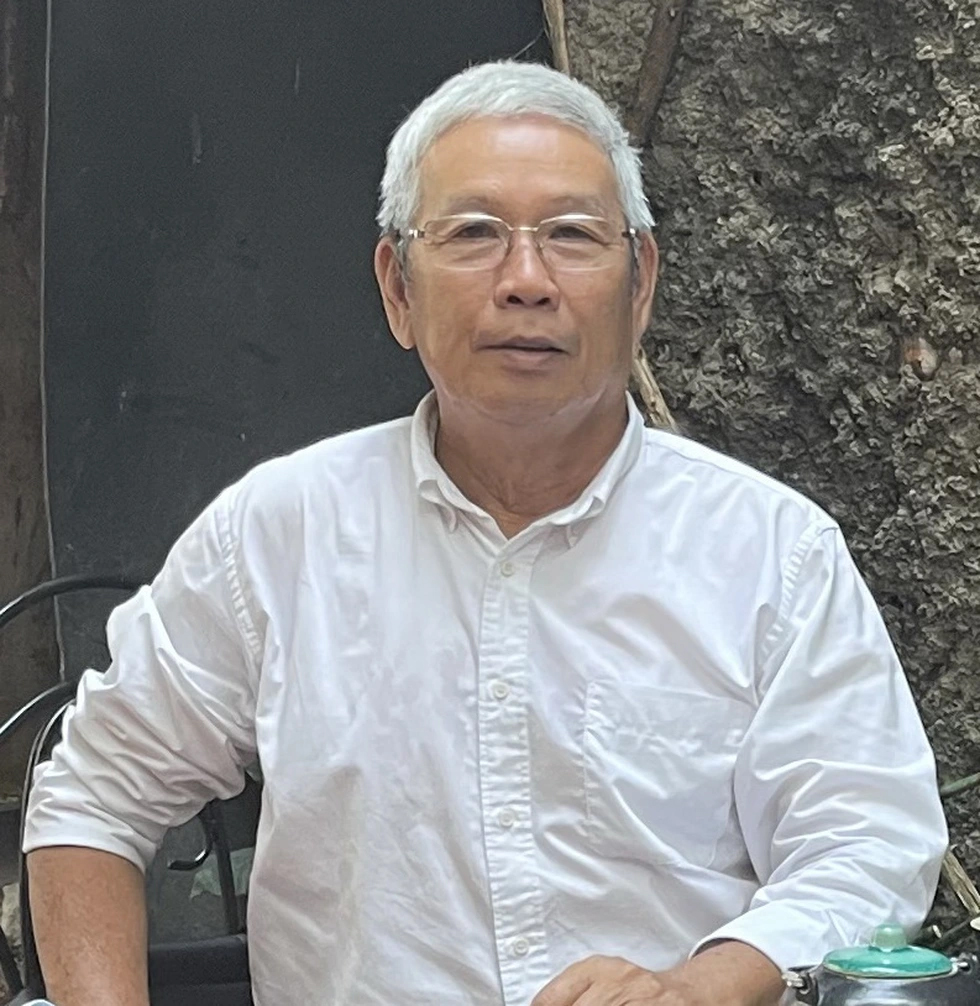
Expert Doan Minh Xuong
* From that, it can be seen that VNS ultimately must return to the core factor: development strategy?
- The "Development Strategy for Vietnam's Physical Training and Sports to 2030, Vision to 2045" exists. The strategy serves as a "guiding principle" for the entire sector in building a sustainable and professional development foundation. Clearly, after disappointing results at the 2020 and 2024 Olympics as well as the 2023 Asian Games (Asiad 19), VNS needs to formulate and implement a new strategy to approach, set goals, tasks, and solutions for the sports field in the next development phase.
It can be seen that what is mentioned in the strategy comprehensively integrates goals for sports development in general and focused investment in certain sports. Looking at the current reality of VNS, achieving these goals requires extraordinary effort and dedication not only from the sports sector. The most crucial aspect is a change in mindset and approach, achieving breakthrough thinking because the journey from theory to implementation, from vision to reality is long, fraught with difficulties and challenges.
* If the strategy is seen as the "guiding principle," then VNS needs breakthrough thinking and radical solutions aimed at future success?
- The determination to excel at the SEA Games is not wrong. The achievements attained are commendable. However, effective investment to enable athletes to reach continental levels and beyond to the Olympics is a different story. Instead of continuing scattered investment, VNS needs to select focal points, concentrate support for athletes in sports capable of winning one of the top three positions at the SEA Games, while also having the strength to compete for medals at Asian Games and Olympic arenas.
It is time for VNS not to focus only on small-scale achievements; instead, it must integrate more deeply with world sports by investing strategically in sports within the Olympic system. Talented athletes need upgraded benefits, long-term training in advanced sports environments. Socializing funding is not too difficult as many businesses are willing to sponsor talents once there is a clear roadmap.
All this poses a difficult problem for sports management personnel, coaches, and athletes. But no matter how difficult, this problem must be solved. Here, the adaptability and flexibility of VNS need to be emphasized because previously, VNS overcame difficulties thanks to these factors. Only then can it clearly demonstrate its alignment with the country's development, as VNS has shown over many years.
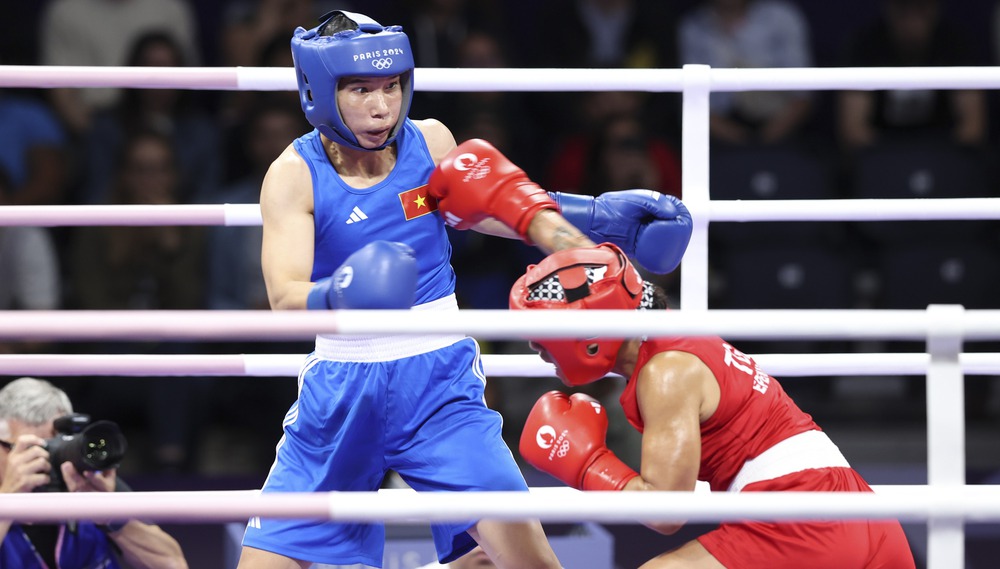
In the history of Olympic participation, Vietnamese sports have not truly surpassed their limits. Photo: Hoang Linh
* One of the core issues preventing VNS from having a runway to "take off" is the limited investment resources?
- There are many reasons hindering VNS from making a strong mark at Asian and world arenas such: the number of athletes participating and achieving results at Olympics, Asian Games is unstable; the domestic competition system is stable but lacks top-level international competitions; key sports lack a competition system from elementary school level and widespread training movements; the infrastructure system is lacking, especially for elite sports; lack of highly qualified coaches, systematically trained, capable of coaching regional-level athletes.
The "knot" of these reasons lies in investment resources. Investment resources for VNS can be likened to a "short blanket," covering the head exposes the feet and vice versa. Even key sports receive only slightly more funding than the general average, with additional training trips each year, accelerating only near major events like SEA Games, Asian Games, or Olympics.
It is time for sports managers to be more substantive regarding the "key" investment goal, focusing on enhancing socialization factors instead of wasting scarce resources on activities with only technical elements or short-term goals.
* Thus, sports socialization is a trend, an inevitable direction?
- In the current context, VNS cannot rely solely on state resources but must mobilize socialized resources; it needs policy mechanisms to encourage businesses to participate more strongly in sports activities, especially high-performance sports. Reality shows that any profession or field that receives investment contributions from social resources and the business community yields commensurate results. Sports are the same; it must be deeply and broadly socialized following international trends.
It is necessary to seriously ask how VNS can earn money and sustain itself? Besides the "knot" of mechanisms, receiving additional investment funds from the budget, the solution for sports can only lie in socialized resources, attracting more businesses to invest in athletes.
Behind the success of top athletes is the presence of many brands and businesses. That is the immutable formula for success in sports. Sports leaders admit that to socialize sports, avoid dependence on the "milk bottle" of subsidies, VNS needs the participation of businesses, joining hands with the sports sector in orienting, selecting athletes, as well as finding experts, introducing technology into training, thereby helping elevate athletes.
To change, the sports sector also needs to create flexible mechanisms, allowing Federations and Associations to operate independently according to their roles as organizations, professional societies, daring to act and taking responsibility. It is impossible and very difficult for sports to develop and reach higher levels if it always relies entirely on the budget.
* Thank you sincerely for the conversation!
The private economy has created momentum for change in VNS, but that socialization process has not been fully exploited; businesses still do not participate deeply in the value chain. Sports socialization in Vietnam almost stops at sponsorship and advertising stages. Very few Federations, Associations build strong financial resources to then have sufficient strength for professional work. The majority of high-performance sports in the Asian Games, Olympic groups do not receive much investment from Federations, Associations of their own. Funding for national team athletes still comes from the state budget - Still from expert Doan Minh Xuong.


Wonderfulshortvideo
Ganglion cyst removed


Ganglion cyst removed
User SportScoop has posted a video.
User SportScoop has posted a video.
Replying to @Computer says no.
Replying to @Computer says no.
User SportScoop has posted a video.
 Links
Links
 Contact
 App
App


