



More technique, less tactics: 'Rebuilding from the foundation' for Italian football



The Italian Football Federation (FIGC) recently announced a bold reform project: initiating a cultural revolution at youth training levels with the slogan "more technique, less tactics".
This move immediately reignited a long-standing debate within Italian football: What is the true foundation of an Italian player – individual technique or tactical awareness?
The old approach is outdated
For many years, youth training in Italy has been dominated by an obsession with tactics and short-term results. Young coaches often prioritized setting up formations, drills, and tight defensive structures to secure immediate wins, rather than allowing players to freely make mistakes, correct them, and refine their ball technique. Consequently, the ball-handling foundation, once the pride of Italian football about 20-30 years ago, shows signs of lagging behind other top football nations.
In this context, FIGC decided to pivot. The new model places individual technique back at the center of training, especially for the 5-12 age group. Training sessions will be designed to maximize ball touches: more 1v1 situations, dribbling exercises, handling in tight spaces, and maintaining possession under pressure, instead of lining up for tactical lectures. Technology is being introduced to measure "quality" ball touches and help coaches tailor exercises to each age group and skill level.
To spread the new philosophy throughout the system, FIGC is building a dense network of technical coaches, disseminating the message to every training ground and youth academy. Personnel-wise, 2006 World Cup champions Simone Perrotta and Gianluca Zambrotta are tasked with overseeing the methodology for the basic 5-12 age group, while a specialist for the 13-18 age group is being selected.
A comprehensive overhaul
Not only players, but coaches are also part of the reform roadmap. FIGC is revising coaching courses, especially the UEFA C license for youth coaches. The content is being updated to clearly distinguish between technique, cognitive thinking, and tactics, aiming to prevent coaches teaching tactics to players who haven't yet mastered basic ball movements. The requirement for continuous knowledge updates is emphasized, reflecting the awareness that European football is changing rapidly.
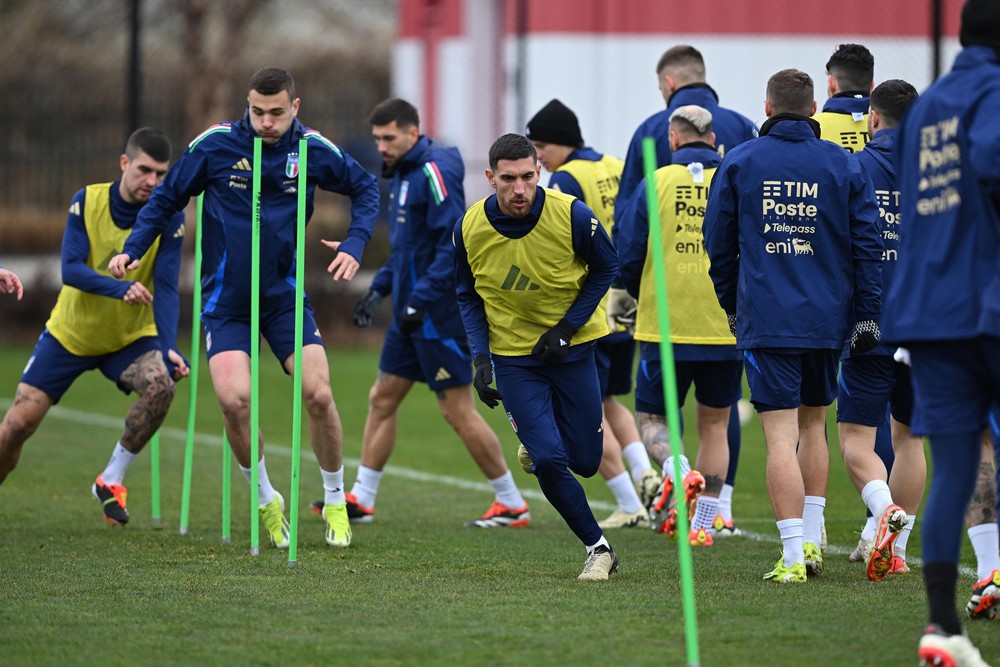
Italy changes its football philosophy to "save" its future
In the commentary "The Eternal Dilemma of Italian Football: Technique or Tactics?", journalist Luigi Garlando describes two sides in this debate. One side worries that emphasizing technique could lead to an "outdated romantic" style of play, reverting to players who only dribble and juggle, lacking tactical discipline. On the opposite side are voices championing instinct and individual inspiration. For them, football is first a game of heart, creativity, and joy.
Garlando argues that framing the debate as "either technique or tactics" is a linguistic trap. He compares football to a novel: You cannot write without grammar, but a book with only grammar and no literary art would be soulless. Technique is the "grammar" of a player, the tool for expressing ideas within a tactical system. Tactics, conversely, is the structure that integrates these individual actions into a collective.
Rebuilding from the foundation
Behind this debate lies Italian football's anxiety about the breakthroughs of other European football nations. Top teams today possess generations of players who are both technically rich and tactically flexible, from Spain, France to England. Italians understand that if they continue leaning too far to one extreme – overly focused on organization while lacking players who create breakthroughs, or vice versa – they will fall further behind in the race for the top. The time has come when the serious decline of Calcio cannot be endlessly blamed on financial downturns or infrastructure issues as in past years.
With this philosophical revolution and foundational shift, Italian football hopes to build new generations of players who are confident with the ball, skilled in 1v1 situations, adept in tight spaces, yet also mature within modern tactical frameworks. That is the model of the modern player, one who harmonizes individual inspiration with the tactical demands of today's football, instead of being constrained by a rigid choice between technique and tactics.


Wonderfulshortvideo
🇪🇸 Spain 🆚 Argentina 🇦🇷


Arsenal goal today arsenal 2-1 chelsea arteta interview arteta press conference
The movement is electric ⚡️
Mbappe injury mbappe surgery real madrid 0-1 getafe mbappe return date mbappe edit
ronaldo almeria ronaldo buying new club ronaldo owner ronaldo manchester united owner
de bruyne edit de bruyne passing kdb edit kdb passing highlights rodrygo kevin de bruyne neymar kevin de bruyne
Never gives up 💪
 Links
Links
 Contact
Address:UNIT 1804 SOUTH BANK TOWER, 55 UPPER GROUND,LONDON ENGLAND SE1 9E
Number:+85259695367
E-mali:[email protected]
 App
App


