



What did Guardiola do to help Man City defeat Arsenal?



Pep Guardiola guided Man City to win another English League Cup, and his strategic approach was key to defeating Arsenal.
A dominant second-half performance enabled Pep's team to overcome Arsenal in the English League Cup final.
Guardiola has openly discussed the need to adapt and evolve his philosophy to stay aligned with modern football. Man City's recruitment of Jurgen Klopp's former assistant, Pepijn Lijnders, last summer clearly signaled impending changes, especially after a disappointing 2024-25 season at Etihad.
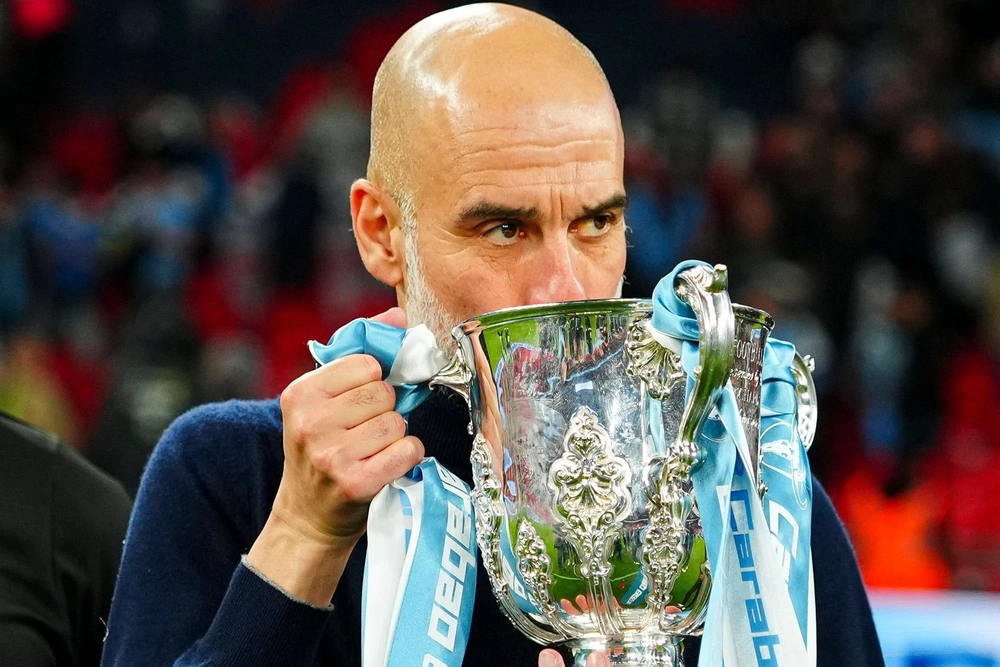
Pep Guardiola wins another English League Cup
This year, Guardiola's "new element" involved implementing central overload situations. Man City still primarily played with a structured positional setup, incorporating plenty of movement and interchange to maintain fluidity. In an era where most teams often seek to exploit wide areas due to limited central space, Man City is among the few attempting to revive central play. However, that did not occur in the match against Arsenal on Sunday.
Which old habits did Guardiola revert to to win the Carabao Cup? According to Squawka's analysis, it was Guardiola abandoning central overloads, employing a positional 3-2-5 system, and switching from zonal defending to specific man-to-man marking.
Abandoning central overloads
Man City's famous central overloads completely vanished at Wembley. Instead, Guardiola deployed a traditional 3-2-5 formation and maintained positional structure, the blueprint that established his global reputation over roughly the past decade.
Unfortunately for Man City, they encountered one of the most effective antidotes to this approach. Mikel Arteta's man-marking system blocked Man City's ball progression options, making it extremely difficult for them to create any meaningful chances in the first half.
Nevertheless, Guardiola's initial intent to almost "bypass" the central zone proved correct, though it unfolded differently than he anticipated.
In the first 20 minutes, Man City utilized the central corridor only 7% of their attacking actions, with the remainder evenly split between the left flank (56%) and the right flank (37%).
They finished with 24% of their activity in the central zone, largely due to Rodri and the defenders circulating the ball when Arsenal retreated. This figure remains lower than their season average of 28% across competitions. This is a notable departure, considering Man City previously crowded the center with technical players operating closely together.
Positional 3-2-5 system
The reason Man City lacked numerical overloads in the central area lay in their operational system. Pep Guardiola abandoned maintaining four to five players surrounding the ball centrally, opting instead for a traditional 3-5-2 shape during possession.
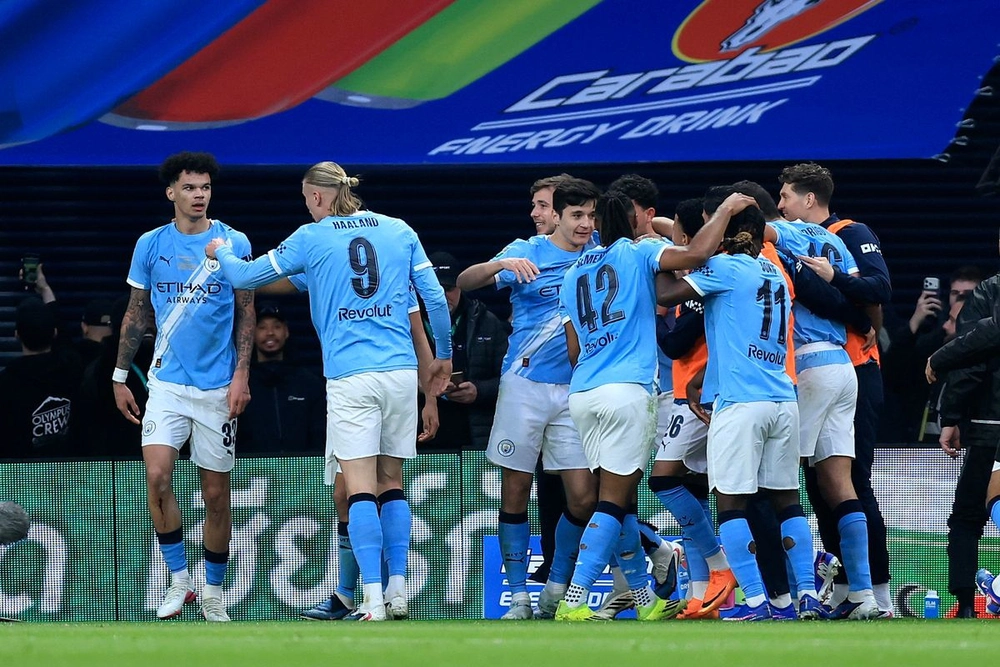
Man City dominated in the second half
He also reverted to having wingers stay wide near the touchlines, while the fullbacks tucked inside. Nico O'Reilly operated higher as a left-sided central midfielder, and Rayan Cherki fulfilled a similar role on the right.
This precisely allowed Nico O'Reilly to penetrate the penalty area for both goals: because he did not function as a left-back when City had possession.
Matheus Nunes, conversely, was responsible for completing the back-three alongside the other center-backs. He rarely joined attacks, but his sole involvement was assisting O'Reilly's second and final goal.
Jeremy Doku and Antoine Semenyo were tasked with maintaining team width, as Guardiola recognized their one-on-one abilities were City's best chance to gain an advantage. Doku was the primary focus, but Semenyo quickly became their most dangerous threat in the final third.
Erling Haaland completed the five-man forward line, while Rodri and Bernardo Silva formed the double-pivot anchoring midfield. The Portuguese player occasionally advanced to transition into a 3-1-6 shape, but those were exceptions rather than a consistent operational structure.
Although City struggled to create clear scoring opportunities, the positional 3-2-5 setup allowed them to push Arsenal back into their own half. This enabled them to gain spatial superiority and shift the match's momentum after the Gunners had a strong start.
Ultimately, the wide-focused approach secured victory for them, as Cherki and Nunes replicated the numerical overloads that Semenyo had executed, which functioned effectively several times in the first half and materialized into goals in the second half to clinch the title.
Transitioning from zonal defending to man-marking
Another trend in modern football is many teams shifting from traditional zonal marking to a more man-oriented approach. A hybrid style, blending individual pressing and deep zonal defending, has also become prevalent.
Much of this relates to the popularity of the 3-2-5 system pioneered by Guardiola over recent years. Man-marking defense is an effective way to neutralize position-oriented attacking play while still maintaining defensive structure.
However, to eliminate Arsenal from the contest, the Spanish strategist did the opposite of what many coaches currently do. Many of them start with a zonal defensive system before switching to 1-1 man-marking to dismantle the opponent's ball progression.
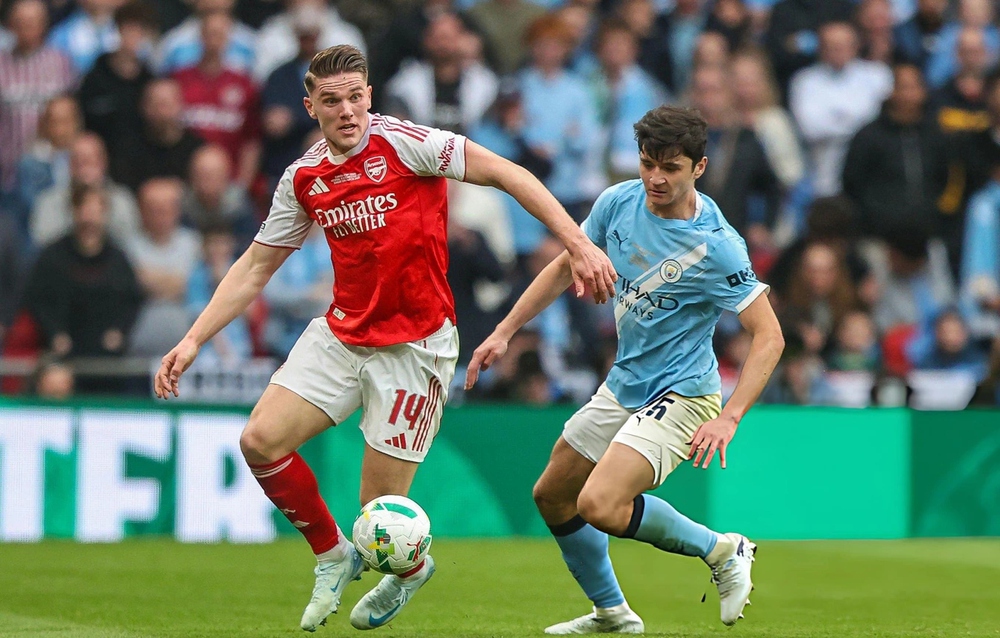
Pep Guardiola's tactics help Man City win
Conversely, Guardiola switched from man-marking to zonal defending. His 4-4-2 out-of-possession formation blocked all short and long passing options for the Gunners, leaving them only the choice to launch long balls forward and concede control.
From there, Man City would restart their buildup, seeking to advance collectively and besiege Arsenal near the opponent's goal. This was precisely the starting point for reversing a match that initially seemed favorable for Arteta's side.
Old habits can be hard to break, but reverting to them isn't necessarily bad. Pep Guardiola and Manchester City did just that, resulting in a trophy against the most stable and solid team in Europe this season.


Wonderfulshortvideo
Kvaratskhelia and Ronaldo 🫶


🇪🇸 Spain 🆚 Argentina 🇦🇷
Arsenal goal today arsenal 2-1 chelsea arteta interview arteta press conference
When Diogo Costa saved EVERY penalty he faced in the shoot-out 🤯🤯🤯
The movement is electric ⚡️
Mbappe injury mbappe surgery real madrid 0-1 getafe mbappe return date mbappe edit
ronaldo almeria ronaldo buying new club ronaldo owner ronaldo manchester united owner
 Links
Links
 Contact
Address:UNIT 1804 SOUTH BANK TOWER, 55 UPPER GROUND,LONDON ENGLAND SE1 9E
Number:+85259695367
E-mali:[email protected]
 App
App


