



Philippines qualifies for the World Cup for the second time, while the Vietnamese team...



There is considerable disappointment among Vietnamese football fans as the Philippines women's team secures a spot in the World Cup finals for the second consecutive time, despite not being significantly better than us. However, this setback still carries some positive significance.
1. Specifically at the 2026 Women's Asian Cup, the Philippines did not demonstrate a higher caliber than Vietnam. Both teams finished third in their group stages, with the Philippines having only a slightly better goal difference. This indicates that the professional gap between the two teams is actually very small, almost negligible when assessed on the same competitive level. Their 0-7 loss to Japan (an opponent Vietnam lost 0-4 to in the group stage) in the quarter-finals exposed numerous issues for the Philippines, from a loose defensive organization to fragile match mentality.
When measured against top continental teams, the Philippines even raises more questions. But the key difference lies in the play-in match. Against Uzbekistan, a mid-tier Asian opponent, the Philippines did not need to display superior football; they simply leveraged their physical advantages and experience to win 2-0. This was a pivotal match, but it also clearly reflects that a favorable "path" played a bigger role than a breakthrough in quality.
In other words, the Philippines' World Cup ticket came from being at the right time and in the right circumstances, rather than clearly surpassing Vietnam. In tournaments, bracket placement and opponents can sometimes be decisive, and the Philippines capitalized well on that opportunity.
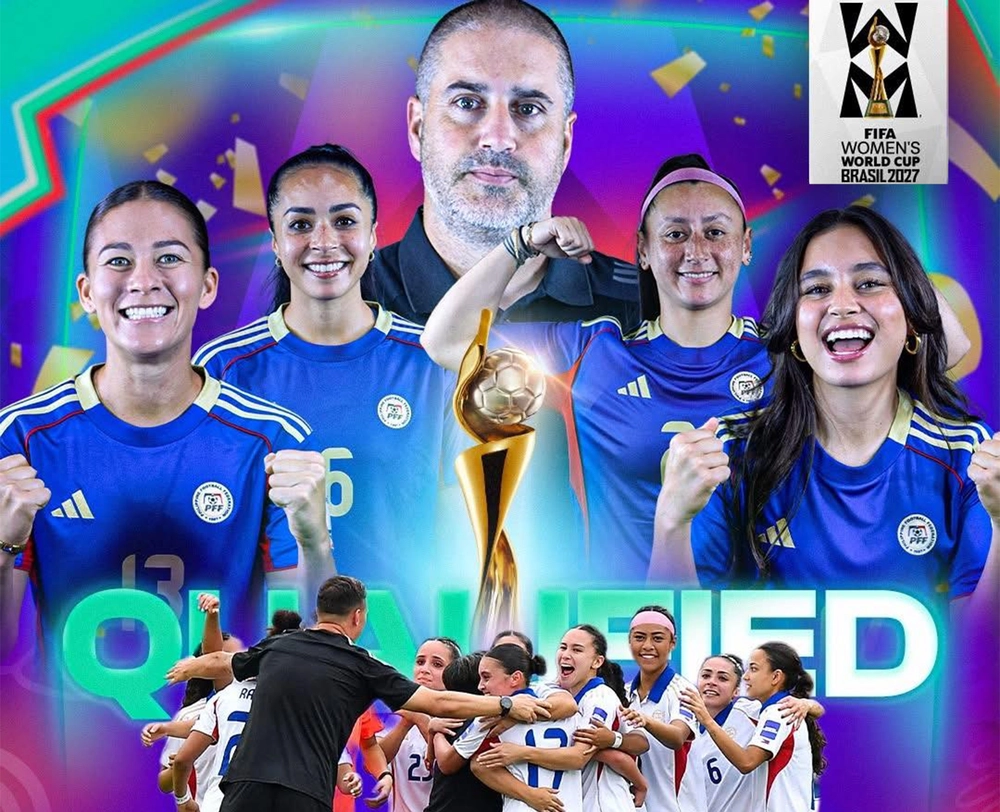
The Philippines isn't exceptionally strong, but they reached the World Cup by effectively utilizing their opportunities
2. The Philippines' story of "success accompanied by luck" is not new. At the 2025 SEA Games, they won the gold medal after defeating Vietnam 6-5 in a penalty shootout. However, that match was highly controversial due to a serious error by the Lao female referee, who disallowed a legitimate goal by Bích Thùy. If that goal had been counted, the match's outcome could have been entirely different.
This detail does not negate the Philippines' efforts, but shows that in critical moments, they had the element of "favorable timing" on their side. From the SEA Games to the Asian Cup, this team's journey has always had turning points where, under different circumstances, the results might not have been the same.
For Vietnam, this provides an important perspective. Our team is not inferior to the Philippines in overall capability. In fact, in many aspects such as tactical organization and competitive spirit, Vietnam demonstrates greater stability. The issue lies in our failure to capitalize on "golden moments" in major tournaments, or not encountering similarly favorable conditions.
Therefore, this is also an opportune time for the Vietnam women's team to reflect and implement necessary reforms. After a prolonged cycle of success, a coaching transition is almost inevitable as Mai Đức Chung gradually concludes his tenure. A new coach with a more modern mindset could bring fresh energy to the team.
Additionally, the squad needs a stronger rejuvenation. The generation of players who achieved the feat of the 2023 World Cup has passed its peak, and without timely succession, the team will face a generational gap. Providing opportunities for young players, while also opening doors for Vietnamese overseas players, will enhance competitiveness and supplement missing elements in physicality and playing mentality.
Vietnamese women's football stands at a crucial crossroads: accepting this setback to transform and break through. If we effectively seize the opportunity for reform, we can undoubtedly return stronger and reclaim our familiar position in the region.


Wonderfulshortvideo
Kvaratskhelia and Ronaldo 🫶


🇪🇸 Spain 🆚 Argentina 🇦🇷
Arsenal goal today arsenal 2-1 chelsea arteta interview arteta press conference
When Diogo Costa saved EVERY penalty he faced in the shoot-out 🤯🤯🤯
The movement is electric ⚡️
Mbappe injury mbappe surgery real madrid 0-1 getafe mbappe return date mbappe edit
ronaldo almeria ronaldo buying new club ronaldo owner ronaldo manchester united owner
 Links
Links
 Contact
Address:UNIT 1804 SOUTH BANK TOWER, 55 UPPER GROUND,LONDON ENGLAND SE1 9E
Number:+85259695367
E-mali:[email protected]
 App
App


