



With all the advantages of timing, location, and personnel, what weaknesses does the Australian women's football team have?



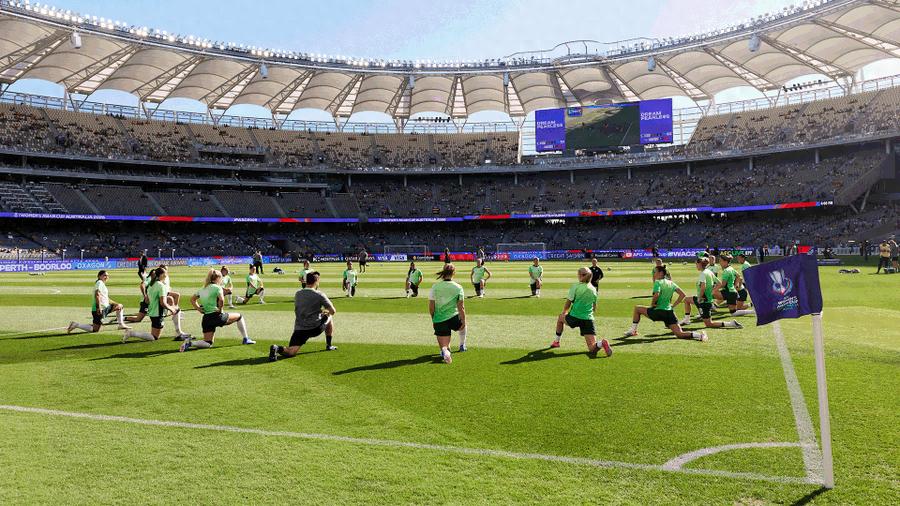
Written by Han Bing During the semifinals, the host Australian women's football team enjoyed all the advantages of timing, location, and personnel: they played their quarter-final one day earlier than the Chinese women's team; the Chinese team only advanced after extra time, giving the host a clear physical advantage; the Chinese team's star player Wang Shuang was suspended, while the fully prepared Australian team aimed for their fifth appearance in the Women's Asian Cup final. As the coach of the Australian women's team during the 2019 Women's World Cup, the current Chinese women's team coach Milicic is very familiar with his home country's team. Correspondingly, the Australian players also have a thorough understanding of their former coach. Before this match, Australian media also paid considerable attention to him.

Since returning to the Women's Asian Cup in 2006, the Australian women's team has reached the semifinals in six out of seven tournaments, with four finals appearances. In 2010, they successively defeated South Korea, Japan, and North Korea to win the championship. Four years ago, they were eliminated in the quarter-finals by a last-minute goal from South Korea's Ji So-yun, which was their only failure to reach the semifinals. After resisting North Korea's overwhelming offensive to advance in this quarter-final, the host's advantage became even more prominent.
In 2006, when Australia first hosted the Women's Asian Cup, they reached the final with a perfect record of five matches without conceding a goal. In the final, they led by two goals in the first half, but in the second half, Han Duan and Ma Xiaoxu scored two goals within five minutes to equalize. Ultimately, in the penalty shootout, Zhang Yanru saved two penalties, crushing the host's dream of winning the championship. Australia hosting the Women's Asian Cup again after 20 years, the host's pre-tournament goal was to win the title, and this semifinal is also a revenge match for the final 20 years ago.
Australian women's football coach Montemurro is a top-tier coach in women's football, having previously managed European powerhouses Arsenal, Juventus, and Lyon, winning women's league championships in England, Italy, and France. In 2019, he received nominations for FIFA and UEFA Women's Coach of the Year awards. Italian-born Montemurro holds a master's degree in sports coaching from the University of Queensland and a PhD in sports psychology performance from Loughborough University in the UK, making him an academically grounded coach with rich practical experience.

Montemurro took over in June 2025, aiming to lead the Australian women's team out of their slump after failing to advance from the group stage at the 2024 Paris Olympics. His initial test was the 2026 home Women's Asian Cup, and his high-pressure possession-based tactics quickly proved successful. The Australian women's team employs complex off-the-ball movement, changes in breakthrough direction, and quickly establishing numerical superiority in local spaces to reduce errors and increase the speed of transition between attack and defense.
However, before the Asian Cup, several key Australian players were unavailable due to injuries. Substitute goalkeeper Micah and defender Matildas Wyman withdrew due to injuries just before the tournament, along with Tottenham Hotspur defender Grant. Veteran 34-year-old midfielder Yallop missed out due to hamstring surgery; she was a member of the Asian Cup-winning team 16 years ago. Another veteran midfielder, Bailey-Hill, retired at the end of January due to a severe knee injury. Goalkeeper Arnold was selected despite injury and only recovered to play in the third group match. Forward Raso and left-back Catley both missed the quarter-final against North Korea due to concussion. Both are expected to return for the semifinal against China, which will aid Australia in both attack and defense.
Despite missing several regular starters, this team remains strong. The 23-player squad includes 20 overseas-based players, with 12 from the English Women's Super League. In the starting lineup against North Korea, nine players were from the WSL, with only goalkeeper Arnold and defender Hitley playing in the US and Italian women's leagues respectively. Left-back Catley, midfielders Kennedy, Van Egmond, Gorry, forwards Kerr, Ford, and Raso have all played over 100 matches, boasting rich experience.
Midfielder Van Egmond, who attended the pre-match press conference, will surpass Bokinhorn in the semifinal to become Australia's all-time appearance leader (170 matches). However, she stated that reaching the final is more important than personal records: "For me, this number is something to be proud of, but the most important thing is reaching the final, which requires the effort of the whole team." Van Egmond emphasized that the Chinese women's team will pose a serious challenge: "Every time we face China, whether in friendlies or official matches, it's very difficult; they are tough opponents."

Under Montemurro's coaching over nine months, the team scored 26 goals in 12 matches, with as many as 15 different players scoring, showing diverse attacking sources. Recent goals have mainly relied on Kennedy and Kerr; the former has scored six goals in the last five matches, with goals in each of the last three Asian Cup matches. Kerr is Australia's all-time top scorer and has scored against South Korea and North Korea in this tournament. With Catley and Raso recovering for the semifinal, Australia has all players available.
Kennedy and Kerr are physically strong, good in duels, and capable of finishing chances. The midfield and defense are anchored by veterans Van Egmond and Catley, while goalkeeper Arnold, who has made several crucial saves, is in excellent form. However, during the match against North Korea, the 60,000-capacity Perth stadium had only 14,400 spectators. The Australian Football Association hopes for more fans in the semifinal, but unsurprisingly, there may be more Chinese supporters in Australia backing the Chinese team, meaning the host's home advantage might not be as significant as imagined.
The Australian starting lineup is relatively aged, with an average age of 28.6 in the last match (the Chinese team's last match averaged 28.1). Although they performed well in the previous match, main striker Kerr is just recovering from a serious injury and is not at her best. Despite an unbeaten run, Australia clearly lacks overall cohesion, relying more on individual ability to score. The high-intensity pressing tactics used by North Korea in the quarter-final could serve as a reference for China. The Australian defense is relatively vulnerable; if China can maintain parity until the second half, when Australia's physical stamina declines, that could be China's opportunity.


Milicic led the Australian women's team at the 2019 Women's World Cup. Ten players from that squad, including main goalkeeper Arnold, defenders Carpenter, Catley, midfielders Van Egmond, Gorry, Kennedy, forwards Ford, Fowler, Raso, and Kerr, will face their former coach in the semifinal. Last Sunday, defender Carpenter told The West Australian that she knows Milicic's tactics well: "He is excellent; he and assistant coach Jolley were very strict, and his tactical organization was tight then. Our whole team watched China's quarter-final; the Chinese team coached by Milicic now is equally excellent in possession and tactical organization; they are a team very hard to break down."
Carpenter said all matches in this tournament have been tough, and China is one of the strong teams: "If they successfully defend the title, it wouldn't be surprising. With a coach like Milicic, I believe he has instilled belief, perseverance, and a never-give-up spirit into the Chinese team. This will be a tough battle; we are prepared for extra time." Carpenter stated that defeating North Korea gave them sufficient confidence: "That match truly showed the resilience of the Australian women's team, and that we can win even when not performing at our best."
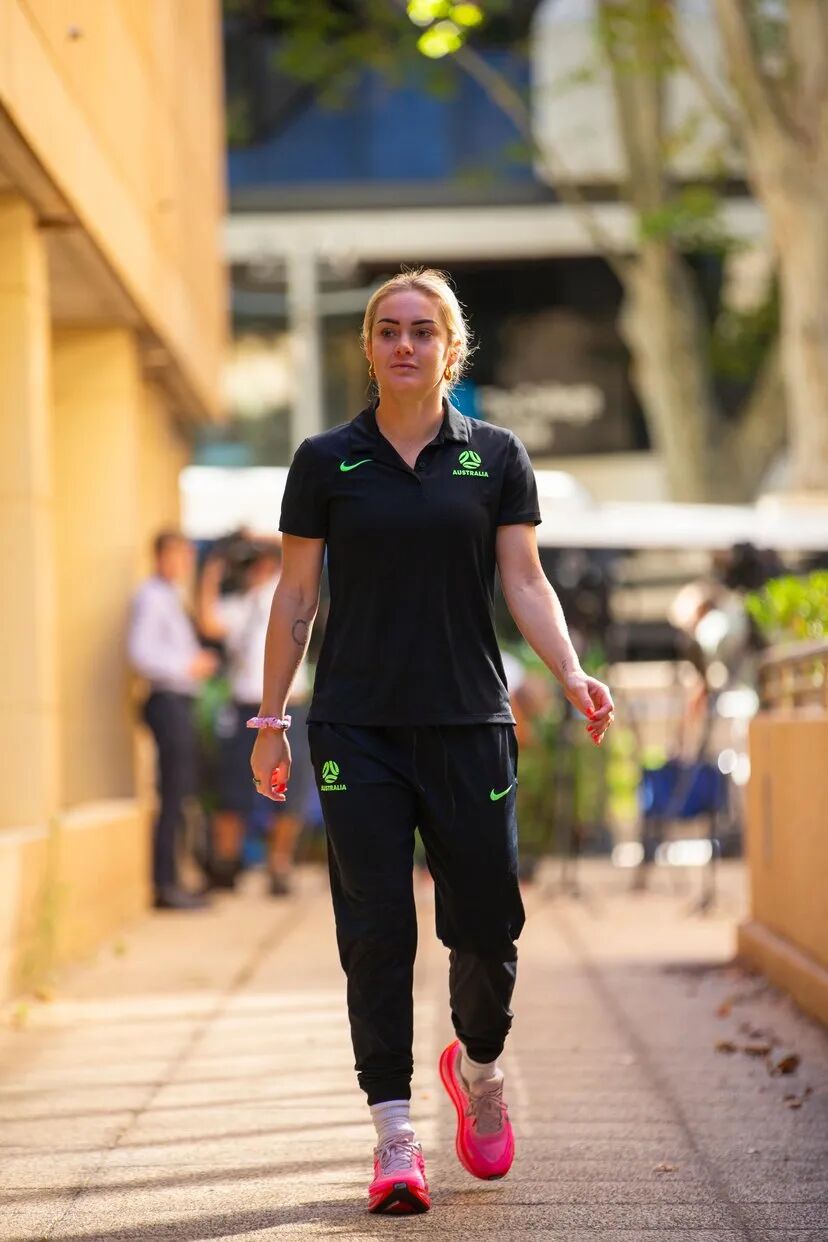
The Sydney Morning Herald also focused on Milicic facing his former players in the semifinal. The report said Milicic is full of confidence in the Chinese team: "Their mentality is too strong; they are fearless and certainly won't fear 60,000 opposing fans." Milicic clearly knows that to defeat the host team, tactics alone are not enough; psychological warfare is also needed. "When coaching Australia seven years ago, I witnessed their resilience firsthand. One of the best moments in my coaching career was in Montpellier against Brazil, where Australia trailed 0-2 but eventually reversed it to 3-2."
Australian women's coach Montemurro and Milicic are old friends. At yesterday's pre-match press conference, Montemurro expressed great respect for Milicic: "He is one of Australia's excellent coaches; he understands football across all levels in Australia. I need to be prepared because I know he will cause us trouble." He admitted his team hasn't been brave enough in possession: "My tactics focus on possession; we will face a well-organized Chinese team; the key is to seize opportunities."


Wonderfulshortvideo
Kvaratskhelia and Ronaldo 🫶


🇪🇸 Spain 🆚 Argentina 🇦🇷
Arsenal goal today arsenal 2-1 chelsea arteta interview arteta press conference
When Diogo Costa saved EVERY penalty he faced in the shoot-out 🤯🤯🤯
The movement is electric ⚡️
Mbappe injury mbappe surgery real madrid 0-1 getafe mbappe return date mbappe edit
ronaldo almeria ronaldo buying new club ronaldo owner ronaldo manchester united owner
 Links
Links
 Contact
Address:UNIT 1804 SOUTH BANK TOWER, 55 UPPER GROUND,LONDON ENGLAND SE1 9E
Number:+85259695367
E-mali:[email protected]
 App
App


