



The New Wave of Overseas Football: Starting from Youth Teams, Xu Bin and Zhang Jiaming Are Paving a More Pragmatic Path




Xu Bin
Report by Chen Yong Dreams have always been the driving force behind human progress. On February 27th, two Chinese players took another small step towards their dreams in Europe: Xu Bin provided two assists in the English Professional Development League (England's U21 second division), helping Barnsley U21 to a 2-1 victory over Coventry U21; Zhang Jiaming scored a goal in his debut after joining Vozdovac, helping Vozdovac U19 to a 2-2 draw with Gura Rec. Additionally, Zhang Jiaming's national youth teammate Lin Zihao also played for Vozdovac U19. Previously, on the 21st, left-winger Lin Zihao curled a shot into the far corner, scoring a spectacular goal.
In August 2022, Wu Lei concluded his three-and-a-half-year stint in Spain and returned to Shanghai Port. Since then, most Chinese players in Europe have been youth players. Starting from the second half of 2025, a new group of Chinese players ventured into European professional football, marking the beginning of a new cycle of overseas development for Chinese football. This includes Wang Bohao, who fans have become familiar with at Dutch second-division club FC Den Bosch, as well as recently signed players Xu Bin, Zhang Jiaming, and Wan Xiang, and Wei Xiangxin, who is set to sign in the summer 2026 transfer window.
This time, although they signed professional contracts, they are not directly entering top-tier leagues like Wu Lei did. Instead, most are starting from youth teams. This is a more pragmatic, yet challenging, path.
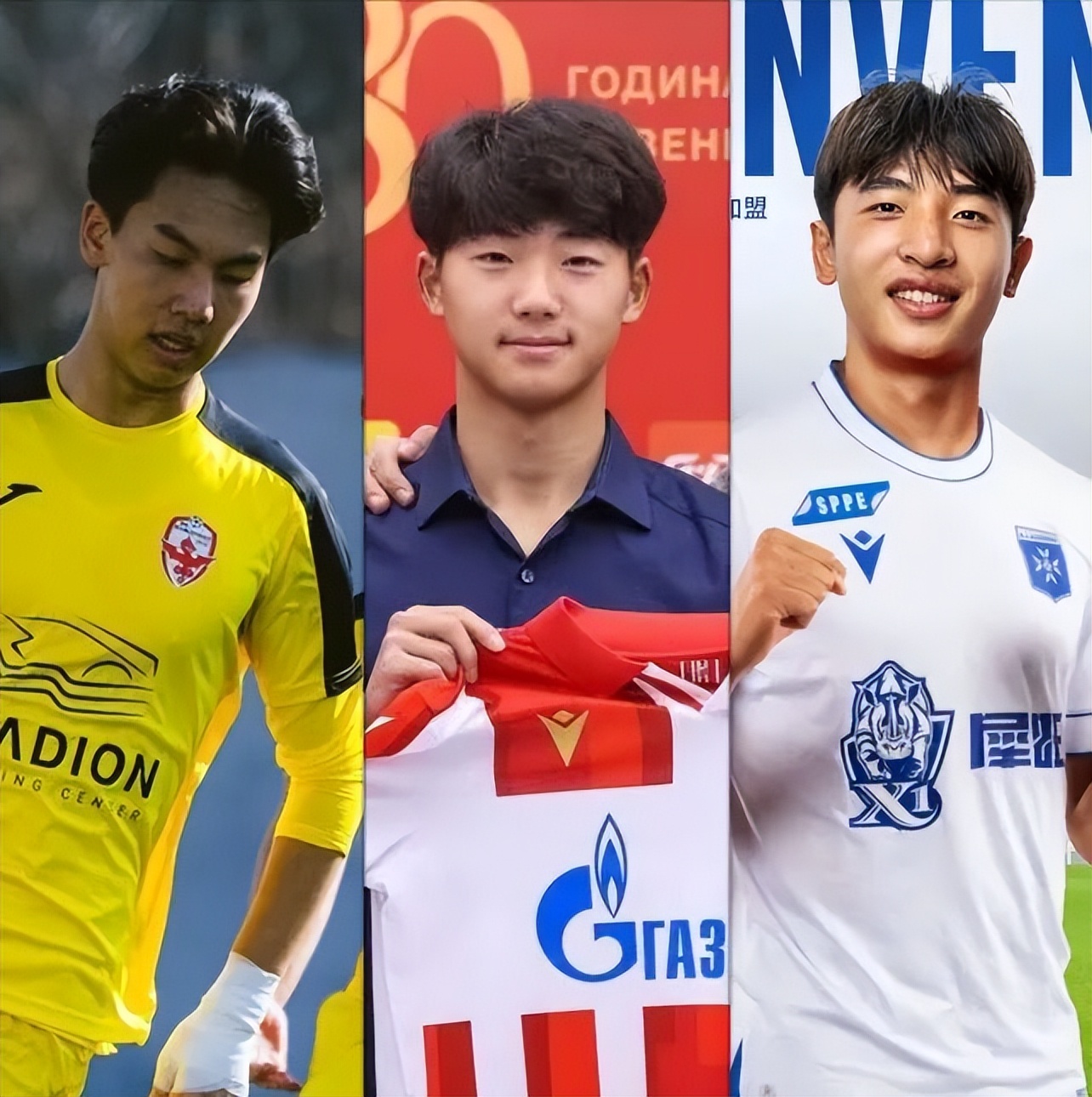
From left to right: Zhang Jiaming, Wan Xiang, Wei Xiangxin

The focal points of this new wave of Chinese players going abroad are Wei Xiangxin and Xu Bin. However, as early as August 2025, two other Chinese players had already landed in Europe: first, Wang Bohao, whom fans have recently become more familiar with. On August 14th last year, Eerste Divisie club FC Den Bosch officially announced the loan signing of Wang Bohao from their sister club Shaanxi Union. This news initially did not attract widespread attention until Wang Bohao's outstanding performance in the U23 Asian Cup later drew more focus. Slightly earlier than Wang Bohao was Lin Zihao, who signed with Serbian club Vozdovac. He had previously appeared in the Chinese professional league, playing in China League Two for Hubei Youth Star at 17. For the future, Lin Zihao needs to prove himself in the Serbian U19 league before moving to a higher professional platform.
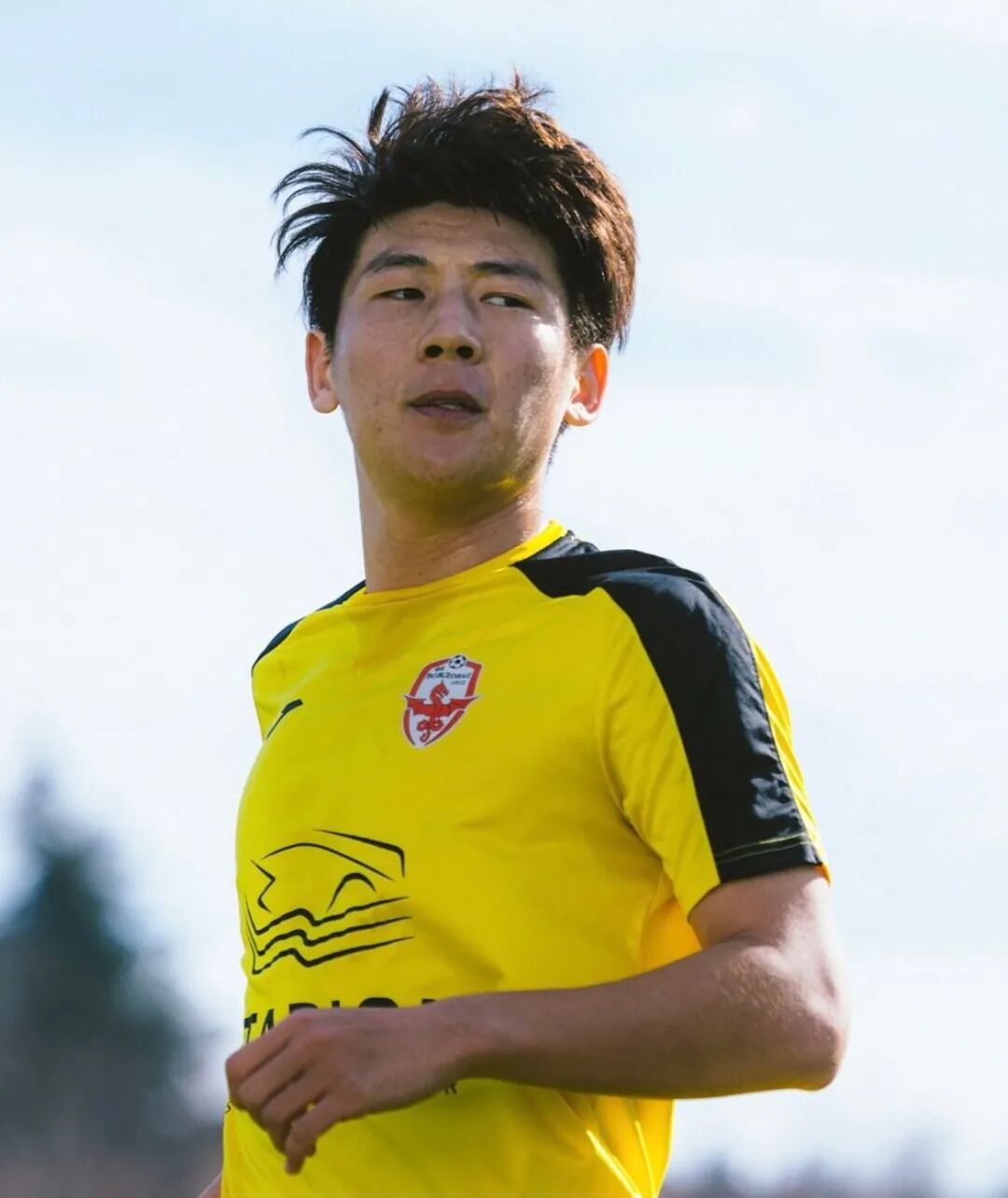
Lin Zihao
So far, Wang Bohao has had relatively stable playing time, appearing in 14 out of 29 league matches (6 starts), providing 1 assist, with an average of 38 minutes per appearance, plus 2 cup appearances. Den Bosch currently ranks 10th in the Eerste Divisie. Lin Zihao has played 13 times for Vozdovac U19 (12 starts), scoring 4 goals.
Compared to Wang Bohao and Lin Zihao, Wei Xiangxin's move abroad has garnered more attention. However, Wei Xiangxin is not yet 18, so he has pre-signed a transfer agreement and professional contract with Auxerre. He will continue to play for Meizhou Hakka in China League One in the first half of 2026 before officially joining Auxerre in the summer transfer window. According to the plan, after joining Auxerre, Wei Xiangxin can either play for Auxerre B in the French fifth division (Championnat National 3) or for Auxerre U19 in the French top youth league (U19 National), depending mainly on his adaptability. His ultimate goal, of course, is to reach the French professional leagues and even the top five European leagues.
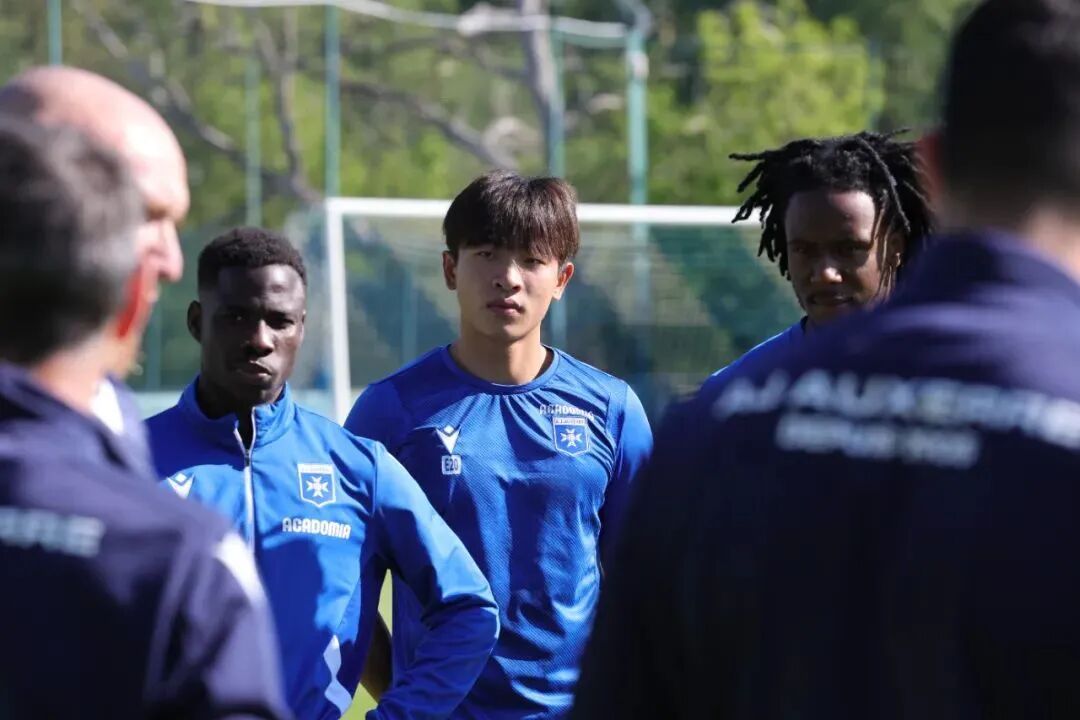
Wei Xiangxin
Following Wei Xiangxin, on January 30, 2026, Premier League club Wolverhampton Wanderers announced the signing of Xu Bin. On February 6th, Wolves announced Xu Bin's loan to League One club Barnsley, while retaining his eligibility to play for Wolves U21. To date, Xu Bin has played once for Wolves U21 in the Premier League 2 (the top-tier English U21 league), starting and playing the full match. He has played three matches for Barnsley U21 in the Professional Development League (England's U21 second division): his full-match debut on February 12th in a 4-2 win; a second start on the 17th, playing 70 minutes in a 2-0 win; and a third start on the 27th, providing two assists in a 2-1 victory.
Xu Bin's primary goal is to play in League One. Although it is England's third tier, it is a standard professional league. Regarding Xu Bin's future development, Wolves have communicated very clearly with him, hoping he will gradually familiarize himself with the English football style, especially the intensity and pace of matches, through different levels of youth and professional leagues, and progress step by step.
On February 13th, Zhang Jiaming joined Premier League club Burnley's U21 team. Unable to obtain a work permit, he was loaned to Serbian club Vozdovac on the 16th. The transfer operation for Zhang Jiaming was very tight, but with efforts from all parties, he quickly completed both the transfer and loan procedures. According to regulations, because Zhang Jiaming transferred to Burnley, Liaoning Tieren is entitled to the highest standard of FIFA training compensation. Regarding Zhang Jiaming's work permit, he needs a record of 5 appearances in the Serbian league or Serbian U19 league to qualify for a permit under the ESC (Elite Significant Contribution) policy, which is how Xu Bin obtained his work permit based on his appearances in the U23 Asian Cup.
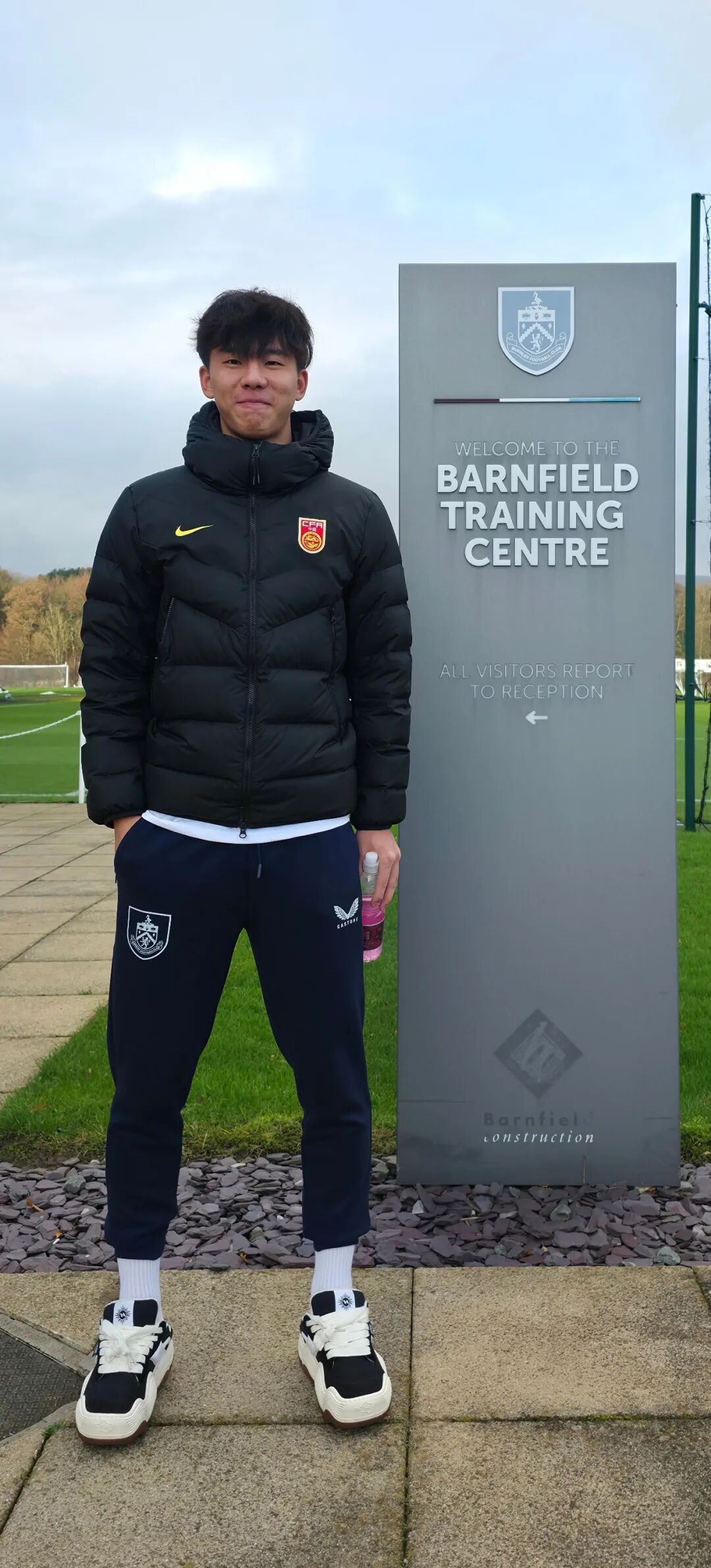
Zhang Jiaming
Scoring on his debut means Zhang Jiaming has a brighter future. It is highly likely he will meet the ESC conditions and obtain his work permit in the summer transfer window, paving the way for a return to Burnley. Once back in the English league system, Zhang Jiaming can plan his future development similarly to Xu Bin.
On February 14th, Hubei Youth Star player Wan Xiang officially joined Serbian club Red Star Belgrade. This season, he will play for Red Star's U17 team in the Serbian youth league.
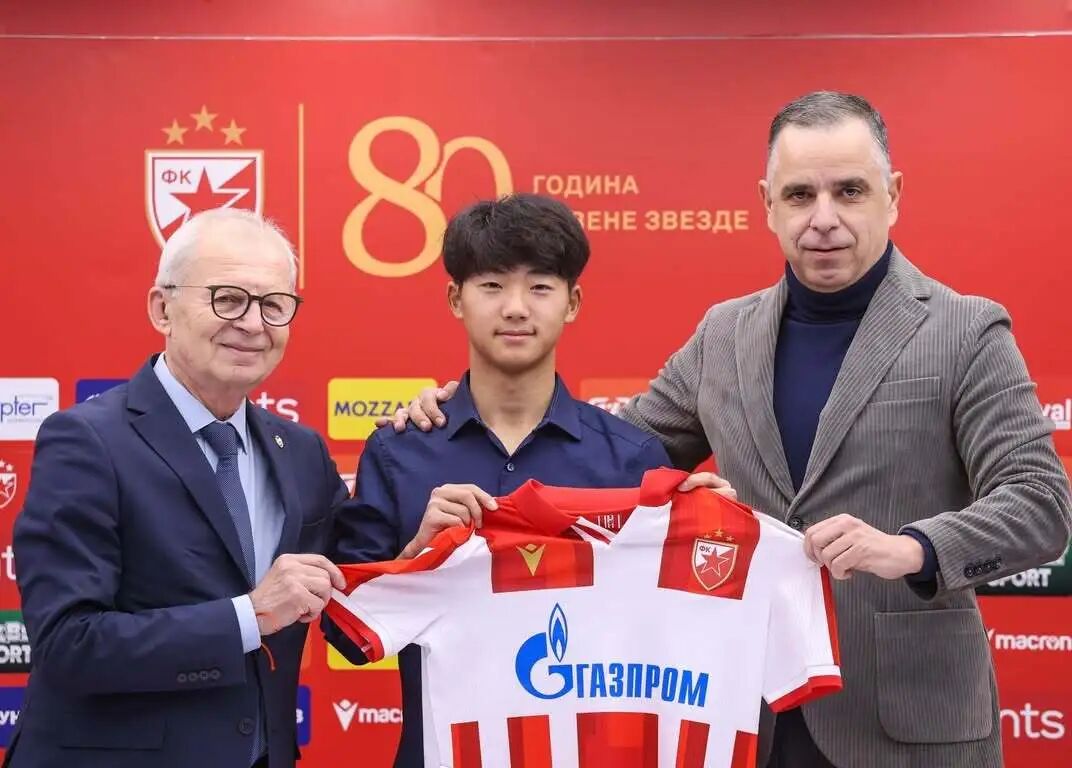
Wan Xiang

The journey of Chinese players going abroad has spanned nearly 40 years. From pioneers like Xie Yuxin, Gu Guangming, Jia Xiuquan, Liu Haiguang, and Shen Xiangfu in the late 1980s, to Yang Chen, Fan Zhiyi, and Sun Jihai in the 1990s, and then to Li Weifeng, Shao Jiayi, Xie Hui, Zheng Zhi, Zhou Haibin, Hao Junmin, Zhang Xizhe, Zhang Yuning, and Wu Lei in the new century, generations of China's top players have aimed for European leagues.
This overseas path is not easy. Leaving China itself presents significant difficulties, generally depending on three factors: first, individual ability; second, personal willingness; third, whether the club releases the player. Individual ability is the easiest to understand, especially as the current skill level of Chinese players generally falls short of the standards required by Europe's top five leagues, necessitating a gradual approach. Personal willingness is also challenging. During the era of high-spending in Chinese football, domestic salaries far exceeded those abroad. Even now, players going abroad often need to sacrifice economic benefits, at least temporarily. Taking Xu Bin as an example, while his overseas salary is higher than what he earned at Qingdao West Coast, as a free agent, if he had chosen another domestic club this season, he could have secured a maximum or near-maximum salary contract, which would have been significantly higher than his overseas income. Currently, some of Xu Bin's U23 national team teammates have secured such contracts, with many players under 20, even 18, getting good deals. The issue of club release has also long troubled players.

Even after resolving domestic hurdles, the process of going abroad is difficult. For example, the Premier League's work permit policy is familiar to fans. The Netherlands is more interesting, imposing a minimum salary requirement for non-EU players, meaning they must import high-level foreign talent. Were it not for the sister-club relationship between Den Bosch and Shaanxi Union, it would have been very difficult for Wang Bohao to play in the Eerste Divisie. In Germany, there are many restrictions on non-EU players competing in leagues below the Bundesliga and 2. Bundesliga, which, for instance, prevented Zhang Yuning from playing for Werder Bremen II.
According to FIFA regulations and EU law, most European countries impose strict restrictions on players under 18, significantly impacting youth players' opportunities to move abroad, unless their families choose immigration to support the move, which comes with very high costs.
Once abroad, players face even more残酷 realities. First, European football operates on a jungle law principle, selecting elite players from a young age through extremely high淘汰 rates, fostering a strong competitive mindset that many Chinese players struggle to adapt to. Second, European football is essentially an industry where players are treated as commodities. To enhance commodity value, Europe focuses heavily on挖掘 young talent. For example, in the Premier League's 2025/2026 summer transfer window, 18-year-old players accounted for £148 million in total transfer fees, 21-year-olds surged to £331 million, 23-year-olds peaked at £495 million, players aged 24-27 also had significant shares, but by age 28, fees plummeted to £68 million, and by 29, they dropped sharply again to £4 million. For Chinese players, breaking into this vast player commodity market is very difficult, and without entering it, one cannot truly be considered to have made it abroad.
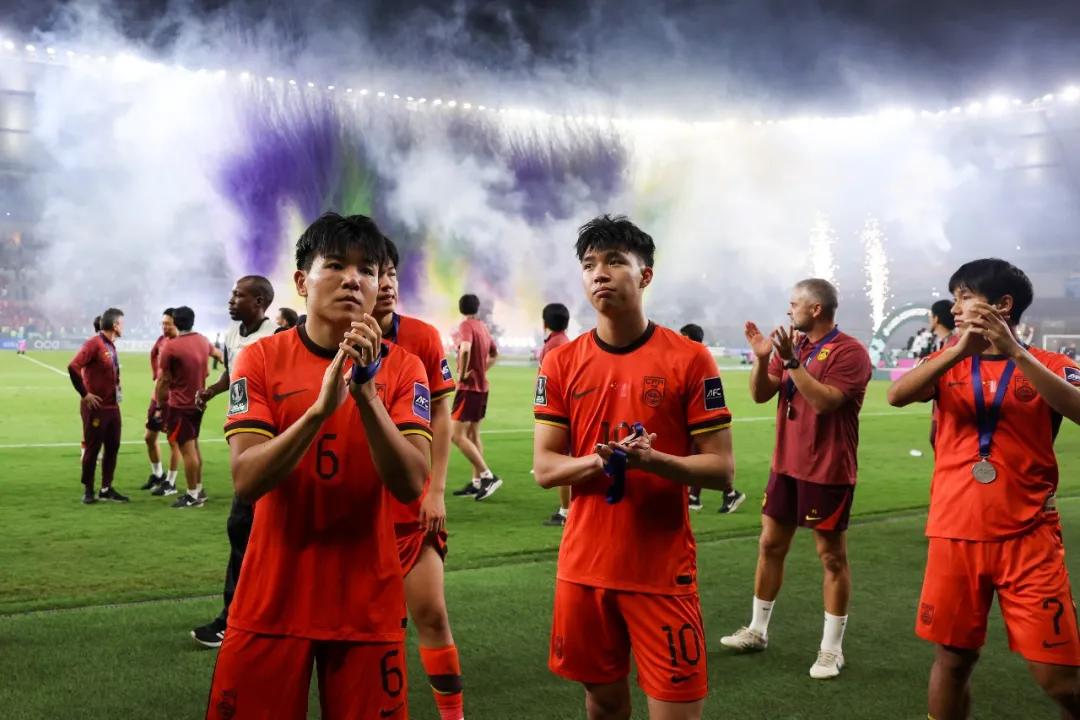
Adapting competitively is also an issue. Xu Bin could easily handle 90 or even over 100 minutes in the Chinese Super League, but evaluations in England's youth leagues show a decline in his physical stamina and decision-making after 70 minutes. This stems from differences in playing style, intensity, and rhythm between the two systems, which is precisely the reason for pursuing overseas experience now.
Life abroad also poses significant challenges. Many Chinese players overseas face considerable difficulties in this regard, especially youth players. This is also closely related to differences between Chinese and European football development systems. Chinese players are often raised in a more sheltered environment, with schools or academies providing comprehensive support for training, matches, studies, and daily life. In Europe, players need to be independent. Additionally, cultural differences and language barriers impact players' overseas experiences. Among the current group, Zhang Jiaming's excellent English communication skills were highly appreciated by Burnley.
However difficult this path may be, from the perspective of Chinese football's long-term development, we must press forward resolutely. Enhancing players' individual abilities and value, such as helping national team players adapt to higher intensity and pace, is only a surface-level benefit. The deeper, more profound impact lies in the new football philosophies gained overseas and their potential to反馈 and enrich Chinese football.


Wonderfulshortvideo
Kvaratskhelia and Ronaldo 🫶


🇪🇸 Spain 🆚 Argentina 🇦🇷
When Diogo Costa saved EVERY penalty he faced in the shoot-out 🤯🤯🤯
The movement is electric ⚡️
Never gives up 💪
Things you really love to see
Neymar highlights neymar edit neymar lamine yamal celebration
 Links
Links
 Contact
Address:UNIT 1804 SOUTH BANK TOWER, 55 UPPER GROUND,LONDON ENGLAND SE1 9E
Number:+85259695367
E-mali:[email protected]
 App
App


