



Vietnam U23 becomes a launching pad for ASIAD 20 and the 2028 Olympic dream



Vietnamese football’s 2026 U23 Asian Bronze Medal is not just a moment of triumph. The VFF is turning it into an “anchor point” for an entire cycle, with ASIAD 20 as a testing ground and the 2028 U23 Asian Championship as the bigger goal — the ticket to the Olympics.
The qualification of 16 teams for the 2026 U23 Asian Championship final also secures their spots in the men’s football event at ASIAD 20 making Vietnam and Thailand the two Southeast Asian representatives. In this context, the decision to send the U21 team to Japan is not as risky as it seems but rather a strategic move to expose the young generation to high-pressure environments earlier.
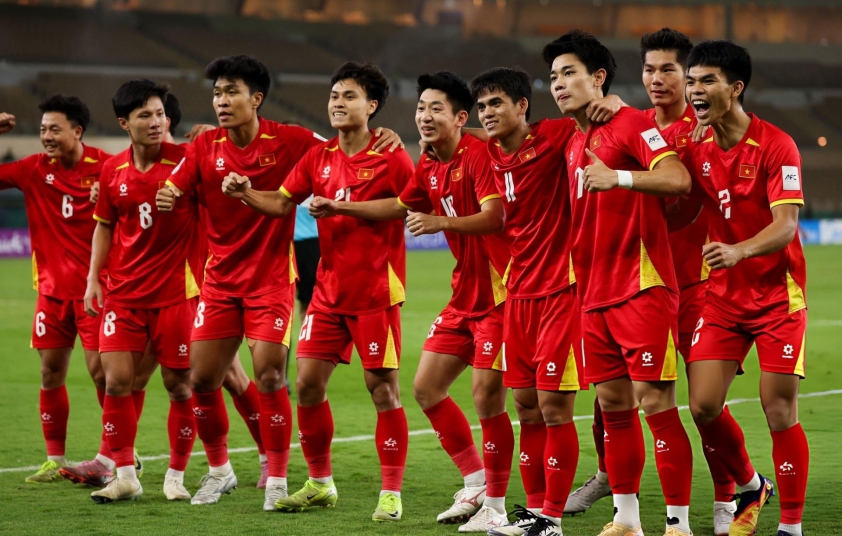
ASIAD is a hybrid competition where teams are allowed to include over-age players. This means Vietnam’s U21 squad will face more experienced and physically stronger opponents. However, this difference acts as a “gold test”: those who endure the intensity, psychological pressure, and still maintain their playing identity will form the backbone for the 2027–2028 period.
If we imagine a backbone for Vietnam’s youth team over the next two years, many names who proved themselves at the 2026 U23 Asian Championship are almost “fixed”.
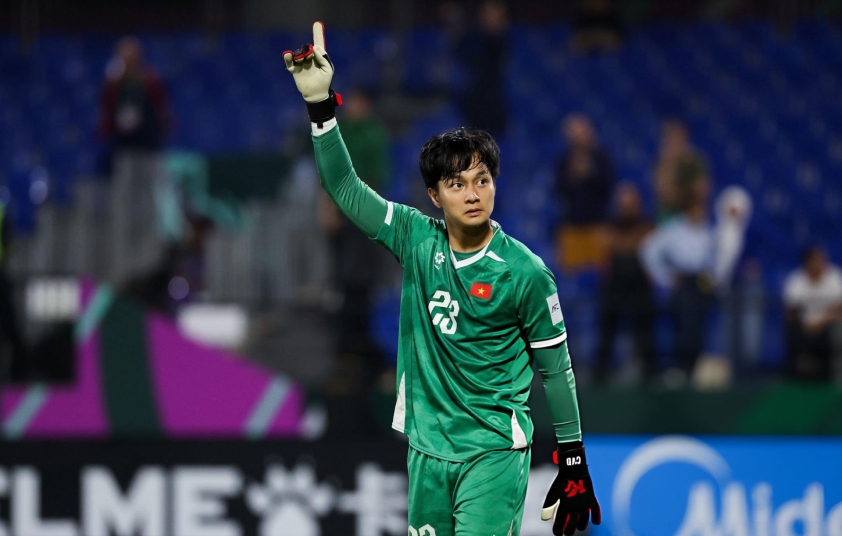
In goal, Cao Văn Bình (born 2005, SLNA) stands out as a reliable last line of defense. His strengths include reflexes, mental toughness, and years of experience with youth national teams — qualities that help a young goalkeeper stay steady during challenging moments.
The defense can be anchored by Quang Kiệt (HAGL), who has the advantage of being over 1.9 meters tall. Although Quang Kiệt was previously cut before major U22/U23 tournaments, his development in the V-League shows a clear upward trajectory. His challenge lies not in physical strength but in anticipation and reading the game — key skills that define a top-class center-back.
The midfield is a domain of endurance and organization. Bá Đạt (PVF CAND) and Nguyễn Lực (Hà Nội FC) have extensive experience training with U17 and U19 squads, so international exposure is not lacking. The remaining task is to find the right tactical structure for them to maximize their potential: a playmaker, a defensive midfielder, or a true box-to-box player.
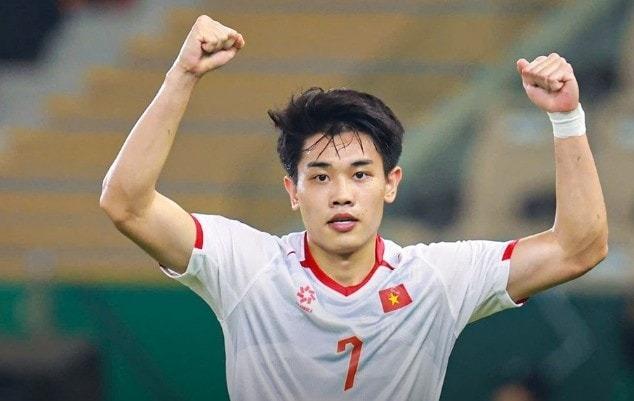
Up front, there is abundant and competitive talent: Nguyễn Công Phương (2006, Thể Công Viettel) can play as an attacking midfielder or second striker; Lê Văn Thuận (2006, Ninh Bình) offers speed; Nguyễn Lê Phát (2007, Ninh Bình) is noted for his goal-scoring instincts. Notably, Minh Tâm (HAGL, 2005) scored 4 goals in the 2025/26 V-League, a positive sign of a young midfielder who knows how to contribute goals. From the same HAGL academy, Gia Bảo (2008) is the next generation ready to challenge the seniors.
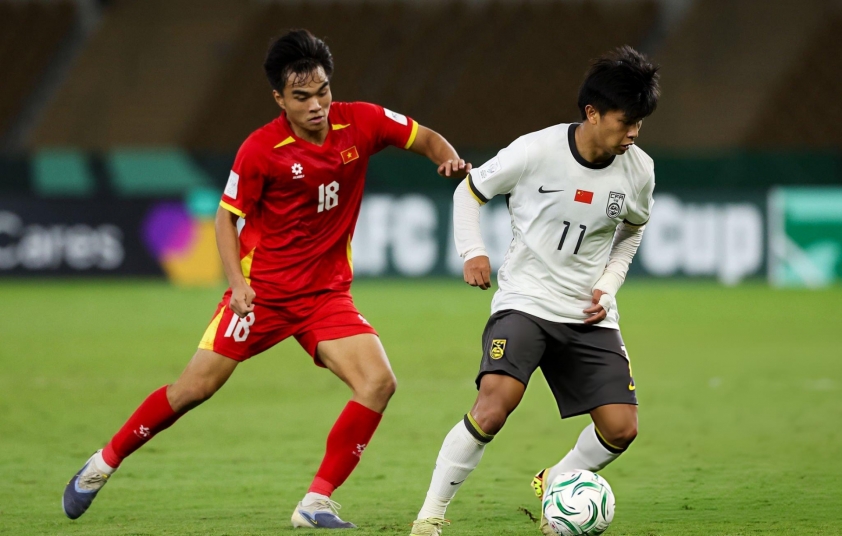
Besides the domestic squad, the group of overseas Vietnamese players is also a notable supplement. Lee Williams and Khoa Ngô are performing well at Ho Chi Minh City Police FC, contributing 3 goals in the 2025/26 V-League; Trần Thành Trung has made his mark at Ninh Bình; Rahni Moreau Nguyễn is trialing at Thể Công Viettel. Importantly, the VFF allows each team in the 2026 National Second Division to use two overseas Vietnamese players without citizenship and one naturalized player — an open mechanism to scout new talents.
However, personnel is only half the story. The other half is finding the most suitable coach for the youth team: whether domestic or foreign, the coaching style, management approach — all must be carefully considered, as Vietnamese football has learned enough lessons from hasty decisions.
Therefore, ASIAD 20 is not just a tournament. It is a crucial test to finalize the core squad, build a winning mentality, and most importantly: prepare for the 2028 U23 Asian Championship — where the Olympic dream is seriously pursued. With the 2005–2009 generation maturing together and tested early, this journey at least has a clear roadmap.


Wonderfulshortvideo
Things you really love to see


Neymar highlights neymar edit neymar lamine yamal celebration
Arsenal 1-0 chelsea havertz goal
Ahead of his 100th cap, Sir Keir Starmer had this message for Maro Itoje…
yamal goal yamal instagram yamal dribble barcelona 2-1 albacete yamal highlights yamal edit
casemiro goal casemiro assist casemiro 6 7 celebration
"Can I just start off by saying I want to congratulate Maro on 100 tests... He's a great bloke and a great player."
 Links
Links
 Contact
Address:UNIT 1804 SOUTH BANK TOWER, 55 UPPER GROUND,LONDON ENGLAND SE1 9E
Number:+85259695367
E-mali:[email protected]
 App
App


