



Suffering, Carrick’s Growth Hormone



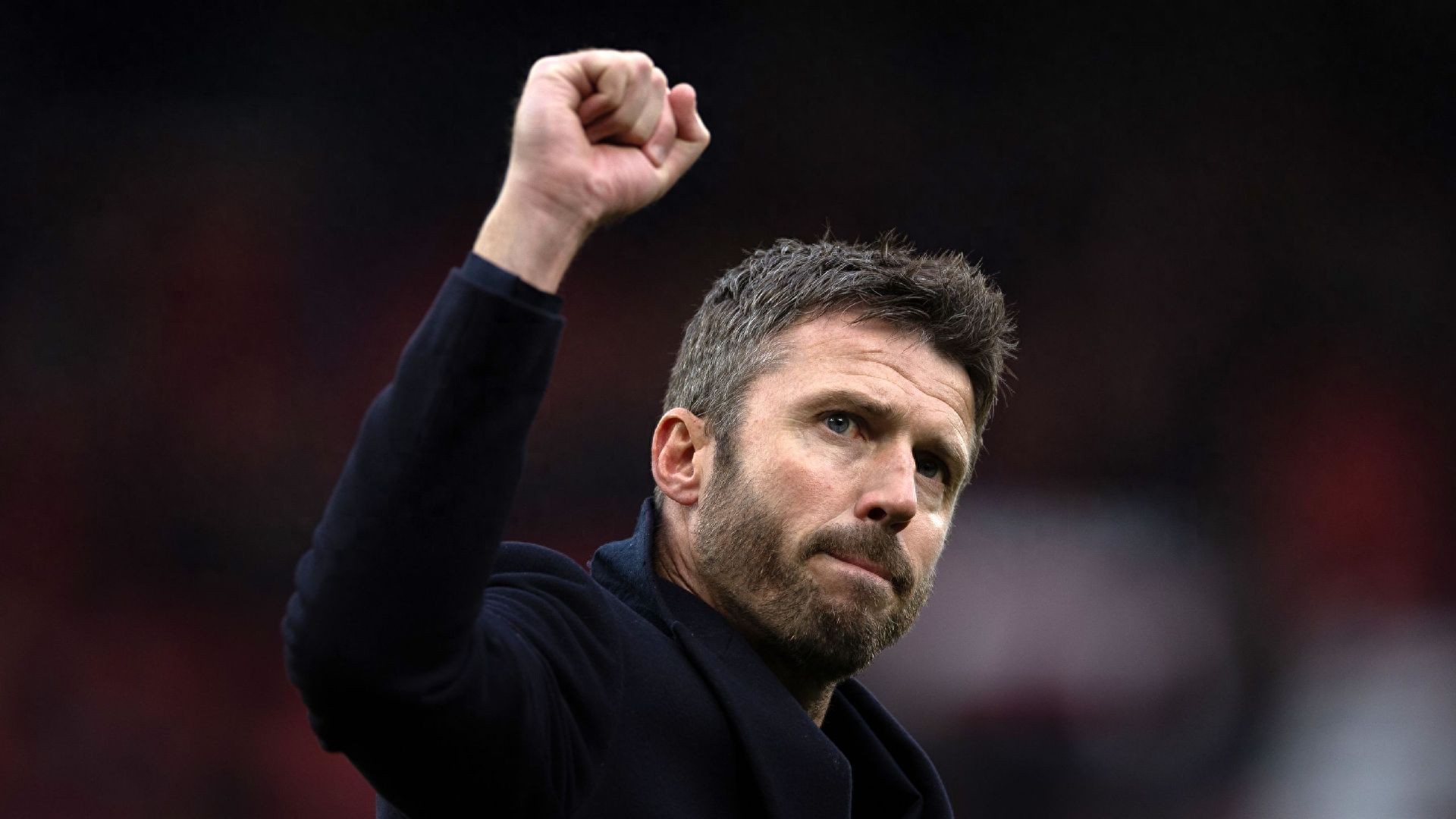
Written by Han Bing Although he played for Manchester United for 12 years, even Ferguson believed that compared to others better suited for managing United, Carrick was too “silent,” always a “shy and introverted boy, sometimes needing to be shaken awake.” But this person, often ignored because of his quietness, quietly achieved unexpected success while others took the spotlight. When he joined United from Tottenham 20 years ago, he probably never imagined he would serve the Red Devils for 12 years, become a club legend, and even have the chance to coach Manchester United.
In his autobiography, Ferguson also thought Carrick lacked the bold spirit of Lampard and Gerrard, yet even he overlooked the iron-like resilience and determination hidden beneath Carrick’s reserved and taciturn “mask.” It is precisely this toughness and resolve that align perfectly with Manchester United’s long-standing DNA.
Trials and Tribulations, Forging Resilience
What shaped Carrick’s silent yet resilient character? It was the constant hardships from an early age. Born in Northeast England, Carrick attended trials at Middlesbrough, Stoke City, Arsenal, Crystal Palace, and Chelsea by age 9, all ending in failure. As a child, he suffered from knock knees; a failed surgery would have left him paralyzed for life. His parents, Vince and Lynn, chose natural correction, causing his right leg to be shorter than the left, and throughout his career, he almost always wore corrective insoles.
As a teenager, Carrick dreamed of joining Newcastle United like Shearer, but after the Magpies disbanded their reserve team, the 15-year-old entered West Ham’s youth academy alone, sharing a flat with a group of Australians. He never complained; each success made him ask himself: “Are you willing to keep challenging yourself? True success isn’t a one-time event but a continuous process, and this is exactly the DNA Manchester United needs to awaken.”
At West Ham’s youth ranks, Carrick often suffered injuries due to rapid growth and a slender, weak physique. At 18, he was named West Ham’s Young Player of the Year. After West Ham’s relegation, he played one season in League One before transferring to Tottenham. In the final Premier League match of May 2006, Carrick was among ten Spurs players afflicted by norovirus, suffering from severe diarrhea. This notorious “food poisoning” led to Spurs losing 1-2 to West Ham, allowing their rival Arsenal to snatch the fourth Champions League spot.
Besides losing Champions League qualification due to team-wide food poisoning, Carrick suffered from depression for two years after the 2009 Champions League final defeat. At 36, he experienced arrhythmia; although surgery was successful, he chose to retire a year later. During his 12-year career at Manchester United, Carrick also endured multiple injuries. Yet every setback, both physical and from public opinion, only made him stronger.
The Boss’s Insight, Self-Awareness
Despite their differing personalities, Ferguson regarded Carrick as Keane’s natural successor. After signing him in summer 2006, Ferguson bestowed Carrick with Keane’s number 16 shirt. Ferguson believed Carrick was the smartest player at Manchester United and in England at that time, and one of the best passers, though his reserved nature often led to misunderstandings: “Certain traits caused people to misinterpret his values. But he possessed a rare football intelligence among young players, able to solve every problem on the pitch.”
Carrick is a perfectionist and a “detail fanatic,” always keeping everything around him neat. At home, when his wife Lisa cooks, he immediately washes all dishes after meals; his office is always tidy, and when leaving hotel rooms, he puts used towels back in the bathtub and makes the bed meticulously, almost obsessively. This matches his clean, precise, and careful playing style and allows him to keenly identify and promptly solve problems during coaching.
Carrick knows well how to build an efficient and successful team. Before coaching Manchester United, he chose Holland, a former UEFA technical analyst, and Woodgate, who speaks Spanish from his time at Real Madrid. Woodgate’s language skills were welcomed by United’s Spanish-speaking players. Holland handled daily training, giving Carrick more time for one-on-one talks with players. His calmness and empathy became his strongest management tools. He never publicly criticized players or colleagues, maintained a humble media attitude, and was even seen as continuing his “boring and dull” style from his playing days. Yet this “dullness” became a shield for him and the team. In this, Carrick is somewhat like Zidane; a coach doesn’t need to act on camera — his stage is the locker room, not the press conference.
Carrick’s passion for football and resilient character may also be inherited from his family genes. His grandfather Owen had the chance to join the England team but enlisted as a sailor during WWII, serving on the destroyer that helped sink the German battleship Bismarck in 1941. His father Vince was skilled but retired reluctantly after a leg fracture. Carrick’s football career is directly linked to his parents’ insistence on correcting his developmental issues through training. Having overcome one challenge after another, how could Carrick fail?


Wonderfulshortvideo
User VictoryVox has posted a video.


 Links
Links
 Contact
Address:UNIT 1804 SOUTH BANK TOWER, 55 UPPER GROUND,LONDON ENGLAND SE1 9E
Number:+85259695367
E-mali:[email protected]
 App
App


