



The winter training initiative carries three hidden meanings — an investigation into the 2026 Guizhou Province Football Youth Training “Winter Training and Competition”



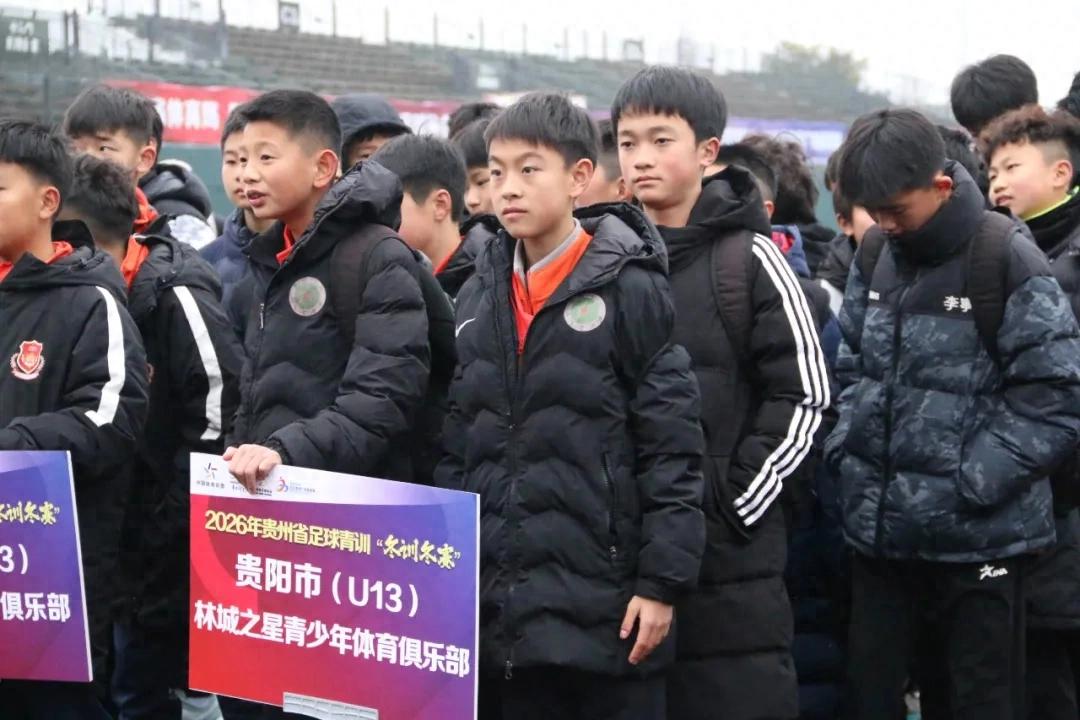
Nan Nan reporting from Xingyi, Guizhou Among the 36 teams in the 2026 Guizhou Province Football Youth Training “Winter Training and Competition,” there are numerous social clubs and youth coaches deeply rooted in Guizhou. Even they have never seen such a strong winter lineup in Guizhou’s youth football. “In previous years, we usually arranged winter training based on each club’s age group situation, but this year is completely different. We can feel that Guizhou’s high-level youth training teams are all highly motivated to compete fiercely in this tournament,” said Li Yang, team leader of Guiyang Lincheng Zhixing.
Most teams participating in this “Winter Training and Competition” have prepared well for tough matches. The Guizhou Police Academy U15 team recently represented the Guizhou Football Association at the inaugural China-Korea Youth Football Elite Challenge held mid-January in Dingnan, Jiangxi. Many players from Bijie Xinliliang Club participated in last year’s second “Western Youth Training Cup.” According to Tian Jian, head of the Competition Department of the Guizhou Football Association, every match in this “Winter Training and Competition” will be a hard-fought battle, representing the highest level of competition for the same age groups in Guizhou, so preparations began early.
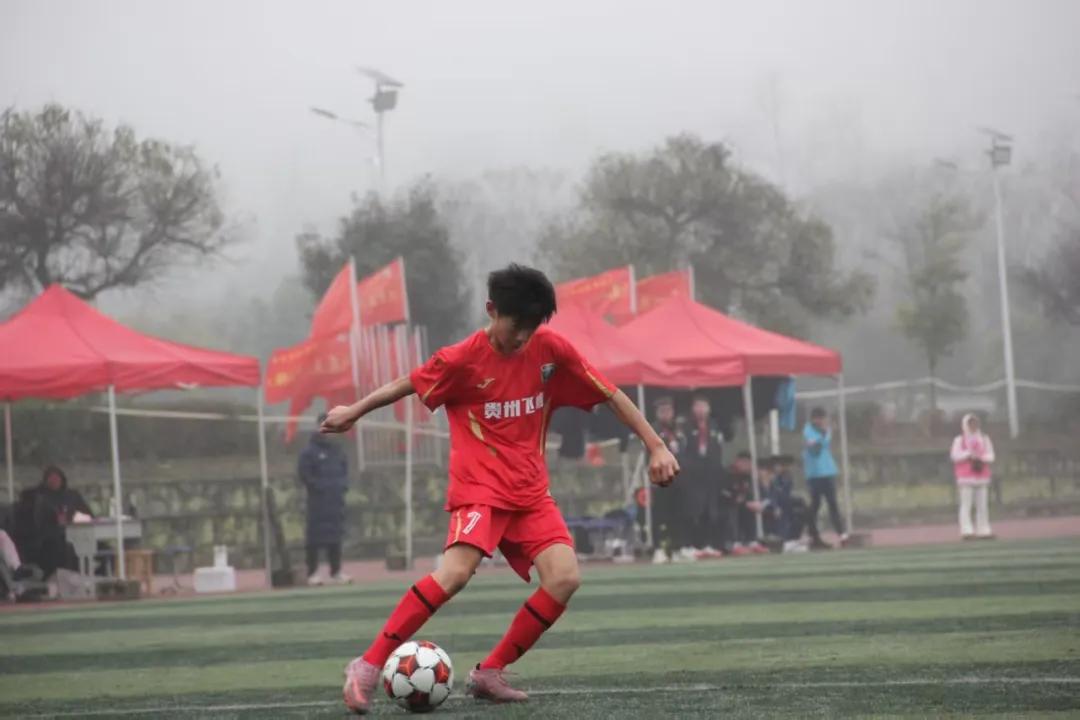

At the 14th National Games in 2021, Guizhou achieved its best-ever result by finishing 11th nationally in the men’s U18 football category. However, four years later at the 15th National Games, Guizhou’s three teams in the U16, U18, and U20 men’s categories all failed to qualify for the finals. This dramatic contrast prompted the Guizhou Sports Bureau and Guizhou Football Association to realize that to avoid repeating such setbacks and to showcase Guizhou football again at major multi-sport and national games, early strategic planning is essential.
“Summer training and competitions” are a tradition for Guizhou football, with June and July being the busiest months for the Guizhou Sports Bureau and Football Association since 2024. Although the summer training and competition system is mature, there has never been a large-scale “Winter Training and Competition” within the province. Guizhou has invested significant effort in preparing for this, including deciding on benchmark events for the “Winter Training and Competition,” ensuring fair team selection, leveraging the event to comprehensively improve local teams, players, coaches, and referees, choosing venues that maximize athlete performance despite the cold mountainous climate, and allocating resources to ensure smooth event operation.
Before the troops move, supplies must be ready. In August 2025, special funding for the 2026 Guizhou Province Football Youth Training “Winter Training and Competition” was included in the 2026 budget of the Guizhou Sports Bureau. This financial guarantee provides comprehensive support for the full implementation of the “Winter Training and Competition.”
“Since 2016, Guizhou football has been primarily driven by social organizations, but now we are returning to a new national system for football development,” said Ma Lei, Party Secretary and Director of the Guizhou Sports Bureau. “This means the sports department takes the lead, education departments cooperate, and social forces jointly manage, with planning, coordination, and step-by-step development.” This framework laid the foundation for Guizhou’s primary goal in establishing the “Winter Training and Competition” — selecting provincial elite teams aligned with major multi-sport and national games.
In Guizhou’s overall football development plan, major multi-sport and national games serve as important milestone tests for youth training progress. The plan calls for selecting 15 elite teams across three age groups (three boys’ teams and two girls’ teams per age group), then through high-level training and competition, choosing provincial elite representatives to participate in these major events.
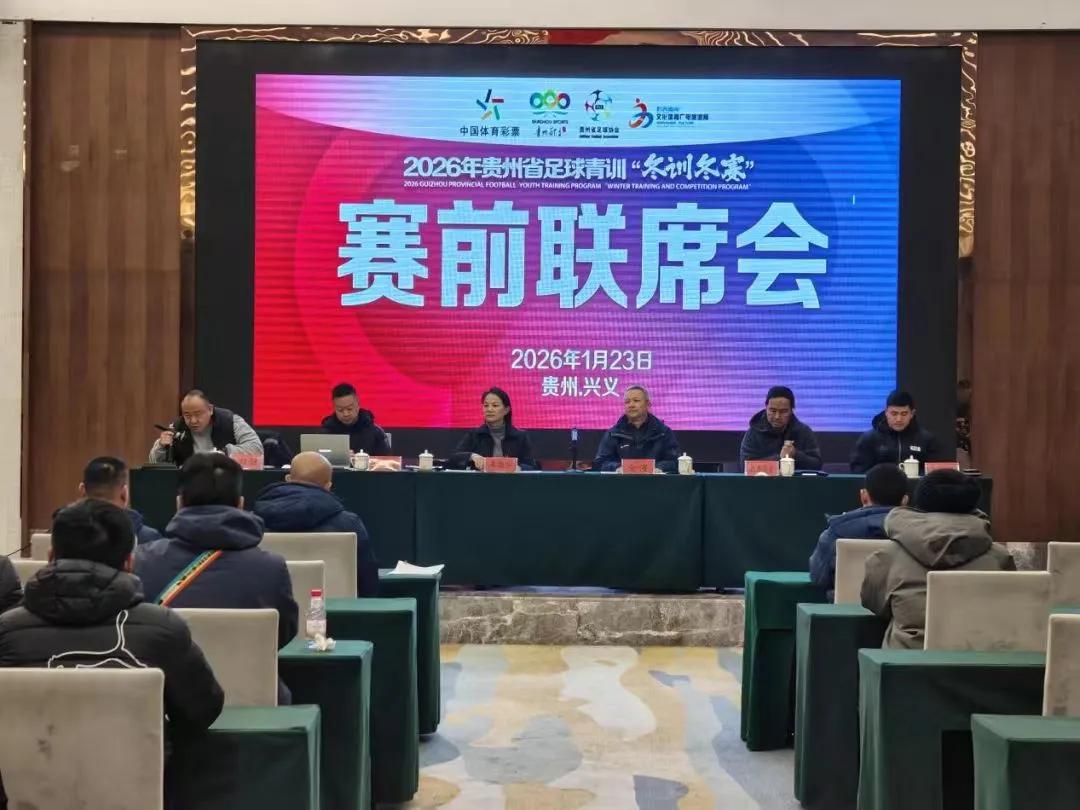

Regarding the formation of provincial elite teams, the Guizhou Sports Bureau proposed a model involving provincial teams managed by city sports authorities, football associations, schools, and clubs respectively, allowing various types of teams to apply for co-construction. Meanwhile, experts selected by the Sports Bureau and Football Association rigorously screened the applicants. From 48 teams applying across six groups (three age groups for boys and girls), 36 teams meeting standards were chosen to compete.
After establishing a “one main, four auxiliary” regional layout, Guizhou has already completed large-scale “five constructions”: building coaching teams, teams, competition systems, player archives, and youth training centers. “We hold over 3,500 youth football matches annually, and most outstanding players are recorded in archives. These numerous competitions have helped us map the structural levels of youth training in Guizhou through results,” said Tian Jian. “But we don’t want to simply rely on past experience to arbitrarily decide co-constructed teams; we aim to provide a fair and just competition platform for these relatively strong local teams to prove themselves on the field.”
Additionally, this “Winter Training and Competition” will select many of Guizhou’s future star players and establish a provincial elite player database. Chen Mao, Vice Chairman of the Guizhou Football Association and former head coach of Guizhou Hengfeng, said although the selection and competition occur in 2026, the elite teams target the major multi-sport and next national games. Therefore, the selection criteria emphasize players’ future potential rather than current ability. “If selected players are already at their peak now, that actually isn’t beneficial for achieving future goals.”
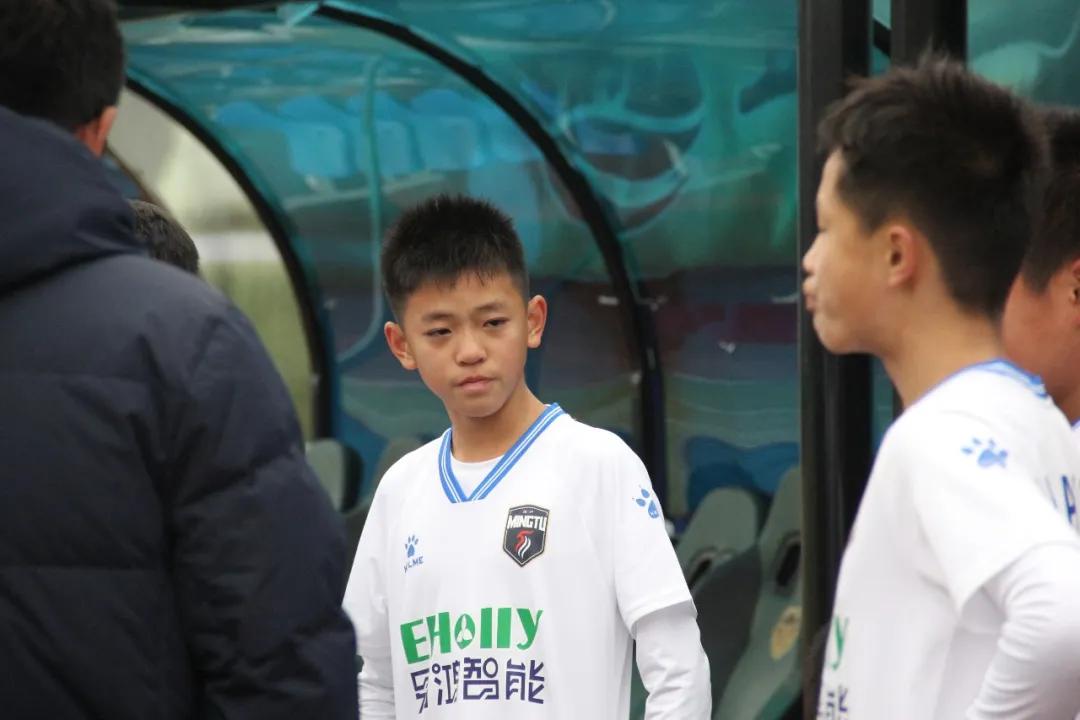
Guizhou is not a football powerhouse. Despite having had two Chinese Super League teams, local team strength varies widely and generally lacks high-level match experience. To provide local teams in this “Winter Training and Competition” with opportunities for high-level competition, Guizhou specially invited the nationally renowned youth training club Guangdong Mingtou to participate. Guangdong Mingtou has long focused on youth training and successfully advanced its youth teams into professional leagues, earning significant recognition in China’s football youth training system.
Guangdong Mingtou attached great importance to this Guizhou event, sending almost the same squad that participated in the first China-Korea Youth Elite Challenge. In Dingnan, Jiangxi, Guangdong Mingtou ranked 7th in the challenge and was 5th among domestic teams behind Evergrande Football School, Shanghai Port, Zhejiang FC, and Wuhan Three Towns, demonstrating strong overall strength.
Inviting Guangdong Mingtou to compete not only increases opportunities for Guizhou teams to face high-level domestic opponents but also shows Guizhou’s openness toward outstanding players nationwide. In fact, Guizhou aims to further raise the local youth training level by combining internal development with external connections. “We can’t keep competing only at Guizhou’s level; to make breakthroughs, we need to see how top teams nationwide play,” said Tian Jian.
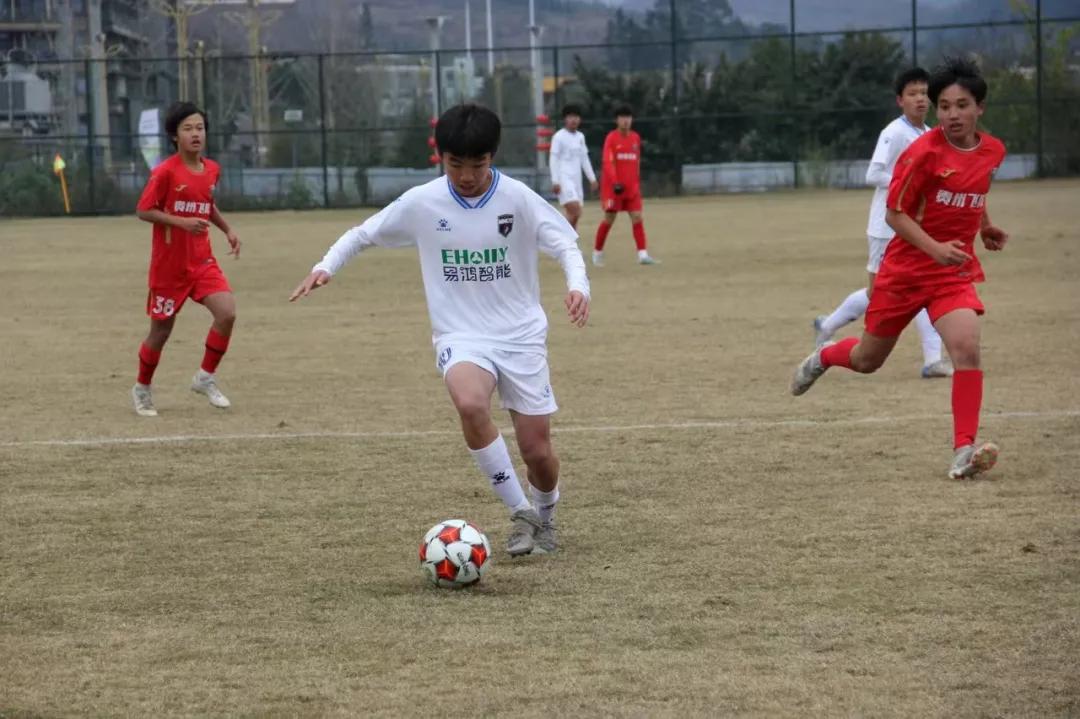

In this “Winter Training and Competition,” Guizhou not only introduced Guangdong Mingtou as a “catfish” to test local teams’ practical abilities but also aims to establish a dynamic assessment system for elite teams. Leading teams and outstanding players will not be guaranteed success indefinitely; Guizhou will continuously evaluate teams and players through higher-level competitions. Especially after the Korean coaching team arrives, high-level training methods will set high standards, allowing continuous selection of suitable players and teams under stricter requirements. “We are committed to holding the ‘Winter Training and Competition’ annually. Maybe next year, the teams will be different, and our assessment standards will definitely be higher each year,” said Tian Jian.
Dynamic assessments in elite selection are a key concept in building provincial elite teams, ensuring that clubs and youth training units must work earnestly and implement training plans effectively to meet increasingly stringent evaluation criteria. This reflects Guizhou’s strategic approach to constructing elite teams across age groups. Besides, this “Winter Training and Competition” also offers knowledge lectures covering areas like sports recovery and sports medicine to comprehensively enhance theoretical knowledge for athletes and coaches.
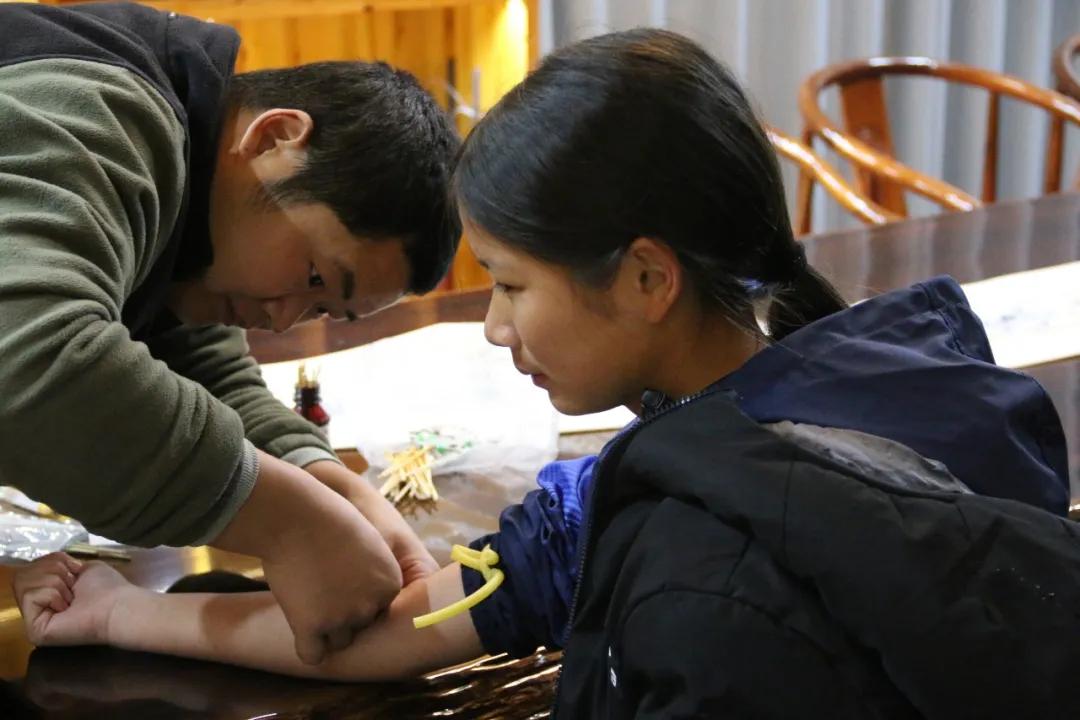
More importantly, Guizhou incorporated technological applications such as blood tests and physical assessments into this “Winter Training and Competition.” Tian Jian noted this is the first time Guizhou has integrated technology on a large scale in provincial youth events: “Some teams didn’t understand why we did this at first because such tech-based training methods were never used before. In fact, modern high-level training increasingly relies on technology. Blood tests provide a real-time picture of players’ physical conditions, and we promptly share results with teams so coaches can use players more scientifically.”
Regarding physical assessments, Tian Jian shared a candid experience. In 2021, during the men’s U18 National Games finals, his team faced physical tests where many players could barely complete a few pull-ups. “Our players performed well on the YOYO test, but strength tests were disappointing, showing weak core and upper body strength. Simply put, they couldn’t handle intense physical confrontations,” Tian Jian said. “Since we are preparing so early for the major multi-sport and national games, we must evaluate players with high standards. Such tests also inform coaches what to focus on in training.”
At the “Winter Training and Competition” special symposium on January 28, Ma Lei, Party Secretary and Director of the Guizhou Sports Bureau, extensively gathered feedback from grassroots youth training personnel on measures and plans for Guizhou’s youth training development. At a time when the provincial youth competition system is taking shape and the Korean high-level coaching team is about to arrive, this in-depth research will help Guizhou football advance more deeply and practically. This pragmatic approach is one of the key factors driving Guizhou football toward a healthy, standardized, and sustainable development path.


Wonderfulshortvideo
User VictoryVox has posted a video.


 Links
Links
 Contact
Address:UNIT 1804 SOUTH BANK TOWER, 55 UPPER GROUND,LONDON ENGLAND SE1 9E
Number:+85259695367
E-mali:[email protected]
 App
App


