



People-centered, everything thrives! The "humanized revolution" behind Carrick’s four consecutive wins at Manchester United



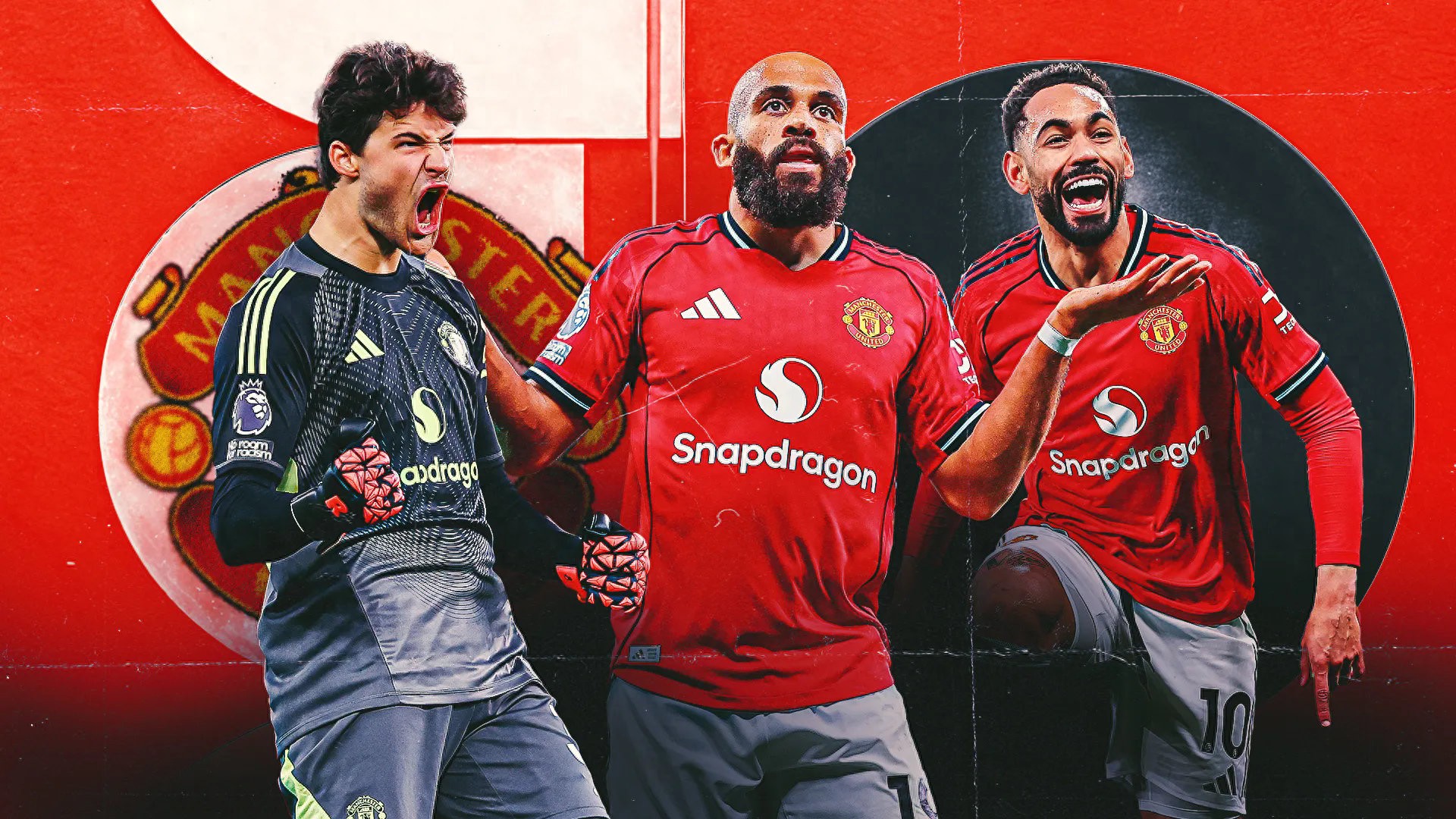
Written by Han Bing Carrick managed to secure Manchester United’s first Premier League four-game winning streak in two years within only four matches! The last time the Red Devils achieved this was on February 18, 2024, under Ten Hag’s leadership. But that previous streak was against Wolves, West Ham, Aston Villa, and Luton, while this time they defeated Manchester City, Arsenal, Fulham, and Tottenham — three of the traditional top six clubs. This also marked United’s first win since October 2022 after eight winless games, beating Spurs and completing a “grand slam” by overcoming all other top five rivals this season, casting a strong shadow in the January Premier League scene.
For Carrick, the “hellish schedule” four-game winning streak counts as passing his initial test. His Manchester United looks completely renewed, from tactics to locker room atmosphere; the current team is worlds apart from the Amolin era. The Red Devils’ upcoming fixtures are relatively easy, with the next tough opponent, Aston Villa, not arriving until mid-March. Amid outside expectations, this period is a prime opportunity for Carrick to stabilize the top-four Champions League position or even push further. Of course, what English media and fans see is not just a long-awaited winning streak but also the return of Manchester United’s former winning mentality.
Making the most of everyone, everything thrives
In just 25 days, how did Carrick transform the Red Devils so drastically? Unlike Amolin’s “players serve the system” philosophy, Carrick emphasizes that talent is the foundation of winning matches. Positioning each player where they fit best is the key to a better tactical system. Carrick’s “people-first” approach immediately changed players like Meunier and Doku. Meunier was deemed “unsuitable for the system” by Amolin and nearly pushed out in the winter transfer window. Yet under Carrick, Meunier returned to the starting lineup, helping United build a compact, disciplined midfield defense while fully unleashing his attacking talents.
Carrick abandoned the 3-4-3 formation, which limited United’s existing squad, and reverted to a 4-2-3-1 system. Meunier and Casemiro jointly protect the defense while supporting Bruno Fernandes. Returning to the No. 10 role, Bruno rediscovered his familiar form, with vision and passing reminiscent of his peak. Against Tottenham, Bruno had eight shots and created six chances — the last time a Premier League player created so many opportunities in a single match was Arsenal’s Saka in October 2024. Even Meunier is now allowed to advance forward when appropriate, no longer restricted by the system. His two key assists in four games revealed potential unseen during the Amolin era.
Doku, who played as a left wing-back in Amolin’s 3-4-3 system and hesitated with the ball, now in Carrick’s 4-2-3-1, occupies a position closer to the flank and penalty area, with a higher selection priority than Cunha. This quickly restored his confidence. Doku provides both offensive and defensive support on the left, acting as the initiator of attacks and the first robust defensive barrier. Positioned further forward, his ball progression helps relieve defensive pressure, and offensively he combines more with Bruno Fernandes, increasing United’s attacking variety.
At the same time, timely substitutions are indispensable. Starting Mbemou is fully trusted; this physically strong Cameroonian attacker has proven himself a true “big-game” player. Meanwhile, Cunha and Szeszko each get at least 10 minutes to show Carrick and fans they can also score for United. Tactically, these two substitute forwards bring fresh impact late in matches, and morale-wise, they give all players hope. After Doku’s injury, Mbemou shifted to the wing, Cunha started upfront, and Szeszko remained on the bench, ensuring continuous fresh attacking pressure on opponents’ tired defenses.
Carrick hasn’t introduced dazzling tactical innovations; his 4-2-3-1 system isn’t perfect, having conceded twice each to Arsenal and Fulham. In fact, without some luck, this four-game winning streak might not have happened. Yet, Carrick’s approach of matching players to the tactical system and motivating them has been enough to make miracles happen. As Arsenal legend Ian Wright said: if Carrick had taken charge two months earlier, Manchester United might already be competing with Arsenal for the title…
Overthrowing the old order to reveal a new face
Carrick’s four consecutive wins represent the longest winning streak among the 20 Premier League teams currently, tied with Chelsea, who also recently changed managers. But Chelsea’s victories came against Brentford, Crystal Palace, West Ham, and Wolves. After 25 rounds this season, Manchester United has earned 44 points, surpassing last season’s 42 points over 38 rounds. Carrick earned 16 points in just 4 matches, which is 59% of the points collected by his predecessor Amolin in 25% of the matches, averaging 2.4 times more points per game than Amolin.
With the same squad, why was Amolin’s era cautious and tense, while Carrick’s takeover brought a fresh new look in just weeks? The Mirror reveals that besides tactics and personnel use, Carrick’s complete overhaul of locker room discipline is the key to the stark difference. Carrick abolished Amolin’s “military rules” in the locker room, allowing players to breathe a completely different atmosphere.
Carrick first ended the rule from Ten Hag and Amolin’s times requiring recovery training the day after matches. Now, players get a full day off after games, with recovery sessions moved to the third day post-match. Amolin forbade players from bringing food into the locker room, enforcing strict dietary rules. Carrick lets players relax and enjoy food in the locker room again, making it a sanctuary where players feel valued, not a restrictive “barracks.” He also introduced a new principle: players can only leave the locker room after feeling their opinions have been heard and respected. This means post-match team meetings happen immediately, with every player’s voice respected, unlike Amolin’s era when the team disbanded on the spot and shared views only the next day during recovery training.
To keep tactics simple, Amolin limited coaches from giving players complex tactical instructions, but Carrick allows assistants to fully discuss tactics with players. Training sessions are shorter but more intense under Carrick, with greater emphasis on personalized one-on-one coaching. Amolin’s training was longer but less intense, focusing more on players conforming to a fixed tactical system.
Carrick also permits players to arrive at Old Trafford closer to kickoff. During the Manchester derby, the United team bus arrived 15 minutes later than usual to avoid players waiting too long on the pitch before kickoff, reducing pre-match anxiety. In contrast, Amolin strictly regulated arrival times before matches.
Carrick’s humanized and personalized approach sharply contrasts with Amolin’s rigid style, and the results for the team, at least so far, are worlds apart.


Wonderfulshortvideo
User VictoryVox has posted a video.


 Links
Links
 Contact
Address:UNIT 1804 SOUTH BANK TOWER, 55 UPPER GROUND,LONDON ENGLAND SE1 9E
Number:+85259695367
E-mali:[email protected]
 App
App


