



Shanghai Port: Looking Ahead, Securing the First AFC Champions League Win is Crucial



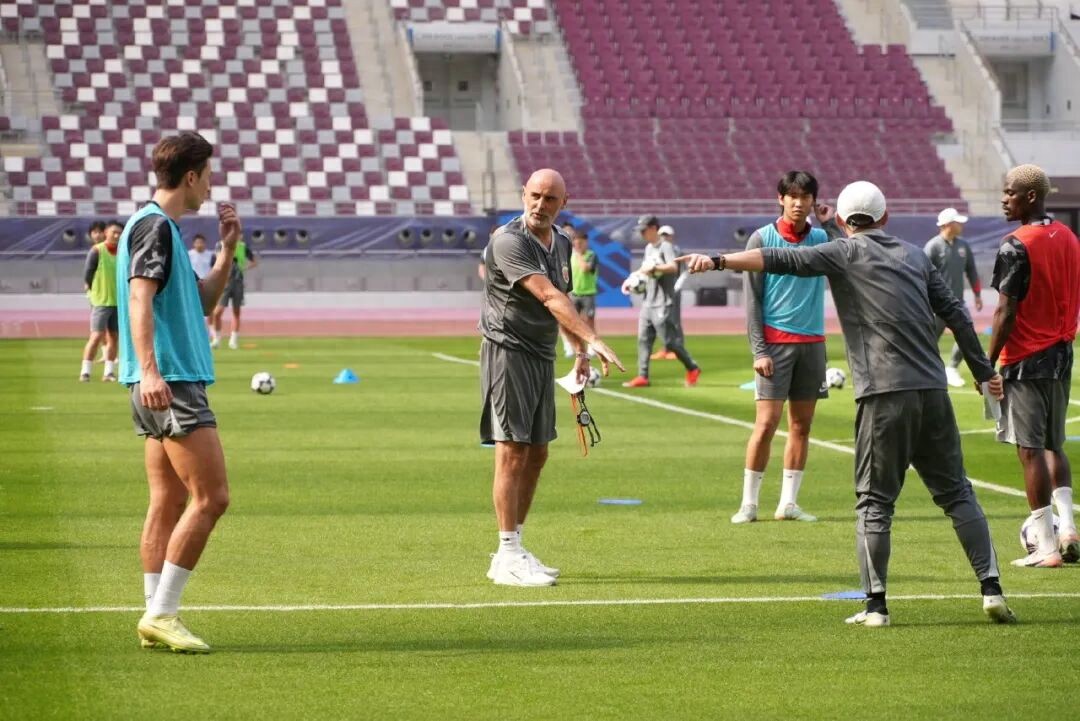
By Cheng Shan After six rounds of the AFC Champions League Elite East Asia group stage, Port stands at the bottom of the group with 2 draws and 4 losses, totaling 2 points, continuing their winless record in the tournament. In February, Port will play their last two group matches against South Korean sides Gangwon FC and Ulsan Hyundai, matches that are critical for the team’s reputation and confidence in its rebuilding process. Whether Port can make a decisive effort to break their AFC Champions League winless streak is the key focus of these games.

In January, a large squad of over 50 members from Shanghai Port traveled to Doha for training. Reflecting on this overseas winter camp, Port gained in three aspects: physical conditioning, tactical drills, and match practice through friendlies. Head coach Muscat implemented his signature “high-press possession system” throughout, aiming to move away from last season’s over-reliance on key foreign players and build an attack-defense system involving the entire squad.
During the Doha training, Port played four friendly matches against Russian Premier League giants Zenit and Qatar Stars League strong team Al-Arabi. With several key players and foreign stars absent, results were disappointing. Against Zenit, Port suffered heavy defeats of 1-4 and 0-6, conceding a total of 10 goals.
Alongside the winter training, an important task was recruitment.
As a three-time consecutive Chinese Super League champion, Port’s aging squad issue was already evident at the start of last season. The “Chongming Phase One” core lineup has struggled to cope with the congested schedule due to limited physical reserves and form. Combined with the departure of key foreign players, the team urgently needs a “blood renewal” to update the roster. Over the past two seasons, Port’s recruitment and personnel adjustments have been strategically focused on a “new configuration for the transition period,” balancing current competitiveness with future potential.
After defending the Chinese Super League title last season, Shanghai Port’s expectations for 2026 results have clearly risen. While securing the championship trophy, they quickly launched the largest squad overhaul and restructuring plan in the club’s history. By February 2026, Port had completed six official signings during the winter transfer window. However, this renewal is not a “clean sweep” but a “natural transition with experience retained,” allowing veteran players to gradually phase out of the starting lineup through rotation and mentorship.
Looking at Port’s winter signings, they cover multiple weak positions including right-back, midfield, forward, and left-back. Most new players are in their prime between 23 and 28 years old, balancing immediate impact with growth potential. The addition of domestic U23 international Yang Xi is the most significant signing of this window and is recognized as a “top-tier domestic transfer” by industry insiders.
Yang Xi boasts excellent stamina, excels in high pressing and quick recovery runs along the flank, with precise defensive positioning and outstanding tackling skills. He was the domestic interception leader in last season’s Chinese Super League. Offensively, he delivers accurate crosses and penetrates from the wing, perfectly fitting Muscat’s “high-press possession system.” Upon joining Port, Yang Xi is not alone; fellow U23 national team member Kuai Jiwen has already posted a photo welcoming his old friend.
Other Port signings each address specific needs: Cameroonian defensive midfielder Jean Claude strengthens midfield interception and defensive toughness; Hong Kong forward An Yongjia boosts attacking power; midfielder Zhang Yuan enhances passing and organization; full-back Yue Xin and versatile midfielder Lu Yongtao reinforce flank defense and midfield depth respectively.
Port’s six signings are not random additions but targeted reinforcements addressing tactical weaknesses revealed last season and during the winter training. Moreover, all newcomers have quickly integrated into Muscat’s tactical system, reflecting the club’s clear team-building vision during this transition phase.
Alongside recruitment, Muscat experimented with multiple positional changes during winter training, trying various formations to strengthen midfield defense, activate wing attacks, and achieve balance between offense and defense. His philosophy centers on maximizing player strengths and increasing tactical flexibility. Players capable of adapting to multiple positions provide the coach with more tactical options. However, judging from the winter friendlies, these positional adjustments still require time to gel, as midfield defensive coordination and wing-to-center attacking cooperation need further refinement in official matches.
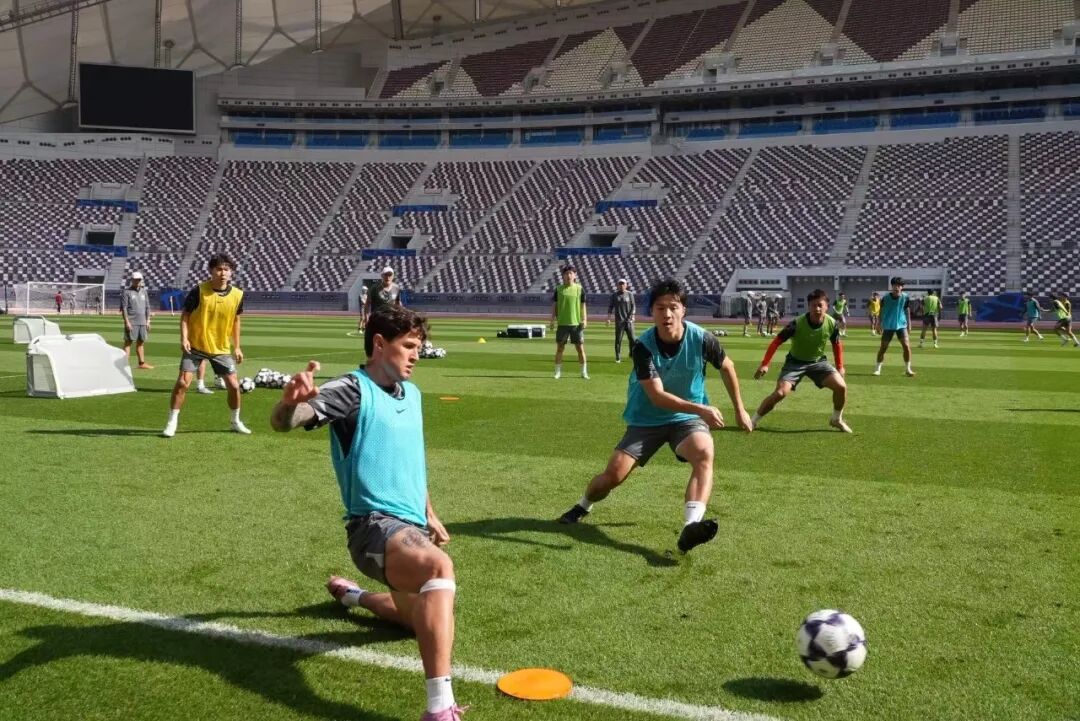

After returning from the Doha winter camp, Port quickly shifted training focus to AFC Champions League preparation, emphasizing tactical analysis and targeted drills based on the characteristics of upcoming opponents.
Head coach Muscat and his staff repeatedly reviewed recent matches of Gangwon FC and Ulsan Hyundai, analyzing their tactical traits, key players, attacking patterns, and defensive weaknesses. They devised corresponding tactical plans. Given the Korean teams’ traits of strong stamina, rapid wing speed, aggressive high pressing, and scoring ability from set pieces, Muscat emphasized defensive support, quick transitions, and conducted specialized set-piece training to remedy last season’s vulnerability in conceding goals from dead-ball situations in the AFC Champions League.
In terms of pure strength, Port lags behind the two Korean teams, a gap seen not only in individual player quality and market value but also in match tempo, intensity of physical confrontations, and tactical execution. During winter training, Port’s weaknesses showed in controlling game pace and handling high-intensity challenges, areas where Korean teams excel.
Injured player Claude has started group training recovery, and Jiang Guangtai has joined some contact drills, though his muscle strain is not fully healed, leaving his starting status uncertain. Claude is not yet at peak fitness. Attacking core Leonardo is still recovering from knee surgery. Facing a situation where qualification is unlikely, head coach Muscat appears to have no pressing reason to field all main players.
Competing on the Asian stage is a necessary step for Shanghai Port to become a top-tier club. The challenges faced in Asia have exposed many team issues, helping the club recognize the gap with Asia’s elite and providing valuable guidance for future team reconstruction.


Wonderfulshortvideo
User VictoryVox has posted a video.


 Links
Links
 Contact
Address:UNIT 1804 SOUTH BANK TOWER, 55 UPPER GROUND,LONDON ENGLAND SE1 9E
Number:+85259695367
E-mali:[email protected]
 App
App


