



The Champions League feast and Premier League celebration: economic foundations determine competitiveness on the pitch



Reporter Han Bing reports When UEFA President Ceferin sees this season’s Champions League group stage standings, he probably feels very awkward. UEFA’s reform to the “Swiss system” was never intended to allow five teams from a single league to occupy the top 8 places and advance straight to the round of 16. In fact, the sixth team from that league almost qualified directly for the last 16 as well.
This situation seriously damages the “brand image” of the newly expanded 36-team Champions League, which was promoted as being more inclusive across Europe. The original purpose of the Champions League was to give the strongest clubs from all European regions a chance to participate and showcase their strength, not to become a platform for the Premier League’s top six to flaunt their financial power. However, Ceferin is helpless because the Premier League’s dominance is simply overwhelming: six clubs played 48 matches with 33 wins, 6 draws, and 9 losses, scoring 109 goals and conceding only 45. No other league’s clubs can match such a powerful “dimensional superiority.” The Premier League’s combined capital and market investment surpass that of the other four major European leagues, and this advantage has finally manifested on the Champions League pitch. In the short term, such dominance is unlikely to be surpassed during the league stage.
Investment determines on-field advantage
Little known is that UEFA introduced the Financial Fair Play regulations following the 2008 Champions League final played in rainy Moscow. That final featured Europe’s wealthiest traditional powerhouse Manchester United against Chelsea, backed by Abramovich’s “unlimited” capital. The final between two of the richest Premier League clubs prompted then UEFA President Platini to push for Financial Fair Play, aiming to limit the rapidly growing financial power of the Premier League and prevent the Champions League from becoming a closed competition among English giants.
Until last season, when the expanded and revamped Champions League debuted, UEFA largely succeeded in curbing the Premier League’s dominance in Europe’s top competition. Although three English clubs reached the quarterfinals, none advanced beyond the semifinals, and the title was won by Paris Saint-Germain, who finished 13th in their domestic league. In fact, over the past 17 years, English clubs have only twice faced each other in the final. English teams have won the Champions League four times, while Barcelona alone has won three times and Real Madrid six times. Despite the Premier League’s growing economic advantage over the other four major European leagues, this had not yet fully translated into Champions League success until now.
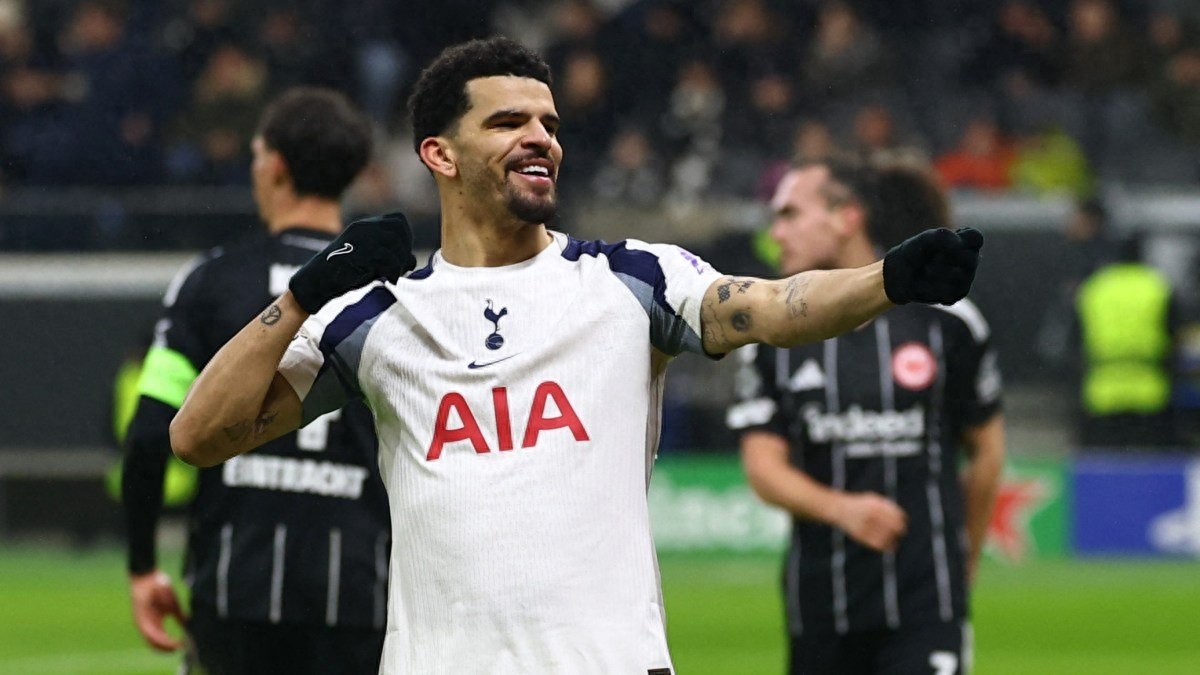
However, this season appears to mark a tipping point: the unprecedented presence of five Premier League teams in the top eight and their overwhelming record against clubs from the other major European leagues and all other European opponents makes it difficult for continental media and fans to remain optimistic. Tottenham, currently 14th in the Premier League, still ranks 4th in the Champions League group stage! In eight matches, they lost only away to defending champions Paris Saint-Germain and remained unbeaten with three wins and one draw against other big five league clubs, all with clean sheets. Newcastle United, who qualified via a wild card spot and currently sit 10th in the Premier League, managed to draw away against PSG and convincingly beat Eindhoven, who lead the Dutch league, 3-0 at home.
Frankly, UEFA hopes to see more “Trubin miracles” on the Champions League stage rather than an excessive number of English clubs in the top eight. But the English teams’ advantage is driven by capital: this summer, the Premier League’s market investment approached €3.6 billion, exceeding the combined total of the other four major European leagues (nearly €3.4 billion). The six English clubs in the Champions League spent over €1.82 billion in the summer market, also surpassing the combined €1.62 billion spent by the other 18 continental teams that qualified. Clearly, the success of English clubs in the Champions League group stage is a direct return on their capital investment. Given such investment disparities, it is difficult for continental clubs to reverse the “All Europe vs. Premier League” disadvantage in the short term during the group stage.
“Lions in winter, lambs in spring”?
The Premier League’s previous dominance in the Champions League was in the early 21st century, when English clubs reached the final in seven of eight seasons from 2005 to 2012 (including one all-English final) and featured three English teams in the semifinals for three consecutive years. However, former UEFA President Platini described English clubs as “lions in winter but lambs in spring,” highlighting their lack of endurance. The Premier League’s intense competition often leads to many injuries and fatigue late in the season, whereas continental giants like Real Madrid, Barcelona, Bayern Munich, and Paris Saint-Germain, who face less pressure in their domestic title races, tend to be stronger in the Champions League knockout stages.
Fatigue seems to be the only hope for continental giants to challenge the Premier League, but this season that may be in vain. The unprecedented investment by Premier League clubs is continuously deepening their squad depth, enabling even their rotation players to maintain an advantage in the Champions League. In contrast, while continental giants can still compete with English clubs, the ongoing additional investments from North American capital into the Premier League make it increasingly difficult for continental clubs to close the gap. Furthermore, the expanded Champions League group stage, adding two extra matches, increases the schedule burden for all teams but seemingly benefits financially strong, deep-squad Premier League clubs accustomed to high-intensity, high-press football.
As the BBC stated: this season’s performance of Premier League clubs in the Champions League is the result of “collective wealth, elite team decision-making, and continually evolving tactics within the Premier League environment,” creating absolute dominance. BBC columnist Ballack even claimed: “Before the kickoff at midfield, the Premier League already holds a comprehensive advantage. It boasts the highest seasonal budgets, world-class coaching staffs, data analysis, recruitment, and medical teams. The Premier League’s edge is established off the pitch. On the pitch, only continental giants like PSG and Bayern Munich can match Premier League clubs in attack organization, defensive structure, and transitions.”
Whether the Premier League’s overwhelming advantage this season will continue into the knockout stages remains to be seen, but the monopolistic trend in the group phase is already concerning. Notably, in the last seven Champions League seasons, the Premier League has won three titles, more than any other European league — La Liga with two, Bundesliga and Ligue 1 with one each. The Premier League’s three titles come from different clubs, proving that its collective strength is beginning to unleash power in the Champions League through accumulated capital. The Premier League’s dominance in the group stage is not a fault of the Champions League’s expansion and reform, but if this monopoly is not timely and effectively addressed, the competition’s appeal and commercial value could be somewhat compromised.


Wonderfulshortvideo
The footwork, the finish 🤌


Did you get it? 🤔😅
The Wirtz x Sané link-up 🔗
Haaland’s movement 🥵
Which counterattack is
When you use your girlfriends shower 🚿 @Emily Bourne @LUSH
Neymar highlights neymar edit neymar lamine yamal celebration
 Links
Links
 Contact
Address:UNIT 1804 SOUTH BANK TOWER, 55 UPPER GROUND,LONDON ENGLAND SE1 9E
Number:+85259695367
E-mali:[email protected]
 App
App


