



The most dominant Premier League, sweeping the Champions League



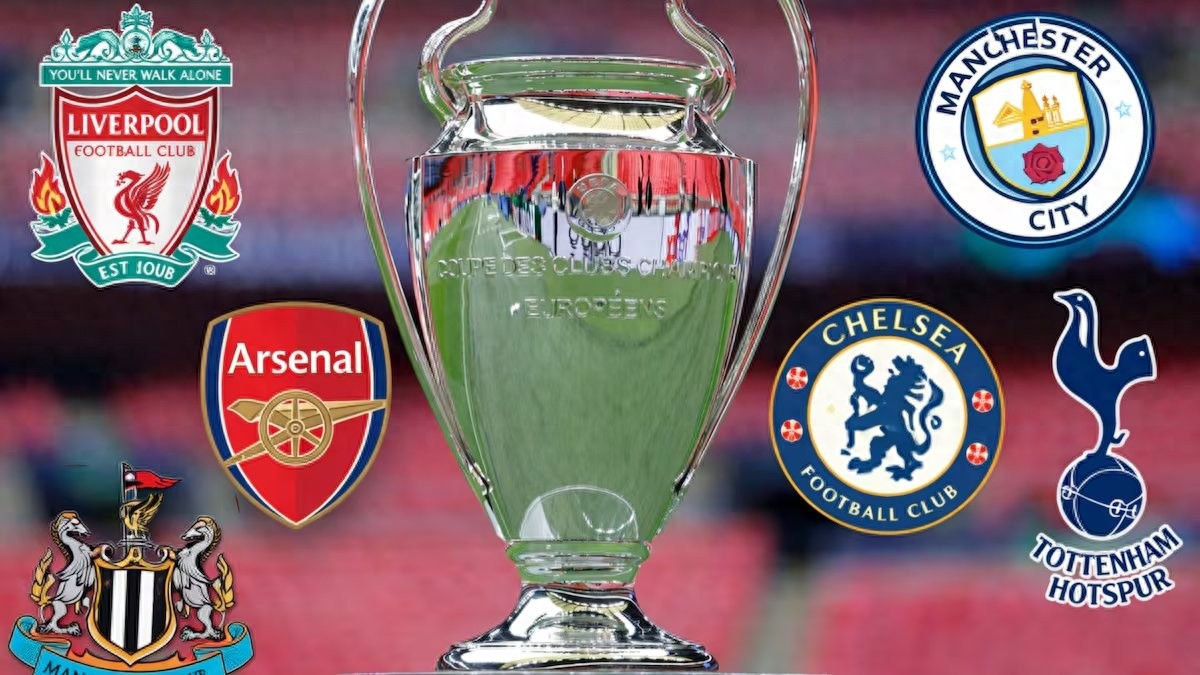
Written by Han Bing In the 2025/26 Champions League group stage, European football experienced the Premier League's unprecedented competitive dominance: out of the top 4 teams, the Premier League claimed 3 spots; out of the top 8, 5; and out of the top 12, 6. Arsenal, with 8 consecutive wins, held the top spot as the "perfect dominant force"... Back in the 2017/18 season, 4 of 5 Premier League teams finished first in their groups, and all 5 reached the last 16, setting a record. However, comparing the new Champions League format with 8 group matches, those 5 teams combined for 23 wins, 10 draws, and 7 losses in 16 knockout matches, while this season's top 8 Premier League teams recorded 29 wins, 4 draws, and 7 losses in 8 matches, surpassing the previous win count and win rate.
The revamped Champions League has been running for two seasons now, and at least during the group stage, the gap between the Premier League and other leagues is clearly visible. Moreover, Newcastle, participating in the playoffs this season, is set to face the surprise team Qarabag and is very likely to advance to the round of 16. This means the Premier League could have 6 teams all reaching the Champions League last 16, breaking its own record for the most teams from one league in the knockout stage. The Premier League’s monopoly in club revenue and fan investment is fully reflected in its competitive dominance in the Champions League.
Unprecedented, collective Premier League monopoly
This season features 6 Premier League teams, due to Tottenham qualifying as last season’s Europa League champions, marking the first time a single league has 6 teams in the Champions League group stage. Previously, La Liga (4 times), Bundesliga (3 times), Premier League (once), and Serie A (once) had 9 occasions of 5 teams entering the Champions League group stage, with only the 2017/18 Premier League season seeing all 5 teams reach the knockout rounds. In recent seasons, Bundesliga (2022/23), La Liga (2023/24), and Serie A (2024/25) each had one team eliminated in the group stage.
Although Bayern Munich maintains its traditional powerhouse status with 7 wins and 1 loss, ranking second in the Champions League group stage, the Premier League’s collective strength is overwhelming. The continental leagues continue to show a “weakness” in both club revenue and fan investment compared to the Premier League, requiring a combined effort to compete with it.
Premier League clubs not only top the Champions League group stage standings, creating a monopolistic advantage, but their overall results also surpass those of the other four major European leagues, demonstrating true dominance. During the group stage, Premier League teams faced clubs from the other four leagues 29 times, achieving 19 wins, 4 draws, and 6 losses, a win rate of 65.5%, clearly dominating. Against the top 12 teams from these leagues, excluding Sporting CP, the Premier League’s six giants recorded 6 wins, 1 draw, and 3 losses in 10 matches against five major clubs, a 60% win rate, also a clear advantage. Real Madrid and Inter Milan were both swept by Premier League teams, while Bayern Munich and Barcelona split their matches evenly. Only Paris Saint-Germain remained unbeaten against the Premier League with 1 win and 1 draw, but they faced the two weakest Premier League sides, Tottenham and Newcastle United.
Theoretically, La Liga is the only league that can compete with the Premier League as the top league. This season, La Liga has 5 teams in the Champions League, but only Barcelona made it to the top 8. Real Madrid and Atlético Madrid had to enter the playoffs, while Athletic Bilbao and Villarreal were eliminated. In direct confrontations, the Premier League won 9 out of 10 matches against La Liga, keeping 7 clean sheets, and outscored them 21 to 5, a crushing advantage. Only Barcelona defeated the Premier League’s weakest Newcastle United, while Real Madrid, Atlético Madrid, Athletic Bilbao, and Villarreal were all swept by Premier League teams. Once nearly equal rivals for European football supremacy in the 21st century, the two leagues’ Champions League confrontations this season have been completely one-sided, with a staggering gap.
Leading advantage impresses Europe
The Premier League not only shows absolute dominance in the Champions League but is also the only league this season with all its teams advancing to the knockout stages in Europe’s three major club competitions. All 9 Premier League teams in European competition qualified for the knockout rounds, accumulating 20.958 points after the group stages, leading second-place Portugal’s Primeira Liga by 4.358 points. Over the last five seasons, the Premier League ranked first four times in total European points, amassing 111.797 points, ahead of third-place La Liga (96.446 points) by 21.313 points, already securing a guaranteed top-two league coefficient spot for next season’s Champions League.
Regarding the Premier League’s collective strength in this season’s European competitions, especially the Champions League, BBC Sports columnist Ballag described it as an “almost perfect storm.” German football expert Honigstein also acknowledged the Premier League’s undeniable monopoly in the Champions League, and Kicker magazine believes the group stage rankings truly reflect the Premier League’s hegemony. Bundesliga teams won only twice in 7 group stage matches against the Premier League, clearly highlighting the gap in overall strength between the two leagues.
Gazzetta dello Sport’s UK correspondent, Cinnerato, emphasized that this Champions League group stage only reinforces people’s “stereotype” of the Premier League: “Serie A teams might occasionally win (Atalanta 2-1 Chelsea), but the league’s overall record (1 win, 4 losses) shows the Premier League’s advantage is unshakable.” Cinnerato lamented, “When players like McTominay, considered fringe in the Premier League, become top stars in Serie A, and Serie A can only sign fringe Premier League players, the gap is obvious.” He voiced the sentiment shared by many European sports media: “The Premier League increasingly resembles the European Super League it once opposed, because its lead over the other big four continental leagues is enough to support this view.”
French football expert Laurent and German expert Eckner remain cautious, believing that knockout stage performance will reveal the Premier League’s true strength: “It’s still uncertain how Tottenham or Newcastle will perform in the knockout rounds; there’s plenty of time. As the knockout stage continues, the Premier League’s advantage may not remain as overwhelming.” Both stressed that continental giants generally suffer from tight schedules and injuries, but so do Premier League teams. Moreover, Premier League clubs play the most matches overall. The Premier League’s six teams’ strong overall record against the top clubs from the other four leagues already demonstrates that their baseline strength far exceeds that of continental teams.


Wonderfulshortvideo
The footwork, the finish 🤌


Did you get it? 🤔😅
The Wirtz x Sané link-up 🔗
Haaland’s movement 🥵
Which counterattack is
When you use your girlfriends shower 🚿 @Emily Bourne @LUSH
Neymar highlights neymar edit neymar lamine yamal celebration
 Links
Links
 Contact
Address:UNIT 1804 SOUTH BANK TOWER, 55 UPPER GROUND,LONDON ENGLAND SE1 9E
Number:+85259695367
E-mali:[email protected]
 App
App


