



Vietnam national team receives consecutive bad news, Coach Kim Sang Sik faces challenges



Vietnamese football is experiencing successive injuries within a brief period, which are directly affecting club rosters and national team staffing strategies.
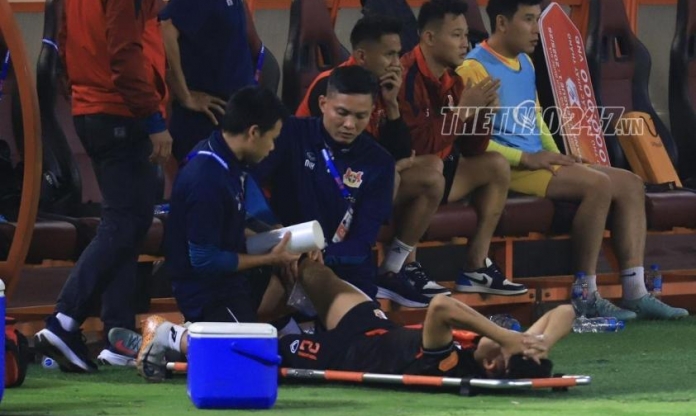
On the evening of February 1, 2026, midfielder Nguyễn Thái Sơn from Ninh Bình Club suffered a severe injury during the 12th round of the LPBank V-League 2025/26. Entering in the second half against Công An Hà Nội, he fell just over 10 minutes into play and was unable to stand on his own. Initial examinations confirmed a torn anterior cruciate ligament in his right knee, requiring surgery and a long recovery, effectively ending his season.
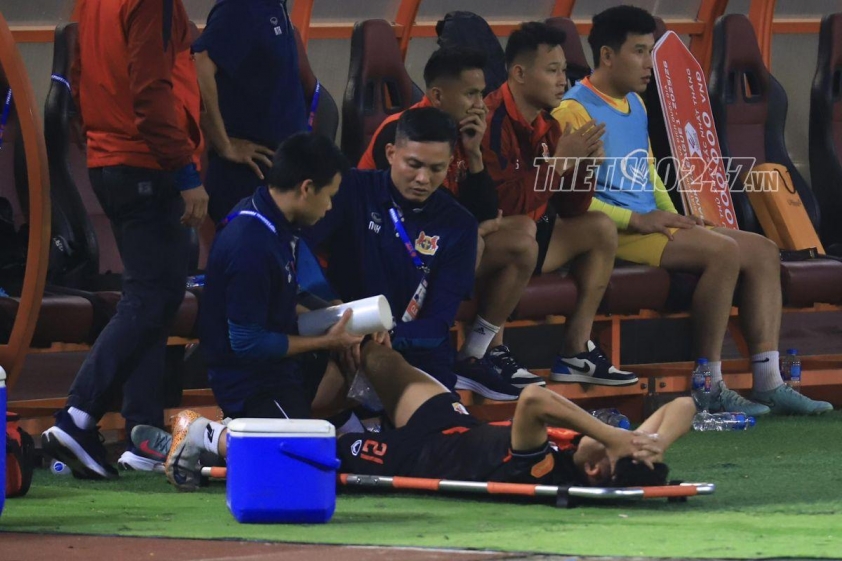
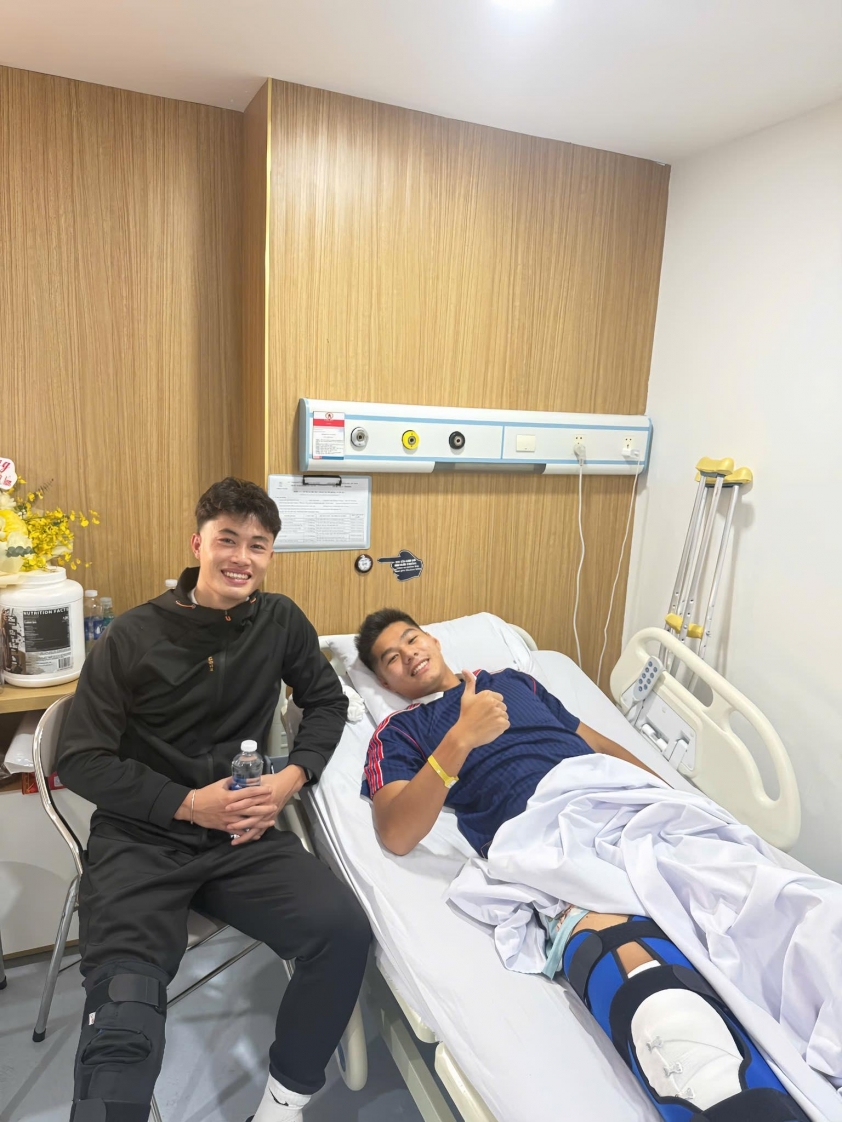
Earlier, center-back Nguyễn Hiểu Minh sustained a serious injury at the 2026 U23 Asian Championship. During the semifinal match against U23 China, a challenge near the corner flag caused a severe right knee ligament injury. Hiểu Minh was rushed to the hospital and later underwent surgery in Ho Chi Minh City, with an expected recovery time of about nine months, missing the entire peak period of 2026.
Further back, midfielder Nguyễn Văn Trường had to say goodbye to the U22 Vietnam team before the 33rd SEA Games. He was injured in a friendly match against U22 South Korea at the CFA Team Panda Cup in November 2025. The diagnosis showed damage to the right knee ligament. After returning home, Hanoi Club coordinated with the VFF on a treatment and surgery plan, disrupting the youth team’s personnel arrangements.
The string of ligament tears among young national players is not coincidental. From qualifiers, international friendlies, SEA Games, continental youth tournaments, to the packed V-League schedule, many players have to play continuously with short breaks. High intensity matches, frequent travel, tough playing surfaces, and physical clashes sharply increase the risk of cumulative overload, especially for key players balancing both club and national duties.
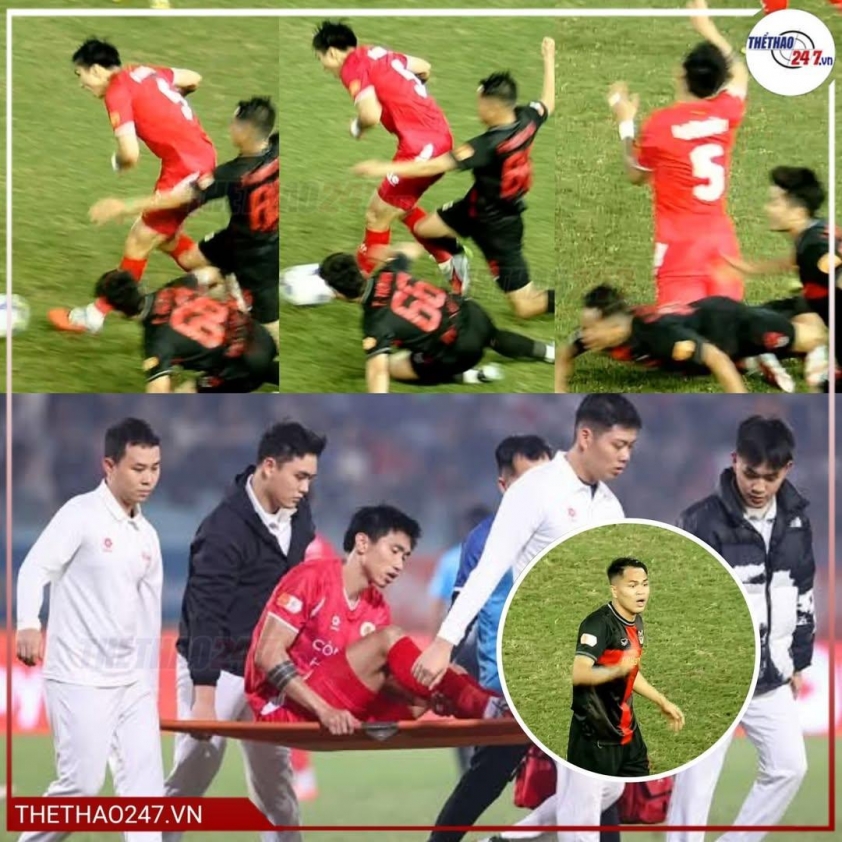
Not only the younger generation, but experienced players are also causing concern among fans. In Công An Hà Nội’s 3-2 victory over Ninh Bình on February 1, defender Đoàn Văn Hậu had to leave the field on a stretcher in the 56th minute after showing pain in his right calf. The injury’s severity is yet unknown, but given his recent return after a long treatment period, all assessments require caution and close monitoring.
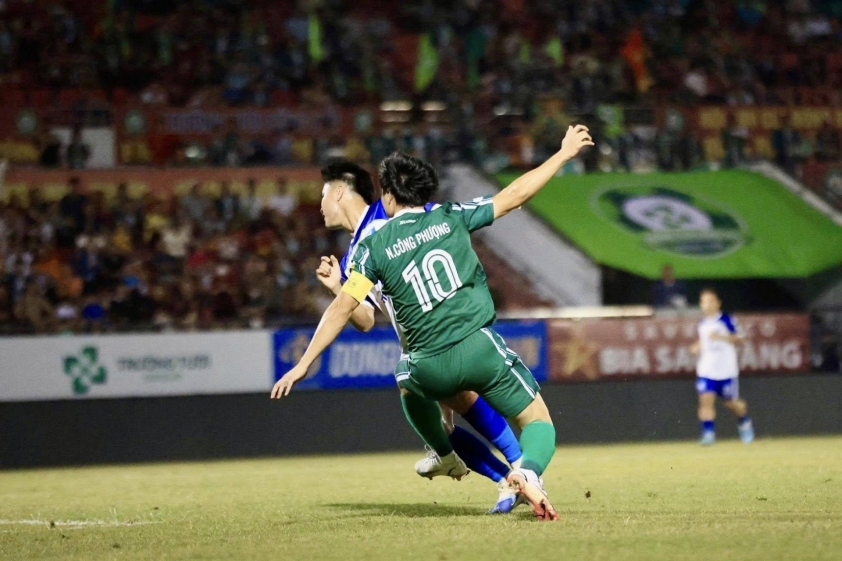
In the match where Trường Tươi Đồng Nai defeated Khánh Hòa 3-1 on January 31, Công Phượng experienced a recurrence of fitness problems. Despite scoring an equalizer and playing actively in the first half, he had to leave the pitch right after halftime. The coaching staff stated the condition was not severe, but the striker’s repeated issues indicate a risk of relapse if faced with a tight, high-intensity schedule, with little time for full recovery.
The overall situation urgently calls for managing match intensity, rotating players, monitoring physiological health, optimizing recovery, and coordinating between clubs and the national team. The compressed schedules from youth levels to the V-League not only drain physical strength but also thin the personnel depth when serious injuries occur simultaneously. The result is tactical plans being affected and difficulty maintaining consistent performance.
With Thái Sơn, Hiểu Minh, and Văn Trường absent, and the participation of Văn Hậu and Công Phượng uncertain, the national team faces a manpower challenge under Coach Kim Sang Sik. The Korean coach needs quality players for critical upcoming matches, especially the crucial clash against Malaysia in the Asian Cup qualifiers on March 31. Each injury now could alter the team’s preparation dynamics.


Wonderfulshortvideo
The footwork, the finish 🤌


Did you get it? 🤔😅
The Wirtz x Sané link-up 🔗
Haaland’s movement 🥵
Which counterattack is
When you use your girlfriends shower 🚿 @Emily Bourne @LUSH
Neymar highlights neymar edit neymar lamine yamal celebration
 Links
Links
 Contact
Address:UNIT 1804 SOUTH BANK TOWER, 55 UPPER GROUND,LONDON ENGLAND SE1 9E
Number:+85259695367
E-mali:[email protected]
 App
App


