



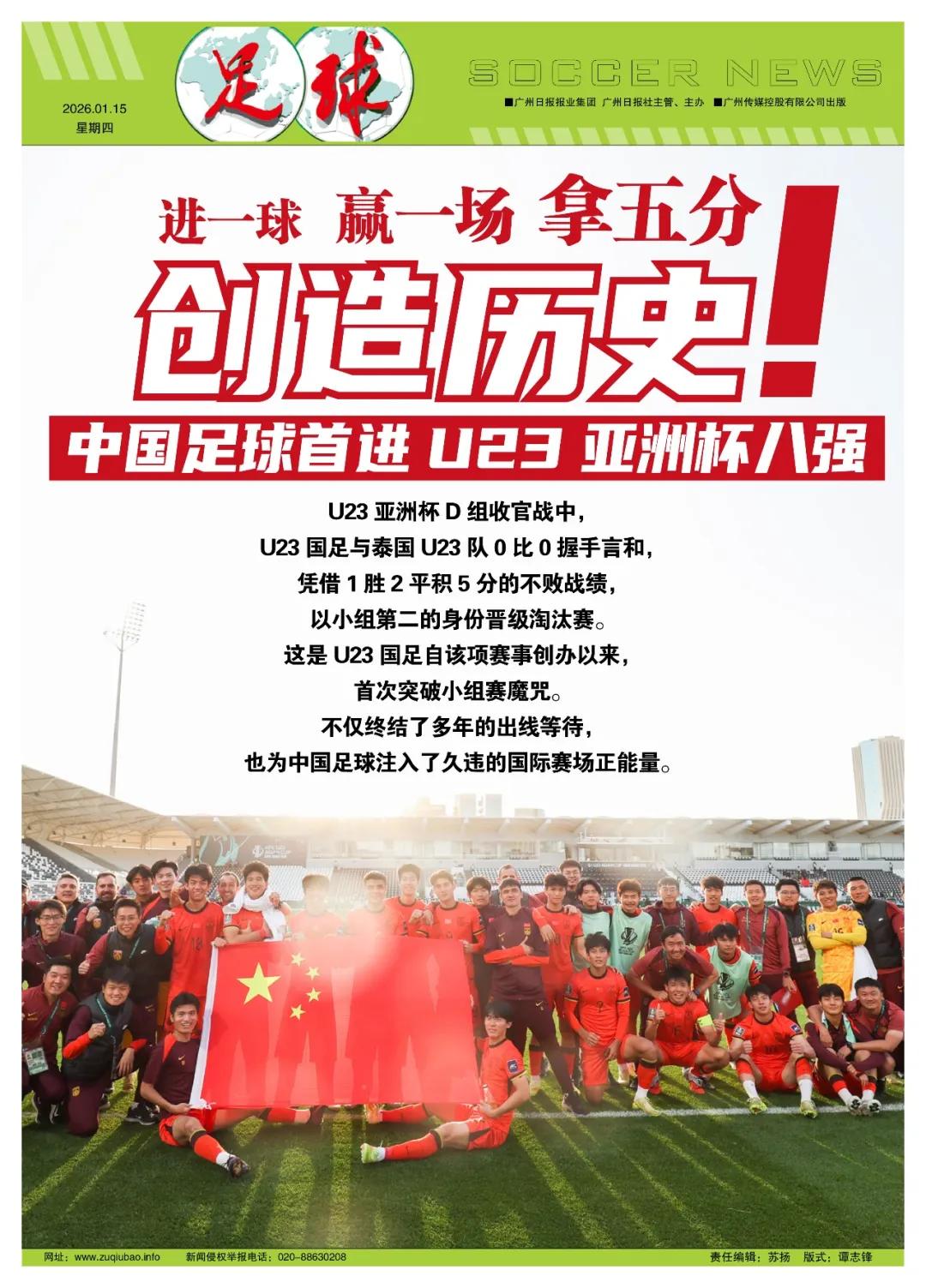
One more goal, one more victory, five points secured! The U23 Chinese national team makes history.



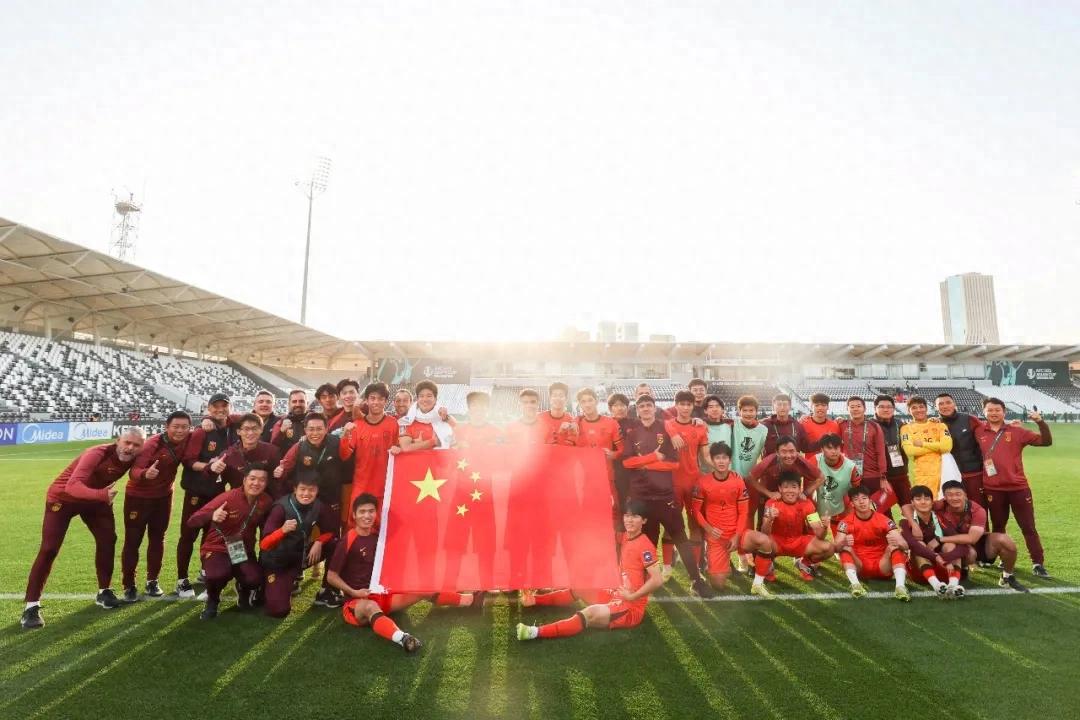
Reporter Lu Mi covering the story. On the evening of January 14th Beijing time, Saudi Arabia saw a landmark moment for Chinese football: In the last Group D match of the U23 Asian Cup, the U23 national team held Thailand’s U23 side to a 0-0 draw, securing an unbeaten tally of 1 win and 2 draws with 5 points, advancing as the second in their group to the knockout rounds. This marks the first time the Chinese U23 team has broken through the group stage curse since the tournament's inception, ending years of waiting to qualify and injecting much-needed positive energy into Chinese football on the international stage.
In this edition of the U23 Asian Cup, China was grouped with Iraq, Australia, and Thailand. In the first two rounds, the team showed remarkable resilience: a goalless draw against last tournament’s third-place Iraq in the opener, followed by a win over strong Australia. Holding 4 points, they faced a crucial final match where a draw would ensure progression. Unlike previous occasions when China faltered under the pressure of “drawing to advance,” this youthful squad averaging just 22 years old bore the heavy responsibility of breaking that fate.
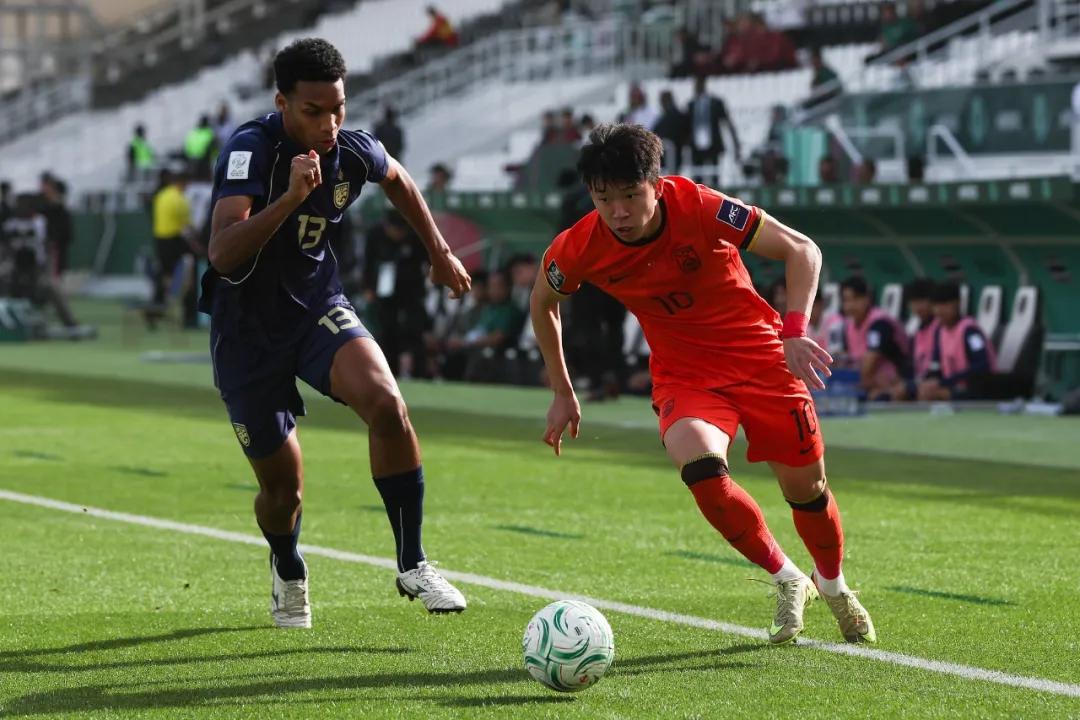
Although Thailand had only 1 point from 1 draw and 1 loss in their first two games, they displayed fierce determination, making the final match highly suspenseful. From the start, Thailand dominated possession with smooth ground passing. China implemented coach Antonio’s pragmatic tactics, using a 5-3-2 formation to strengthen their defense and looked to create chances on the counterattack.
However, within the first half hour, the situation became tense: in the 12th minute, midfielder Yang Haoyu received a yellow card for a foul from behind; at the 26th minute, right wing-back Mutalip committed a foul and was also booked; then in the 29th minute, Hu Hetao was shown a yellow for disputing a decision. Three Chinese players were cautioned within 30 minutes, putting the defense under pressure.
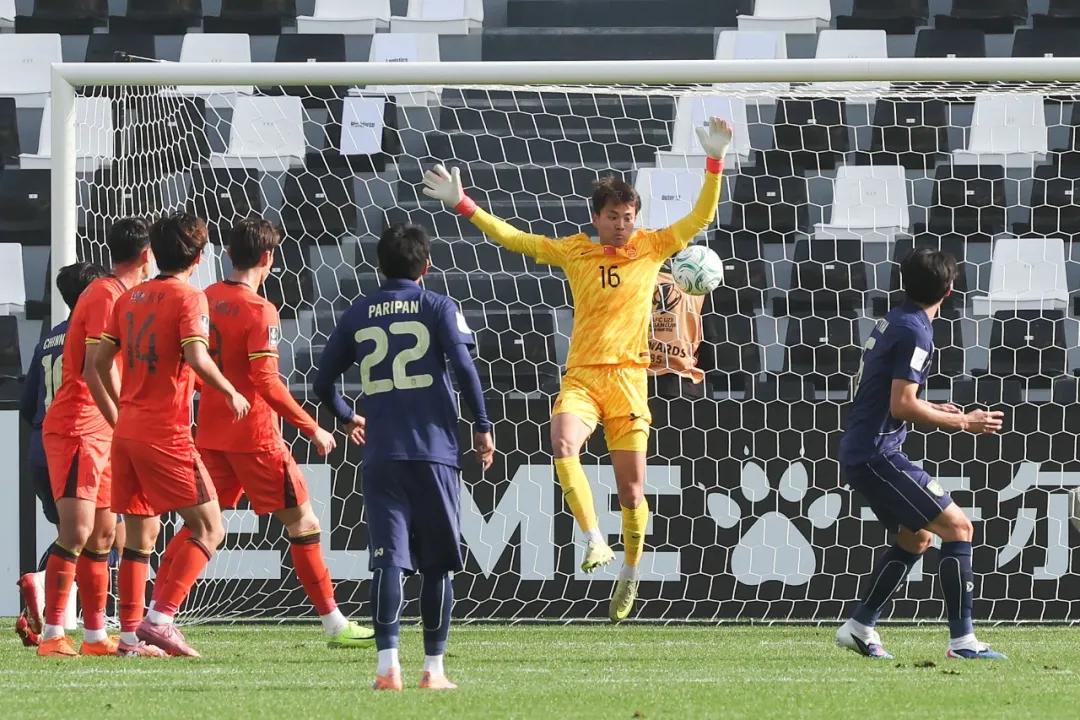
The true test of the first half fell on goalkeeper Li Hao. In the 22nd minute, a Thai free kick into the box led to a header which Li Hao confidently caught; at the 37th minute, a headed clearance error by Bai Helamu sent the ball toward their own goal, but Li Hao reacted swiftly to parry it away with one hand; at the 42nd minute, a Thai cross forced Li Hao to leap and tip the ball out, crashing heavily against the post but staying on his feet. This young keeper, who once trained in Spain, made three crucial saves to keep a clean sheet in the first half, becoming the team’s rock. China also had attacking moments: in the 44th minute, Kuai Jiwen cut inside and crossed from the box, but Yang Haoyu missed a good header chance. The half ended scoreless for both sides.
After the break, Antonio quickly made substitutions, replacing the booked Yang Haoyu and Mutalip with Li Zhenquan and Zhang Aihui to avoid further defensive risks. Thailand continued to control the tempo, holding up to 62% possession, and in the 57th minute created a golden opportunity—Sanlun broke through on a one-on-one, but Li Hao blocked the angle in time, averting danger once again.
China then pressed frequently on the counterattack: at the 63rd minute, Li Zhenquan’s through ball set up Wang Yudong, whose shot narrowly missed; at the 76th minute, Wang Yudong cut inside and curled a shot toward the far corner, just missing the right post. This was the best scoring chance of the match. In stoppage time of the second half, neither side scored, and the 0-0 draw held until the final whistle.
Throughout the match, China’s possession was only 40%, with 11 shots and 2 on target, but thanks to solid defense and key player performances, they achieved the feat of three consecutive clean sheets in the group stage of this tournament. Behind the stats lies the team’s iron will—16 fouls show their intensity in attack and defense, while defenders Wumitijiang, He Yiran, and others made multiple crucial clearances. Although Thailand dominated possession and shot numbers, they failed to create real scoring chances and ultimately had to accept a draw and elimination.
When the final whistle blew, Chinese players embraced in tears, and the coaching staff along with substitutes rushed onto the field to celebrate. This moment captured a historic breakthrough for China’s U23 football: in the previous five U23 Asian Cups, China never advanced past the group stage, with only 2 wins and 13 losses in 15 matches. This time, they advanced undefeated, setting records for highest points in a single tournament, first unbeaten group stage, and first zero goals conceded.
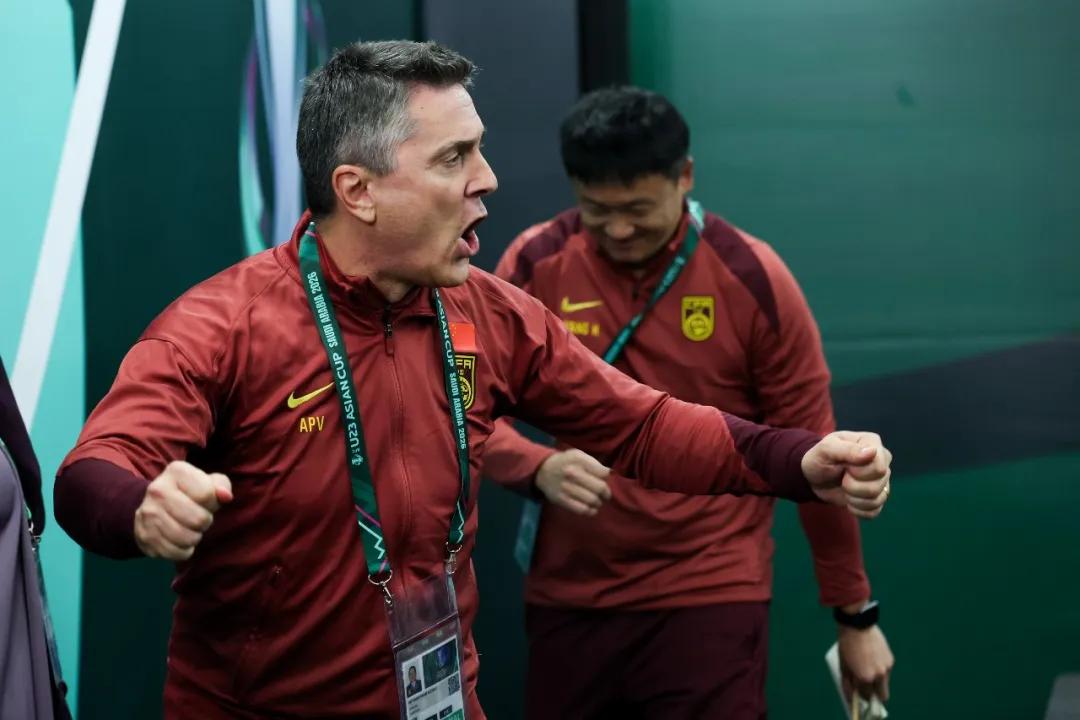
After the match, head coach Antonio was visibly emotional: “This is a historic moment for us; it’s like a final. I’m very happy and extremely proud of my players. They are outstanding and have always believed in this—that belief is crucial in football: believe, believe, and believe!”
The significance of this draw goes beyond the scoreline. Among this U23 squad, seven players have senior national team experience, with Wang Yudong and Hu Hetao firmly established, and most are key players in their club teams. Their tactical discipline, composure under pressure, and fighting spirit in the match shattered many outside prejudices against China’s youth team.
According to the schedule, China will face the winner of Group C, Uzbekistan, in the quarterfinals on January 17th at 19:30. Uzbekistan finished Group C undefeated with 2 wins and 1 draw, pushing South Korea to second place. Antonio commented: “They are a very strong team. Importantly, over the past decade, Uzbekistan’s senior, U23, and U20 teams have all achieved excellent results. I consider them the third or fourth strongest team in Asia.”
Although the road ahead remains tough, this young team is confident to challenge stronger opponents. U23 captain Xu Bin said in a post-match interview: “We have actually played Uzbekistan twice before. They are very strong at the Asian level, but we have confidence in ourselves and will focus on doing our best.”
Youth fearless and future promising. The journey of the U23 Chinese team is far from over. In the upcoming knockout stage, these young players will continue to pursue their dreams, hoping to create more possibilities for Chinese football. “This is a brand new and remarkable journey for us,” as Antonio said, “The match against Uzbekistan will undoubtedly be very difficult, but as long as we keep moving forward on this path, we will always have a chance.”


Wonderfulshortvideo
Kvaratskhelia and Ronaldo 🫶


🇪🇸 Spain 🆚 Argentina 🇦🇷
Arsenal goal today arsenal 2-1 chelsea arteta interview arteta press conference
When Diogo Costa saved EVERY penalty he faced in the shoot-out 🤯🤯🤯
The movement is electric ⚡️
Mbappe injury mbappe surgery real madrid 0-1 getafe mbappe return date mbappe edit
ronaldo almeria ronaldo buying new club ronaldo owner ronaldo manchester united owner
 Links
Links
 Contact
Address:UNIT 1804 SOUTH BANK TOWER, 55 UPPER GROUND,LONDON ENGLAND SE1 9E
Number:+85259695367
E-mali:[email protected]
 App
App


