



Thai football fans are stunned by Vietnam’s stadium worth over 500 billion VND



The official launch of the Thai Nguyen provincial stadium by Vietnamese football rapidly attracted significant interest from Thai supporters.
Thai Nguyen Provincial Stadium was constructed on an area of 15.47 hectares, part of the provincial sports complex plan. The project started on October 1, 2022, featuring an international standard football field surrounded by a track with 8 curved lanes and 10 straight lanes, meeting the requirements for hosting major tournaments.
The field uses Zeon Zoysia grass, a premium natural turf commonly applied in international standard stadiums and certified by ITGAP. Additionally, the entire system including lighting, drainage, wastewater treatment station, internal traffic, and transformer station was uniformly invested, demonstrating a well-planned and long-term design.
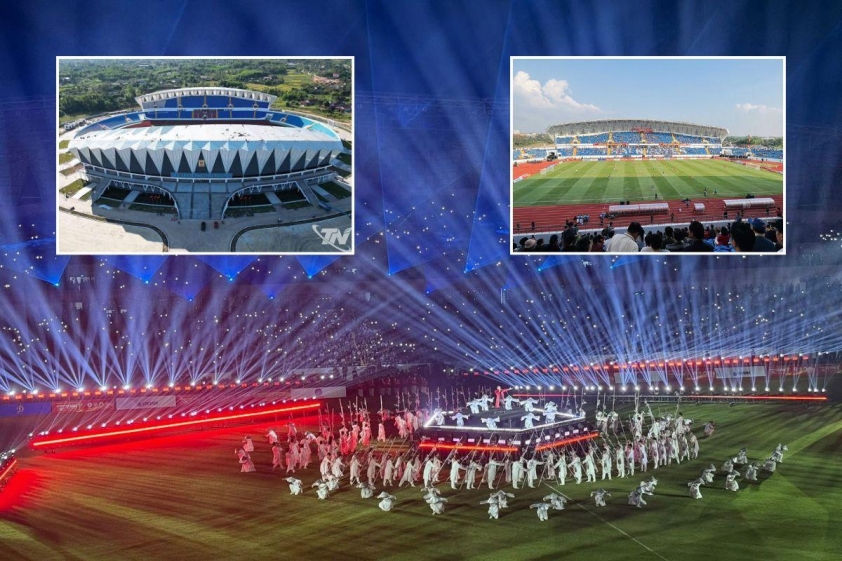
On the Mr.ลูกหนัง AEC fanpage of Thai football, numerous comments appeared immediately after images of Thai Nguyen Stadium circulated. One Thai fan frankly admitted: “This year, I no longer feel jealous of Vietnam because they are truly serious about football.”
Many others expressed admiration and made direct comparisons with Thailand. One fan wrote: “I really like how Vietnam develops football; both Thailand and Vietnam are heading in very commendable directions.”
Meanwhile, another person was surprised: “They even have a women’s league with such a beautiful stadium? Vietnam is really advancing.”
Notably, one comment drew significant attention within the Thai community by acknowledging infrastructure lag: “They are building new stadiums, reportedly very large ones. Meanwhile, our facilities are falling behind many Southeast Asian countries.”

Thai Nguyen Stadium has a seating capacity of 22,000, with a total investment of 535 billion VND, funded by the central budget, land use fees, and other legal sources. This scale allows it to hold a capacity comparable to Hang Day Stadium and larger than Viet Tri Stadium, making it the largest stadium in the Northern midland and mountainous region.
Since its operation, this venue not only serves professional football but also targets national and regional cultural, sports, and tourism events. This has caused many Thai fans to reconsider Vietnam’s football investment approach, seeing it as clear evidence of a sustainable development ambition.
According to official information, Thai Nguyen Provincial Stadium was built on 15.47 hectares, part of the provincial sports complex plan. The project began on October 1, 2022, featuring an international standard football pitch surrounded by a track with 8 curved lanes and 10 straight lanes, suitable for hosting major tournaments.
The field’s surface uses Zeon Zoysia grass, a high-quality natural turf often used in international standard stadiums and certified by ITGAP. Moreover, the entire lighting system, drainage, wastewater treatment station, internal transport, and transformer station were uniformly invested, reflecting a professional and long-term design.
Thai Nguyen Stadium has officially been put into use (Photo: Thai Nguyen Newspaper).
On the Mr.ลูกหนัง AEC fanpage of Thai football, many comments appeared immediately after images of Thai Nguyen Stadium were shared. One Thai fan openly admitted: “This year, I no longer feel jealousy towards Vietnam because they are genuinely serious about football.”
Several others expressed admiration and directly compared with Thailand. One fan wrote: “I truly appreciate how Vietnam manages football; Thailand and Vietnam are progressing in very admirable ways.”
Meanwhile, another was surprised: “There’s even a women’s league with such a beautiful stadium? Vietnam has come a long way.”
Importantly, one comment drew wide attention in the Thai community by acknowledging infrastructure shortcomings: “They are constructing new stadiums, reportedly very large. Meanwhile, our facilities lag behind many Southeast Asian nations.”
Thai fans admire Vietnam’s stadium construction, especially Thai Nguyen Stadium.
Thai Nguyen Stadium accommodates 22,000 seats, with a total investment of 535 billion VND, funded by the central budget, land fees, and other lawful sources. This size makes it comparable to Hang Day Stadium and larger than Viet Tri Stadium, becoming the largest stadium in the Northern midland and mountainous area.
Since opening, this venue serves not only professional football but also national and regional cultural, sports, and tourism events. This has led many Thai fans to reevaluate Vietnam’s football investment, viewing it as clear proof of a sustainable development ambition.
According to official data, Thai Nguyen Provincial Stadium covers 15.47 hectares, part of the provincial sports complex plan. The project started on October 1, 2022, with an international standard football field surrounded by a track with 8 curved lanes and 10 straight lanes, meeting requirements for major competitions.
The pitch uses Zeon Zoysia grass, a premium natural turf commonly applied in international stadiums and certified by ITGAP. Additionally, the entire lighting, drainage, wastewater treatment, internal traffic, and transformer systems were invested in uniformly, showing thorough and long-term planning.
Thai Nguyen Stadium has officially been opened (Photo: Thai Nguyen Newspaper).
On the Mr.ลูกหนัง AEC fanpage of Thai football, numerous comments appeared immediately after images of Thai Nguyen Stadium spread. One Thai fan frankly admitted: “This year, I no longer feel envious of Vietnam because they are truly committed to football.”
Many others showed admiration and directly compared with Thailand. One fan wrote: “I really like how Vietnam approaches football; Thailand and Vietnam are following paths worth emulating.”
Meanwhile, another expressed surprise: “They even have a women’s league with such a beautiful stadium? Vietnam is really progressing.”
Notably, one comment attracted significant attention in the Thai community by recognizing infrastructure delays: “They are building new stadiums, reportedly very large. Meanwhile, our stadium systems lag behind many Southeast Asian countries.”
Thai fans admire Vietnam’s stadium construction, exemplified by Thai Nguyen Stadium.
Thai Nguyen Stadium seats 22,000, with a total investment of 535 billion VND, sourced from the central budget, land use fees, and other legal funds. This capacity is comparable to Hang Day Stadium and larger than Viet Tri Stadium, making it the largest stadium in the Northern midland and mountainous region.
After becoming operational, this venue serves not only professional football but also national and regional cultural, sports, and tourism events. This has caused many Thai fans to reconsider Vietnam’s football investment strategy, seeing it as clear evidence of a sustainable growth ambition.
According to official sources, Thai Nguyen Provincial Stadium was built on 15.47 hectares, part of the provincial sports complex plan. Construction began on October 1, 2022, featuring an international standard football field surrounded by a track with 8 curved lanes and 10 straight lanes, suitable for major competitions.
The pitch uses Zeon Zoysia grass, a high-quality natural turf often used in international stadiums and certified by ITGAP. Moreover, the entire lighting, drainage, wastewater treatment station, internal transport, and transformer station were uniformly invested, reflecting professional and long-term planning.
Thai Nguyen Stadium has officially been opened (Photo: Thai Nguyen Newspaper).
On the Mr.ลูกหนัง AEC fanpage of Thai football, many comments appeared immediately after images of Thai Nguyen Stadium were shared. One Thai fan openly admitted: “This year, I no longer feel jealousy towards Vietnam because they are genuinely serious about football.”
Several others expressed admiration and directly compared with Thailand. One fan wrote: “I truly appreciate how Vietnam manages football; Thailand and Vietnam are progressing in very admirable ways.”
Meanwhile, another was surprised: “There’s even a women’s league with such a beautiful stadium? Vietnam has come a long way.”
Importantly, one comment drew wide attention in the Thai community by acknowledging infrastructure shortcomings: “They are constructing new stadiums, reportedly very large. Meanwhile, our facilities lag behind many Southeast Asian nations.”
Thai fans admire Vietnam’s stadium construction, especially Thai Nguyen Stadium.
Thai Nguyen Stadium accommodates 22,000 seats, with a total investment of 535 billion VND, funded by the central budget, land fees, and other lawful sources. This size makes it comparable to Hang Day Stadium and larger than Viet Tri Stadium, becoming the largest stadium in the Northern midland and mountainous area.
Since opening, this venue serves not only professional football but also national and regional cultural, sports, and tourism events. This has led many Thai fans to reevaluate Vietnam’s football investment, viewing it as clear proof of a sustainable development ambition.





Wonderfulshortvideo
Kvaratskhelia and Ronaldo 🫶


🇪🇸 Spain 🆚 Argentina 🇦🇷
Arsenal goal today arsenal 2-1 chelsea arteta interview arteta press conference
When Diogo Costa saved EVERY penalty he faced in the shoot-out 🤯🤯🤯
The movement is electric ⚡️
Mbappe injury mbappe surgery real madrid 0-1 getafe mbappe return date mbappe edit
ronaldo almeria ronaldo buying new club ronaldo owner ronaldo manchester united owner
 Links
Links
 Contact
Address:UNIT 1804 SOUTH BANK TOWER, 55 UPPER GROUND,LONDON ENGLAND SE1 9E
Number:+85259695367
E-mali:[email protected]
 App
App


