



The U15 East Asian Cup finished in third place, and the national youth team needs more high-quality matches.



Reporter Chen Yong reporting. With a win over Hong Kong, a draw against South Korea, and a loss to Japan, the U15 national team concluded the U15 East Asian Cup with a 1-1-1 record, placing third in Group A after South Korea based on goal difference. Compared to winning the last U15 East Asian Cup, this performance was less satisfying, highlighting areas such as technical skills, pace variation, chance conversion, and defensive aspects that need review.

The match against Hong Kong U15 was the final Group A game of the U15 East Asian Cup. Unlike previous editions, this tournament was divided into Group A and Group B with a promotion and relegation system, where the last place in Group A and the top team in Group B swap places for the next competition. If the U15 team failed to win this game, they would be relegated to Group B next time.
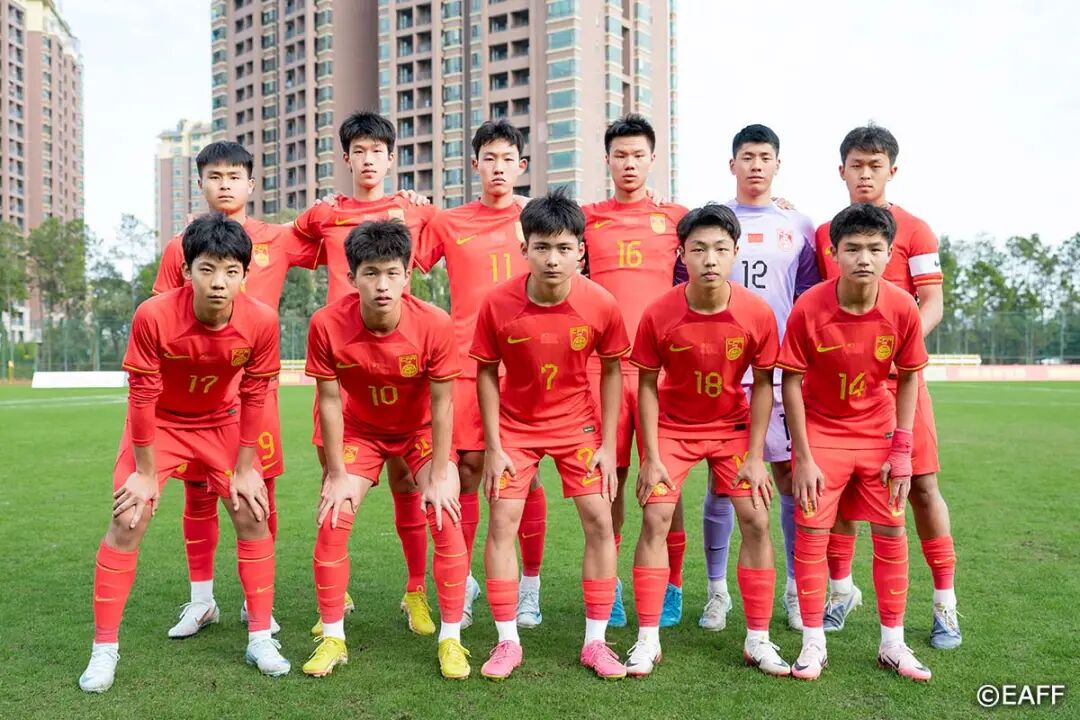
The U15 national team rotated their lineup again, starting with goalkeeper Chen Chengyun; defenders Su Ziyi, Ji Zhenghao, Bai Huajun, and Jiang Leshang; defensive midfielders Peng Xiran and Xu Zhongqi; attacking midfielders Li Yuxuan, Sheng Chenxi, and Zheng Kangjin; and forward Ke Bowen.
In the 29th minute, Li Yuxuan crossed from the right, and Sheng Chenxi headed the ball into the net; in the second half, the U15 team brought on Pan Chaowei and Gao Ze’en to strengthen the attack. At the 51st minute, Ke Bowen scored with a sharp angled shot from the left wing, extending the lead to 2-0.
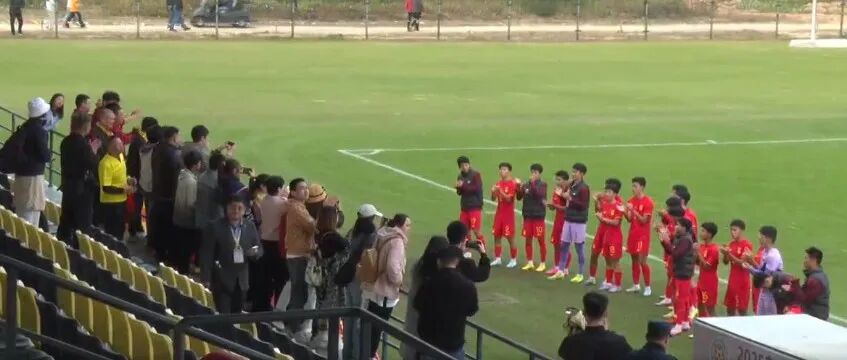
Since South Korea had previously beaten Japan 3-0, the U15 team needed to win by at least 4-0 to surpass South Korea. After taking a 2-0 lead, the team pressed forward aggressively but missed at least two excellent chances. It was not until near the end that an own goal by the opponent sealed the score at 3-0.
In this East Asian Cup, the U15 national team lost 0-3 to Japan, drew 1-1 with South Korea, and defeated Hong Kong 3-0. Other results included Hong Kong beating South Korea 2-0, South Korea defeating Japan 3-0, and Japan winning 2-0 over Hong Kong. Ultimately, Japan won the championship with 2 wins and 1 loss; South Korea finished second with 1 win, 1 draw, 1 loss, edging out China by one goal difference; China placed third with 1 win, 1 draw, 1 loss but inferior goal difference; and Hong Kong ranked fourth with 1 win and 2 losses.
The East Asian Cup results also reveal high inconsistency among U15 teams. For example, South Korea lost to bottom-ranked Hong Kong but then defeated Japan. Such fluctuations are partly due to how teams arrange their lineups.
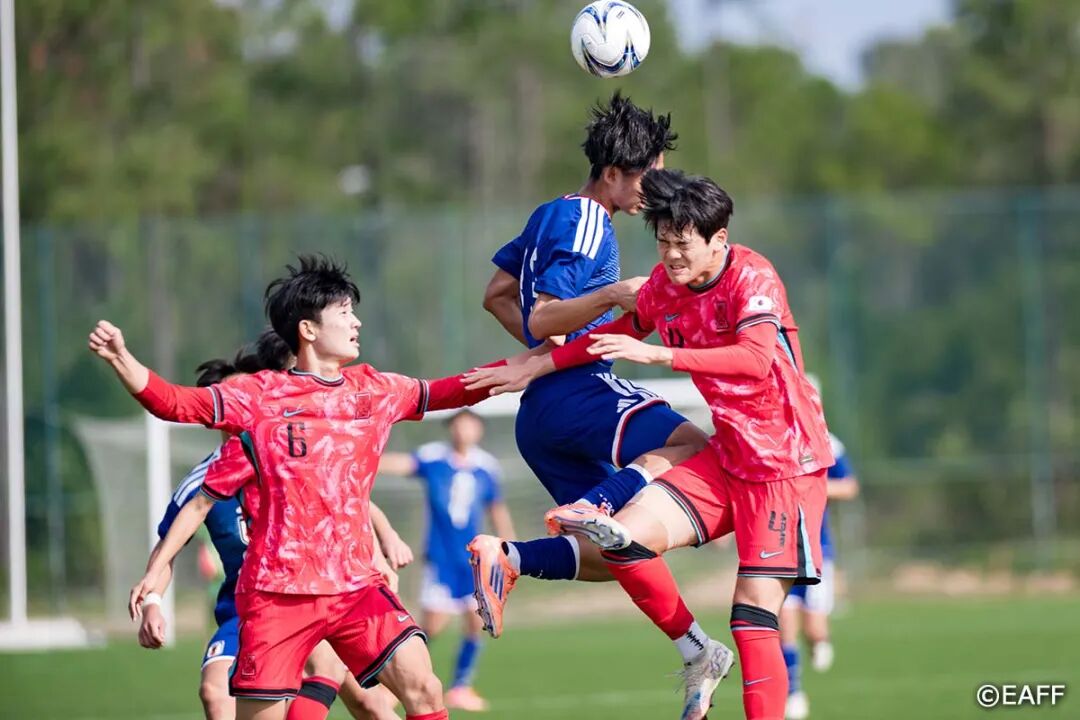

This U15 East Asian Cup was a comprehensive test for the national team. The coaching staff continuously rotated players to assess them fully, but overall, four main areas showed clear deficiencies.
Firstly, individual technical skills were somewhat lacking, evident in several aspects such as passing and receiving, one-on-one dribbling, personal defense, and chance finishing. These shortcomings affected the team’s game rhythm, tactical system, offense, and defense to some extent.
Secondly, the game pace was fast and physically intense throughout the U15 East Asian Cup. The U15 team performed well in physical contests and often regained possession through high pressing. However, under strong physical pressure and fast tempo, their tactical execution suffered with many errors. Notably, even Korea and Japan made numerous mistakes, but adapting continuously to such strong and fast-paced games is essential.
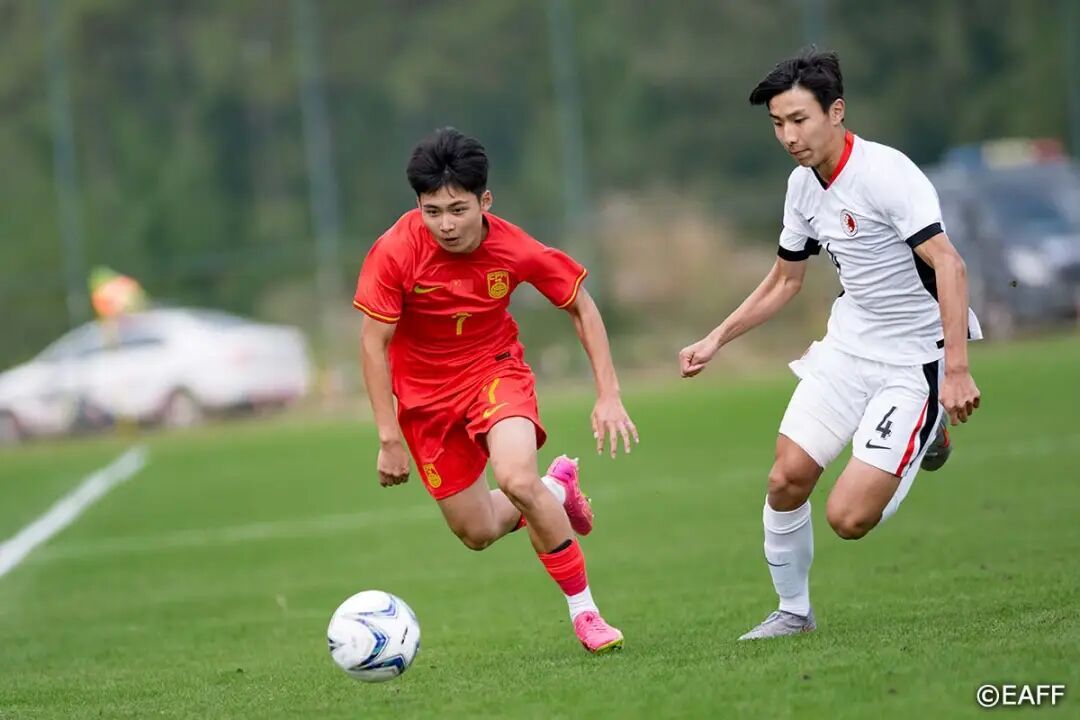
The U15 team’s scoring ability was indeed limited. They struggled in one-on-one situations in the attacking third, missing several good chances, and also failed to capitalize on some clear goal opportunities inside the box. Improving this area requires more experience in fast and physical matches.
Defensive weaknesses were more apparent in the first two games, especially in individual defending. There was even a case of a center-back cramping, which relates closely to players’ mental state. Issues such as high pressing or transitioning from attack to defense after set pieces call for further tactical refinement from the coaching staff.
Overall, the most crucial thing for the U15 national team is to participate in more high-level matches and continuously improve their tactical and technical skills under strong, fast-paced conditions. Although the U15 East Asian Cup results were disappointing, they serve as a valuable motivation for growth.


Wonderfulshortvideo
Kvaratskhelia and Ronaldo 🫶


🇪🇸 Spain 🆚 Argentina 🇦🇷
Arsenal goal today arsenal 2-1 chelsea arteta interview arteta press conference
When Diogo Costa saved EVERY penalty he faced in the shoot-out 🤯🤯🤯
The movement is electric ⚡️
Mbappe injury mbappe surgery real madrid 0-1 getafe mbappe return date mbappe edit
ronaldo almeria ronaldo buying new club ronaldo owner ronaldo manchester united owner
 Links
Links
 Contact
Address:UNIT 1804 SOUTH BANK TOWER, 55 UPPER GROUND,LONDON ENGLAND SE1 9E
Number:+85259695367
E-mali:[email protected]
 App
App


