



Korea Evened the Score Again! From 2008 Youth Team Dominance to 2010 Youth Team Being Fully Passive



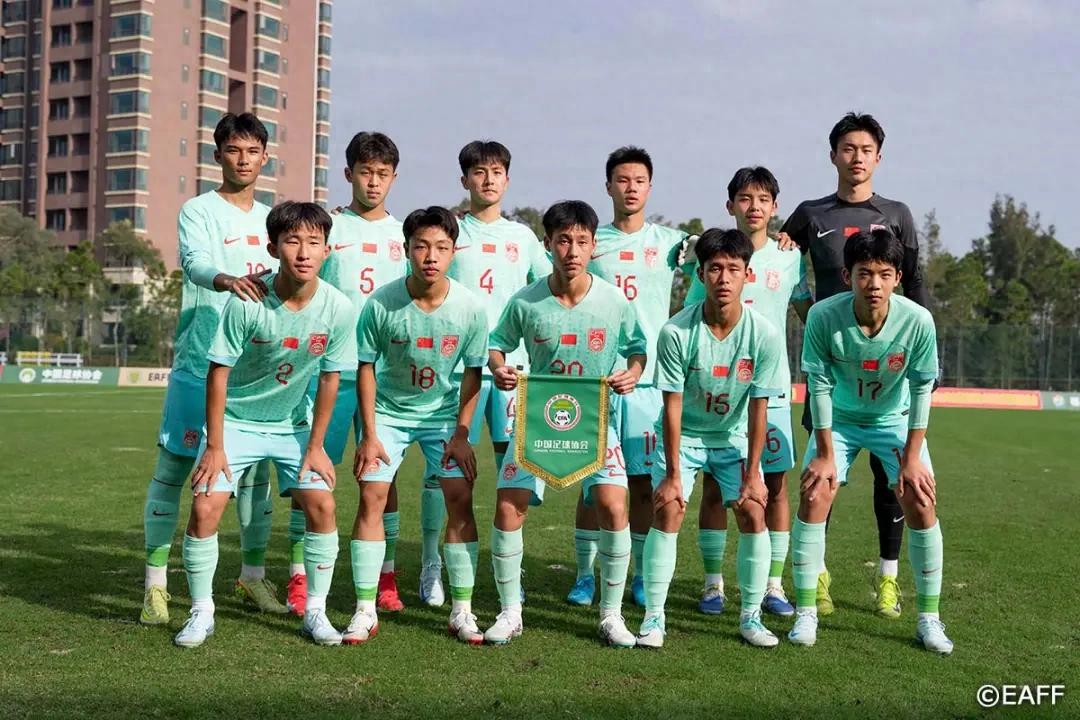
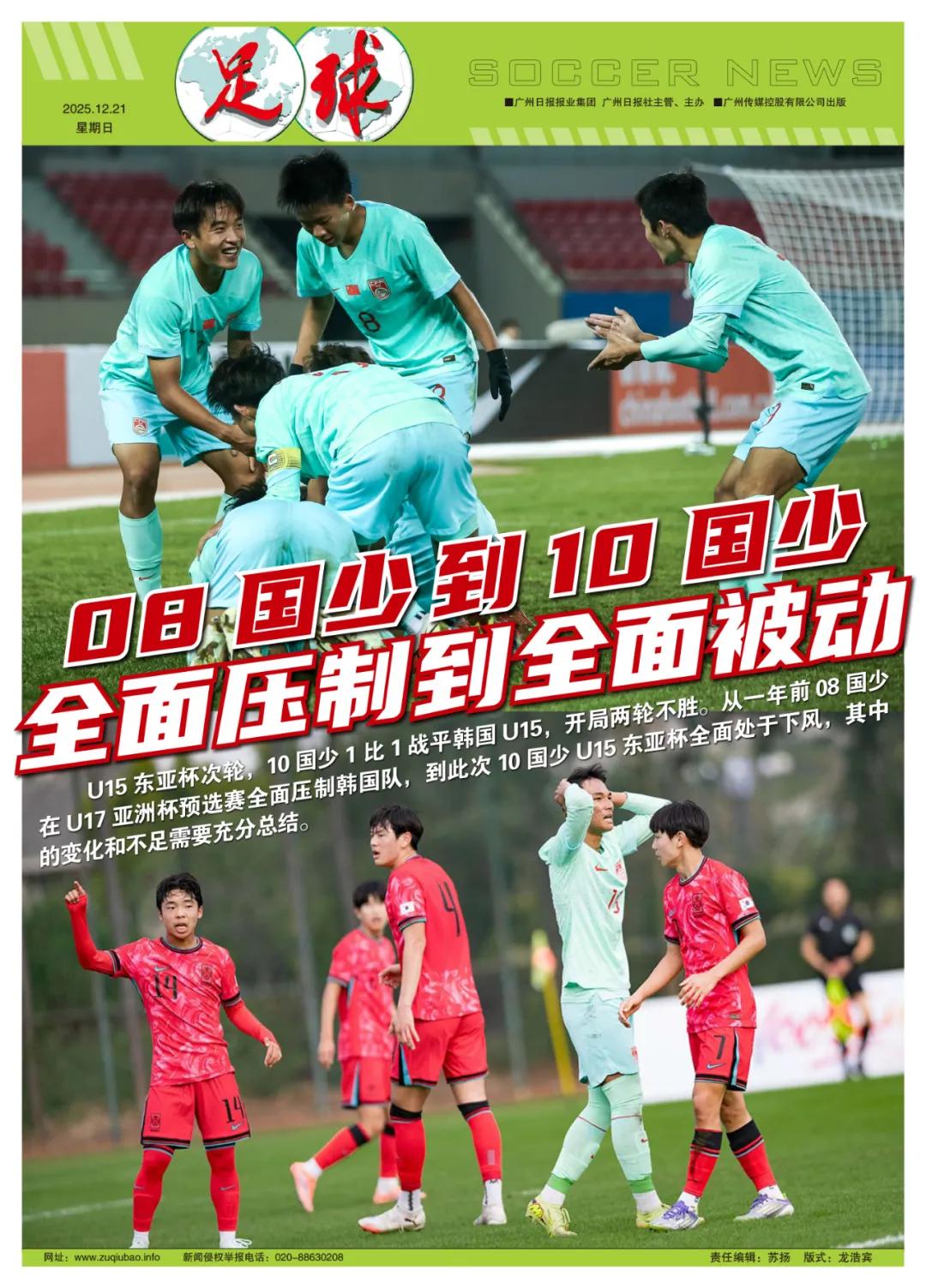
Reporter Chen Yong reports In the second round of the 2025 U15 East Asian Cup, the U15 Chinese national team (2010 age group) managed a 1-1 draw against Korea’s U15 squad despite making extensive rotations. Although the U15 team lineup changed considerably, the shift from the 2008 youth team’s complete dominance over Korea in the U17 Asian Cup qualifiers to the 2010 youth team’s overall disadvantage in this U15 East Asian Cup highlights issues that need thorough review.
On the 20th, in the first round of the U15 East Asian Cup, Korea’s U15 team lost 0-2 to Hong Kong’s U15 squad, while the U15 Chinese team also performed poorly, suffering a 0-3 defeat to Japan’s U15 team in their opening match.
For this match, the U15 Chinese team made significant lineup adjustments: goalkeeper Jiang Cheng’en remained; the defense was reshaped with Yang Chenshuo, Ji Zhenghao, Yang Yihuan, and Jiang Leshang; the double defensive midfielders were still Pan Chaowei and Peng Xiran; the front line was completely rotated to Wu Bile, Sheng Chenxi, Liu Yuyang, and Zhu Jiajun. Compared to the previous game, six positions were changed, including a full overhaul of the attacking players.
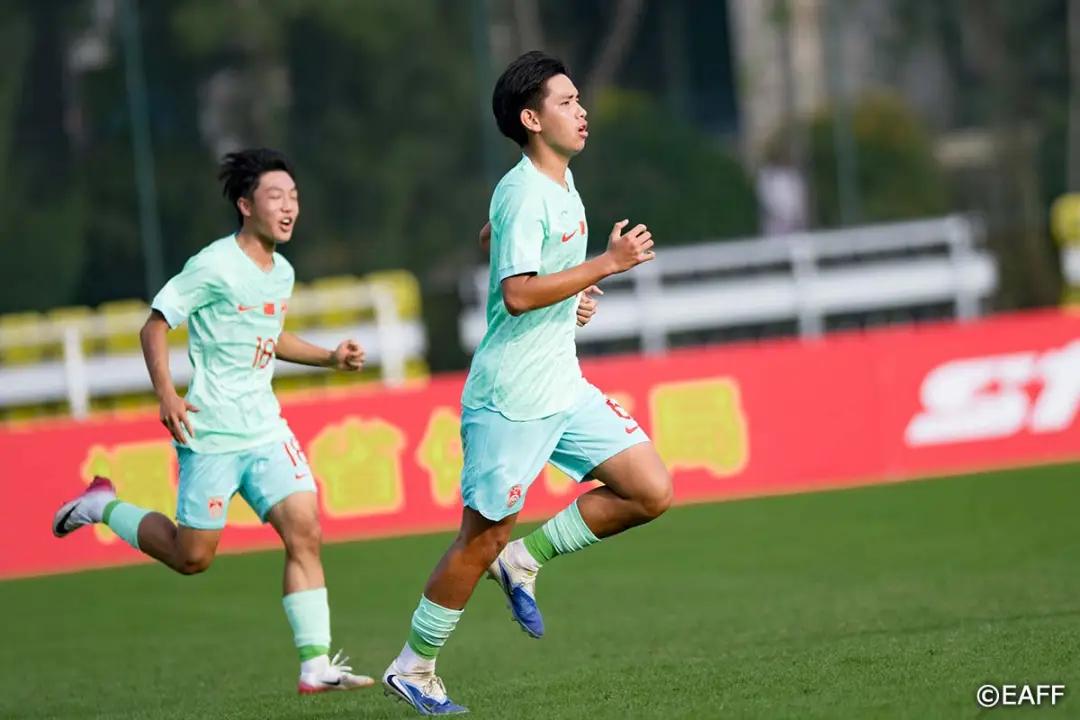
In the 27th minute, Wu Bile penetrated the penalty area from the left wing and was fouled, resulting in a penalty kick which Pan Chaowei successfully converted, putting the U15 Chinese team ahead 1-0. In the 42nd minute, Korea’s U15 team equalized with a header from a corner kick. Additionally, in the 65th minute, Korea again threatened from a corner; a header from a player in the center hit the post, but the recently substituted goalkeeper Chen Chengyun quickly secured the ball.
The U15 Chinese team made several substitutions during the match, including bringing on multiple attacking players at the 50th minute. Although these changes created some offensive chances, they ultimately failed to alter the scoreline.
In this match, the U15 Chinese team held 42% possession, took 11 shots compared to Korea’s 18, had 2 shots on target versus 5 for Korea, and earned 1 corner kick against Korea’s 6, clearly showing a disadvantage compared to the Korean U15 squad.
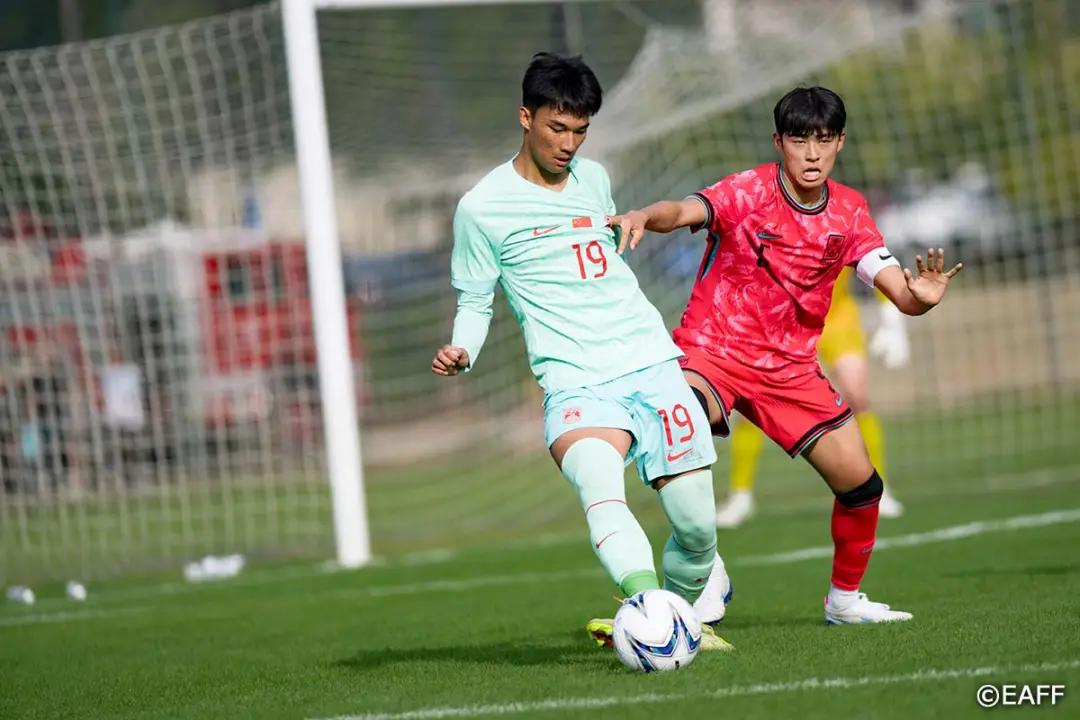
A stark contrast can be seen in the 2008 age group’s U17 Asian Cup qualifiers, where the U16 Chinese youth team (08 youth team) drew 2-2 with Korea’s U16 team. Although it was also a draw, the statistics showed total dominance: the 08 team limited Korea’s chance creation rate to 5.9%, restricted Korea to 6 shots with 3 on target, while the 08 team had 12 shots and 6 on target, thoroughly controlling Korea. Moreover, the 08 team maintained 60% possession in that match.
Times have changed, and the 2010 youth team’s performance cannot be compared to the 2008 team: offensively, their one-on-one success rate is low and their chance conversion is poor; defensively, more problems have been exposed, including repeated mistakes against Japan’s U15 team and significant aerial weaknesses in this match. Overall, there are clear gaps in tactical execution, individual technical skills, and some physical shortcomings. These are all issues that the U15 Chinese team and head coach David must carefully analyze and develop strategies to improve.


Wonderfulshortvideo
Kvaratskhelia and Ronaldo 🫶


🇪🇸 Spain 🆚 Argentina 🇦🇷
Arsenal goal today arsenal 2-1 chelsea arteta interview arteta press conference
When Diogo Costa saved EVERY penalty he faced in the shoot-out 🤯🤯🤯
The movement is electric ⚡️
Mbappe injury mbappe surgery real madrid 0-1 getafe mbappe return date mbappe edit
ronaldo almeria ronaldo buying new club ronaldo owner ronaldo manchester united owner
 Links
Links
 Contact
Address:UNIT 1804 SOUTH BANK TOWER, 55 UPPER GROUND,LONDON ENGLAND SE1 9E
Number:+85259695367
E-mali:[email protected]
 App
App


