



Olympic quotas: "Men's spots reduced, women's increased" — Men's Olympic football qualification grows tougher, women's prospects also remain bleak



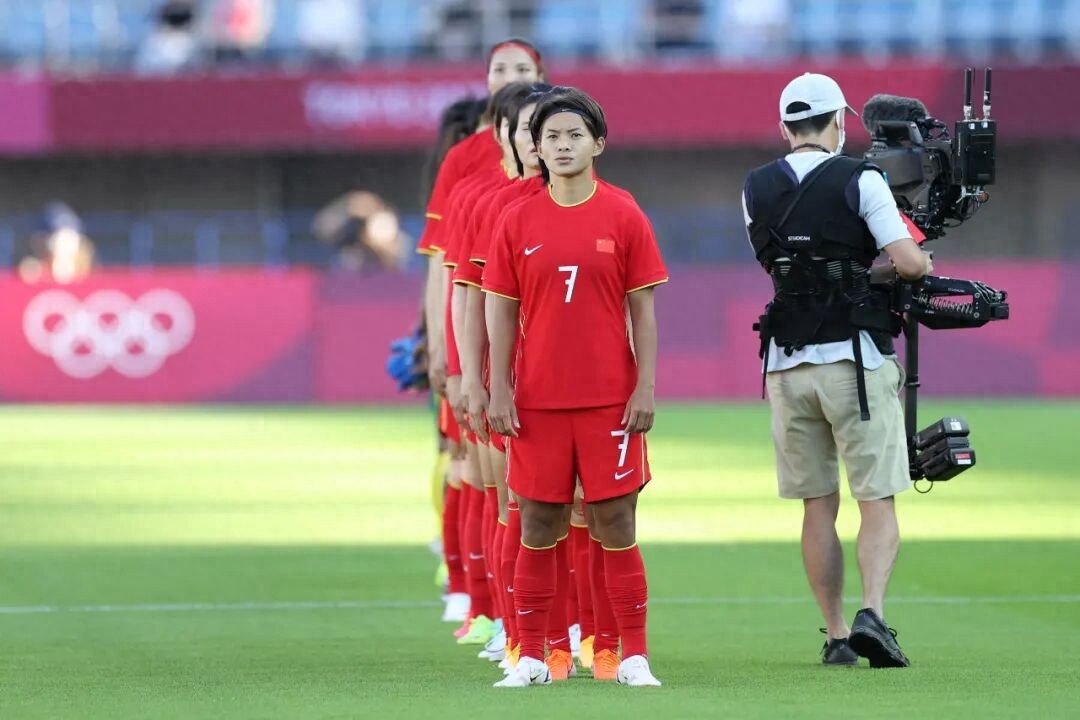
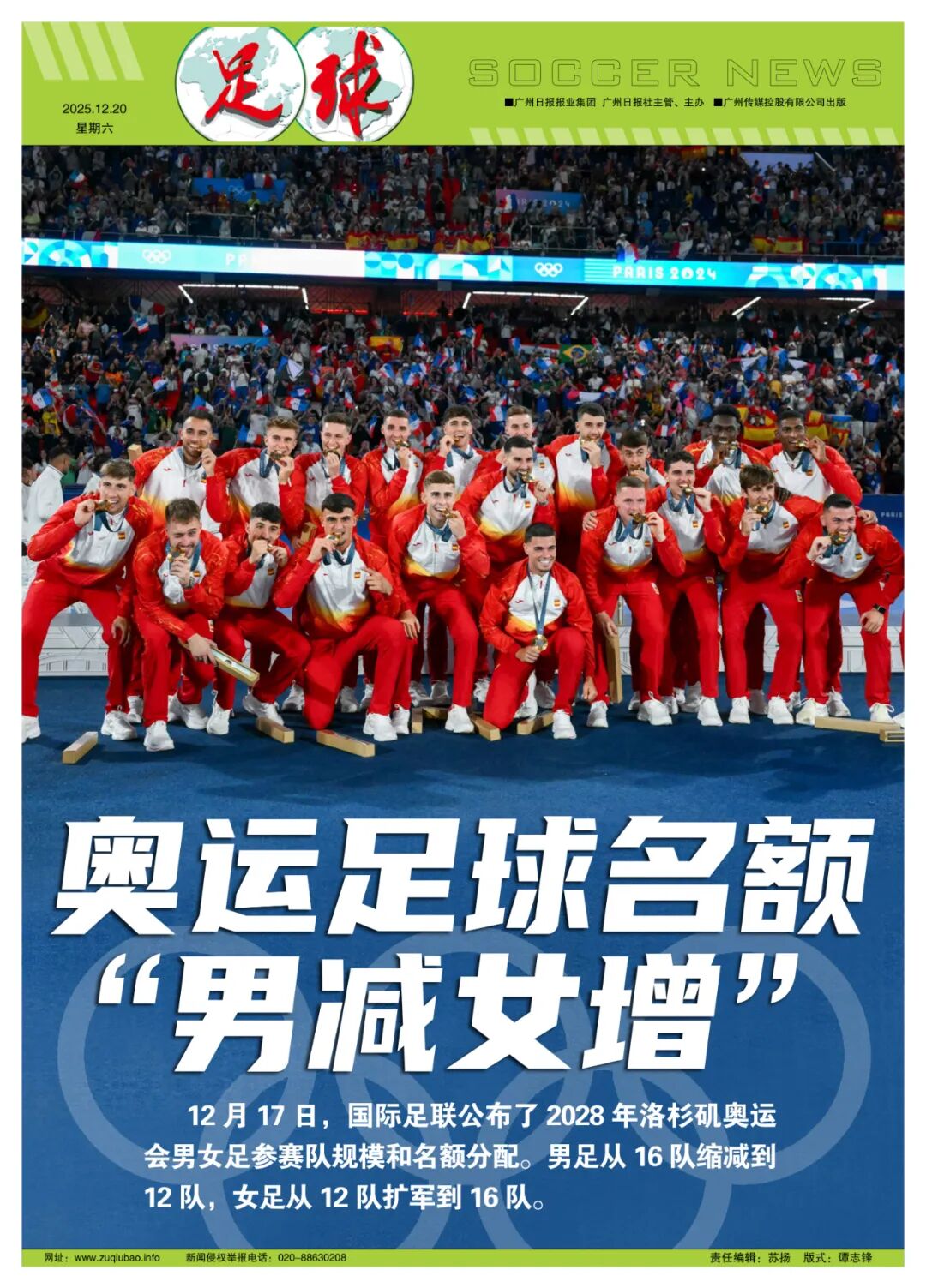
Written by Han Bing On December 17, FIFA revealed the team sizes and quota distribution for men's and women's football at the 2028 Los Angeles Olympics. The men's tournament shrinks from 16 teams to 12, and the women's expands from 12 to 16. For China's men's Olympic team, which has missed the last four editions, qualification becomes even more difficult; although the women's tournament expands to 16 teams, given their recent decline in strength, securing the Asian third-place spot to compete with South America's third is also unlikely — China's Olympic football dream grows more distant for men, and the women face the risk of missing out for a second consecutive time.

FIFA's allocation of men's football quotas for the Los Angeles Olympics is as follows: Europe gets 3 spots; South America, Africa, and Asia each receive 2; North and Central America and Oceania get 1 each; plus the host nation, the United States. Compared to the previous Olympics, Europe, South America, and Oceania's quotas remain unchanged, while Africa and Asia lose 1.5 spots each, and North and Central America lose 1. The playoff spot shared by Asia and Africa is also cut. This clearly shows that the men's Olympic football downsizing impacts Asia and Africa the most.
Since 2016, the U23 Asian Cup in Olympic years serves as the Asian qualifying tournament. In the last three Olympics, the top three qualifiers were South Korea, Japan, and Iraq twice each, with Saudi Arabia, Uzbekistan, and Australia qualifying once each, reflecting the current Asian football hierarchy. For the Tokyo Olympics, Japan qualified automatically as host, giving Asia a total of 4 spots. For other Asian teams, this meant one extra qualification spot. Unfortunately, the 1997 U23 team was placed in a tough group with South Korea, Uzbekistan, and Iran, losing all three matches without scoring and finishing last. In the 2024 U23 Asian Cup, the 2001-born team again faced a tough group with South Korea and Japan, losing 0-1 to Japan and 0-2 to South Korea, only managing a win against the UAE. Across five U23 Asian Cups and 15 matches, the Chinese Olympic team has only won twice.
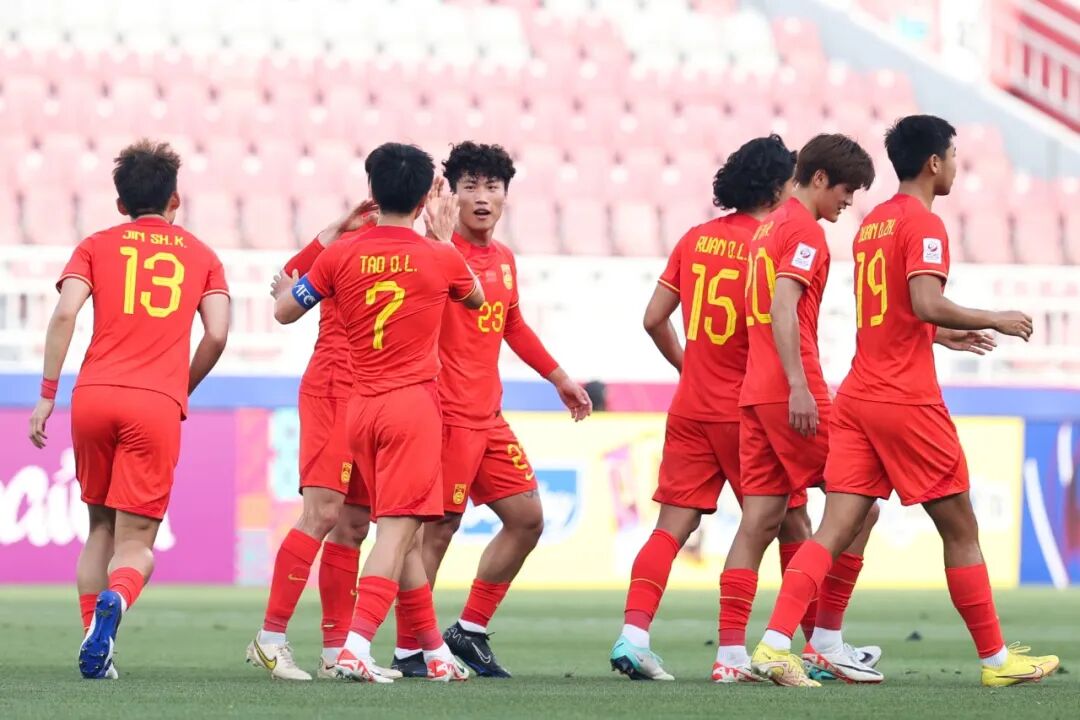
On January 6 next year, the U23 Asian Cup will start in Saudi Arabia. Although it is not the 2028 Olympic qualifier, it will provide a good assessment of the U23 Asian football landscape. China’s U23, ranked in the fourth pot, is grouped with Iraq, Australia, and Thailand in Group D. Two years later, the 2028 Olympic qualifiers will use the 2005-born players as the core of the team.
The players eligible for the 2005-born U23 team participating in the 2026 U23 Asian Cup include rising stars in the Chinese Super League this season such as Wang Yudong, Li Xinxiang, Kuai Jiwen, Yang Xi, and Zhu Pengyu; also regular or rotational starters like Zhang Aihui, He Yiran, Yang Haoyu, Mao Weijie, and Peng Xiao; plus Wang Bohao, who is playing in the Dutch second division, and promising players Chen Zeshi and Yimulan, who have had limited appearances this season. Gaining experience in a major tournament like the U23 Asian Cup two years ahead is beneficial for their Olympic qualifier campaign, helping them accumulate valuable experience.
Of course, the qualification challenge remains huge two years from now. This year's U20 Asian Cup serves as a reference: the U20 team, led by Wang Yudong and Kuai Jiwen, qualified by beating Qatar 2-1 but lost 0-1 in the quarterfinals to eventual runners-up Saudi Arabia. The youth team has been unable to break into the semifinals for over 20 years, while for the Olympics, they must reach the final to secure a spot.
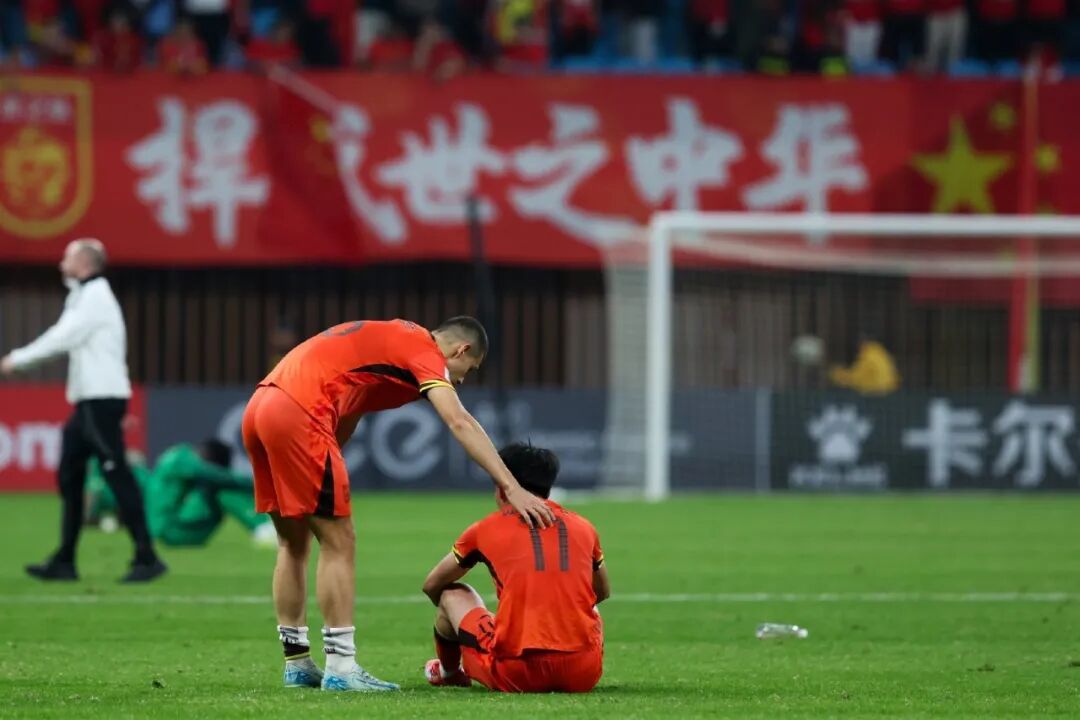

The men's team spots for the Los Angeles Olympics have decreased, while the women's teams have expanded from 12 to 16. Following the expansion of the 2023 Women's World Cup from 24 to 32 teams, this is another major tournament where women's football has successfully increased its team numbers. The 2028 Olympics will be the first major event where the number of women's teams exceeds that of men.
FIFA's allocation of women's football quotas for the Los Angeles Olympics is as follows: Europe 4, North and Central America 3, South America and Asia 2.5 each, Africa 2, Oceania 1, plus host United States. Compared with the 2024 Paris Olympics, Europe gains 2 spots, North and Central America 1 spot, Asia and South America 0.5 each, while Africa and Oceania remain unchanged. The third place from Asia and South America will compete in a playoff for one spot.
Although Asia gains an additional 0.5 spot, the outlook for the Chinese women's team remains grim.
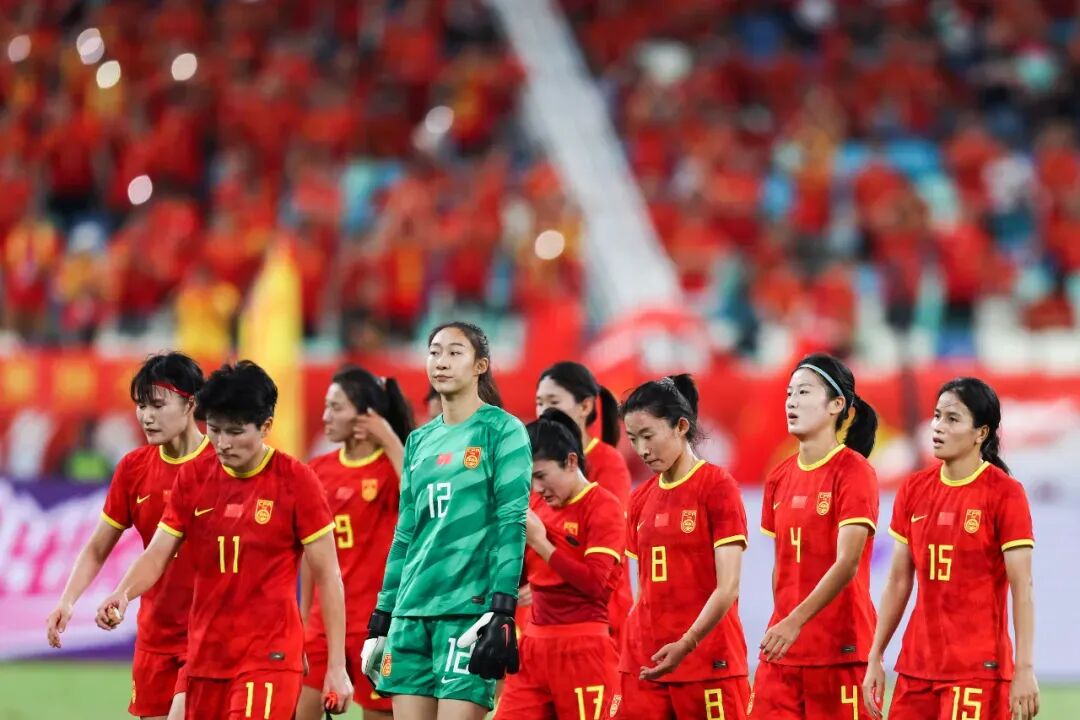
At the Tokyo Olympics, Asia had only 2 women's spots, but the strongest team, Japan, qualified automatically as host; in the February 2020 qualifiers, North Korea withdrew. With two major rivals absent, the Chinese women's team barely advanced through the playoff by defeating South Korea in extra time thanks to Wang Shuang's goal. For the 2024 Paris Olympics, both Japan and North Korea participated in the qualifiers; China was grouped with North Korea and South Korea, losing 1-2 to North Korea and drawing 1-1 with South Korea, thus failing to qualify for the playoff.
Currently, the Chinese women's team ranks below Japan, North Korea, and Australia, and has no guaranteed win against South Korea. In the Los Angeles qualifiers, China must finish at least second in their group to reach the playoff, but competing for the third Asian spot against South America's third place is also very challenging. Even if North Korea withdraws, China would still face a tough battle against South America's third team. Recently, China played South American teams in July 2023, losing 0-3 to Brazil and drawing 2-2 with Colombia.
The 2024 Olympic women's South American qualifiers were the 2022 Women's Copa América, where Brazil, Colombia, and Argentina finished top three. The 2025 Women's Copa América will keep the same top three order, with Argentina narrowly losing to Colombia on penalties in the semifinals. CONMEBOL will again use the Women's Copa América as the Olympic qualifier, meaning Asia's third-place team will face Argentina. If China reaches the playoff, they will have to overcome this tough obstacle.


Wonderfulshortvideo
Kvaratskhelia and Ronaldo 🫶


🇪🇸 Spain 🆚 Argentina 🇦🇷
Arsenal goal today arsenal 2-1 chelsea arteta interview arteta press conference
When Diogo Costa saved EVERY penalty he faced in the shoot-out 🤯🤯🤯
The movement is electric ⚡️
Mbappe injury mbappe surgery real madrid 0-1 getafe mbappe return date mbappe edit
ronaldo almeria ronaldo buying new club ronaldo owner ronaldo manchester united owner
 Links
Links
 Contact
Address:UNIT 1804 SOUTH BANK TOWER, 55 UPPER GROUND,LONDON ENGLAND SE1 9E
Number:+85259695367
E-mali:[email protected]
 App
App


