



Coach Kerr openly declares he will never leave Curry! Responds to Kuminga's situation: just like Wiggins last season



As long as Stephen Curry continues to represent the Golden State Warriors, head coach Steve Kerr will absolutely not depart. On December 22 Beijing time, Kerr made a resolute statement in an interview: “I will never leave Stephen Curry.”
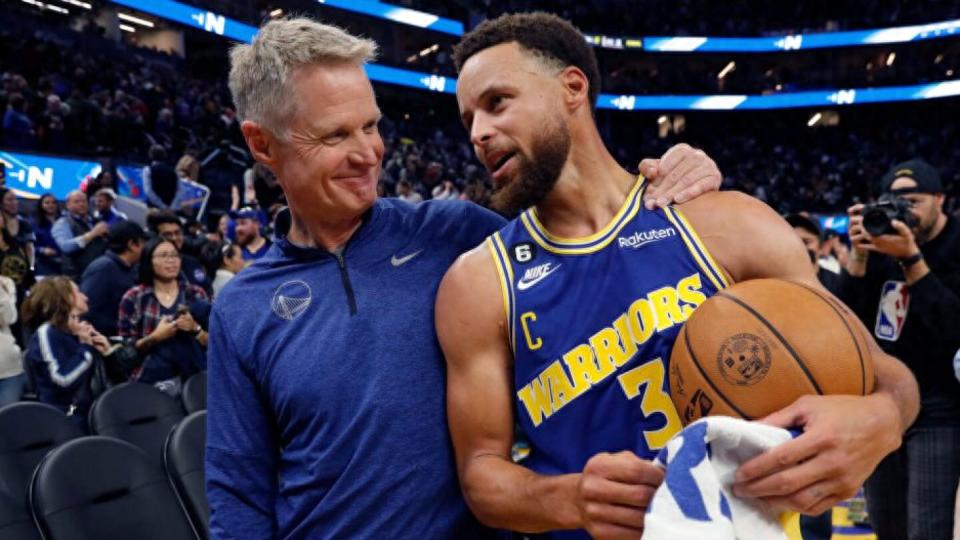
In February 2024, the then 60-year-old Kerr signed a contract extension with the Warriors, binding him to the team through this season. Since no new extension agreement has been reached yet, his future in the Bay Area remains a subject of ongoing speculation. Unless Curry announces retirement this summer, Kerr’s statement essentially secures his stay beyond the 2025-26 season.
Similarly, when Curry was interviewed by ESPN last October and asked whether he would play under another coach, his response was equally clear.
“I wouldn’t want to,” Curry said. “I believe we deserve this kind of ending. The league’s landscape constantly shifts, and there’s only so much we can control. But right now, we’re in a very unique situation, and we deserve the chance to see it through together.”
The Warriors’ championship window may have already closed. Since their title win in 2022, the team has failed to advance past the Western Conference semifinals. Their current 14-15 record this season reflects this reality. Even acquiring Butler before the 2025 trade deadline hasn’t reversed the team’s overall decline.
Even if the Warriors no longer have championship-caliber strength, Kerr might prefer to retire alongside Curry. He generously praises this two-time regular-season MVP, lauding him as flawless both on and off the court.
“He is one of the finest people I’ve ever met in my life,” Kerr said. “Being able to walk into the arena every day and see Curry makes this job truly fulfilling.”
Kerr also fondly recalled the 2024 Paris Olympics men’s basketball final when he coached Team USA. Curry nailed eight three-pointers in that gold medal game, dominating the fourth quarter and leading the team to a decisive victory over France.
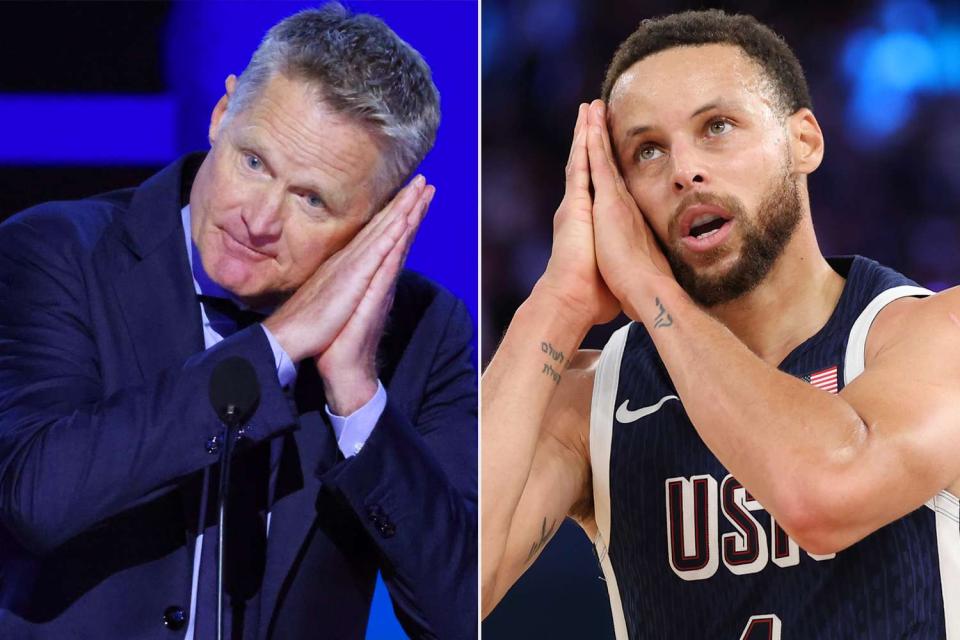
“I’ll never forget that moment—LeBron and Kevin willingly handing the ball to Curry on the court,” Kerr reminisced. “That scene perfectly showed their respect for Curry, as well as their high character and selflessness, because Curry was completely unstoppable at that point.
They sensed the flow of the game instantly, without hesitation, choosing to trust Curry: ‘You lead us to victory, we believe in you.’ … Seeing those three superstars cooperate so seamlessly was truly beautiful.”
That was Curry’s first time competing in the Summer Olympics, and the long wait ultimately led to a perfect outcome.
It is this shared glorious journey that has forged a bond between Kerr and Curry beyond most coach-player relationships in the NBA—especially in an era when stars frequently change teams. Both deserve to end this chapter on their own terms.
Kerr also spoke about Kuminga on the show. For most of this season, Warriors forward Kuminga has been surrounded by trade rumors, and Kerr, addressing the issue, couldn’t help but recall a similar situation faced by a former core team member.
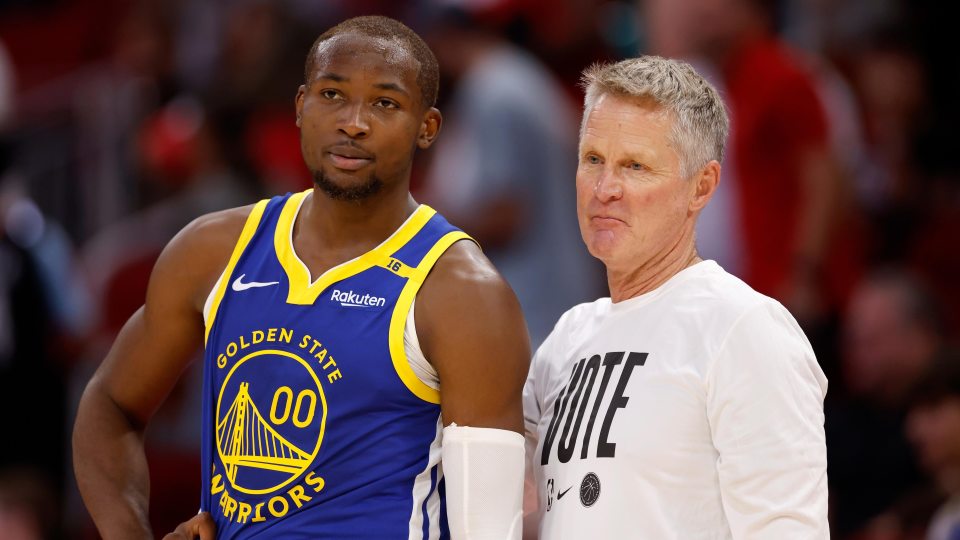

“Players want honesty; they don’t like being brushed off. You have to be clear about the team’s real situation, but deliver that message with empathy. This is a tough position—Kuminga has two young daughters at home and has played five seasons with the Warriors,” Kerr said. “Wiggins was in the exact same spot last season, right around the trade deadline, with his third child about to be born, yet his name kept coming up in rumors. We go through this every year; there’s always one or two players who become the center of trade chatter near the deadline.”
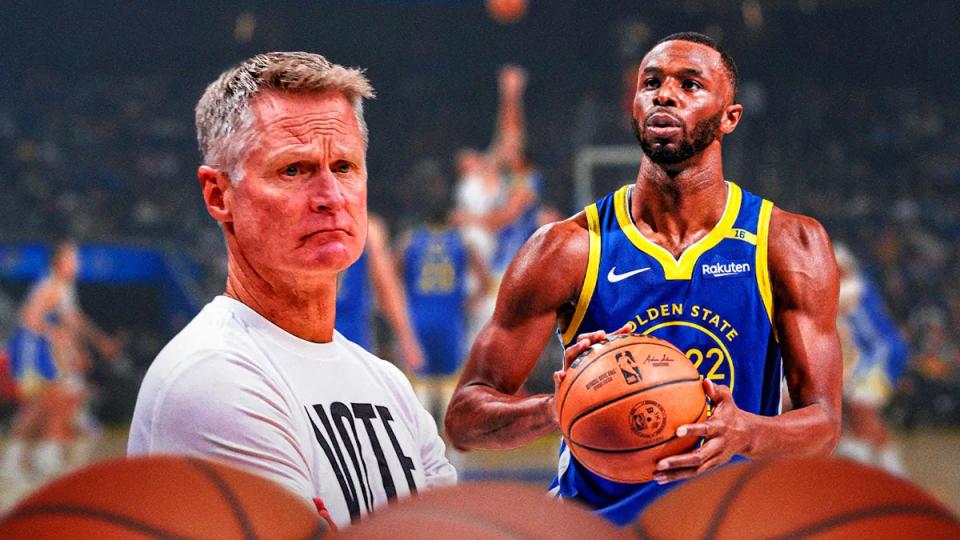
This season, Kuminga’s playing time has been very inconsistent. He has appeared in 18 games, starting 13, averaging 11.8 points, 6.2 rebounds, and 2.6 assists per game. After lengthy contract negotiations during the offseason, the 23-year-old forward eventually signed a two-year extension worth $48.5 million with the team.
Kerr added that as the February 6 trade deadline approaches, he is trying to balance two priorities: maximizing players’ potential on the court and keeping them informed about the team’s situation off the court in a timely manner.
“I always try to talk to players about how the business side of the league works, explaining that this is the nature of the industry. Very few players in NBA history stay with the same team their entire career—that’s something you should understand when entering the league. But even so, when you truly feel you might be traded, having to pack up and move your family to a new team, that feeling is still hard to bear,” Kerr said. “It’s a painful experience, and as a coach, I believe you have to acknowledge these emotions and understand the pressures players face in their careers.”


Wonderfulshortvideo
LaMelo knocks down the tough one-legged three 😮💨


This game was cinema 🙌
This sequence was INSANE 🤯
Jaxson Hayes really brought out the eastbay slam 😱
What a FANTASTIC FINISH by the @warriors 🤩
The @Charlotte Hornets win their 8th straight, their longest single-season win streak since 1999 🥳
This was too tough 💪 💥
 Links
Links
 Contact
Address:UNIT 1804 SOUTH BANK TOWER, 55 UPPER GROUND,LONDON ENGLAND SE1 9E
Number:+85259695367
E-mali:[email protected]
 App
App


